The traditional pixel tracking model is breaking down. With iOS privacy changes blocking up to 85% of user-level tracking, GDPR enforcement intensifying, and Google phasing out third-party cookies, marketers face a critical challenge: how do you maintain accurate attribution without violating user privacy?
The good news is that privacy-compliant tracking isn't just possible—it can actually deliver more accurate data than the old pixel-dependent methods.
This guide covers seven proven alternatives that help you track marketing performance while respecting user privacy and staying compliant with regulations like GDPR, CCPA, and the evolving global privacy landscape.
1. Server-Side Tracking
The Challenge It Solves
Browser-based pixels are increasingly unreliable. Ad blockers, iOS restrictions, and privacy-focused browsers like Brave block traditional tracking scripts before they can fire. When a significant portion of your audience becomes invisible to your analytics, your attribution data becomes skewed and your optimization decisions suffer.
Server-side tracking solves this by processing conversion data on your own server before sending it to advertising platforms. Because the data never relies on browser-based scripts, it bypasses most tracking restrictions while maintaining user privacy.
The Strategy Explained
Instead of loading a tracking pixel directly in the user's browser, server-side tracking captures conversion events on your server first. When someone completes a purchase or fills out a form, that event data is sent to your server, which then forwards it to your analytics and advertising platforms through secure server-to-server connections.
This approach gives you control over what data gets collected, how it's processed, and when it's shared with third parties. You can hash personally identifiable information, aggregate data appropriately, and ensure compliance with privacy regulations before any data leaves your infrastructure.
The technical implementation requires setting up a server-side container or endpoint that can receive event data from your website or app, process it according to your privacy policies, and distribute it to the platforms that need it.
Implementation Steps
1. Set up a server-side tracking infrastructure using tools like Google Tag Manager Server-Side, Segment, or a custom solution built on your existing server architecture.
2. Configure your website to send conversion events to your server endpoint instead of directly to advertising platforms, ensuring all critical events (purchases, leads, sign-ups) are captured.
3. Implement data processing rules on your server to hash email addresses, remove sensitive information, and format data according to each platform's API requirements before forwarding events.
4. Test your implementation thoroughly by comparing server-side event data against your source of truth (like your CRM or database) to ensure accuracy and completeness.
Pro Tips
Start with your highest-value conversion events rather than trying to migrate everything at once. Focus on purchases and qualified leads first, then expand to other touchpoints. Monitor your server infrastructure carefully during the initial rollout to ensure it can handle the additional load without impacting site performance.
2. First-Party Data Collection with Consent Management
The Challenge It Solves
Third-party cookies are disappearing, and regulations like GDPR require explicit consent before tracking users. Many marketers struggle to balance compliance requirements with the need to understand customer behavior. Without a proper consent management system, you risk both regulatory fines and lost marketing data.
Building a compliant first-party data strategy lets you collect valuable customer information directly, with proper consent, creating a sustainable foundation for attribution that doesn't rely on third-party tracking mechanisms.
The Strategy Explained
First-party data collection means gathering information directly from your customers through interactions they have with your brand. This includes email addresses from newsletter sign-ups, purchase history from your e-commerce platform, and behavioral data from your website—all collected with explicit user consent.
The key is implementing a robust consent management platform (CMP) that clearly explains what data you're collecting and why, gives users granular control over their preferences, and automatically adjusts your tracking based on their choices. When someone opts in, you can track their journey across your properties. When they opt out, your systems respect that decision.
This approach shifts your measurement strategy from anonymous tracking to relationship-based data collection. You know less about random visitors, but you know much more about engaged customers who've chosen to share their information with you.
Implementation Steps
1. Deploy a consent management platform like OneTrust, Cookiebot, or Usercentrics that displays compliant consent banners and manages user preferences across your digital properties.
2. Audit all data collection points on your website and apps to identify what information you're gathering, categorize it by purpose (analytics, marketing, necessary functionality), and ensure each type has appropriate consent requirements.
3. Create a comprehensive privacy policy that clearly explains your data practices in plain language, then link to it prominently from your consent banner and throughout your site.
4. Build incentives for users to share their data by offering exclusive content, personalized experiences, or special offers to customers who create accounts and opt into marketing communications.
Pro Tips
Don't make your consent banner unnecessarily restrictive. Many sites default to "reject all" buttons that discourage consent. Instead, use clear language about the value users receive in exchange for sharing data, and make both acceptance and rejection equally easy. Focus on building trust through transparency rather than trying to trick users into accepting tracking.
3. Conversion APIs for Direct Platform Integration
The Challenge It Solves
When browser-based pixels fail to fire due to ad blockers or privacy settings, advertising platforms lose visibility into which ads drive conversions. This creates a data gap that undermines campaign optimization and makes it difficult to scale winning campaigns. Platforms like Meta and Google can't optimize delivery if they don't know which conversions happened.
We compare the leading options in our AI advertising agent roundup.
Conversion APIs solve this by establishing direct server-to-server connections between your systems and advertising platforms, ensuring conversion data reaches them regardless of browser restrictions.
The Strategy Explained
Conversion APIs allow you to send conversion events directly from your server to advertising platforms through secure API connections. Instead of relying on a pixel loaded in the user's browser, your server notifies the platform when a conversion occurs, passing along relevant information like purchase value, event type, and user identifiers.
Meta's Conversions API (CAPI) and Google's Enhanced Conversions are the two most widely used examples. These APIs accept event data from your server, match it to the appropriate ad click or impression using hashed email addresses or other identifiers, and attribute the conversion accordingly.
The platform receives richer, more reliable data than pixel-based tracking could provide, which improves their ability to optimize ad delivery and target similar audiences. You maintain control over what data gets shared and can ensure it's processed in compliance with privacy regulations before transmission.
Implementation Steps
1. Generate API access credentials from each advertising platform you use (Meta Business Manager, Google Ads, TikTok Ads Manager) and securely store them in your server environment.
2. Implement server-side code that captures conversion events from your website or CRM, formats them according to each platform's API specifications, and sends them via HTTPS POST requests.
3. Include multiple matching parameters with each event (hashed email, phone number, user agent, IP address) to improve the platform's ability to match conversions to the correct user and ad interaction.
4. Set up event deduplication by assigning unique event IDs that match between your browser pixel (if still active) and your server-side API calls, preventing platforms from counting the same conversion twice.
Pro Tips
Send conversion events to platforms as quickly as possible after they occur. The closer the timestamp is to the actual conversion, the better platforms can optimize in real time. Also, don't just send purchase events—include lead form submissions, add-to-cart actions, and other valuable micro-conversions to give platforms more optimization signals.
4. Probabilistic Attribution and Statistical Modeling
The Challenge It Solves
Even with the best tracking infrastructure, you'll never capture 100% of user interactions. Privacy restrictions, technical limitations, and user behavior create inevitable gaps in your data. Traditional deterministic attribution (which requires perfect user-level tracking) becomes impossible when significant portions of your audience are untrackable.
Probabilistic attribution uses statistical modeling to fill these gaps, providing directionally accurate insights about campaign performance even when individual user tracking is limited or unavailable.
The Strategy Explained
Probabilistic attribution analyzes patterns in your aggregated marketing data to estimate the impact of different channels and campaigns. Instead of tracking individual users, it looks at correlations between marketing activities and conversion outcomes across your entire audience.
For example, if you increase Facebook ad spend by 30% and see a corresponding 25% increase in conversions three days later (controlling for other variables), probabilistic models can attribute a portion of those conversions to Facebook even without perfect user-level tracking. The model considers factors like historical performance, seasonal trends, and cross-channel interactions to estimate attribution.
This approach is particularly valuable for understanding the impact of upper-funnel activities like brand campaigns, which are difficult to track with deterministic methods but create measurable downstream effects on conversion rates.
Implementation Steps
1. Aggregate your marketing data from all channels into a central analytics platform, including ad spend, impressions, clicks, and any conversion data you can reliably capture.
2. Implement marketing mix modeling (MMM) or multi-touch attribution (MTA) software that uses statistical techniques to estimate channel contribution, such as Rockerbox, Northbeam, or custom models built with data science tools.
3. Establish baseline conversion rates for periods without marketing activity or with minimal spend, which helps the model isolate the incremental impact of your campaigns.
4. Run regular holdout tests where you intentionally pause specific channels or campaigns to validate your model's predictions against actual observed changes in conversion rates.
Pro Tips
Probabilistic models work best with larger data sets. If you're a smaller advertiser, focus on modeling at the channel level rather than trying to attribute individual campaigns or ad sets. Also, remember that these models provide estimates, not certainties—use them to guide strategic decisions about budget allocation rather than for precise campaign optimization.
5. UTM Parameters with CRM Integration
The Challenge It Solves
When pixels fail and cookies get blocked, you lose the connection between ad clicks and eventual conversions. A user might click your Facebook ad on their phone, research your product later on their laptop, and convert days later on a different device. Traditional tracking methods struggle to connect these touchpoints into a coherent customer journey.
UTM parameters combined with CRM integration create a tracking method that follows the customer rather than the device, maintaining attribution even across complex, multi-session journeys.
The Strategy Explained
UTM parameters are tags you add to your marketing URLs that identify the source, medium, campaign, and other details about where the traffic originated. When someone clicks a link with UTM parameters, those values get captured and stored with their session data.
The key is connecting these UTM values to individual customer records in your CRM. When someone fills out a form or creates an account, you capture not just their contact information but also the UTM parameters from their current session and previous visits. This creates a complete attribution trail from initial ad click through final conversion.
As the customer progresses through your funnel—receiving emails, returning to your site, engaging with sales—your CRM maintains the connection to their original traffic source. When they eventually convert, you can attribute that revenue back to the specific campaign that first brought them in.
Implementation Steps
1. Implement a consistent UTM naming convention across all marketing channels, defining standard values for source (facebook, google, linkedin), medium (cpc, email, social), and campaign names that clearly identify specific initiatives.
2. Set up tracking on your website that captures UTM parameters from the URL and stores them in cookies or local storage, persisting them across multiple page views during the same session.
3. Configure your forms and conversion points to pass UTM data to your CRM when someone submits their information, creating custom fields in your CRM to store source, medium, campaign, content, and term values.
4. Build reports in your CRM that connect revenue and conversions back to original traffic sources using the stored UTM data, allowing you to calculate ROI by campaign even when conversions happen days or weeks after the initial click.
Pro Tips
Don't just capture the most recent UTM parameters—store the entire history of how each lead found you. Someone might discover you through organic search, return via a Facebook ad, and finally convert after clicking an email. Tracking all touchpoints gives you a complete picture of the customer journey and helps you understand how different channels work together.
6. Privacy-Preserving Measurement with Data Clean Rooms
The Challenge It Solves
You need to analyze marketing performance across multiple platforms and data sources, but privacy regulations make it risky to simply merge customer data from different systems. Combining first-party data with advertising platform data in traditional analytics tools can create compliance issues and expose you to regulatory risk.
Data clean rooms provide secure environments where you can analyze aggregated marketing data without exposing individual user information, enabling sophisticated measurement while maintaining privacy compliance.
The Strategy Explained
A data clean room is a secure environment where multiple parties can analyze combined datasets without sharing raw user-level data. Your first-party customer data and a platform's advertising data are matched using privacy-preserving techniques like hashing and aggregation, allowing you to measure campaign effectiveness without either party seeing the other's underlying customer details.
For example, you might upload a list of customers who made purchases (with hashed email addresses) to a clean room, where it's matched against Meta's data about which users saw your ads. The clean room returns aggregated insights about campaign performance without revealing which specific users converted or their personal information.
Major platforms like Google, Meta, Amazon, and Disney offer data clean room solutions that let advertisers measure cross-platform performance, analyze audience overlap, and optimize campaigns using combined datasets in a privacy-compliant way.
Implementation Steps
1. Identify which advertising platforms and data partners offer clean room solutions that integrate with your marketing stack, focusing on platforms where you spend significantly and need better attribution insights.
2. Prepare your first-party data by creating standardized customer lists with properly hashed identifiers (email addresses, phone numbers) that can be securely matched against platform data.
3. Set up clean room access through your advertising platform accounts, configuring permissions and establishing which team members can run queries and access aggregated results.
4. Design measurement queries that answer specific business questions (like "What's the incremental reach of adding YouTube to my Meta campaigns?" or "Which audience segments convert best across both platforms?") rather than trying to analyze everything at once.
Pro Tips
Data clean rooms are most valuable for larger advertisers with substantial first-party data and multi-platform campaigns. If you're spending less than $50,000 per month on advertising, simpler attribution methods will likely provide better ROI. Focus clean room analysis on strategic questions about channel mix and audience strategy rather than tactical campaign optimization.
7. Multi-Touch Attribution Platforms with Server-Side Infrastructure
The Challenge It Solves
Each individual tracking method has limitations. Server-side tracking captures conversions but might miss early touchpoints. UTM parameters work well for direct clicks but don't capture view-through attribution. Conversion APIs improve platform optimization but don't give you a unified view across all channels.
Comprehensive attribution platforms combine multiple privacy-compliant tracking methods into a single system, giving you the most complete picture possible of how your marketing drives results.
The Strategy Explained
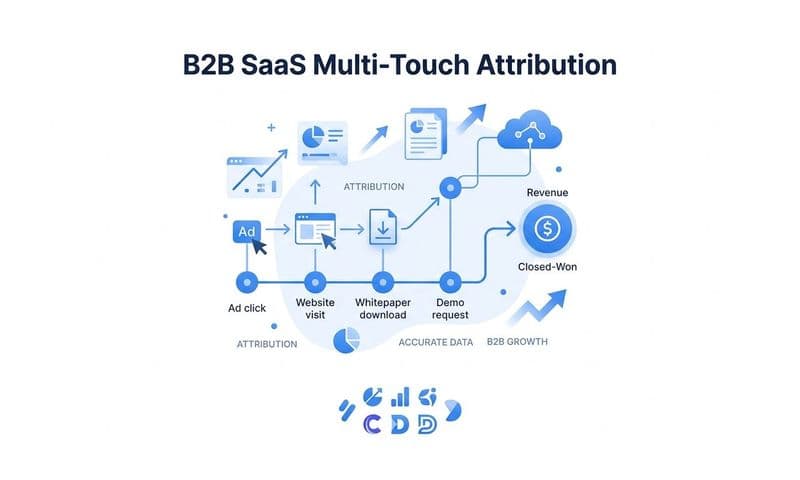
Modern attribution platforms like Cometly use server-side infrastructure as their foundation, then layer in additional tracking methods to capture as many touchpoints as possible. They combine first-party cookies, UTM parameters, conversion APIs, and CRM integration to track the customer journey from initial awareness through final conversion.
These platforms process all data on their servers before sending it to advertising platforms, ensuring compliance with privacy regulations while maintaining tracking accuracy. They can attribute revenue across multiple sessions, devices, and channels by matching conversions to customer records rather than relying solely on browser-based tracking.
The result is a unified attribution system that shows you which marketing activities drive results, how different channels work together, and where to allocate budget for maximum ROI—all while maintaining user privacy and regulatory compliance.
Implementation Steps
1. Evaluate attribution platforms based on their server-side capabilities, integration options with your existing marketing stack, and support for the specific channels where you advertise most heavily.
2. Implement the platform's tracking infrastructure on your website, which typically includes a first-party cookie for session tracking and server-side event forwarding to capture conversions reliably.
3. Connect all your advertising platforms, analytics tools, and CRM to the attribution platform so it can ingest data from every touchpoint and create a unified view of the customer journey.
4. Configure attribution models that match your business reality (first-touch, last-touch, linear, time-decay, or custom models) and set up automated reporting that shows campaign performance across all channels in a single dashboard.
Pro Tips
Don't just look at the attribution platform's interface—evaluate how well it integrates with your existing workflows. The best attribution system is one your team actually uses daily to make decisions. Look for platforms that offer AI-powered recommendations to help you identify optimization opportunities you might miss in the raw data.
Cometly captures every touchpoint from ad clicks to CRM events, providing AI a complete, enriched view of every customer journey. This comprehensive data collection feeds better information back to ad platform algorithms through conversion sync, improving targeting and optimization while maintaining privacy compliance.
Implementing Your Privacy-Compliant Tracking Stack
Start with server-side tracking as your foundation, then layer in conversion APIs and first-party data collection. These three methods work together to create a robust tracking infrastructure that captures the majority of conversions while respecting user privacy.
For most businesses, this core stack provides sufficient attribution accuracy. Add UTM parameters with CRM integration to track the full customer journey, especially for longer sales cycles where customers interact with multiple touchpoints before converting.
Probabilistic attribution and data clean rooms become valuable as your marketing sophistication increases and you need to answer strategic questions about channel mix and audience overlap. These advanced methods complement rather than replace your core tracking infrastructure.
The transition from pixel-dependent tracking to privacy-first methods isn't just about compliance. It's about building a more accurate, sustainable measurement system. Marketers who make this shift now will have a significant advantage as privacy regulations continue to tighten and browser restrictions expand.
Think of privacy-compliant tracking as an investment in the long-term health of your marketing operations. The initial implementation requires effort, but the result is attribution data you can trust and a system that won't break when the next privacy regulation or browser update rolls out.
Ready to elevate your marketing game with precision and confidence? Discover how Cometly's AI-driven recommendations can transform your ad strategy. Get your free demo today and start capturing every touchpoint to maximize your conversions.