Think of marketing analytics software as the command center for your entire marketing operation. It’s the tool that connects every single ad click, email open, and social media like directly to a sale, turning a tangled web of data into a clear, actionable map of the customer journey.
This isn’t about guesswork anymore. It’s about having the clarity to see which touchpoints actually convinced someone to buy, so you can make confident, data-driven decisions that maximize your return on investment (ROI).
Seeing Your Marketing Performance Clearly
 Marketing analytics software: Maximize ROI with Smarter Ad Spend
Sound familiar? You're spending thousands of dollars on ads across Facebook, Google, and TikTok, but when your boss asks which campaigns are really driving sales, you're left scrambling for answers. This is the chaos most marketing teams live in—a problem I call "attribution blindness." You know money is going out and sales are coming in, but drawing a straight line between the two feels impossible.
This disconnect happens because your data is stuck in different places. Facebook knows all about its ads, your CRM knows about your leads, and your payment processor knows about your sales. But these platforms don't talk to each other, leaving you with a dangerously incomplete picture.
The Problem of Data Silos
Trying to make sense of your marketing by looking at each platform's dashboard is like trying to build a puzzle with pieces from ten different boxes. You get a little piece of the sky from your Google Ads data and a corner piece of a tree from your email marketing report, but you can never, ever see the full image.
This leaves the most critical questions unanswered:
- Did that expensive YouTube video ad actually influence the sale that closed a week later?
- How many times does an average customer interact with our brand before they finally buy?
- Which ad creative is really bringing in the most profitable customers, not just a bunch of cheap clicks?
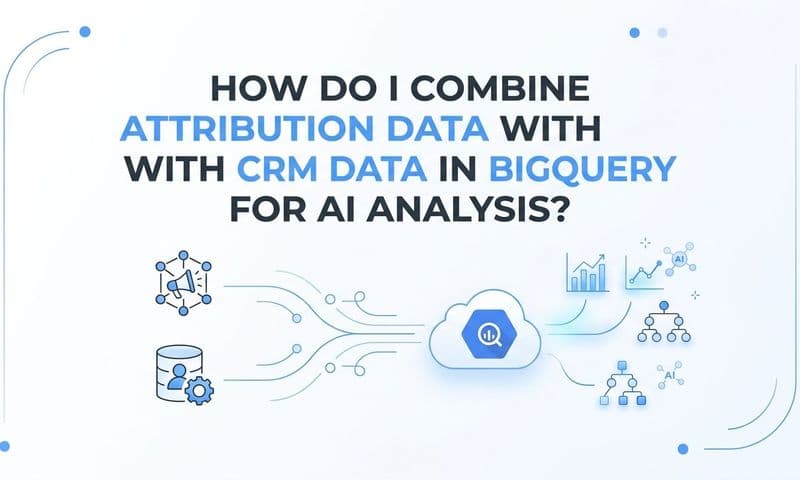
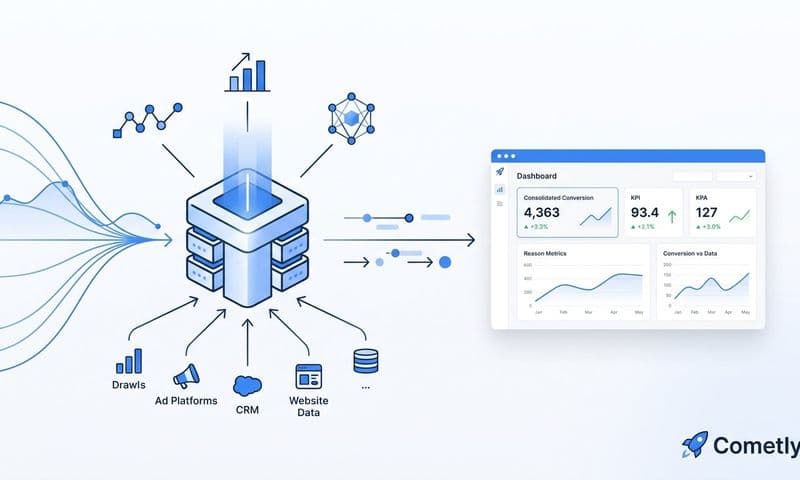
This is where marketing analytics software steps in. It acts as the bridge connecting all your data silos, collecting and stitching together every piece of the customer journey into one single, cohesive story.
To truly appreciate what these tools can do, it helps to understand the fundamental aspects of marketing analytics. This software isn't just about reporting numbers; it's about revealing the hidden cause-and-effect relationships that drive your entire funnel.
Turning Data Into Decisions
Once all your information is unified, you can finally stop guessing and start knowing. Instead of spreading your budget thinly across every channel "just in case," you can confidently double down on what’s working and cut what’s not. You can finally see which ad campaigns attract high-value customers and which ones are just bringing in tire-kickers.
This clarity is the absolute bedrock of scalable growth. The best platforms don't just dump raw data on you; they present these insights through clean, intuitive visuals, often in a centralized marketing KPI dashboard that tells the full story of your performance. With this holistic view, every decision is backed by accurate, complete data, ensuring every single marketing dollar is spent with purpose.
The Journey from Spreadsheets to Smart Platforms
 Marketing analytics software: Maximize ROI with Smarter Ad Spend
Not that long ago, a marketer’s most trusted tool was the spreadsheet. The daily grind was a painful cycle of exporting raw data from Google Ads, Facebook, and email platforms, then trying to tame it all with pivot tables and VLOOKUPs. The result was usually a fragile, often inaccurate, performance report.
This manual process was barely manageable when a business just had a website and maybe one ad channel. But as digital touchpoints exploded—social media, video ads, podcasts, influencer marketing—the spreadsheet model completely shattered. It just became impossible to keep up.
The sheer volume and speed of incoming data created an urgent need for something better. Marketers needed a central, automated system that could not only pull in data from everywhere but actually make sense of it in real time. This is what sparked the evolution from clunky spreadsheets to the intelligent marketing analytics software we use today.
From Basic Trackers to Attribution Engines
The first analytics tools were really just advanced web trackers. They were great for answering simple questions like, "How many people visited our homepage?" or "Which country are they from?" The problem was, they couldn't connect those visits to actual revenue, leaving the most important marketing questions unanswered.
The real game-changer was the development of attribution. Modern platforms moved beyond just counting clicks and started mapping the entire customer journey from start to finish.
This was the moment measurement went from passive reporting to active analysis. Instead of just seeing what happened, marketers could finally understand why it happened—and which specific ads or emails drove a sale.
This shift was fueled by intense pressure on CMOs to prove ROI. Over the last decade, this pressure has turned analytics software from a niche tool into a non-negotiable budget item. The market, valued at around $3.2 billion in 2021, shot up to over $5 billion by 2024. Projections now show it could hit $19 billion by 2035.
Think about it: as global digital ad spend climbs into the hundreds of billions, even a 5% improvement in attribution accuracy means billions in reallocated budget. You can dig into more data on this incredible market growth in this detailed industry report.
Why a Central Platform Is No Longer Optional
Today, using spreadsheets for marketing measurement is like trying to navigate a cross-country road trip with a paper map from 1995. Sure, you might get there eventually, but it's slow, full of errors, and puts you at a huge disadvantage against everyone else using a GPS.
A dedicated analytics platform has become a competitive necessity. These systems do things that are flat-out impossible to replicate by hand:
- Multi-Touch Attribution: They assign credit to every touchpoint in a customer’s journey, not just the very first or last click.
- Predictive Insights: Advanced tools use AI to forecast trends and suggest how to optimize your budget before you waste it.
- Real-Time Dashboards: They give you an up-to-the-minute view of performance, letting you adjust your strategy on the fly.
Ultimately, this journey from manual data entry to automated intelligence marks a fundamental change in how marketing is done. It’s a shift away from guesswork and toward confident, data-backed decisions that directly fuel business growth. Without a smart platform, you're not just missing data; you're missing the insights that actually drive success.
Essential Capabilities of Modern Analytics Software
What really separates a powerful analytics tool from a basic reporting dashboard? While plenty of platforms can spit out charts and numbers, truly effective marketing analytics software is built on a few non-negotiable capabilities. These are the engines that turn raw data into profitable decisions.
Think of it like building a high-performance car. You can have a sleek body and a fancy paint job, but without a powerful engine, a precise transmission, and responsive steering, you’re not going anywhere fast. For your marketing, these core components are what allow you to actually understand performance, prove ROI, and drive real growth.
Below is a quick look at the core features that are non-negotiable in today's top-tier analytics software.
Key Features in Top Marketing Analytics Software
Multi-Touch Attribution distributes conversion credit across multiple touchpoints in the customer journey instead of giving all the credit to the final click. This is critical for ROI because it reveals which channels are assisting conversions, so you don’t accidentally cut budget from top-of-funnel campaigns that are actually creating demand and driving results later in the journey.
Server-Side Tracking sends conversion data directly from your server to your analytics platform, bypassing common browser-based tracking issues. This matters for ROI because it can recapture up to 30% of conversions that would otherwise be lost to ad blockers, iOS privacy changes, and cookie restrictions, which means your budget decisions are based on real performance instead of incomplete data.
Seamless integrations connect your full marketing and sales stack, including ad platforms, CRMs, payment processors, and communication tools. This is critical for ROI because it creates a single source of truth where ad spend is tied directly to actual revenue, and it also unlocks smarter automation workflows that improve efficiency and speed up decision-making.
AI-powered insights use artificial intelligence to analyze your data, spot trends, identify opportunities, and flag issues automatically. This is important for ROI because it acts like a strategic co-pilot, surfacing actionable insights fast so you can optimize performance without spending hours digging through reports and dashboards.
These capabilities work together to provide a complete, accurate, and actionable view of your marketing performance, turning your analytics platform from a simple reporting tool into a true growth engine.
Multi-Touch Attribution Models
The old way of measuring marketing was simple, but deeply flawed. A "last-click" model gives 100% of the credit for a sale to the very last ad a customer clicked. This is like giving all the credit for a championship win to the player who scored the final point, ignoring the assists, defensive plays, and coaching that made it possible.
Modern analytics platforms move way beyond this simplistic view by using multi-touch attribution. This capability distributes credit across multiple touchpoints in the customer journey. It recognizes that the initial blog post a customer read, the retargeting ad they saw on social media, and the email they opened all played a role in the final conversion.
This complete view is crucial because it helps you understand how your channels work together. You might discover that your top-of-funnel content isn't a direct sales driver but is essential for introducing new customers who convert later. Without multi-touch attribution, you'd mistakenly cut its budget and cripple your entire funnel.
Real-Time and Accurate Tracking
In the world of digital ads, speed and accuracy are everything. Waiting days or weeks for performance data means you're making decisions based on stale information. That’s why another essential capability is real-time tracking, giving you an immediate view of how your campaigns are performing right now.
But real-time data is useless if it's wrong. Thanks to browser privacy updates and ad blockers, traditional client-side (browser-based) tracking has become notoriously unreliable, often missing up to 30% of conversions.
The modern solution is server-side tracking. Instead of relying on the customer's browser, this method sends data directly from your server to the analytics platform. This creates a much more reliable and accurate data stream that isn't disrupted by browser restrictions.
This accuracy is fundamental. It ensures the data you're using to make multi-thousand-dollar budget decisions is as close to ground truth as possible, preventing you from scaling a campaign that only looks good on paper.
Seamless Platform Integrations
Your marketing analytics software can't operate in a vacuum. Its true power is unlocked when it connects seamlessly with your entire tech stack. A top-tier platform has to offer deep, native integrations with the tools you already use every day.
This goes far beyond simply importing data. It’s about creating a two-way conversation between your systems.
- Ad Platforms: Syncing conversion data back to platforms like Facebook and Google Ads helps their algorithms find more customers like your best ones.
- CRMs and Payment Gateways: Connecting with tools like Salesforce, Stripe, or Shopify allows the platform to tie ad spend directly to actual revenue and customer lifetime value.
- Communication Tools: Integrations with email, SMS, and other marketing automation tools complete the picture of the customer journey.
Without these connections, you’re back to manual data entry and fragmented puzzle pieces. With them, you have a single, unified command center for your entire marketing ecosystem. You can explore a wide range of powerful Cometly analytics features that show how deep integration drives better results.
AI-Powered Insights and Recommendations
Finally, the best marketing analytics software doesn't just present data; it helps you interpret it. The sheer volume of information can be overwhelming, which is why AI-powered insights have become a critical capability. These systems act as your co-pilot, automatically analyzing performance data to spot trends, identify opportunities, and flag potential problems.
Instead of you having to manually sift through hundreds of campaigns, an AI-driven tool can proactively alert you: "This new ad creative has a 25% higher conversion rate than your account average," or "Ad spend on this campaign has increased, but ROI is declining." This transforms the platform from a passive reporting tool into an active strategic partner, helping you make smarter, faster decisions to optimize performance and maximize your return.
Unifying the Fragmented Customer Journey
Let's be honest: your customer's path to a purchase is anything but a straight line. It’s a winding road that might start with a TikTok ad, detour through a blog post, get a nudge from an email, and finally end with a retargeting ad days later. Trying to follow that journey without the right software is like trying to assemble a puzzle with half the pieces missing.
That’s where marketing analytics software comes in. It connects every single touchpoint, giving you the complete picture of how a potential customer moves from curious browser to paying customer. This unified view is the secret to figuring out which of your efforts are actually driving revenue and which are just making noise.
This concept map shows how the core functions of marketing analytics—attribution, tracking, and integrations—all work together to build that complete picture.
 Marketing analytics software: Maximize ROI with Smarter Ad Spend
As you can see, these features aren't isolated. They feed into each other to create a reliable, start-to-finish view of the customer journey.
Piecing Together Every Interaction
The modern customer journey is scattered across dozens of channels and devices. Someone might see your ad on their phone, read your blog on their work laptop, and then finally make a purchase on their tablet at home. Without a central system, those look like three separate, unrelated events.
Marketing analytics platforms are built to solve this exact problem. They use advanced tracking to stitch these scattered touchpoints together into a single, chronological timeline for each customer.
This holistic view is no longer a luxury; it's a necessity. It lets you move beyond channel-specific metrics (like clicks and opens) and focus on what really matters: how all your marketing efforts work together to influence revenue.
The rise of these complex, multi-touch journeys has been a huge driver for the adoption of analytics software. By 2022, North America had become the largest market, thanks to high digital ad spend and early cloud adoption. This is where platforms are replacing messy spreadsheets and disconnected tools, especially for businesses managing multiple brands or funnels. You can read the full research on how market trends are shaping software adoption.
Optimizing the Full Funnel
Once you have that unified view, you can start making much smarter decisions. Instead of just seeing which channel got the last click before a sale, you can analyze the entire sequence of events that led to it. This unlocks powerful insights that were completely hidden before.
- Top-of-Funnel Value: You might find out your podcast ads rarely lead to direct sales but are fantastic at introducing new, high-value customers to your brand.
- Mid-Funnel Nurturing: You can pinpoint which specific email sequences or blog posts are most effective at moving prospects from consideration to decision.
- Bottom-of-Funnel Conversion: You can identify which retargeting ads are actually closing deals and which ones are just burning through your budget.
This level of detail lets you optimize your entire marketing funnel, not just individual campaigns. You finally learn how your channels collaborate, allowing you to invest your budget with far more precision and confidence.
Improving Customer Lifetime Value
Understanding the full journey doesn't just help you get new customers; it helps you keep them. By analyzing the paths your most loyal and profitable customers took, you can spot patterns and replicate that success. You can see which initial touchpoints lead to a higher customer lifetime value (LTV).
This insight is critical for sustainable growth. It helps you focus your acquisition budget on attracting customers who are more likely to stick around, buy again, and become advocates for your brand. This transforms your marketing from a short-term sales machine into a long-term value creation engine. For a deeper dive, check out our guide on leveraging customer journey analytics to boost retention.
How to Choose the Right Analytics Software
Picking the right marketing analytics software is a lot more than just another purchase—it's a strategic bet on your company's growth. The right platform is like a GPS for your marketing, guiding every single budget decision with data you can actually trust. To get it right, you have to look past a simple feature checklist.
Think about it this way: buying a sports car based only on its top speed is just silly if you live in a city gridlocked with traffic. In the same way, choosing software because of one flashy feature is a recipe for frustration. You have to judge it based on how it will actually perform in your specific business environment.
This means you need to get serious about the criteria that matter: ease of implementation, the accuracy of its data, and its ability to scale with you. A tool that’s a nightmare to set up or spits out bad data is worse than having no tool at all.
Evaluate Core Technical Capabilities
Your first move should be to get under the hood and look at the software's technical foundation. Data accuracy is everything. In a world increasingly focused on privacy, this means you absolutely must prioritize platforms that support server-side tracking. This method is way more reliable than old-school browser tracking, ensuring you capture conversions that ad blockers would otherwise make invisible.
Another critical piece of the puzzle is how well it integrates with your other tools. Your analytics platform has to play nice with your existing tech stack, no exceptions.
- Does it integrate with your CRM? Connecting your analytics to your CRM is how you tie marketing spend directly to sales outcomes and, eventually, customer lifetime value.
- Can it connect to your payment gateways? For any e-commerce business, this is non-negotiable. It’s how you validate sales data against real, hard revenue.
- How does it sync with ad platforms? A deep, two-way sync is a game-changer. It feeds accurate conversion data back to the ad platforms, making their own algorithms smarter and your ads more effective.
When you're looking at different options, it's also smart to consider more advanced features, like those found in the best AI search tracker tools, to make sure you're staying ahead of the curve.
Assess Scalability and Support
Beyond the tech specs, you need to think about the human side of things. How good is their customer support? Sooner or later, you're going to hit a snag or have a question, and when you do, you'll need a responsive and knowledgeable team on your side. A great product backed by poor support can quickly turn into a massive headache.
Scalability is just as important. The software that’s a perfect fit for your business today might be holding you back in a year. The market for this kind of software is blowing up; small and midsize businesses now account for over 35% of all global data analytics spending. This is especially true in e-commerce and SaaS, where nailing your ROI isn't just a goal—it's a survival metric. As companies grow, they need tools that can handle more complex data from more sources without needing a team of engineers to manage it.
Get direct with vendors. Ask them questions like, "What does your support look like for a company our size?" and "How do your pricing and infrastructure support a business that plans to triple its ad spend next year?"
Choosing the right platform is about finding a true partner that can grow with you. By asking the tough questions and really digging into a tool's technical foundation, support quality, and scalability, you can confidently pick a solution that will serve you well, both now and down the road. For a deeper look at your options, you might find our guide on different marketing analytics platforms helpful.
Frequently Asked Questions About Marketing Analytics
Even after getting the hang of the tech, some practical questions always pop up when you're thinking about adding a new piece of marketing analytics software to your stack. Let's run through the most common ones to clear things up and show you the real-world value these platforms bring to the table.
How Is This Different from Google Analytics?
It's a great question. While Google Analytics is an incredibly powerful tool, its main job is to measure website traffic and what people do on your site. It's fantastic for answering questions like, "Where are my visitors coming from?" or "Which of my blog posts are the most popular?"
Marketing analytics software, on the other hand, is built from the ground up to measure revenue and ROI from your marketing. It connects the dots across your entire funnel by pulling in data from your ad platforms (like Meta and Google), your CRM, and your payment processor. This gives you a complete, multi-touch view of the customer's journey, finally answering the one question that really matters: "Which specific marketing efforts are actually driving sales?"
Is Marketing Analytics Software Difficult to Set Up?
The idea of implementing new software can feel like a headache, but modern platforms are built for speed and simplicity. Forget the old days of enterprise solutions that took months and a whole dev team to get running. Today’s tools are a different breed.
Most of the best platforms now offer no-code setups and one-click integrations for the big players like Shopify, Facebook Ads, and Google Ads. For the vast majority of businesses, this means you can be fully set up and tracking accurate data in just a few minutes. The whole point is to get you to those valuable insights fast, without any technical hurdles getting in your way.
Can This Software Actually Improve My Ad ROI?
Absolutely. In fact, improving your return on investment is the entire reason this software exists. It works by getting rid of the expensive guesswork that kills your ad spend.
By giving you accurate, real-time attribution data, these platforms show you exactly which channels, campaigns, and individual ads are making you money. This lets you stop feeding the losers and confidently pour fuel on the fire for your winners.
Instead of spreading your budget thin and hoping for the best, you can make surgical, data-backed decisions that directly pump up your bottom line. For a closer look at how this works, check out our guide on how to accurately calculate your return on ad spend.
Is My Business Too Small for This Type of Software?
Not at all. Honestly, small and midsize businesses often see the biggest impact because every single marketing dollar counts. When your budget is tight, you simply can't afford to guess which ads are pulling their weight.
Understanding your customer acquisition cost (CAC) and lifetime value (LTV) is non-negotiable for any business that wants to grow sustainably. Modern, scalable platforms make powerful attribution accessible and affordable for companies of all sizes. They effectively level the playing field, letting smaller brands compete with the kind of data-driven precision that used to be reserved only for the big corporations.
Ready to stop guessing and start knowing exactly what drives your growth? Cometly provides the clarity you need to connect ad spend directly to revenue, optimize your campaigns, and maximize your ROI. Discover how Cometly can transform your marketing performance today.