You've just spent $15,000 across Meta ads, Google search campaigns, LinkedIn sponsored content, and a handful of influencer partnerships. Your dashboard shows clicks, impressions, and even some conversions. But when you check your actual revenue, the numbers don't add up. Which campaigns actually drove sales? Which ones just burned budget? Without a clear answer, you're flying blind—and every dollar you spend next month is a gamble.
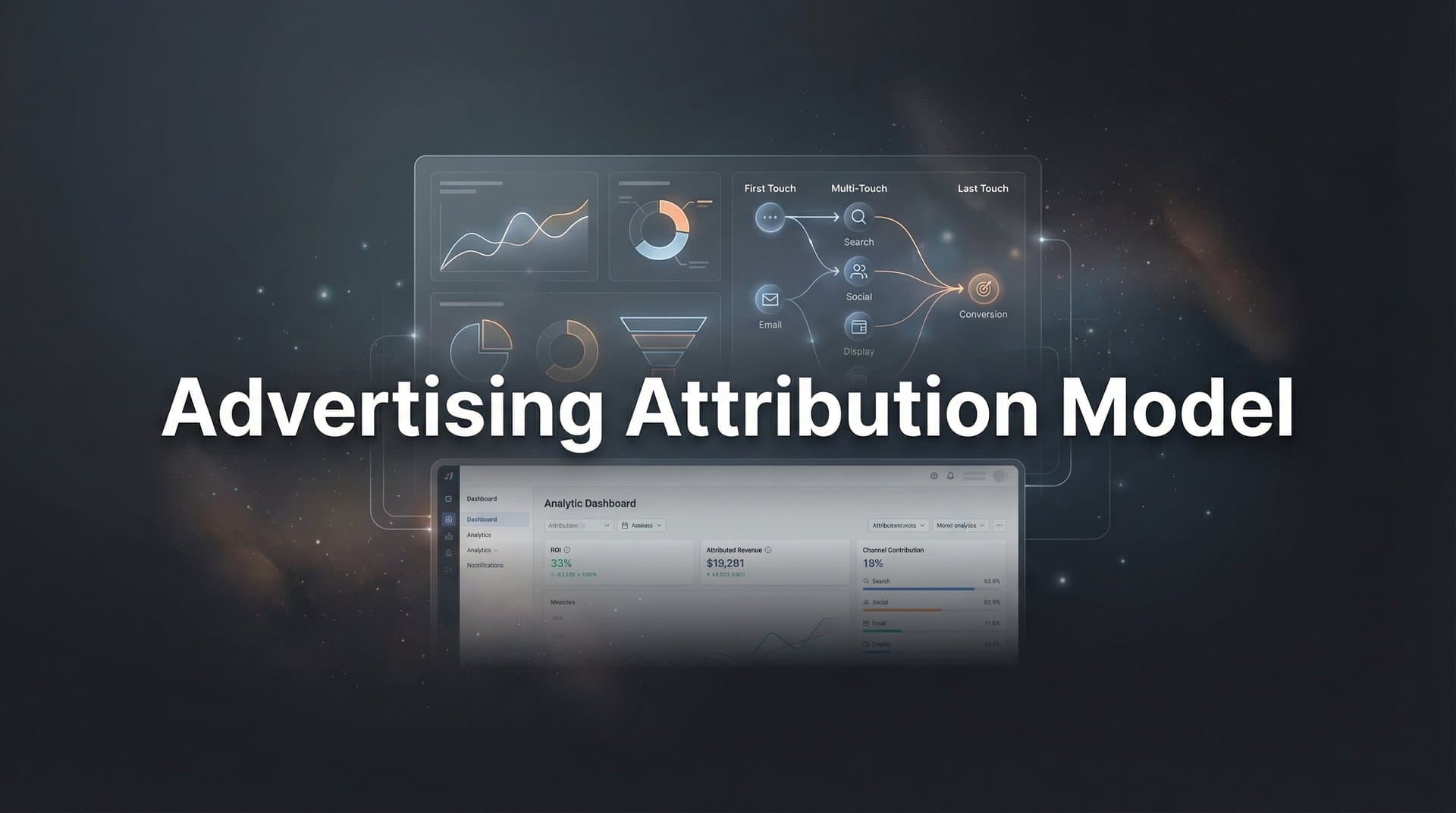
This is the problem an advertising attribution model solves. It's the framework that connects every marketing touchpoint—every ad click, email open, and social media interaction—to the conversions and revenue that actually matter. Instead of guessing which channels work, you get a clear picture of how customers move through your funnel and which touchpoints deserve credit for closing the deal.
By the end of this guide, you'll understand exactly how attribution models work, the major types available, and how to choose the right approach for your business. More importantly, you'll learn how to turn attribution data into decisions that drive real growth.
The Building Blocks of Marketing Attribution
An advertising attribution model is a framework that assigns credit to the marketing touchpoints a customer encounters before converting. Think of it as a scoring system for your marketing channels. When someone clicks a Facebook ad, reads a blog post, searches for your brand on Google, and then finally makes a purchase, attribution tells you how much credit each of those interactions deserves.
This matters more now than ever because customer journeys have become incredibly fragmented. Your prospects don't follow neat, linear paths anymore. They discover you on Instagram, research you on their laptop, compare options on their phone, and convert days later on a different device entirely. Without attribution, you're only seeing isolated snapshots—not the full story.
Here's where people often get confused: attribution models are fundamentally different from basic analytics tracking. Google Analytics can tell you how many people visited your site and which pages they viewed. That's useful. But attribution goes deeper—it connects those visits to actual revenue and shows you which marketing efforts influenced the sale. Understanding what attribution models mean in digital marketing is essential for any serious marketer.
Let's say a customer first discovers you through a LinkedIn ad, then clicks a Google search ad three days later, and finally converts after clicking an email. Basic analytics might only credit the email because it was the last thing they clicked. A proper attribution model evaluates all three touchpoints and distributes credit based on their actual influence.
The challenge is that modern marketing creates dozens of potential touchpoints. Someone might see your display ad, ignore it, then encounter your brand again through organic social, read a comparison article, watch a YouTube review, and finally search your brand name before buying. Each interaction plays a role, but how much credit does each one deserve? That's what your marketing channel attribution modeling determines.
The right model gives you confidence in your marketing decisions. Instead of wondering whether your content marketing actually generates revenue or if your retargeting campaigns are worth the investment, you have data showing exactly how each channel contributes to your bottom line. That clarity transforms how you allocate budget, test campaigns, and scale what works.
Single-Touch vs. Multi-Touch: Two Fundamentally Different Approaches
Attribution models fall into two broad categories: single-touch and multi-touch. Understanding the difference between single source attribution and multi-touch attribution models is critical because each approach tells you a fundamentally different story about your marketing.
Single-touch models assign 100% of the credit to one touchpoint in the customer journey. The two most common versions are first-touch and last-touch attribution.
First-Touch Attribution: This model gives all the credit to the first interaction a customer had with your brand. If someone discovered you through an Instagram ad, then interacted with five other touchpoints before buying, Instagram gets 100% of the credit. This model answers the question: "What's bringing new people into my funnel?" It's useful for understanding top-of-funnel performance and brand awareness efforts. Learn more about implementing the first-touch attribution model effectively.
Last-Touch Attribution: This model does the opposite—it credits the final touchpoint before conversion. If someone clicked your Google search ad right before purchasing, Google gets all the credit, even if they first discovered you months ago through content marketing. This model answers: "What's closing deals?" It's popular because it's simple and aligns with how many ad platforms report conversions by default.
The problem with single-touch models is obvious: they ignore everything that happened in between. Real customer journeys involve multiple touchpoints, and pretending only one matters creates massive blind spots. You might cut budget from a channel that's actually driving awareness because it doesn't get credit under a last-touch model. Or you might over-invest in bottom-funnel tactics while starving the top of your funnel.
Multi-touch attribution models solve this by distributing credit across multiple touchpoints. Here are the main approaches:
Linear Attribution: Every touchpoint in the journey gets equal credit. If a customer interacted with five touchpoints before converting, each one receives 20% of the credit. This model assumes all interactions contribute equally, which isn't always accurate, but it's a step up from single-touch models because it acknowledges the full journey. Discover how to use the linear attribution model for your campaigns.
Time-Decay Attribution: This model gives more credit to touchpoints closer to the conversion. The logic is that recent interactions had more influence on the final decision. If someone clicked an ad three weeks ago and then clicked another ad yesterday before buying, the recent ad gets significantly more credit. This works well for businesses where recency matters—like limited-time offers or seasonal campaigns.
Position-Based Attribution: Also called U-shaped attribution, this model assigns 40% of the credit to the first touchpoint, 40% to the last touchpoint, and splits the remaining 20% among everything in between. It recognizes that both discovery and closing moments are critical while still acknowledging mid-funnel interactions. This is popular with B2B companies that care about both lead generation and deal closing.
Data-Driven Attribution: This is the most sophisticated approach. Instead of using predetermined rules, data-driven models analyze your actual conversion patterns and assign credit based on which touchpoints statistically correlate with successful conversions. Machine learning algorithms evaluate thousands of customer journeys to determine which interactions truly influence outcomes. This requires significant data volume to work effectively, but it's the most accurate method when you have enough conversions to train the model.
The shift toward multi-touch attribution models is accelerating because customer journeys have become more complex. A decade ago, someone might see one or two ads before buying. Today, they might interact with ten touchpoints across multiple devices over several weeks. Single-touch models can't capture that reality. Multi-touch models give you the complete picture, showing how your channels work together to drive conversions.
Matching Your Attribution Model to Your Business Reality
There's no universally "best" attribution model. The right choice depends entirely on your business model, sales cycle, and channel mix. Using the wrong model is like using a map of the wrong city—you'll make decisions based on data that doesn't reflect your reality.
Sales cycle length is one of the biggest factors. If you run an ecommerce store where customers discover you and buy within hours or days, a simpler model might work fine. Last-touch attribution can be sufficient because the journey is short and there aren't many touchpoints to evaluate. You see an ad, you click, you buy. Simple. For online retailers, understanding attribution models for ecommerce marketing is particularly valuable.
But if you're a B2B SaaS company with a 90-day sales cycle involving multiple decision-makers, demo calls, and nurture emails, you absolutely need multi-touch attribution. Someone might download a whitepaper in January, attend a webinar in February, and finally convert in March after a sales call. If you only credit the final touchpoint, you'll completely miss the content marketing and events that built trust over months. Position-based or data-driven models work better here because they capture the full nurture process.
Your channel mix also matters. If you're heavily invested in paid social and paid search—channels where users click and convert relatively quickly—a time-decay or last-touch model might align with how those channels actually drive conversions. But if your strategy includes content marketing, SEO, email nurture sequences, and retargeting, you need a model that recognizes how these channels work together over time. Linear or position-based models make more sense.
Average deal size and customer lifetime value should influence your decision too. If you're selling $10 impulse purchases, the complexity of data-driven attribution might be overkill. But if you're closing $50,000 enterprise deals or acquiring customers worth $10,000 over their lifetime, investing in sophisticated attribution is worth it. The cost of misattributing even one deal is significant, and accurate attribution helps you scale the channels that truly drive high-value customers.
Here's a practical way to think about it: start with your biggest question. If you need to know "What's bringing new people into my world?", first-touch attribution is a good starting point. If you need to know "What's closing deals?", last-touch works. But if you need to know "How do all my channels work together to drive revenue?"—which is the question most growth-focused marketers should be asking—you need multi-touch attribution. Our guide on how to choose the right attribution model walks you through this decision process.
The good news is you're not locked into one model forever. As your business grows and your marketing becomes more sophisticated, you can evolve your attribution approach. Many companies start with last-touch attribution because it's simple and easy to implement, then graduate to position-based or data-driven models as they scale and need more nuanced insights.
Common Attribution Pitfalls That Distort Your Data
Even with the right attribution model, your data can be wildly inaccurate if you're not aware of the technical challenges that plague modern tracking. These pitfalls don't just create small errors—they can lead you to completely misallocate budget and scale the wrong campaigns. Understanding the attribution challenges in marketing analytics helps you avoid costly mistakes.
Cross-device tracking is one of the biggest gaps. Your customer discovers you on their phone during their morning commute, researches you on their laptop at work, and converts on their tablet that evening. Traditional cookie-based tracking sees these as three different users. Your attribution model might credit the tablet session as a "first-touch" conversion when it was actually the third touchpoint in a multi-device journey. Without a way to stitch these sessions together, your customer journeys are incomplete and your attribution is broken.
The iOS privacy updates have made this worse. When Apple introduced App Tracking Transparency, users started opting out of tracking at high rates. This means a huge portion of mobile traffic is now invisible to traditional tracking methods. Someone might click your Facebook ad on their iPhone, but if they've opted out of tracking, Facebook can't follow them to your website. The conversion happens, but Facebook doesn't know about it—and neither does your attribution model unless you're using server-side tracking to capture that data independently.
Cookie deprecation is the next wave of this problem. As browsers phase out third-party cookies, traditional tracking pixels lose their ability to follow users across websites. This affects retargeting, conversion tracking, and attribution. The customer journey that used to be visible is increasingly obscured, making it harder to connect touchpoints and assign credit accurately.
Here's where things get messy: ad platforms often over-report their own performance. Facebook might claim 50 conversions, Google Ads might claim 40, and your actual revenue data shows only 60 total conversions. How is that possible? It's because each platform uses its own attribution window and methodology, often crediting themselves for conversions they influenced but didn't directly cause. When you add up what each platform claims, you get more conversions than actually happened. This is called attribution overlap, and it inflates your perceived performance.
The discrepancy between platform-reported conversions and actual revenue is a massive pain point for marketers. You might see Facebook reporting a 3x ROAS, but when you check your bank account, the numbers don't match. This happens because platforms optimize for their own attribution rules, which don't always align with reality. They might count a conversion if someone viewed your ad and then converted within 7 days—even if they never clicked and found you through organic search instead.
Another common mistake is ignoring offline conversions. If you run online ads but customers call your sales team or visit a physical store to complete the purchase, traditional tracking misses that entirely. Your attribution model shows the online journey but has no idea the conversion happened offline. This makes your online channels look less effective than they actually are, leading you to underfund campaigns that are driving real revenue.
The solution to these pitfalls is using a tracking system that operates independently of ad platforms and captures data server-side. This approach creates a single source of truth for your conversions, connects cross-device journeys, and survives privacy changes that break traditional tracking. Implementing robust digital marketing attribution measurement is essential for accurate data.
From Attribution Data to Actionable Decisions
Accurate attribution data is only valuable if you actually use it to make better marketing decisions. The goal isn't just to know which channels drive revenue—it's to act on that knowledge and systematically improve your results.
The most immediate use case is budget reallocation. Once you know which channels and campaigns truly drive conversions, you can shift spending away from underperformers and double down on what works. Let's say your attribution data reveals that LinkedIn ads are generating qualified leads that convert at twice the rate of Facebook ads, but you're currently spending 70% of your budget on Facebook. That's actionable. You reallocate budget toward LinkedIn, test scaling it up, and measure whether the conversion rate holds as you increase spend.
This isn't about killing channels entirely—it's about optimizing your mix. Maybe Facebook ads don't close deals directly, but your attribution model shows they're excellent at first-touch awareness, introducing new prospects who later convert through search or email. That's valuable information. You might reduce Facebook spend slightly but keep it running because it feeds your funnel. Attribution shows you how channels work together, not just which one gets the final click. A thorough comparison of attribution models can help you understand these dynamics better.
Here's where it gets interesting: accurate attribution data improves ad platform algorithms when you sync it back to Meta, Google, and other platforms. These platforms use conversion data to optimize who they show your ads to. If they only see partial data—because tracking is broken or conversions are happening offline—they optimize based on incomplete information. But when you send enriched, accurate conversion data back to the platforms, their algorithms get smarter. They learn which audience segments actually convert, which ad creatives drive real results, and how to allocate your budget more effectively within the platform itself.
This creates a feedback loop. Better attribution data leads to better platform optimization, which leads to better campaign performance, which gives you even more data to refine your strategy. Companies that master this loop see sustained improvements in cost per acquisition and return on ad spend because they're feeding the machine learning algorithms exactly what they need to perform.
Attribution data also transforms creative testing and audience targeting. When you know which campaigns drive revenue, you can analyze what those campaigns have in common. Maybe your best-performing Facebook ads all feature customer testimonials, or your highest-converting Google search keywords all include the word "enterprise." Those patterns inform your next round of creative tests and help you focus on what actually resonates with buyers, not just what generates clicks.
You can also use attribution insights to identify weak points in your funnel. If your data shows that prospects who interact with three or more touchpoints convert at much higher rates, you know you need to build more mid-funnel touchpoints—maybe a webinar, a comparison guide, or a retargeting campaign. Attribution doesn't just tell you what's working; it reveals gaps and opportunities to improve your entire customer journey. Leveraging multi-touch attribution modeling helps you see these patterns clearly.
The key is building a regular review process. Attribution data should inform your monthly or quarterly planning, not just sit in a dashboard. Set aside time to analyze which channels are trending up or down, which campaigns exceeded expectations, and where you're seeing diminishing returns. Use those insights to set your budget, prioritize tests, and guide your strategy. That's how attribution becomes a competitive advantage—not just a reporting tool.
Putting It All Together
Choosing and implementing the right advertising attribution model isn't just a technical exercise—it's the foundation for confident, data-driven marketing decisions. When you understand how customers actually move through your funnel and which touchpoints influence conversions, you stop guessing and start scaling what works.
The shift from single-touch to multi-touch attribution reflects the reality of modern marketing: customer journeys are complex, spanning multiple devices, channels, and weeks or months of interactions. Capturing that complexity accurately requires both the right attribution model for your business and the tracking infrastructure to support it. Without both pieces, you're either oversimplifying the journey or collecting incomplete data.
The pitfalls are real—cross-device gaps, iOS privacy changes, cookie deprecation, and platform over-reporting all distort your view of what's actually driving revenue. But these challenges aren't insurmountable. The solution is moving toward first-party data collection, server-side tracking, and independent attribution systems that create a single source of truth for your conversions.
What matters most is taking action. Evaluate your current attribution setup honestly. Are you relying on last-touch attribution from ad platforms, or do you have a comprehensive view of the full customer journey? Are you seeing discrepancies between what platforms report and actual revenue? Are you making budget decisions based on incomplete data? If the answer to any of these is yes, it's time to level up your attribution.
Accurate attribution reveals which campaigns truly drive revenue, enabling smarter budget allocation, better platform optimization, and sustainable growth. It's the difference between hoping your marketing works and knowing exactly why it does. Ready to elevate your marketing game with precision and confidence? Discover how Cometly's AI-driven recommendations can transform your ad strategy—Get your free demo today and start capturing every touchpoint to maximize your conversions.