You've invested heavily in LinkedIn ads, content marketing, webinars, and email campaigns. Your pipeline is growing, deals are closing, but when your CFO asks which marketing channels actually drive revenue, you freeze. Was it the LinkedIn ad they clicked three months ago? The webinar they attended last week? The case study they downloaded yesterday? In B2B marketing, where sales cycles stretch across months and involve 6-10 decision-makers, pinpointing what's working feels like solving a puzzle with half the pieces missing.
This is where B2B marketing attribution agencies enter the picture. These specialized partners promise to untangle your complex buyer journeys, connect your marketing activities to closed revenue, and finally answer the question every marketer dreads: "What's our marketing ROI?" But before you sign an agency contract, you need to understand what these firms actually deliver, how they differ from general marketing agencies, and whether you might solve attribution challenges more effectively with the right technology platform.
This guide breaks down everything you need to know about B2B marketing attribution agencies—what they do, when they add value, and how to decide between agency support, in-house capabilities, or a platform-first approach that puts attribution control directly in your hands.
Why B2B Attribution Is Fundamentally Different
B2B marketing operates in a completely different universe than B2C. While consumer purchases often happen in minutes or hours, B2B sales cycles span weeks to months. A prospect might interact with your brand dozens of times across multiple channels before a single conversation with sales even happens.
Consider a typical enterprise software purchase. A marketing director sees your LinkedIn ad in January, visits your website, and downloads a whitepaper. Two weeks later, they attend your webinar. In March, they engage with your email nurture sequence. April brings a demo request, followed by multiple sales calls, a proposal review, and finally—if you're lucky—a closed deal in May. That's five months and at least ten meaningful touchpoints before revenue hits your books.
Traditional attribution models break down completely in this scenario. First-touch attribution would give all credit to that initial LinkedIn ad, ignoring the webinar that actually convinced them your solution was worth exploring. Last-touch attribution would credit the demo request form, dismissing months of nurturing that built trust and urgency. Neither approach reflects reality, which is why understanding the types of marketing attribution models available becomes essential for B2B marketers.
The complexity multiplies when you factor in multiple decision-makers. In B2B, you're rarely selling to one person. The marketing director who discovered you might champion your solution internally, but the VP of Operations evaluates features, the IT director assesses security, and the CFO scrutinizes pricing. Each stakeholder follows their own research path, creating parallel buyer journeys that eventually converge in a purchase decision.
This creates a massive disconnect between marketing metrics and revenue outcomes. Your marketing automation platform shows thousands of MQLs. Your ad platforms report impressive click-through rates. Your content gets downloaded constantly. But which of these activities actually correlate with closed deals? Without proper attribution, you're flying blind—making budget decisions based on vanity metrics rather than revenue impact.
The stakes are high. Marketing teams often control six or seven-figure budgets spread across LinkedIn, Google Ads, content syndication, events, and more. Misallocating that budget—doubling down on channels that generate activity but not revenue, or cutting channels that quietly drive high-value deals—can cost your company millions in lost opportunities and wasted spend.
What B2B Marketing Attribution Agencies Deliver
A marketing attribution agency specializes in solving this exact problem. Unlike general marketing agencies that focus on campaign creation or ad management, attribution agencies concentrate on the data infrastructure and analytics that connect marketing activities to revenue outcomes.
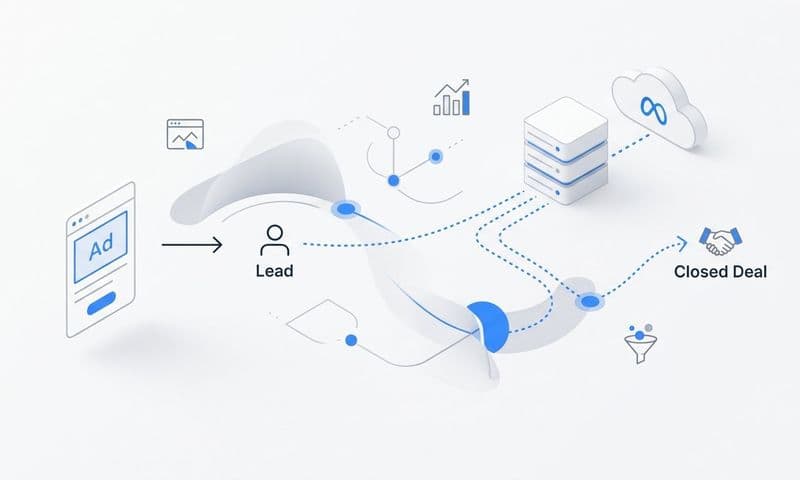
The core service starts with implementation. Most companies have data scattered across disconnected systems: ad platforms track clicks and impressions, marketing automation tools track email engagement and form fills, CRM systems track opportunities and closed deals, and website analytics track visitor behavior. Attribution agencies build the technical infrastructure to unify these data sources, creating a single view of the customer journey from first touch to closed revenue.
This technical work is more complex than it sounds. It requires configuring tracking pixels, implementing server-side tracking to maintain accuracy despite browser restrictions, ensuring UTM parameters flow consistently through every system, and building data pipelines that sync information in real time. Many marketing teams lack the technical resources or expertise to handle this implementation themselves, which is where agencies add immediate value.
Beyond the technical setup, attribution agencies provide strategic consulting on model selection. Should you use first-touch attribution to understand awareness-building channels? Last-touch to identify conversion drivers? Multi-touch models like linear, time-decay, or position-based that distribute credit across the journey? Or data-driven attribution that uses machine learning to weight touchpoints based on their actual influence on outcomes?
The answer depends entirely on your specific sales process, channel mix, and business goals. An agency brings experience from working with dozens of B2B companies, helping you choose models that align with how your buyers actually make decisions. They can also help you understand the trade-offs—simpler models are easier to explain to stakeholders but may oversimplify reality, while sophisticated data-driven models provide nuanced insights but require more data and technical sophistication to implement.
Once attribution is running, agencies shift into ongoing optimization mode. They analyze the data to identify patterns: which channels consistently appear in high-value deal journeys, which touchpoints correlate with faster sales cycles, and where you're overspending relative to revenue impact. This analysis translates into concrete recommendations: reallocate budget from underperforming channels, increase investment in high-performing combinations, or adjust your content strategy based on what actually moves prospects through the funnel.
Many agencies also provide reporting and stakeholder communication support. They create dashboards that executives can actually understand, translate complex attribution data into actionable insights, and help marketing teams tell a compelling story about their impact on revenue. For organizations where marketing struggles to prove its value or secure budget increases, this communication support can be as valuable as the technical implementation itself.
When Attribution Support Becomes Essential
Not every B2B company needs an attribution agency or sophisticated attribution infrastructure. If you're running a single ad channel with short sales cycles and clear conversion paths, basic platform analytics might suffice. But several warning signs indicate you've outgrown simple tracking and need serious attribution support.
The most obvious signal is significant multi-channel ad spend with no clear connection to revenue. You're investing heavily across LinkedIn, Google Ads, display advertising, and content syndication platforms. Each platform reports its own metrics—impressions, clicks, conversions—but you can't definitively say which channels drive actual closed deals. You make budget decisions based on platform-reported conversions that may or may not correlate with revenue, essentially guessing which investments actually pay off.
Another red flag emerges when marketing and sales teams fundamentally disagree about lead quality and channel performance. Marketing insists their campaigns generate qualified leads, while sales complains that leads from certain channels never close. Without attribution data connecting lead sources to closed revenue, these arguments become political rather than data-driven. You need objective visibility into which channels produce leads that actually convert into customers, not just leads that meet arbitrary qualification criteria.
Technical limitations often force the attribution question. You've outgrown basic Google Analytics or platform-level reporting, but building a unified tracking system requires technical resources you don't have. Your marketing team understands strategy and campaigns but lacks the data engineering skills to implement server-side tracking, build data pipelines, or create custom attribution models. You need either agency support to handle the technical heavy lifting or a platform that makes sophisticated attribution accessible without requiring a data science team.
Budget pressure creates urgency around attribution. When you're spending hundreds of thousands or millions annually on marketing, even small optimization improvements generate significant returns. A 10% improvement in budget allocation efficiency could mean hundreds of thousands in additional revenue or cost savings. At this scale, the investment in proper attribution—whether through an agency or platform—pays for itself quickly through better decision-making.
Rapid growth or channel expansion also signals attribution needs. As you add new channels, your marketing mix becomes increasingly complex. What worked when you ran only LinkedIn ads might not scale when you add Google, content syndication, events, and ABM programs. You need cross channel attribution to understand how channels work together, which combinations drive the best results, and where incremental budget should go as you scale.
Choosing Between Agency Support and Platform Solutions
Once you've determined you need better attribution, the next question becomes how to get it. The traditional answer was hiring an attribution agency, but modern attribution platforms have changed the equation significantly. Understanding when each approach makes sense helps you make the right choice for your organization.
Attribution agencies make the most sense when you lack internal technical resources and need rapid implementation. If your marketing team is stretched thin managing campaigns and you don't have data engineers or analysts who can build tracking infrastructure, an agency can get you operational quickly. They handle the technical complexity, configure your systems correctly, and deliver working attribution without requiring your team to become tracking experts overnight.
Agencies also add value when you need strategic guidance alongside technology. If you're unsure which attribution models fit your business, how to interpret attribution data, or how to translate insights into budget decisions, an experienced agency brings perspective from working with similar companies. They can benchmark your performance, suggest optimizations based on what's worked elsewhere, and help you avoid common pitfalls in attribution implementation.
The downsides of agencies center on control, cost, and access. You're dependent on the agency for insights—you can't log in at midnight to check attribution data or run ad-hoc analyses without submitting requests. Ongoing agency fees compound over time, often costing more than platform subscriptions over a multi-year period. And if the agency relationship ends, you might lose access to the infrastructure and historical data they built, forcing you to start over.
In-house attribution using modern platforms works better when you have data-savvy marketers who want direct access to insights. If your team includes people comfortable with analytics who will actually use attribution data to optimize campaigns, a platform puts that power directly in their hands. They can explore data in real time, test hypotheses immediately, and make optimization decisions without waiting for agency reports. When evaluating options, consider reviewing the best marketing attribution tools for B2B SaaS companies to find the right fit.
Platforms also offer better long-term economics. While they require upfront investment in implementation and learning, ongoing costs are typically lower than agency retainers. You build internal capabilities that stay with your company even if team members change. And you maintain complete control over your attribution infrastructure and historical data.
The trade-off is implementation responsibility. You need to configure tracking, ensure data quality, and build internal expertise in attribution methodology. For teams without technical resources, this can feel overwhelming. However, modern attribution platforms have dramatically simplified implementation, offering guided setup, pre-built integrations, and support that makes sophisticated attribution accessible without requiring data engineering expertise.
The hybrid approach combines the best of both worlds. Many companies adopt an attribution platform for day-to-day visibility and control while engaging consultants or agencies for strategic optimization reviews. This gives you real-time access to your attribution data and the ability to make quick decisions, while still benefiting from outside expertise for major strategic questions or optimization initiatives.
Essential Capabilities for Attribution Success
Whether you choose an agency, platform, or hybrid approach, certain capabilities are non-negotiable for effective B2B attribution. Understanding these requirements helps you evaluate potential solutions and avoid implementations that look sophisticated but miss critical functionality.
Complete touchpoint capture forms the foundation. Your attribution solution must track every meaningful interaction across the entire buyer journey—from initial ad clicks through website visits, content downloads, email engagement, webinar attendance, sales calls, and ultimately closed revenue. Gaps in tracking create blind spots in attribution. If you can't see that a prospect attended your webinar before requesting a demo, you'll undervalue webinars in your attribution model and potentially cut a channel that's actually driving conversions.
This requires integration across all your systems. Your attribution solution needs to pull data from ad platforms like LinkedIn, Google, and Meta, connect to your website analytics, sync with your marketing automation platform, and integrate with your CRM to track opportunities and closed deals. Server-side tracking has become increasingly important for maintaining this complete view despite browser restrictions and privacy regulations that limit traditional cookie-based tracking. A comprehensive guide to attribution marketing tracking can help you understand these technical requirements.
Multi-touch attribution modeling provides the analytical flexibility to understand how different channels contribute throughout the journey. You need the ability to compare multiple attribution models—first-touch, last-touch, linear, time-decay, position-based, and ideally data-driven models that use machine learning to weight touchpoints based on their actual influence. Different models reveal different insights, and the ability to compare them helps you understand both awareness-building channels and conversion drivers. Exploring multi-touch marketing attribution software options can help you find solutions with these capabilities.
Real-time visibility matters more than many marketers realize. Attribution isn't just for quarterly reviews—it should inform daily optimization decisions. Can you check attribution data this afternoon to decide whether to increase your LinkedIn budget tomorrow? Or do you wait weeks for agency reports? Real-time access enables agile optimization and faster learning cycles.
Ad platform integration completes the attribution loop. The most sophisticated attribution solutions don't just analyze data—they feed enriched conversion data back to ad platforms like Meta, Google, and LinkedIn. This improves their machine learning algorithms, helping them optimize for the conversions that actually matter to your business rather than just platform-level actions. This conversion sync capability can dramatically improve campaign performance by giving ad platforms better signals to optimize against.
AI-powered recommendations represent the cutting edge of attribution technology. Rather than just showing you data and expecting you to derive insights, modern platforms use AI to identify high-performing ads and campaigns, suggest budget reallocations, and highlight optimization opportunities you might miss in manual analysis. This bridges the gap between data and action, making attribution insights immediately actionable even for teams without dedicated analysts.
Building an Attribution Strategy That Lasts
Attribution isn't a one-time project—it's an ongoing capability that evolves with your marketing mix and business goals. Building for long-term success requires approaching attribution strategically rather than just implementing technology and hoping for insights.
Start with clear goals that define what attribution success looks like for your organization. Are you primarily trying to improve budget allocation efficiency? Prove marketing's revenue impact to secure additional budget? Align sales and marketing around lead quality? Identify which channels drive the fastest sales cycles? Your attribution goals shape implementation priorities, model selection, and how you'll use the resulting insights.
Data quality foundations are prerequisites for accurate attribution. Clean CRM data with consistent opportunity stages, standardized UTM parameters across all campaigns, proper tracking implementation on your website, and regular audits to catch tracking breaks all matter more than sophisticated attribution models. Garbage in, garbage out applies especially to attribution—if your underlying data is messy, even the most advanced models will produce unreliable insights. Understanding the common attribution challenges in marketing analytics helps you proactively address these issues.
Invest time in establishing tracking standards. Document your UTM parameter conventions, create templates for campaign URLs, train everyone who creates marketing campaigns on proper tracking implementation, and build quality checks into your workflow. These unglamorous operational details determine whether your attribution data is trustworthy enough to base major budget decisions on.
Plan for iteration from the start. Your first attribution model won't be perfect, and that's okay. Start with a simpler model that you understand and trust, use it to generate initial insights, then refine based on what you learn. As your marketing mix evolves—adding new channels, changing campaign strategies, or targeting different segments—your attribution approach should evolve too. Build in regular reviews to assess whether your current models still reflect how your buyers actually make decisions.
Stakeholder education ensures attribution insights actually drive decisions. The most sophisticated attribution setup fails if your team doesn't understand how to interpret the data or your leadership doesn't trust it enough to base budget decisions on it. Invest in training your team on attribution fundamentals, create clear documentation of your methodology, and communicate regularly about what you're learning and how it's improving marketing performance. Learning how to leverage marketing attribution reports effectively can help bridge this gap.
Making Your Attribution Decision
The choice between hiring a B2B marketing attribution agency, building in-house capabilities, or adopting a platform-first approach ultimately comes down to your specific situation—your technical resources, budget, timeline, and how much control you want over your attribution infrastructure.
Agencies offer speed and expertise, getting you operational quickly without requiring internal technical resources. They're particularly valuable when you need strategic guidance alongside implementation or when attribution is completely new to your organization. However, they come with ongoing costs, dependency on external partners, and less direct control over your data and insights. You can explore the top marketing attribution firms in the USA to evaluate potential agency partners.
In-house approaches using modern attribution platforms provide more control, better long-term economics, and real-time access to insights. They work best when you have data-savvy marketers who will actively use attribution data to optimize campaigns. The trade-off is implementation responsibility, though modern platforms have made this far more accessible than it once was.
Regardless of which path you choose, the goal remains the same: connecting your marketing activities to revenue with confidence. In B2B marketing, where sales cycles are long and buyer journeys are complex, attribution transforms marketing from a cost center making educated guesses into a revenue driver making data-informed decisions.
Modern attribution platforms have democratized capabilities that once required agency partnerships or massive internal investments. Sophisticated multi-touch attribution, AI-powered optimization recommendations, and complete customer journey visibility are now accessible to marketing teams of all sizes. The question isn't whether you need attribution—if you're spending significantly on marketing across multiple channels, you do. The question is how to implement it in a way that fits your organization and actually improves your marketing performance.
Ready to elevate your marketing game with precision and confidence? Discover how Cometly's AI-driven recommendations can transform your ad strategy—Get your free demo today and start capturing every touchpoint to maximize your conversions.