You know the feeling. Your marketing team is running campaigns across LinkedIn, Google, email, and content. Leads are coming in. The pipeline looks healthy. But when the board asks which channels are actually driving revenue, you hesitate. Because honestly? You're not entirely sure.
This is the defining frustration of B2B SaaS marketing. Unlike an e-commerce store where someone clicks an ad and buys a product within minutes, B2B SaaS deals unfold over weeks or months. A prospect might download a whitepaper in January, attend a webinar in February, get a cold outreach from sales in March, and finally sign a contract in April. By the time the deal closes, the original marketing touchpoint that started the journey is buried under layers of interaction, often invisible to the tools trying to measure it.
Add multiple decision-makers to the mix, and the complexity multiplies. Enterprise buying committees often include champions, economic buyers, technical evaluators, and end users, each interacting with your content and ads at different times and in different ways. Attributing that closed deal to a single channel or campaign is not just inaccurate; it's misleading.
This is precisely why B2B SaaS revenue attribution exists as a discipline in its own right. It is the practice of connecting closed revenue back to the specific marketing channels, campaigns, and touchpoints that influenced the deal across the entire buyer journey. Done well, it gives marketing teams the clarity to stop guessing and start making confident, data-backed decisions about where to invest and where to pull back.
This article breaks down how B2B SaaS revenue attribution works, why it matters more than ever, and how to implement it in a way that actually changes how you operate.
Why Platform Metrics Alone Will Mislead You
Most B2B SaaS marketing teams start their measurement journey the same way: they log into their ad platforms, check the dashboard, and review clicks, impressions, leads, and cost per lead. The numbers look reasonable. Maybe even good. But there's a fundamental problem with stopping there.
Platform-reported metrics are designed to make platforms look good. Google Ads will show you conversions that happened after someone clicked your ad. Meta will show you conversions that happened after someone saw your ad. When you add those numbers up, they often exceed the total number of leads or deals you actually generated. This is the double-counting problem, and it is endemic to relying on platform-native reporting as your source of truth.
Beyond double-counting, there's the vanity metrics trap. Clicks, impressions, and even MQL counts tell you that marketing is active. They do not tell you whether marketing is generating revenue. A campaign that drives hundreds of form fills but zero closed deals is not a success. It is a budget drain dressed up in impressive-looking numbers. Without connecting those leads all the way through to closed-won revenue in your CRM, you cannot tell the difference between a high-performing channel and a high-volume one. Understanding essential metrics every SaaS company should track is the first step toward fixing this.
Then there is the data degradation problem, which has intensified significantly in recent years. Apple's App Tracking Transparency framework reduced the reliability of pixel-based tracking for mobile users. Browser-level privacy protections and the gradual deprecation of third-party cookies have further eroded the accuracy of platform-reported conversions. In practice, this means a meaningful portion of conversions that your marketing drives are simply not being captured by traditional tracking methods.
For B2B SaaS teams with long sales cycles, this is especially damaging. A prospect who clicks a LinkedIn ad today and converts to a customer three months from now is unlikely to be connected to that original ad click by a standard pixel. The click happens, the cookie gets blocked or expires, and the attribution chain breaks. The channel that started the journey gets no credit. This is one of the core SaaS marketing attribution challenges teams face today.
The solution is not to optimize the metrics you have. It is to rebuild your measurement foundation so that it captures the full picture, from the first ad interaction through to the signed contract. That requires a different approach entirely, starting with understanding what proper B2B SaaS revenue attribution is actually made of.
The Three Pillars of Accurate Revenue Attribution
Revenue attribution in B2B SaaS is not a single tool or a single report. It is a system built on three interconnected components. Get all three right, and you have a clear line of sight from marketing spend to revenue. Miss any one of them, and your data will have gaps that distort every decision you make downstream.
Touchpoint Capture: This is the foundation. Every meaningful interaction a prospect has with your brand needs to be recorded: ad clicks, website visits, content downloads, webinar registrations, email opens, demo requests, and CRM events like sales calls and opportunity creation. The goal is a complete, chronological record of every marketing and sales interaction that occurred before a deal closed. Without this, you are working with an incomplete picture of what actually influenced the buyer.
Identity Resolution: Capturing touchpoints is only useful if you can connect them to the same person across different sessions, devices, and time periods. A prospect who clicks a Google ad on their work laptop, visits your pricing page on their phone, and attends a webinar two weeks later needs to be recognized as a single buyer journey, not three separate anonymous visitors. Identity resolution is the technical process of stitching these interactions together using a combination of first-party data, CRM records, and tracking infrastructure. It is one of the hardest problems in B2B attribution, but it is non-negotiable for accuracy.
Revenue Mapping: This is where attribution becomes genuinely powerful. Once you have captured touchpoints and resolved identity, you can map closed-won deals back to the full chain of marketing interactions that preceded them. This means connecting your CRM data, where revenue lives, to your attribution platform so that every closed deal carries a complete history of which channels, campaigns, and content contributed to it. For a deeper dive into this process, explore how revenue attribution by marketing channel works in practice.
The CRM integration piece deserves special emphasis. Many marketing teams track leads and MQLs carefully but never close the loop on what happens after a lead enters the sales process. This creates a dangerous blind spot. A channel that generates high volumes of MQLs might convert to customers at a very low rate, while a channel that generates fewer leads might drive a disproportionate share of closed revenue. Without connecting your attribution data to your CRM, you will systematically over-invest in the wrong channels.
This is also why lead attribution and revenue attribution are fundamentally different things. Lead attribution tells you where your form fills came from. Revenue attribution tells you where your revenue came from. If you are still unclear on the distinction, this guide on what is revenue attribution breaks it down thoroughly. For B2B SaaS teams making decisions about six-figure or seven-figure ad budgets, only one of those answers actually matters.
Choosing the Right Attribution Model for Long Sales Cycles
Once you have the infrastructure to capture and map touchpoints, you need to decide how to distribute credit across them. This is where attribution models come in, and the choice matters more than most teams realize.
First-Touch Attribution gives 100% of the credit to the very first interaction a prospect had with your brand. It is useful for understanding which channels are best at generating awareness and bringing new prospects into your funnel. The downside is that it completely ignores everything that happened after that first interaction, including the content, campaigns, and conversations that actually moved the deal forward.
Last-Touch Attribution does the opposite, giving all the credit to the final touchpoint before conversion. This is the default model in many ad platforms and CRM systems. It tends to over-credit bottom-of-funnel activities like branded search or demo request pages, while ignoring the awareness and consideration touchpoints that built the relationship over months. Understanding the difference between single source and multi-touch attribution is critical for moving beyond these limited approaches.
Linear Attribution distributes credit equally across all touchpoints in the buyer journey. It is a more honest model than first or last touch because it acknowledges that multiple interactions contributed to the deal. The limitation is that it treats a quick homepage visit the same as a 45-minute product demo, which does not reflect reality.
Time-Decay Attribution gives more credit to touchpoints that occurred closer to the conversion event. This makes intuitive sense for B2B SaaS: the webinar someone attended two weeks before signing is probably more influential than the blog post they read six months ago. It is a solid model for teams that want to weight recency without ignoring earlier touchpoints entirely.
U-Shaped (Position-Based) Attribution gives the most credit to the first touch and the lead conversion touch, with the remaining credit distributed across the middle interactions. It is designed for teams that care most about what generated the lead and what converted them, which aligns well with many B2B marketing funnels.
W-Shaped Attribution extends this logic by adding a third emphasis point: the opportunity creation stage. It distributes significant credit to first touch, lead conversion, and opportunity creation, making it well-suited for B2B SaaS teams that track both marketing-qualified and sales-qualified stages.
Here is the critical insight: no single model is the definitive truth. Each one tells a different part of the story. The most sophisticated B2B SaaS marketing teams do not pick one model and treat it as gospel. They compare multiple revenue attribution models side by side to understand how channel performance changes depending on which lens you use. A channel that looks weak in last-touch attribution might look very strong in first-touch, revealing that it is an excellent awareness driver even if it rarely closes deals on its own. That nuance is what separates teams that optimize intelligently from teams that cut the wrong channels.
How to Actually Implement Revenue Attribution
Understanding attribution models is one thing. Building the infrastructure to use them reliably is another. Here is a practical path forward that does not require a data engineering team to execute.
Start by mapping your current tech stack. List every platform that touches your buyer journey: your ad platforms (Google, Meta, LinkedIn), your CRM, your website, your email marketing tool, your webinar platform, and any other tools where prospect interactions occur. The goal is to identify every system that holds touchpoint data and understand how those systems currently communicate with each other, or fail to. Reviewing the best SaaS marketing attribution tools available can help you identify gaps in your current setup.
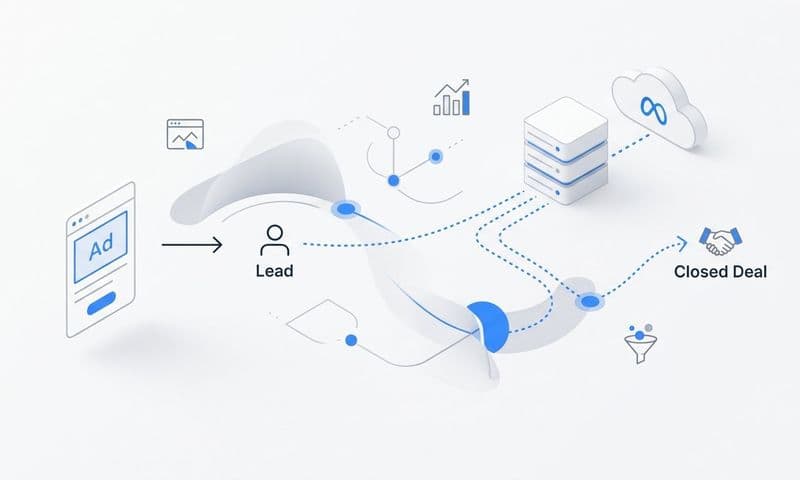
Next, connect those systems through a centralized attribution platform. This is the connective tissue that unifies data from your ad platforms, website, and CRM into a single view of the customer journey. Without a centralized system, you are stuck manually reconciling data across platforms that use different identifiers, different conversion windows, and different attribution logic. The result is always a mess.
Implement server-side tracking as a priority. Browser-based tracking using pixels and cookies is increasingly unreliable due to privacy restrictions, ad blockers, and browser-level protections. Server-side tracking routes conversion data through your own server before sending it to ad platforms, bypassing many of the browser-level limitations that cause data loss. For B2B SaaS teams with long sales cycles, where a conversion might happen weeks after the original ad click, server-side tracking is not optional. It is the only way to maintain data integrity across the full funnel.
Set up conversion sync to close the feedback loop with your ad platforms. This means taking the enriched conversion data you have collected, including signals about which leads actually became customers, and sending it back to platforms like Meta and Google. When these platforms receive better signal data about what a high-quality conversion looks like, their machine learning algorithms can optimize ad delivery toward prospects who are more likely to become actual customers, not just form fillers. This single step can meaningfully improve the efficiency of your ad spend over time, because you are teaching the algorithm to find buyers, not just leads. Following proven SaaS marketing attribution best practices ensures you get this right from the start.
Finally, connect your CRM to your attribution platform so that closed-won revenue flows back into your reporting. This is what transforms your attribution system from a lead-tracking tool into a true revenue attribution platform. Every closed deal should carry a full history of the marketing touchpoints that contributed to it, enabling you to report on revenue by channel, campaign, and even specific ad creative.
From Attribution Data to Smarter Budget Decisions
Revenue attribution data is only valuable if it changes how you allocate your budget. This is where the work pays off.
When you can see which channels and campaigns are generating the highest revenue, not just the most leads, budget decisions become much more defensible. You stop arguing about which channel "feels" more strategic and start making decisions grounded in actual revenue outcomes. A channel that costs more per lead but converts to customers at a higher rate and at higher deal values deserves more budget. A channel that generates volume but rarely closes is a candidate for reduction or restructuring, regardless of how good its CPL looks in isolation. Leveraging SaaS marketing analytics alongside attribution data makes this analysis even more powerful.
AI-powered analysis takes this a step further. Manual reporting can surface broad trends, but it struggles to identify the specific combinations of channels, ad creatives, and audience segments that consistently produce high-revenue customers. AI analysis can process the full dataset and surface patterns that would be invisible in a standard spreadsheet, helping teams identify which specific ads are driving the highest-value deals and scale those campaigns with confidence rather than guesswork.
There is also a compounding effect worth understanding. When you feed better conversion data back to ad platforms through conversion sync, their algorithms improve their targeting over time. Better targeting means more efficient ad delivery. More efficient ad delivery means lower cost per acquisition. Lower cost per acquisition means your budget goes further. The feedback loop between accurate attribution data and improved ad platform performance is one of the most powerful levers available to B2B SaaS marketing teams, and it only works if your attribution infrastructure is solid enough to generate trustworthy signals in the first place.
This is the compounding advantage of getting attribution right: every improvement in data quality creates downstream improvements in campaign performance, budget efficiency, and ultimately, revenue growth.
Your Revenue Attribution Roadmap
B2B SaaS revenue attribution is not a nice-to-have for teams that want to scale with confidence. It is the foundation that makes every other marketing decision more reliable. Without it, you are optimizing based on incomplete data, cutting channels that deserve investment, and doubling down on channels that look good on paper but underperform in reality.
The path forward is clear. Start by capturing every touchpoint across your buyer journey, from ad clicks to CRM events. Build the identity resolution infrastructure to connect those touchpoints into unified buyer journeys. Integrate your CRM so that closed revenue flows back into your attribution reporting. Implement server-side tracking to maintain data accuracy despite browser-level privacy restrictions. Use multi-touch attribution models and compare them side by side to understand channel performance from multiple angles. And feed enriched conversion data back to your ad platforms to improve their targeting algorithms over time.
Each of these steps builds on the previous one. The result is a marketing operation that can answer the question every board and leadership team is asking: which marketing investments are actually driving revenue?
Cometly is built to make this entire system work. It connects your ad platforms, CRM, and website to track the entire customer journey in real time. It captures every touchpoint, resolves identity across sessions and devices, and maps closed revenue back to the marketing interactions that drove it. Its AI-powered analysis surfaces high-performing ads and campaigns across every channel, and its conversion sync feeds enriched data back to Meta, Google, and other platforms to improve their optimization over time.
If you are ready to move beyond vanity metrics and start connecting every marketing dollar to actual revenue outcomes, the next step is to see it in action. Get your free demo today and discover how Cometly gives you the clear, accurate attribution data you need to scale your B2B SaaS marketing with confidence.