You're running campaigns across Meta, Google, TikTok, and maybe a handful of other platforms. The budgets are flowing. The ads are live. But here's the question that keeps you up at night: which of these campaigns is actually driving revenue?
Most marketers are flying blind. They see clicks in Google Ads, impressions in Meta, form fills on their website—but connecting those dots to actual customers and revenue? That's where things get murky. You're making budget decisions based on incomplete information, hoping your gut instinct fills in the gaps.
This is where business analytics in marketing becomes your competitive advantage. It's the difference between guessing which ads work and knowing exactly where every dollar goes and what it returns. Think of it as the bridge between scattered data points and confident, revenue-driving decisions.
This guide breaks down how modern marketing analytics transforms raw data into clear insights. You'll learn what actually matters in your data, why traditional tracking keeps failing you, and how to build an analytics system that shows the complete picture of your marketing performance.
What Marketing Analytics Actually Measures (And Why It Matters)
Business analytics in marketing is the practice of collecting, measuring, and analyzing marketing data to evaluate performance and guide strategy. But let's cut through the textbook definition—it's really about answering one core question: what's working, what's not, and what should you do next?
Here's where most marketers get tripped up. They think analytics means drowning in dashboards and metrics. In reality, effective marketing analytics operates on three distinct levels, each serving a different purpose.
Descriptive Analytics: The "What Happened" Layer
This is your foundation. Descriptive analytics tells you what already occurred. Your Meta campaign spent $5,000 last week. You got 2,300 clicks. Your landing page converted at 3.2%. These are facts—historical data points that show you the results of past actions.
Most marketing dashboards live here. They're rearview mirrors showing where you've been. Useful? Absolutely. But not enough to drive decisions.
Predictive Analytics: The "What Might Happen" Layer
This is where analytics gets interesting. Predictive analytics uses historical patterns to forecast future outcomes. If your customer acquisition cost has increased 15% month-over-month for three consecutive months, predictive models can project where it's headed and when it becomes unsustainable.
Modern platforms use predictive analytics to estimate conversion likelihood, forecast budget needs, and identify trends before they become problems. It's the difference between reacting to issues and anticipating them.
Prescriptive Analytics: The "What To Do About It" Layer
This is the holy grail. Prescriptive analytics doesn't just show you what happened or what might happen—it tells you what action to take. Should you shift budget from Google to Meta? Which audience segments deserve more investment? When should you pause underperforming campaigns?
AI-powered analytics platforms excel here because they can process massive datasets and surface recommendations humans might miss. They connect patterns across channels and suggest specific optimizations based on what's actually driving conversions.
The Metrics That Actually Matter
Now let's talk about what you should actually measure. Four core metrics form the backbone of effective marketing analytics:
Customer Acquisition Cost (CAC) shows exactly what you pay to acquire each new customer. Not lead. Not click. Customer. This metric cuts through vanity numbers and shows the true cost of growth.
Customer Lifetime Value (LTV) reveals how much revenue each customer generates over their entire relationship with your business. The LTV to CAC ratio becomes your north star—if you're spending $100 to acquire customers worth $500, you've got a scalable model.
Conversion rates tell you how efficiently each step of your funnel turns prospects into customers. But here's the key: track conversion rates at every stage, not just the final purchase. Where are people dropping off? That's where optimization happens.
Return on Ad Spend (ROAS) connects ad investment directly to revenue. A 3:1 ROAS means every dollar spent returns three dollars in revenue. Simple math, powerful insight.
These metrics work together to paint a complete picture. High ROAS with terrible LTV? You're attracting the wrong customers. Low CAC with strong LTV? You've found product-market fit and should scale aggressively.
Why Your Current Tracking Setup Is Probably Lying to You
Let's address the uncomfortable truth: your marketing data is probably wrong. Not slightly off—potentially wildly inaccurate. And it's not your fault.
The problem isn't that you're bad at analytics. The problem is that traditional tracking methods have been systematically broken by privacy changes, platform updates, and the fundamental way modern browsers handle data.
The Fragmentation Problem Nobody Talks About
Picture this: You're running campaigns on Meta, Google, LinkedIn, and TikTok. Each platform has its own dashboard showing its own version of success. Meta says it drove 50 conversions. Google claims 42. LinkedIn reports 18. Your CRM shows 73 new customers that month.
Which number is right? Probably none of them.
This is data fragmentation in action. Every platform measures success differently, uses different attribution windows, and has no visibility into what happens on other platforms. They're all telling partial truths, but nobody has the complete story.
The result? You're making budget decisions based on competing narratives. Meta wants more budget because its dashboard looks great. Google's numbers suggest it's your top performer. Meanwhile, your actual revenue might be coming from a completely different source that nobody's properly tracking.
Privacy Changes That Shattered Traditional Tracking
Then Apple dropped iOS 14.5, and everything got worse. Suddenly, users could opt out of tracking with a single tap. Most did. Browser-based tracking that marketers relied on for years stopped working reliably.
Cookie deprecation followed. Third-party cookies—the foundation of cross-site tracking—are being phased out. Firefox and Safari already block them by default. Chrome is following suit. The tracking infrastructure that powered digital marketing for two decades is crumbling.
What does this mean for you? Those Facebook pixels and Google tags you carefully installed? They're missing huge chunks of data. Users who opt out become invisible. Cross-device journeys disappear. Multi-touch attribution becomes nearly impossible when you can't see most of the touches.
The Platform Reporting vs. Reality Gap
Here's where it gets really frustrating. Ad platforms have an inherent conflict of interest. They want to show you great results so you keep spending. Their attribution models are designed to maximize the credit they receive.
Meta might claim a conversion happened because someone saw your ad three days ago, even if they actually found you through Google search yesterday. Google might take credit for a conversion that really started with a LinkedIn interaction two weeks prior.
Both platforms are technically correct based on their attribution rules. But neither is telling you the whole truth about the customer journey. You're getting platform-reported metrics that inflate success and hide the real story of how customers actually find and buy from you.
The gap between what platforms report and what actually drives revenue can be staggering. Marketers who rely solely on platform dashboards often discover they've been over-investing in channels that look good on paper but don't actually convert, while under-investing in channels that quietly drive real results. Understanding the difference between marketing attribution software vs traditional analytics is crucial for bridging this gap.
This isn't sustainable. You can't optimize what you can't accurately measure. And you can't accurately measure customer journeys with fragmented, privacy-limited, platform-biased data.
Building an Analytics System That Actually Works
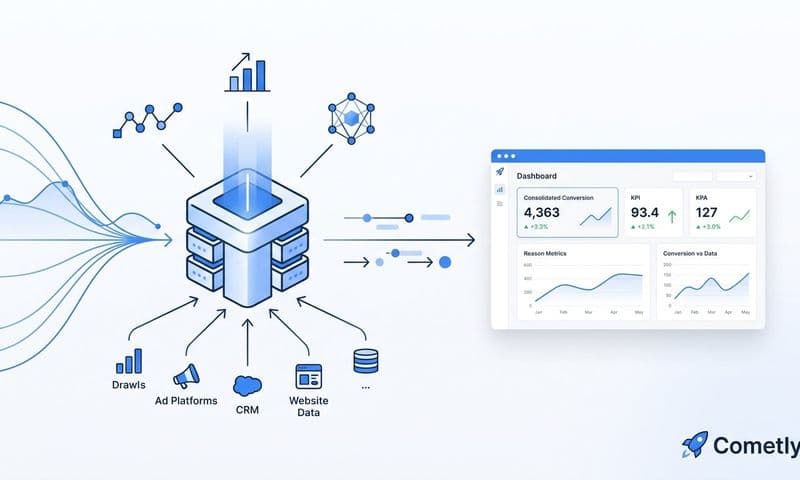
So if traditional tracking is broken, what's the solution? You need an analytics ecosystem that captures the complete customer journey—every touchpoint, every interaction, every step from first awareness to final purchase.
This requires rethinking how you collect and connect marketing data. The goal isn't more dashboards. It's unified visibility into what's actually happening across your entire marketing operation.
Server-Side Tracking: Your New Foundation
Server-side tracking solves the browser-based tracking problem by capturing events directly from your server rather than relying on cookies and pixels that users can block.
Here's how it works. When someone takes action on your site—views a page, adds to cart, completes a purchase—that event gets sent to your server first. Your server then forwards that data to your analytics platforms and ad networks. The user's browser never gets involved.
Why does this matter? Because server-side events can't be blocked by privacy settings, ad blockers, or cookie restrictions. You capture the complete picture of user behavior regardless of browser settings or device type.
Server-side tracking also solves the cross-device problem. When someone researches on mobile but purchases on desktop, browser-based tracking often breaks the connection. Server-side tracking maintains that link because it's tied to user identity in your system, not browser cookies.
The accuracy improvement is substantial. Marketers who implement server-side tracking typically discover they were missing significant portions of their conversion data—sometimes 20-30% or more of actual events.
Connecting Every Data Source Into One View
Server-side tracking is powerful, but it's just the foundation. The real magic happens when you connect all your data sources into a unified analytics ecosystem.
This means integrating your ad platforms with your CRM, connecting your website events to your email marketing tool, linking your analytics platform to your payment processor. Every system that touches customer data needs to feed into a central source of truth.
Think of it like building a complete map. Your ad platforms show where customers first hear about you. Your website analytics reveal how they research and evaluate. Your CRM tracks the sales process. Your payment system records the final transaction. Separately, each system shows a small piece of the journey. Connected, they reveal the complete path from stranger to customer.
This unified view answers questions that fragmented data can't. Which ad campaigns drive customers who actually stay and buy again? What's the typical journey length for high-value customers versus one-time buyers? Which touchpoints appear most often in successful conversions?
You stop guessing about attribution and start seeing exactly how your marketing channels work together to drive results.
Real-Time Data: The Speed Advantage
Here's where modern analytics separates from legacy approaches. Historical reporting is useful for understanding trends. But real-time data flow enables something more valuable: fast optimization decisions. Understanding the real-time marketing analytics benefits can transform how quickly you respond to campaign performance.
When your analytics system updates in real-time, you can spot problems immediately. A campaign that's burning budget without conversions? You see it within hours, not days or weeks. An audience segment that's suddenly performing exceptionally well? You can scale it before the opportunity passes.
Real-time analytics also enables dynamic budget allocation. Instead of setting monthly budgets and hoping for the best, you can shift spend toward what's working right now. If LinkedIn is crushing it this week while Meta underperforms, you can adjust accordingly.
The compound effect of faster decisions adds up quickly. Catching and fixing problems early prevents wasted spend. Scaling winners while they're hot maximizes returns. Over time, this agility becomes a significant competitive advantage.
Building this connected ecosystem requires investment—in tools, in setup time, in ongoing maintenance. But the alternative is continuing to make expensive marketing decisions based on incomplete, inaccurate data. That's a cost you can't afford.
Attribution Models: Understanding What Actually Drives Conversions
You've built a connected analytics system. You're capturing complete customer journey data. Now comes the tricky part: figuring out which touchpoints actually deserve credit for driving conversions.
This is where attribution models come in. And here's the truth: there's no single "correct" attribution model. Different models tell different stories about your customer journey, and understanding these perspectives is crucial for making smart optimization decisions.
First-Touch Attribution: The Awareness Story
First-touch attribution gives 100% credit to the initial touchpoint—the first ad, article, or interaction that brought someone into your world. A customer sees your Meta ad, clicks through, explores your site, leaves, comes back via Google search a week later, and eventually purchases. First-touch attributes that entire conversion to the original Meta ad.
This model tells you which channels are best at generating awareness and starting customer relationships. It's particularly valuable for understanding top-of-funnel performance and identifying which campaigns successfully introduce new audiences to your brand.
The limitation? First-touch completely ignores everything that happened after that initial interaction. It doesn't account for the nurturing, the retargeting, the search queries, or the email campaigns that actually convinced someone to buy.
Last-Touch Attribution: The Conversion Story
Last-touch attribution flips the script. It gives 100% credit to the final touchpoint before conversion. In our example, the Google search that brought the customer back would get all the credit, while the Meta ad that started the journey gets none.
This model reveals which channels are best at closing deals. It shows you what customers interact with immediately before purchasing, which can be valuable for understanding bottom-funnel performance.
The problem? Last-touch ignores the entire journey that led to that final interaction. It often over-credits direct traffic and branded search—channels that capture demand rather than create it. You might conclude that branded search is your best performer when really it's just catching customers who were already convinced by other channels.
Linear Attribution: The Democratic Approach
Linear attribution takes a more balanced view. It distributes credit equally across every touchpoint in the customer journey. If someone interacted with five different campaigns before converting, each campaign gets 20% credit.
This model acknowledges that customer journeys involve multiple interactions and that each touchpoint contributes to the final decision. It prevents any single channel from dominating your attribution story.
The downside? Linear attribution assumes all touchpoints are equally valuable, which isn't realistic. The webinar that educated a prospect about your solution probably contributed more to the conversion than the display retargeting ad they scrolled past three days later.
Time-Decay Attribution: The Recency-Weighted Story
Time-decay attribution recognizes that touchpoints closer to conversion typically have more influence. It distributes credit across the journey but weights recent interactions more heavily than older ones.
This model balances the extremes of first-touch and last-touch. It acknowledges the entire journey while recognizing that the final stages often matter most for driving the actual purchase decision.
Time-decay works well for longer sales cycles where early touchpoints create awareness but later interactions drive the decision. It's particularly useful for B2B marketing where the journey from awareness to purchase might span weeks or months.
Data-Driven Attribution: The Machine Learning Approach
Data-driven attribution uses machine learning to analyze your actual conversion data and determine which touchpoints statistically contribute most to successful outcomes. Instead of applying a predetermined rule, it learns from patterns in your specific customer journeys.
This approach can reveal insights that standard models miss. Maybe your email campaigns don't directly drive many conversions, but customers who engage with them convert at much higher rates later. Data-driven attribution would recognize and credit that influence.
The limitation is data requirements. Data-driven models need substantial conversion volume to identify statistically significant patterns. They work best for businesses with hundreds or thousands of conversions to analyze.
Why You Should Compare Multiple Models
Here's the key insight: don't pick one attribution model and treat it as gospel. Compare multiple models to understand different dimensions of your marketing performance. Navigating attribution challenges in marketing analytics requires this multi-model perspective.
First-touch shows you which channels are best at customer acquisition. Last-touch reveals which channels close deals. Linear attribution ensures you don't overlook mid-funnel touchpoints. Time-decay and data-driven models provide nuanced views of how touchpoints work together.
When you analyze these models side by side, patterns emerge. You might discover that Meta is incredible at awareness (first-touch) but weak at closing (last-touch), suggesting you need stronger retargeting or nurture campaigns. Or you might find that LinkedIn touchpoints rarely get last-touch credit but appear consistently in successful journeys, indicating they're valuable for qualification even if they don't close deals.
Multi-touch attribution isn't about finding the "right" answer. It's about understanding the complete story of how your marketing channels work together to drive results. That understanding enables smarter budget allocation, better campaign optimization, and more confident scaling decisions.
Turning Analytics Into Action: The Optimization Framework
You've got comprehensive data. You understand attribution. Now what? The gap between having good analytics and actually improving performance is where most marketers get stuck.
Data without action is just noise. The real value of business analytics in marketing comes from translating insights into specific optimizations that improve results. Here's how to build that translation layer.
AI-Powered Pattern Recognition
Human brains are incredible, but they're not designed to process thousands of data points across multiple dimensions simultaneously. This is where AI-powered analytics becomes invaluable.
Modern AI can analyze your entire marketing dataset—every campaign, every audience segment, every creative variation, every time of day, every device type—and surface patterns you'd never spot manually. It might discover that your best-performing audience segment converts 40% better on weekends, or that certain ad creatives dramatically outperform others for specific customer personas.
These insights often hide in the complexity of your data. You might know that Campaign A performs well, but AI can tell you that Campaign A specifically performs well for users aged 35-44 who visit your site on mobile devices between 6-9 PM after clicking from Instagram Stories. That level of granularity enables surgical optimization.
The key is using AI as a discovery tool, not a replacement for strategic thinking. AI surfaces opportunities. You decide which opportunities align with your business goals and deserve investment.
The Feedback Loop: Teaching Ad Platforms What Works
Here's a strategy that most marketers overlook: your analytics platform shouldn't just report results to you. It should feed data back to your ad platforms to improve their optimization algorithms.
Meta, Google, TikTok—all these platforms use machine learning to optimize ad delivery. But they can only optimize based on the data they receive. If you're only sending them basic conversion events, their algorithms are learning from incomplete information.
When you send enriched conversion data back to ad platforms—actual revenue values, customer lifetime value predictions, specific product purchases, CRM qualification status—you give their algorithms much richer signals to learn from.
The result? Ad platforms get better at finding and converting high-value customers. Their targeting improves. Their bidding becomes more efficient. You see better results without changing your creative or strategy—simply because the platform algorithms are working with better data.
This feedback loop compounds over time. As platforms learn which characteristics define your best customers, they get progressively better at finding similar high-value prospects. Your cost per acquisition decreases while customer quality increases.
Weekly Analytics Review: Your Optimization Rhythm
Effective analytics requires consistent rhythm. Here's a practical framework for weekly review and optimization:
Start by reviewing your core metrics against targets. Are you hitting your CAC goals? Is ROAS trending up or down? How does LTV look for recent cohorts? This high-level check ensures you catch major shifts quickly.
Next, dive into channel performance. Compare current week results to the previous four weeks. Which channels are improving? Which are declining? Look for statistically significant changes, not random noise.
Then examine attribution model comparisons. How does performance look across first-touch, last-touch, and multi-touch models? Are there channels that perform well in one model but poorly in others? These discrepancies reveal opportunities for optimization.
Identify your top three insights from the data. Maybe you discovered an audience segment with exceptional LTV. Or you noticed that conversion rates drop significantly on a specific landing page. Or you found that certain ad creatives consistently outperform others.
Finally, translate those insights into specific actions. If an audience segment is crushing it, increase budget allocation. If a landing page is underperforming, run tests to improve it. If certain creatives work best, produce more variations in that style.
Document your decisions and their rationale. This creates a learning loop where you can later evaluate whether your optimization hypotheses were correct and refine your approach over time. A multi-channel marketing analytics dashboard makes this weekly review process significantly more efficient.
The weekly cadence is crucial. Monthly reviews miss opportunities and let problems compound. Daily reviews create noise and encourage reactive decisions based on insufficient data. Weekly hits the sweet spot—frequent enough to stay agile, spaced enough to see meaningful patterns.
Putting It All Together: Your Path to Analytics-Driven Growth
Let's bring this full circle. Business analytics in marketing isn't a nice-to-have capability—it's the foundation for sustainable, scalable growth. Every successful marketing operation runs on three core pillars.
First, unified data collection. You need complete visibility into customer journeys across every touchpoint and channel. Server-side tracking captures what browser-based methods miss. Integrated systems connect ad platforms, website behavior, CRM events, and revenue data into one coherent view. Without this foundation, you're building strategy on quicksand.
Second, accurate attribution. Understanding which touchpoints actually drive conversions enables smart budget allocation. Comparing multiple attribution models reveals different dimensions of performance—which channels create awareness, which nurture consideration, which close deals. This nuanced view prevents over-investing in channels that look good on paper but don't drive real results. Exploring marketing attribution analytics options can help you find the right solution for your needs.
Third, actionable insights. Data becomes valuable when it drives decisions. AI-powered analysis surfaces patterns and opportunities. The feedback loop between your analytics and ad platforms improves algorithmic optimization. Regular review rhythms ensure insights translate into concrete optimizations that improve performance.
These three pillars work together. Unified data enables accurate attribution. Accurate attribution generates actionable insights. Actionable insights drive optimizations that improve results. The cycle repeats, compounding your competitive advantage over time.
Your Next Step: Audit Your Current Setup
Before you can improve your analytics, you need to understand where you currently stand. Run an honest audit of your tracking and attribution setup.
Start with data collection. Are you using server-side tracking or still relying on browser-based pixels? How much conversion data are you actually capturing versus missing due to privacy restrictions? Can you track customers across devices and sessions?
Next, examine integration. Are your ad platforms connected to your CRM? Does your analytics system see revenue data, or just website events? Can you connect a customer's first touchpoint to their final purchase and everything in between?
Finally, assess attribution. Are you comparing multiple attribution models or relying on a single view? Can you see the complete customer journey, or just isolated interactions? Do you know which channels work together to drive conversions?
The gaps you identify in this audit become your roadmap. Maybe you need to implement server-side tracking. Perhaps you need to connect your CRM to your ad platforms. Or you might need a unified analytics platform that brings everything together. Learning how to leverage analytics for marketing strategy starts with understanding your current capabilities.
Whatever your gaps, addressing them isn't optional if you want to scale profitably. The marketers who win in the current landscape are those who can see clearly what's working and double down with confidence. The ones who lose are still making decisions based on incomplete data and platform-reported metrics that tell partial truths.
Moving Forward: From Data to Revenue
Business analytics in marketing isn't about drowning in dashboards or obsessing over vanity metrics. It's about building a clear, accurate view of what drives revenue so you can make confident decisions about where to invest your budget and attention.
The marketing landscape has fundamentally changed. Privacy restrictions have broken traditional tracking. Platform fragmentation has scattered your data across disconnected silos. Ad costs keep rising while attribution gets harder. These aren't temporary challenges—they're the new reality.
The solution isn't more complicated. It's more connected. When you unify your data, implement accurate attribution, and build systems that turn insights into action, you gain clarity that most competitors lack. You stop guessing which campaigns work and start knowing exactly where every dollar goes and what it returns.
That clarity becomes your competitive advantage. While others waste budget on channels that look good but don't convert, you invest in what actually drives results. While others react slowly to changes, you spot opportunities and problems in real-time. While others scale blindly and hope for the best, you scale confidently based on data that shows exactly what works.
The marketers who master business analytics in marketing don't just survive in this complex landscape—they thrive. They grow faster, more profitably, and with greater confidence than competitors still flying blind.
Ready to elevate your marketing game with precision and confidence? Discover how Cometly's AI-driven recommendations can transform your ad strategy—Get your free demo today and start capturing every touchpoint to maximize your conversions.