
You check your Facebook Ads Manager and see the dreaded message: conversions not tracking. Your campaigns are running, money is being spent, but the data showing what actually converts is missing or incomplete. This is one of the most frustrating problems digital marketers face today, and it has become increasingly common since iOS 14.5 privacy updates and browser tracking restrictions rolled out.
Without accurate conversion data, Facebook's algorithm cannot optimize your campaigns effectively, leading to wasted ad spend and missed opportunities. The platform relies on conversion signals to understand which audiences, creatives, and placements drive results. When those signals disappear, your campaigns essentially run blind.
The good news is that most Facebook conversion tracking issues can be diagnosed and fixed systematically. This guide walks you through the exact steps to identify why your Facebook conversions are not tracking and how to resolve each issue. Whether your Pixel is not firing, events are not registering, or attribution windows are causing gaps in your data, you will find actionable solutions here.
By the end, you will have a clear path to restoring accurate conversion tracking and getting your campaigns back on track.
Step 1: Verify Your Facebook Pixel Is Installed and Firing Correctly
The first place to start when conversions are not tracking is confirming your Facebook Pixel is actually installed and functioning on your website. This sounds basic, but installation errors are surprisingly common and often the root cause of tracking failures.
Install the Facebook Pixel Helper Chrome extension from the Chrome Web Store. This free tool from Meta displays a small icon in your browser toolbar that lights up when it detects a Pixel on any page you visit. Navigate to your website and click the Pixel Helper icon to see if your Pixel is present.
When the Pixel Helper detects your Pixel, it will show the Pixel ID and any events firing on that page. Compare the Pixel ID displayed in the extension to the Pixel ID in your Facebook Events Manager. They must match exactly. If you see a different Pixel ID, you have someone else's Pixel installed or an old Pixel that needs to be removed.
Check every important page on your site, not just your homepage. Your Pixel should fire on product pages, checkout pages, thank you pages, and anywhere else you want to track user behavior. Many tracking issues happen because the Pixel code was only added to certain pages or template types.
Look for error messages in the Pixel Helper. Common warnings include duplicate Pixels (the same Pixel ID installed multiple times on one page), which can cause events to fire twice and inflate your numbers. You might also see warnings about missing parameters or improperly formatted events. For a deeper dive into resolving these errors, check out our guide on how to fix Facebook Pixel tracking issues.
Test the Pixel in real time by opening Facebook Events Manager and navigating to the Test Events tab. Enter your website URL and browse your site in a separate tab. You should see your activity appear in the Test Events interface within seconds, showing which pages you visited and which events fired.
If your Pixel is not showing up at all, the installation has failed. Check if you are using a tag manager like Google Tag Manager. Verify the Pixel code is published in your tag manager and set to fire on all pages. If you installed the Pixel manually in your website code, confirm it appears in the header section of your HTML before the closing head tag.
One frequent issue is Pixel code being added to only one page template. If you run WordPress, for example, the Pixel might be on your blog posts but not your landing pages. Review your installation method and ensure the Pixel loads site-wide.
Step 2: Diagnose Event Configuration and Standard Event Setup
Once you have confirmed your Pixel is installed and firing, the next step is verifying your conversion events are configured correctly. A Pixel can be present on your site but still fail to track conversions if the events themselves are not set up properly.
Open Facebook Events Manager and review the events list. You should see standard events like PageView, ViewContent, AddToCart, InitiateCheckout, and Purchase if you run an e-commerce site. For lead generation, look for Lead or CompleteRegistration events. These standard events use Facebook's predefined names and parameters, which helps the platform understand what actions matter.
Click on each event to see its configuration details. Check if the event is firing on the correct pages. Your Purchase event should only fire on the order confirmation page after someone completes a transaction. If it fires on product pages or cart pages, your conversion numbers will be wildly inaccurate.
Review the parameters attached to each event. Purchase events should include value and currency parameters so Facebook knows the revenue generated. Lead events should capture relevant information about the conversion. Missing or incorrectly formatted parameters prevent Facebook from optimizing for the outcomes you actually care about. Understanding why your Facebook Pixel is not tracking all conversions often comes down to these parameter issues.
Use the Test Events tool to send test conversions and verify they register correctly. In Events Manager, go to Test Events and enter your website URL. Complete a test purchase or lead form submission on your site. Within seconds, you should see the conversion event appear in the Test Events interface with all the correct parameters.
If events are not showing up in Test Events, the problem is in your event implementation. Check if you are using custom event names instead of standard events. Facebook prioritizes standard events for optimization, so using a custom event called "Checkout Complete" instead of the standard "Purchase" event will limit your campaign performance.
Look for typos in event names. Event names are case-sensitive, so "purchase" is different from "Purchase." Facebook will not recognize a misspelled standard event, treating it as a custom event instead. Review your implementation code or tag manager setup to ensure event names match Facebook's specifications exactly.
Another common issue is events firing but without the required parameters. A Purchase event without a value parameter gives Facebook no information about revenue, making it impossible to optimize for return on ad spend. Go back to your implementation and add the missing parameters following Facebook's documentation.
If you recently changed your event setup, allow 24 hours for the new configuration to populate in your reports. Events Manager can take time to reflect recent changes, so do not panic if test events work but historical data looks wrong.
Step 3: Configure Domain Verification and Aggregated Event Measurement
Domain verification became mandatory for Facebook advertisers in 2021, and failing to complete this step will prevent your conversions from tracking properly, especially on iOS devices. This is a critical configuration that many marketers overlook.
Navigate to Facebook Business Settings and select Brand Safety, then Domains. Add your website domain if it is not already listed. Facebook will provide you with a DNS TXT record or an HTML file to upload to your server. Choose the verification method that works best for your technical setup.
For DNS verification, copy the TXT record Facebook provides and add it to your domain's DNS settings through your hosting provider or domain registrar. This typically takes 24 to 48 hours to propagate. For HTML verification, upload the provided file to your website's root directory and confirm Facebook can access it.
Once verified, your domain will show a green checkmark in Business Settings. This verification does not expire unless you remove it, but periodically check that it remains active. Domain verification issues can occur if you migrate hosting providers or change DNS settings without updating the verification record.
After verifying your domain, set up Aggregated Event Measurement. This system prioritizes up to eight conversion events per domain for iOS 14.5+ users who have opted out of tracking. Go to Events Manager, select Aggregated Event Measurement, and choose your domain. For more details on navigating iOS tracking limitations for Facebook Ads, we have a comprehensive breakdown.
Prioritize your events strategically. Put your most valuable conversion events at the top of the list. If you run e-commerce, Purchase should be your top priority. For lead generation, prioritize Lead or CompleteRegistration. Facebook will optimize for these events even when individual user tracking is limited.
Understand that iOS conversion data now reports with a delay. Conversions from iOS users appear in your reports up to 72 hours after they occur. This delay is built into Apple's privacy framework and cannot be avoided. Plan your campaign analysis accordingly and avoid making optimization decisions based on incomplete same-day data.
The eight-event limit means you need to be selective. If you have more than eight conversion events configured, the lower-priority ones will not receive full optimization support for iOS users. Review your event list and consolidate where possible. You might combine multiple lead form events into a single Lead event with different parameters, for example.
Check your domain verification status regularly, especially if you notice sudden drops in conversion tracking. An expired or broken verification will immediately impact your ability to track iOS conversions, which can represent a significant portion of your audience depending on your market.
Step 4: Implement Conversions API for Server-Side Tracking
Browser-based tracking alone is no longer sufficient due to cookie restrictions, ad blockers, and privacy features built into modern browsers. Conversions API sends conversion data directly from your server to Facebook, bypassing browser limitations entirely.
Think of it this way: your Facebook Pixel tracks conversions through the user's browser, which can be blocked or restricted. Conversions API tracks conversions from your server, which the user cannot block. Using both methods together gives you the most complete picture of your conversion data.
Setting up Conversions API requires technical implementation, but many platforms now offer simplified integration options. If you use Shopify, WooCommerce, or other major e-commerce platforms, check for native Conversions API integrations or plugins that handle the setup automatically. Learning how to sync conversions to Facebook Ads properly is essential for this process.
For custom implementations, you will need to configure your server to send HTTP POST requests to Facebook's Graph API whenever a conversion occurs. Facebook provides detailed documentation and SDKs for popular programming languages. Your development team will need to implement code that triggers when conversions happen on your site.
The key to effective Conversions API tracking is event matching. Facebook needs to match the server-side conversion event to a specific user in their system. Configure event matching parameters including email address, phone number, external ID, client IP address, and user agent string.
Hash personal information before sending it to Facebook. Email addresses and phone numbers should be converted to SHA-256 hashes to protect user privacy. Most Conversions API integrations handle this automatically, but verify your implementation follows Facebook's data handling requirements.
Check your Event Match Quality score in Events Manager. This metric shows how well your server-side events can be matched to Facebook users. A score above 6.0 is good, above 8.0 is excellent. Low scores mean Facebook cannot match your conversions to users effectively, reducing optimization performance.
Improve match quality by sending more matching parameters with each event. The more information you provide (email, phone, external ID, IP address, user agent), the better Facebook can match the conversion to the right user. Just ensure you are collecting this data in compliance with privacy regulations.
Test your Conversions API implementation using the Test Events tool. Server-side events will appear marked with a server icon, while browser events show a browser icon. Ideally, you want to see both icons for each conversion, indicating the event was captured through both methods for maximum reliability.
Monitor the deduplication process in Events Manager. When the same conversion is captured by both Pixel and Conversions API, Facebook automatically deduplicates it using the event_id parameter. Verify your implementation sends matching event IDs from both browser and server to prevent double-counting conversions.
Step 5: Audit Attribution Settings and Conversion Windows
Even with perfect Pixel and Conversions API setup, you might see fewer conversions than expected due to attribution window settings. Facebook changed default attribution windows in 2021, and these settings significantly affect how conversions are reported.
Open your Ads Manager and check your attribution window setting. The current default is 7-day click and 1-day view, meaning Facebook attributes conversions that happen within 7 days of clicking an ad or 1 day of viewing an ad. Conversions outside these windows are not counted in your ad reports.
If your business has a longer consideration cycle, the 7-day window might exclude legitimate conversions. Someone might click your ad, research for two weeks, then purchase. That conversion would not appear in your Facebook reports even though your ad drove it. This is a common reason behind Facebook Ads underreporting conversions.
Compare attributed conversions in Ads Manager with actual sales data from your e-commerce platform or CRM. Export your conversion data from both sources for the same date range and look for discrepancies. If you see significantly more actual sales than Facebook-attributed conversions, attribution windows are likely cutting off valid conversions.
You cannot change the attribution window options available, but understanding the limitation helps you interpret your data correctly. The 7-day click window is now standard across the platform, replacing the previous 28-day option that was removed.
Consider how this affects your optimization strategy. If Facebook only sees conversions within 7 days, the algorithm optimizes for quick conversions. For products with longer sales cycles, you might need to optimize for earlier funnel events like leads or add-to-cart actions that happen within the attribution window.
Review your conversion lag report in Ads Manager under the Columns dropdown. This shows how long it typically takes between ad interaction and conversion. If most conversions happen within 7 days, the current attribution window works fine. If you see significant conversion volume beyond 7 days, you are losing visibility into your true ad performance.
The 1-day view window is particularly restrictive. Someone needs to see your ad and convert within 24 hours for it to count as a view-through conversion. This works for impulse purchases but not for considered buying decisions. Factor this into your performance analysis.
Step 6: Implement a Multi-Touch Attribution Solution for Complete Visibility
Relying solely on Facebook's native tracking in a privacy-first environment leaves significant blind spots in your conversion data. Browser restrictions, iOS limitations, and attribution window constraints mean Facebook cannot see the complete customer journey.
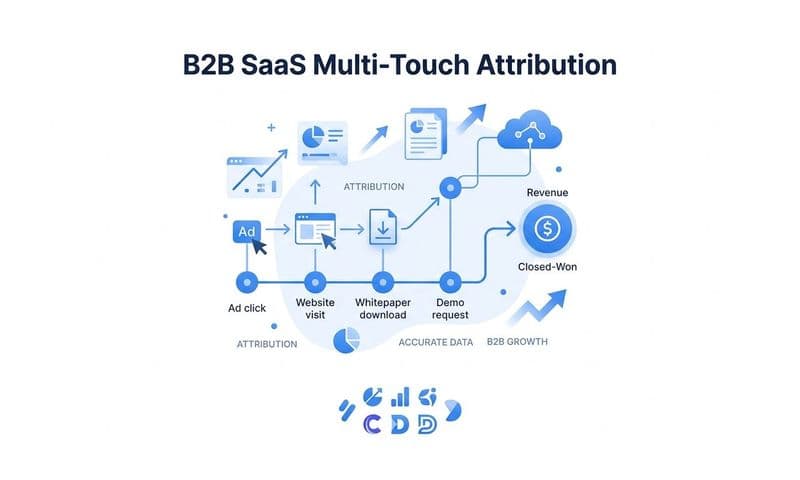
A multi-touch attribution platform connects your ad platforms, CRM, and website data into a unified view. Instead of relying on browser cookies that can be blocked, these solutions track conversions through server-side methods that capture every touchpoint regardless of browser restrictions. Understanding how to track conversions across multiple platforms is crucial for modern marketers.
This approach shows you the full path to conversion. A customer might see your Facebook ad, click a Google ad three days later, visit from an email campaign, then convert through organic search. Facebook's attribution only shows the Facebook click, but multi-touch attribution reveals the entire journey.
Server-side tracking solutions capture conversion data directly from your website or CRM, then send enriched event data back to Facebook through Conversions API. This improves Facebook's algorithm optimization because the platform receives more complete and accurate conversion signals.
Feed better data back to Facebook and your campaigns perform better. When Facebook's algorithm sees accurate conversion data with proper user matching, it can identify patterns and optimize targeting more effectively. This creates a virtuous cycle where better data leads to better results. Explore strategies for improving Facebook Ads tracking accuracy to maximize this benefit.
Look for attribution platforms that offer AI-driven recommendations based on your complete conversion data. These systems analyze performance across all your marketing channels and identify which campaigns, audiences, and creatives truly drive revenue, not just last-click conversions.
The reality is that Facebook will never show you the complete picture when using only native tracking. Privacy restrictions will continue to evolve, and reliance on browser-based methods will only become more problematic. Marketers who implement comprehensive attribution now gain a competitive advantage.
Connect every touchpoint from ad click to CRM event. Track users across devices and sessions without depending on cookies. See which marketing sources actually convert, not just which ones get credit under limited attribution windows. This level of visibility transforms how you allocate budget and scale campaigns.
Consider platforms that provide event matching parameters automatically, improving your Conversions API match quality without manual configuration. The better your server-side events match to Facebook users, the more effectively the platform can optimize your campaigns.
Putting It All Together
Fixing Facebook conversion tracking requires a systematic approach, starting from basic Pixel verification and moving through event configuration, domain setup, server-side implementation, and attribution optimization.
Here is your quick checklist: confirm your Pixel is installed and firing on all relevant pages using Pixel Helper, verify events are configured correctly with proper parameters using Test Events, complete domain verification and Aggregated Event Measurement setup in Business Settings, implement Conversions API for server-side tracking with strong event matching parameters, audit your attribution windows to understand reporting limitations, and consider a comprehensive attribution platform for complete visibility across your entire marketing ecosystem.
The reality is that browser-based tracking alone will continue to face challenges as privacy restrictions evolve. Apple's App Tracking Transparency framework is just the beginning. Browser makers are implementing increasingly aggressive cookie blocking and fingerprinting prevention. Regulations like GDPR and CCPA add compliance complexity to tracking implementations.
Marketers who implement server-side tracking and multi-touch attribution now will have a significant advantage in understanding what truly drives conversions. You will see the complete customer journey, not just the fragments that survive browser restrictions. Your Facebook campaigns will receive better conversion data, improving algorithmic optimization and ad performance.
Take action on these steps today, and you will transform your conversion tracking from a source of frustration into a reliable foundation for scaling your campaigns with confidence. Start with the basics—verify your Pixel and events are working. Then move to the more advanced implementations like Conversions API and multi-touch attribution.
Ready to elevate your marketing game with precision and confidence? Discover how Cometly's AI-driven recommendations can transform your ad strategy. Get your free demo today and start capturing every touchpoint to maximize your conversions.