You're spending thousands on Facebook ads, Google campaigns, and LinkedIn outreach. Your dashboards show clicks, impressions, and form submissions. But when your CFO asks which campaigns actually drove revenue, you're stuck piecing together spreadsheets and making educated guesses.
This is the reality for most marketers today. Ad platforms optimize for conversions they can see—form fills, page views, add-to-carts. But those metrics don't tell you which leads became paying customers, which campaigns drove high-value deals, or where your budget is actually working hardest.
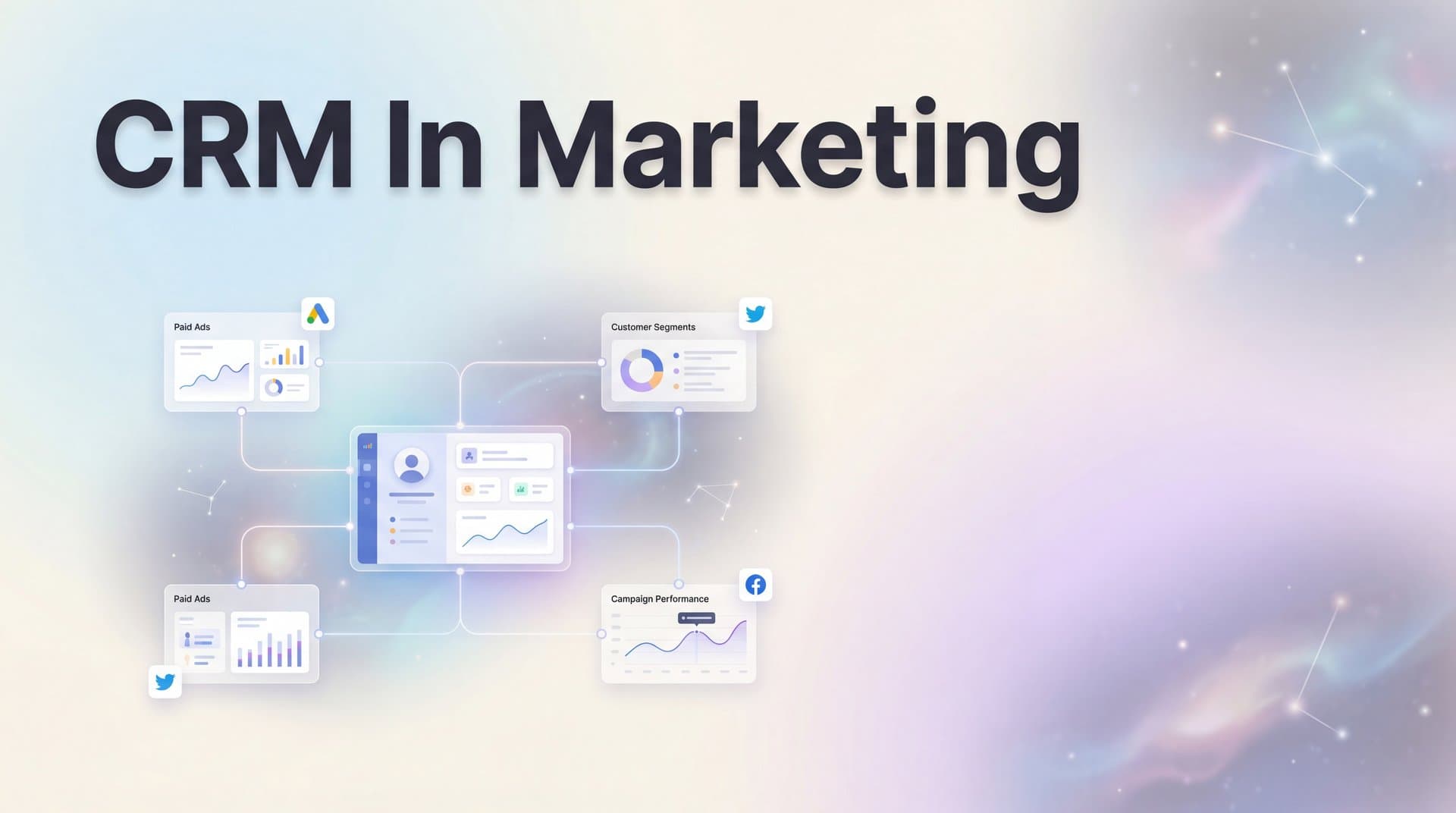
CRM in marketing changes this equation entirely. When your customer relationship management system connects directly to your advertising ecosystem, you stop optimizing for vanity metrics and start making decisions based on actual revenue outcomes. You see which touchpoints matter, which channels deserve more budget, and which campaigns are burning cash on leads that never convert.
This guide breaks down how CRM data transforms marketing from educated guesswork into precise, revenue-focused strategy. You'll learn how to connect your customer data to your campaigns, track the full journey from ad click to closed deal, and build the feedback loops that make your advertising smarter with every dollar spent.
The Marketing-CRM Connection: Why Your Ad Platforms Need Customer Context
Let's clear up a common misconception: CRM isn't just a sales tool. In the marketing context, your CRM is the single source of truth for understanding which marketing efforts actually drive business outcomes.
Think about how most marketers operate. You launch a Facebook campaign targeting decision-makers in your industry. Meta's dashboard shows 500 conversions. Success, right? Not necessarily. Those "conversions" might be form fills from job seekers, competitors doing research, or tire-kickers who'll never buy.
Your CRM tells a different story. It shows that only 50 of those 500 leads were qualified prospects. Of those 50, maybe 10 became opportunities. And of those 10, perhaps 3 closed as customers worth $50,000 each.
This is the gap CRM data fills. Ad platforms see the top of your funnel. Your CRM sees the bottom. Without connecting these two worlds, you're optimizing campaigns based on incomplete information.
Here's what changes when you integrate CRM data into your marketing strategy. Instead of celebrating 500 conversions, you start tracking which campaigns generated those 3 customers worth $150,000. You discover that maybe your LinkedIn campaign generated fewer leads but a higher percentage became customers. Or that your Google Search ads drove lower-value deals but converted faster. Understanding marketing attribution CRM integration is essential for connecting these data points effectively.
The contrast is stark. Marketing without CRM integration means optimizing for clicks, impressions, and shallow engagement metrics. You're essentially flying blind, hoping that more traffic equals more revenue. Marketing with CRM integration means optimizing for actual business outcomes—qualified leads, sales opportunities, closed revenue, customer lifetime value.
This shift fundamentally changes how you allocate budget. Instead of feeding more money into campaigns with high conversion rates, you invest in campaigns with high customer acquisition rates. Instead of pausing ads that generate expensive leads, you might double down if those leads convert to high-value customers.
The customer context your CRM provides reveals patterns invisible to ad platforms. You might discover that leads from certain industries convert at 10x the rate of others. Or that prospects who engage with specific content pieces are 5x more likely to become customers. These insights only emerge when you connect marketing touchpoints to CRM outcomes.
Core CRM Functions That Transform Marketing Performance
Your CRM isn't just storing contact information—it's tracking the entire lifecycle of every prospect who interacts with your marketing. Three core functions turn this data into marketing intelligence.
Lead Tracking and Scoring: Every lead enters your CRM with context. Which campaign drove them? What content did they engage with? Which ad creative caught their attention? Your CRM captures this source data and tracks what happens next. Did they book a demo? Download additional resources? Respond to sales outreach?
Lead scoring takes this further. By analyzing historical patterns, you identify which characteristics predict conversion. Leads from certain industries might score higher. Prospects who visit your pricing page three times might get flagged as high-intent. When you feed this intelligence back to your marketing, you stop treating all leads equally and start prioritizing the ones most likely to convert.
This transforms campaign optimization. Instead of just tracking cost-per-lead, you track cost-per-qualified-lead. A campaign generating $50 leads might look expensive until your CRM reveals that 40% become opportunities. Meanwhile, that $20 lead source might have a 2% qualification rate—cheap leads that waste sales time.
Customer Segmentation: Your CRM holds behavioral gold. Purchase history shows which products customers buy first versus later. Engagement data reveals which content resonates with different segments. Lifecycle stage information indicates where prospects are in their buying journey.
This enables surgical marketing precision. You can build lookalike audiences based on your highest-value customers, not just anyone who filled out a form. You can retarget prospects who reached the opportunity stage but didn't close, with messaging tailored to their specific objections. You can identify customers ready for upsells based on usage patterns and engagement signals.
The segmentation possibilities multiply when you layer CRM data. Industry + company size + engagement level + lifecycle stage creates hyper-targeted segments that generic ad platform targeting can't match. You're not just targeting "marketing managers"—you're targeting marketing managers at mid-sized SaaS companies who've engaged with attribution content and are in active buying cycles.
Lifecycle Stage Tracking: This is where attribution becomes accurate. Your CRM tracks when a lead becomes an MQL (Marketing Qualified Lead), when they advance to SQL (Sales Qualified Lead), when they become an opportunity, and when they close as a customer.
Each stage transition is a data point your marketing needs. If a campaign generates lots of MQLs but few SQLs, there's a qualification problem. If prospects become opportunities quickly but stall before closing, your marketing might be attracting the wrong fit. If certain campaigns consistently drive customers who close in 30 days while others take 180 days, that affects how you calculate ROI.
Lifecycle tracking also reveals the true impact of multi-touch marketing. A prospect might click a Facebook ad, read three blog posts, attend a webinar, and then convert via a Google search. Without CRM lifecycle tracking, Google gets 100% credit. With it, you see the full journey and understand how different touchpoints work together.
Connecting CRM Data to Your Advertising Ecosystem
The real power emerges when CRM data flows back to your ad platforms. This creates a feedback loop that makes your advertising smarter over time.
Here's how it works. When a lead in your CRM converts to a customer, that conversion event gets sent back to Facebook, Google, LinkedIn, or whichever platform drove the initial click. The ad platform's algorithm learns that this type of user, this creative, this targeting combination drives real business outcomes—not just form fills.
This feedback transforms ad optimization. Facebook's algorithm might initially optimize for cheap conversions—anyone who'll fill out your form. But when you feed back CRM conversion data showing which of those leads became customers, Facebook starts optimizing for users more likely to complete the full journey. Your cost-per-lead might increase, but your cost-per-customer drops dramatically.
The technical mechanism matters here. Browser-based tracking—the traditional pixel approach—captures less data every year. iOS privacy updates block tracking. Cookie restrictions limit visibility. Users browse on mobile but convert on desktop. Traditional tracking misses these cross-device journeys.
Server-side tracking solves this by capturing conversion events directly from your CRM, regardless of browser limitations. When a lead becomes a customer in your CRM, that event fires to your ad platforms via server-to-server connection. No cookies required. No iOS restrictions. Just clean, accurate conversion data. This is why performance marketing tracking software has become essential for modern marketers.
This creates closed-loop reporting—the holy grail of marketing analytics. You can trace a specific ad impression to a click, to a website session, to a CRM lead, to a qualified opportunity, to closed revenue. Every dollar spent connects to a dollar earned.
Building this loop requires three components. First, proper source tracking that captures UTM parameters and campaign data when leads enter your CRM. Second, CRM integrations that monitor lifecycle stage changes and trigger conversion events. Third, connections between your attribution platform and ad platforms that send those conversion events where they're needed.
When these pieces connect, your marketing ecosystem becomes self-improving. Ad platforms get smarter about who to target. Your CRM gets richer context about lead sources. Your marketing team gets clear visibility into what's working. Budget decisions shift from opinion to data.
Multi-Touch Attribution: Seeing the Full Customer Journey
Single-touch attribution models—first-click or last-click—fail modern marketers because they ignore reality. Your customers don't see one ad and buy. They engage with multiple touchpoints across days, weeks, or months before converting.
First-click attribution gives all credit to the initial touchpoint. If someone clicked a Facebook ad six months ago, then later converted via a Google search, Facebook gets 100% credit. This overvalues awareness campaigns and undervalues conversion-focused efforts.
Last-click attribution does the opposite—all credit to the final touchpoint. That same customer journey gives Google 100% credit, completely ignoring that Facebook introduced them to your brand. This leads to slashing awareness budgets and over-investing in bottom-funnel tactics.
Both models lie by omission. They can't show you how your marketing channels work together because they only see one piece of the puzzle. Understanding attribution models in digital marketing helps you choose the right approach for your business.
CRM data enables true multi-touch attribution by tracking every interaction a prospect has with your brand. That Facebook ad click gets logged. The blog post they read next week gets captured. The webinar registration two weeks later gets recorded. The email they opened before searching your brand on Google gets noted. All of it connects to the same CRM record.
When that prospect becomes a customer, you see the complete journey. You understand which touchpoints played awareness roles versus conversion roles. You identify which combinations of channels drive the highest-value customers. You spot patterns like "prospects who engage with both paid social and content marketing convert 3x faster than those who only see ads."
This visibility changes budget allocation entirely. Instead of arguing whether Facebook or Google deserves more budget, you understand how they complement each other. You might discover that Facebook is excellent at generating awareness but weak at closing deals, while Google Search captures high-intent prospects who were introduced via other channels. The answer isn't choosing one over the other—it's optimizing the balance. Cross channel marketing attribution software makes this analysis possible at scale.
Multi-touch attribution also reveals undervalued channels. Email nurture sequences might not get last-click credit, but CRM data shows they're present in 80% of customer journeys. Content marketing might not drive direct conversions, but prospects who engage with three or more pieces convert at twice the rate. These insights only emerge when you track the full journey.
The practical impact hits your bottom line. You stop wasting budget on channels that look good in isolation but don't contribute to revenue. You double down on combinations that work. You build marketing strategies around customer journeys, not individual channel performance.
Practical Steps to Leverage CRM Data in Your Marketing Strategy
Understanding the value of CRM in marketing is one thing. Actually implementing it requires systematic steps. Here's how to build the foundation for CRM-driven marketing decisions.
Audit Your Current Data Flow: Map exactly how data moves through your marketing ecosystem today. When someone clicks an ad, what information gets captured? When they fill out a form, what data enters your CRM? When they become a customer, does that information flow back to your ad platforms?
Most marketers discover gaps immediately. UTM parameters aren't being captured in the CRM. Lifecycle stage changes aren't triggering conversion events. Ad platforms aren't receiving customer data. These gaps mean you're optimizing campaigns with incomplete information.
Document every integration point and data handoff. Where does information get lost? Which systems don't talk to each other? What manual processes could be automated? This audit reveals exactly what needs fixing.
Set Up Proper UTM Tracking and CRM Field Mapping: Consistent UTM parameter usage is non-negotiable. Every campaign link needs source, medium, and campaign tags. Every piece of content needs tracking parameters. Without this discipline, you can't attribute leads to their original sources. Learning how to track marketing campaigns properly is the foundation of accurate attribution.
Your CRM needs fields that capture this data. When a lead comes in, their source campaign, ad set, creative, and keyword should all get logged. Many CRMs capture basic source information but miss the granularity needed for optimization. You need to know not just that a lead came from Facebook, but which specific ad and audience drove them.
Field mapping ensures data flows correctly between systems. When your website form connects to your CRM, are UTM parameters being passed? When your ad platforms send data, are they populating the right fields? Mismatched field mapping means valuable data gets lost in translation.
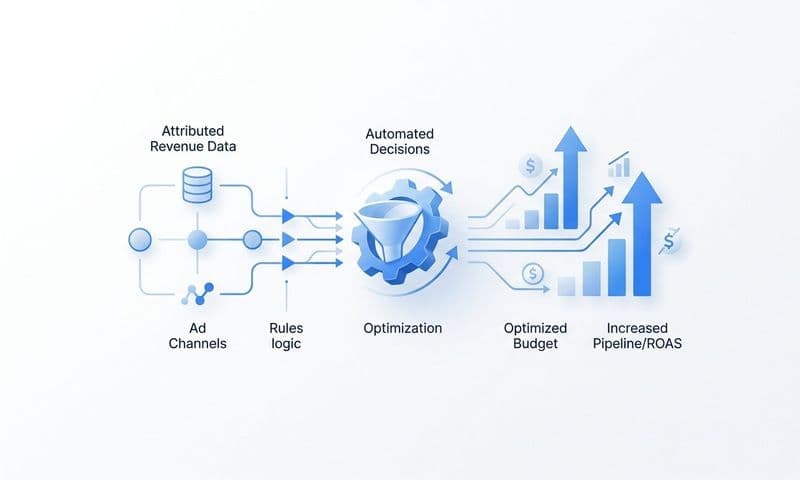
Establish Feedback Loops: This is where CRM integration becomes powerful. Set up automated workflows that send conversion events back to ad platforms when leads hit key milestones. When a lead becomes qualified, fire an event to Facebook. When they become an opportunity, send it to Google. When they close as a customer, notify all platforms that touched their journey.
These feedback loops require integration between your CRM, your attribution platform, and your ad accounts. Marketing attribution platforms like Cometly automate this process, capturing CRM events and distributing them to the right destinations without manual intervention.
The technical setup matters, but the strategic thinking matters more. Which CRM events should trigger ad platform notifications? How do you define a qualified lead versus an opportunity? What conversion values should you assign to different lifecycle stages? These decisions shape how your ad algorithms optimize.
Start with the highest-value conversion events—closed customers—and work backward. Once customer data flows reliably, add opportunity conversions. Then qualified leads. Each layer of feedback makes your advertising more precise.
Turning Data Into Competitive Advantage
The transformation from siloed marketing data to unified customer journey visibility isn't just operational improvement—it's competitive advantage. While your competitors optimize campaigns based on clicks and form fills, you're optimizing based on revenue outcomes.
This shift changes everything about how you market. Budget allocation becomes scientific rather than political. You're not arguing opinions about which channels "feel" more effective—you're showing data on which channels drive customers. Campaign planning starts with customer insights from your CRM rather than generic audience targeting. Creative decisions get informed by which messages resonate with prospects who actually convert.
The marketers winning today aren't necessarily spending more—they're spending smarter. They know which customer segments have the highest lifetime value and target lookalikes. They understand which combination of touchpoints drives the fastest sales cycles and orchestrate those journeys deliberately. They feed their ad platforms conversion data that makes algorithms smarter with every campaign. Knowing how to calculate marketing ROI accurately separates data-driven teams from those still guessing.
CRM-driven marketing also future-proofs your strategy. As privacy regulations tighten and browser-based tracking deteriorates further, marketers relying on pixels and cookies will struggle. Those with server-side tracking connected to CRM systems will maintain accurate attribution and optimization capabilities regardless of tracking limitations.
The practical reality is simple: your CRM already holds the answers to your biggest marketing questions. Which campaigns drive revenue? Which channels work together? Where should you invest more budget? The data exists—you just need to connect it to your advertising ecosystem. A robust marketing campaign attribution platform bridges this gap automatically.
This is where modern attribution platforms eliminate the technical complexity. Instead of building custom integrations between your CRM, website, and ad platforms, you connect everything through a unified system that handles the data flow automatically. Cometly captures every touchpoint from ad click to CRM event, tracks the full customer journey across all channels, and feeds conversion data back to your ad platforms for continuous optimization.
The result? Marketing decisions backed by revenue data instead of vanity metrics. Campaigns that get smarter over time as your ad platforms learn which users actually convert. Budget flowing to the channels and strategies that drive real business outcomes. This is marketing with confidence, powered by the customer data that matters most.
Ready to elevate your marketing game with precision and confidence? Discover how Cometly's AI-driven recommendations can transform your ad strategy—Get your free demo today and start capturing every touchpoint to maximize your conversions.