You're running ads on Meta, Google, TikTok, and LinkedIn at the same time. Each platform dashboard shows impressive numbers. But when you add up all the conversions each platform claims, the total is roughly twice your actual sales. Sound familiar?
This is the daily reality for most multi-channel marketers in 2026. Every ad platform operates like its own little kingdom, taking full credit for conversions that other channels helped influence. The result is a distorted picture of performance that leads to real consequences: budgets flowing toward channels that look good on paper while the channels doing the heavy lifting go underfunded.
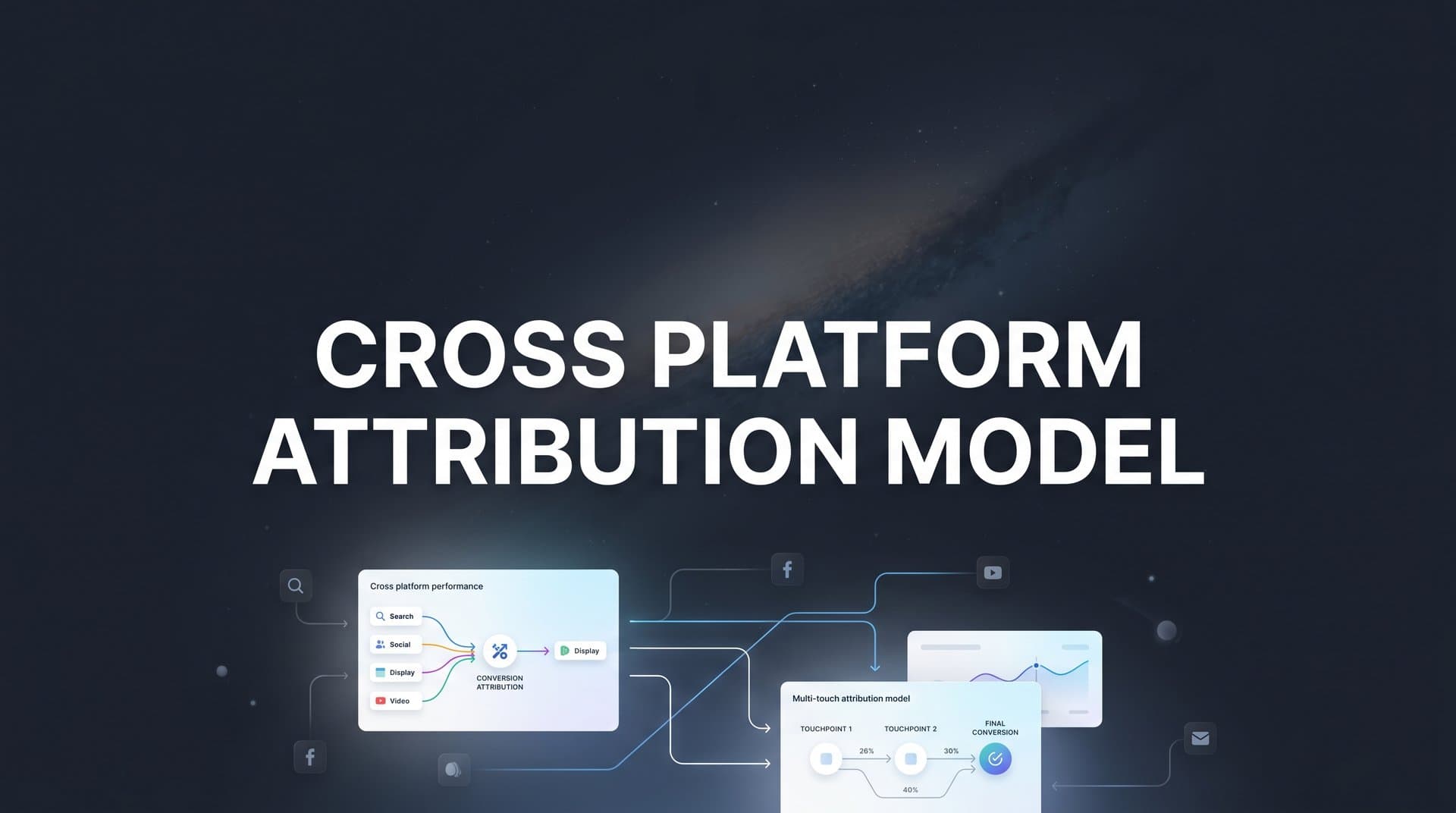
A cross platform attribution model solves this problem by stitching together the complete customer journey across every channel into a single, consistent framework. Instead of relying on each platform's self-reported numbers, you get one source of truth that shows how your channels actually work together to drive revenue.
This matters more than ever right now. Privacy restrictions have tightened significantly. Apple's App Tracking Transparency has reduced the signal data flowing to platforms like Meta. Google continues pushing toward a cookieless future. Consent frameworks in the EU and beyond further limit what platforms can see. The net effect is that platform-native attribution is getting less accurate over time, not more. Marketers who rely solely on what each platform tells them are flying increasingly blind.
In this article, we'll break down exactly how cross platform attribution models work, the different types available and when to use each, the common challenges that derail implementation, and how to turn attribution insights into real budget decisions that drive growth.
Why Every Ad Platform Tells a Different Story
The core problem is structural. Each ad platform builds its attribution system to showcase its own value. Meta might use a 7-day click, 1-day view attribution window by default. Google Ads uses a different window and methodology. TikTok has its own approach. When a customer sees a TikTok ad, clicks a Google Search ad two days later, and then converts after seeing a Meta retargeting ad, all three platforms may claim full credit for that single conversion.
This isn't a bug in the system. It's how each platform is designed to report. The incentive for each platform is to demonstrate its own ROI to advertisers, not to give you an accurate cross-channel picture. The result is what marketers often call "attribution inflation," where the sum of conversions across all platforms far exceeds your actual conversion volume. Understanding cross channel attribution is the first step toward solving this disconnect.
Privacy changes have made this problem significantly worse. When Apple introduced App Tracking Transparency with iOS 14.5, it required users to explicitly opt in to cross-app tracking. Many users opt out, which means platforms like Meta lose visibility into what happens after someone clicks an ad. To compensate, platforms began using statistical modeling to fill in the gaps. The numbers still look plausible, but they're increasingly estimated rather than observed.
Browser-based tracking faces similar headwinds. Cookie restrictions in Safari and Firefox, combined with the rise of ad blockers, mean that standard pixel-based tracking misses a meaningful portion of conversions. The data flowing into platform dashboards reflects an increasingly incomplete view of actual customer behavior.
The business impact is direct and measurable in the wrong direction. Marketers who trust platform-reported data often over-invest in bottom-funnel channels that get last-touch credit while cutting awareness and consideration channels that actually initiated the journey. You might pause a TikTok campaign because it shows poor direct conversions, not realizing it was responsible for introducing a large share of your eventual buyers to your brand. Without a cross platform attribution model, you're making budget decisions based on each platform's marketing copy rather than actual performance data. Learning to track ad performance across platforms is essential to avoiding this trap.
How a Cross Platform Attribution Model Actually Works
A cross platform attribution model is a unified framework that collects touchpoint data from all your marketing channels and assigns conversion credit based on a consistent set of rules or algorithms applied equally across every channel. The key word is "unified." You're no longer asking each platform to grade its own homework. If you're new to the concept, this guide on attribution modeling in marketing provides a solid foundation.
The data pipeline that makes this work has several layers. At the top, you're collecting ad click and impression data from every platform you run: Meta, Google, TikTok, LinkedIn, and any others. This tells you which ads people interacted with and when. Next comes website and landing page interaction data: page views, time on site, form submissions, and any other behavioral signals that indicate intent. Finally, CRM events complete the picture: lead creation, sales activity, deal stages, and closed revenue.
The challenge is stitching these data points together into a single customer journey. A person might click a Google ad from their work laptop, visit your site from their phone later that evening, and then convert after a follow-up email. Without identity resolution, these look like three separate anonymous users. A proper cross platform attribution model uses first-party identifiers, such as email addresses captured at form submission, authenticated user IDs, or first-party cookies, to connect these touchpoints into one coherent journey. Mastering tracking customer journeys across platforms is what separates accurate attribution from guesswork.
Server-side tracking plays a critical role in building an accurate cross-platform view. Traditional pixel-based tracking runs in the browser, which means it's vulnerable to ad blockers, cookie restrictions, and browser privacy settings. Server-side tracking sends conversion events directly from your server to ad platforms, bypassing these browser-based limitations. This approach captures more events, provides more accurate data, and remains functional even as browser-level tracking continues to erode.
First-party data collection is the foundation of this entire system. When you own the data, collected directly from your customers and prospects through your own properties, you're not dependent on what third-party platforms choose to share with you. This is why marketers who invest in first-party data infrastructure are better positioned to build accurate attribution as the privacy landscape continues to tighten.
Comparing the Most Common Attribution Model Types
Once you have unified data flowing into your attribution system, you need to decide how to assign credit across touchpoints. The model you choose shapes the insights you get and, ultimately, the budget decisions you make. There's no universally correct answer, but there are better and worse fits depending on your business context. For a comprehensive overview, explore the different types of attribution models in digital marketing.
First Touch Attribution: Gives 100% of the credit to the very first interaction a customer had with your brand. This model is useful when your primary goal is understanding which channels are best at creating awareness and introducing new audiences to your product. Its limitation is that it ignores everything that happened between first contact and conversion, which can be a lot in longer sales cycles.
Last Touch Attribution: Gives 100% of the credit to the final interaction before conversion. This is the default in many ad platforms and analytics tools. It's simple and easy to understand, but it systematically over-credits bottom-funnel channels and under-credits the channels that did the work of building interest and intent earlier in the journey.
Linear Attribution: Distributes credit equally across every touchpoint in the customer journey. If a customer had five interactions before converting, each gets 20% of the credit. It's a fairer representation than first or last touch, but it treats a quick banner ad impression the same as a detailed product demo, which often doesn't reflect actual influence. You can dive deeper into how the linear attribution model works and when it makes sense.
Time Decay Attribution: Assigns more credit to touchpoints that occurred closer to the conversion event. Interactions from last week count more than interactions from last month. This model works well for shorter sales cycles where recency genuinely does correlate with influence. For long B2B sales cycles, it can undervalue the awareness and consideration work done early in the process.
Position-Based Attribution: Often called the U-shaped model, this approach typically assigns around 40% of credit to the first touch, 40% to the last touch, and distributes the remaining 20% across middle interactions. It acknowledges that the first and last touchpoints are often most significant while still giving some credit to the middle of the journey.
Data-Driven and Algorithmic Models: These use machine learning to analyze your actual conversion paths and assign credit based on statistical impact rather than fixed rules. The model learns which touchpoints and sequences are genuinely predictive of conversion in your specific business context. This is generally the most accurate approach, but it requires sufficient data volume to produce reliable results. If you're running lower-volume campaigns, you may not have enough conversion events for the algorithm to learn from.
Matching the model to your business context matters. For high-volume ecommerce with short purchase cycles, time decay or data-driven models often perform well. For B2B lead generation with long sales cycles involving multiple stakeholders, position-based or linear models can provide a more balanced view of how channels contribute across a multi-month journey. The best approach is often to run multiple models simultaneously and compare the insights each provides before committing your budget decisions to any single view.
Five Challenges That Derail Cross Platform Tracking
Understanding the theory of cross platform attribution is one thing. Actually implementing it is where most teams run into friction. Here are the most common obstacles and how to address them.
Data Silos Between Platforms and Tools: Your ad data lives in Meta Ads Manager. Your website data lives in Google Analytics. Your lead and revenue data lives in your CRM. By default, these systems don't talk to each other. Building a cross platform attribution model requires connecting these data sources so that a single customer journey can be assembled from events that originated in different systems. Server-side event collection and integration layers that pull data from multiple sources into a central repository are the practical solution here. Exploring tracking conversions across multiple ad platforms can help you understand how to bridge these gaps.
Identity Resolution Across Devices and Sessions: Most customer journeys span multiple devices and multiple sessions over days or weeks. Without a way to connect these touchpoints to the same person, your attribution model sees fragmented, anonymous interactions rather than coherent journeys. As third-party cookies continue to decline, identity resolution increasingly depends on first-party data: email addresses captured at opt-in, authenticated user IDs, and first-party cookies that persist within your own domain. Building more moments where users identify themselves, such as account creation, newsletter signup, or gated content, gives your attribution system more anchors for connecting the dots.
Delayed Conversions and Long Sales Cycles: In B2B environments especially, the gap between first touch and closed revenue can be months. Attribution models need to account for this reality. If your attribution window is too short, you'll systematically under-credit early-stage channels. Real-time data syncing between your CRM and attribution platform ensures that when a deal closes, the credit flows back to the touchpoints that contributed, even if they occurred months earlier. Flexible attribution windows that you can adjust based on your actual sales cycle length are essential.
Inconsistent UTM Tagging and Tracking Setup: Attribution models are only as good as the data going in. If your UTM parameters are inconsistent, some campaigns are missing tracking entirely, or your conversion events aren't firing correctly, the model will produce inaccurate results. Understanding the differences between UTM tracking and attribution software helps you build a more reliable data foundation. Establishing a consistent naming convention for UTM parameters across all campaigns and platforms, and auditing your tracking setup regularly, is foundational work that pays dividends across every attribution effort.
Organizational Resistance to Changing the Story: This one is less technical but equally real. When attribution data shows that a channel your team has championed for years is actually delivering less value than believed, there's often pushback. Building a culture where decisions follow data rather than intuition requires presenting attribution findings alongside clear methodology explanations, and running model comparisons that let stakeholders see multiple perspectives before drawing conclusions.
Putting Your Attribution Model to Work: From Insight to Action
Attribution data has no value sitting in a dashboard. Its purpose is to inform decisions, specifically budget decisions, creative decisions, and channel strategy decisions that improve your return on ad spend.
The most direct application is budget reallocation. When your cross platform attribution model shows that a particular channel consistently appears early in converting customer journeys, even if it rarely gets last-touch credit, that channel deserves more investment. Conversely, channels that appear frequently in non-converting paths or that show up only in journeys with low revenue value can be scaled back or restructured. The ability to track marketing ROI across platforms is what makes these budget shifts possible with confidence.
There's also a powerful feedback loop available through conversion sync. When you send enriched conversion data, including CRM events like qualified leads and closed revenue, back to ad platforms via server-side APIs, you're giving their machine learning algorithms better information to work with. Meta's Conversions API and Google's offline conversion imports are designed for exactly this purpose. Instead of optimizing toward form fills that may or may not become customers, the platform's algorithm learns to find more people who look like your actual buyers. This often improves targeting quality and reduces wasted spend over time.
A practical rollout plan helps you avoid getting overwhelmed. Start by connecting your core ad platforms and your CRM to a central attribution system. Verify that data is flowing correctly by comparing reported conversions against your actual business records. Once you trust the data, run multiple attribution models side by side and compare the channel rankings each model produces. Knowing when to switch attribution models ensures you're always using the framework that best fits your evolving business needs. Look for patterns: which channels consistently show up as valuable regardless of which model you apply? Those are your most reliable performers. Then use those insights to make incremental budget shifts, measure the impact, and iterate.
The key mindset shift is moving from "which platform performed best this week" to "what combination of channels and touchpoints drives the most revenue over the customer lifetime." Cross platform attribution makes that broader question answerable in a way that siloed platform reporting never can.
How Cometly Unifies Attribution Across Every Channel
Cometly is built specifically to solve the cross platform attribution challenge that most marketing teams struggle with. It connects your ad platforms, CRM, and website data into a single attribution dashboard where you can see the complete customer journey, compare attribution models side by side, and understand which channels and campaigns are actually driving revenue.
The platform captures every touchpoint from ad clicks and impressions to CRM events like lead creation and deal closure, giving you a complete, enriched view of how customers move through your funnel. Instead of toggling between Meta Ads Manager, Google Ads, and your CRM to piece together a picture manually, Cometly assembles it for you in one place. You can switch between attribution models and immediately see how the credit distribution changes, which helps you make more confident decisions rather than anchoring to a single model's perspective.
Cometly's AI-powered recommendations identify high-performing ads and campaigns across every channel you're running. Rather than spending hours analyzing data manually, the AI surfaces the insights that matter most: which campaigns are generating the highest quality conversions, which channels are underperforming relative to spend, and where budget shifts are likely to improve results. The AI Chat feature takes this further, letting you query your attribution data conversationally so you can get answers to specific questions without building custom reports from scratch.
On the data accuracy side, Cometly's server-side tracking addresses the privacy and signal loss challenges that make platform-native attribution increasingly unreliable. By sending conversion events from your server rather than relying solely on browser-based pixels, Cometly captures more events with greater accuracy, even in environments where ad blockers and cookie restrictions are prevalent. This means the attribution data you're working with reflects what's actually happening, not just what browsers and platforms can still observe.
The conversion sync capability closes the loop by feeding enriched conversion data back to Meta, Google, and other ad platforms. This helps their algorithms optimize toward your actual business outcomes, whether that's qualified leads, opportunities, or closed revenue, rather than surface-level engagement metrics. The result is better targeting, more efficient bidding, and ad platform AI that works in your favor instead of against you.
The Bottom Line on Cross Platform Attribution
Running multi-channel campaigns without a cross platform attribution model is like navigating with five different maps that all disagree on where the destination is. You'll make it somewhere, but probably not where you intended, and you'll waste a lot of time and budget along the way.
The key takeaways from everything we've covered: platform-native attribution is structurally biased and increasingly inaccurate due to privacy changes. A cross platform attribution model requires unified data collection across your ad platforms, website, and CRM. The right model type depends on your sales cycle, business model, and data volume. And attribution data only creates value when it drives real decisions about budget, creative, and channel strategy.
The marketers who will win in 2026 and beyond are the ones who invest in accurate, unified attribution now, before the privacy landscape tightens further and the gap between platform-reported data and reality grows even wider. The infrastructure you build today compounds in value over time as you accumulate better data, make smarter decisions, and train ad platform algorithms to find your best customers.
Ready to elevate your marketing game with precision and confidence? Discover how Cometly's AI-driven recommendations can transform your ad strategy. Get your free demo today and start capturing every touchpoint to maximize your conversions.