You're running campaigns across Google, Meta, LinkedIn, and TikTok. Your analytics dashboard shows thousands of clicks. Your CRM records dozens of new leads. But when your CEO asks which campaign actually drove last quarter's revenue, you're left piecing together conflicting reports from five different platforms—none of which tell the same story.
This is the paradox of modern marketing: we're drowning in data yet starving for answers.
The problem isn't a lack of information. It's that marketing data lives in silos—fragmented across platforms, incomplete due to privacy restrictions, and disconnected from the actual customer journey. One platform claims credit for a conversion that another platform also reports. Your website analytics show one number while your CRM shows another. And somewhere in that gap between data and truth, you're making expensive decisions based on incomplete information.
Data in marketing isn't just about collecting numbers. It's about connecting every touchpoint across the entire customer journey—from the first ad impression to the final purchase—so you can confidently answer the questions that actually matter: Which channels drive revenue? Where should you invest more? What's working and what's wasting budget?
This guide breaks down exactly what marketing data matters, why traditional tracking falls short, and how to build a connected data infrastructure that turns raw numbers into revenue-driving insights. Let's start with the foundation: understanding what types of data you're actually working with.
The Four Types of Marketing Data That Actually Matter
Not all marketing data is created equal. Understanding the difference between data types helps you prioritize what to collect and where to focus your tracking efforts.
First-Party Data: Your Most Valuable Asset
First-party data is information you collect directly from your audience through your own channels. This includes website behavior (pages visited, time on site, actions taken), CRM data (contact information, deal stages, purchase history), email engagement (opens, clicks, conversions), and transaction records.
This is your gold standard. You own it completely, you control how it's collected, and it's directly tied to your actual customers and prospects. When someone fills out a form on your website, makes a purchase, or engages with your email campaign, that's first-party data flowing into your systems.
The power of first-party data lies in its accuracy and completeness. Unlike data filtered through third-party platforms, you're capturing the raw customer journey as it happens on your properties. This gives you the foundation for understanding marketing data and true attribution—not what an ad platform thinks drove a conversion, but what actually happened in your customer's path to purchase.
Zero-Party Data: What Customers Tell You Directly
Zero-party data takes first-party data a step further. This is information customers intentionally and proactively share with you: preference center selections, survey responses, quiz results, account settings, and explicit feedback.
Think of it as the difference between observing behavior and asking directly. When a customer tells you they're interested in enterprise solutions rather than small business products, or that they prefer email over phone contact, that's zero-party data. It's incredibly valuable because it eliminates guesswork—you know exactly what they want because they told you.
For marketers, zero-party data helps refine targeting and personalization. Instead of inferring intent from behavior patterns, you're working with stated preferences. This becomes especially powerful when combined with behavioral first-party data to create complete customer profiles.
Second and Third-Party Data: The Declining External Sources
Second-party data is essentially someone else's first-party data that they share with you—often through partnerships or data-sharing agreements. Third-party data comes from aggregators who compile information from multiple sources and sell access to marketers.
Here's where the landscape has shifted dramatically. Privacy regulations, browser changes, and platform restrictions have made third-party data increasingly unreliable and, in many cases, unusable. Cookie deprecation means the tracking pixels that powered third-party data collection for years are becoming obsolete.
Many marketers who built strategies around purchased audience lists and third-party targeting are finding these approaches less effective. The data is often outdated, inaccurate, or simply unavailable due to privacy restrictions.
Why First-Party Data Now Drives Attribution Strategy
This shift toward first-party data isn't just about privacy compliance—it's fundamentally changing how smart marketers approach attribution and tracking. When you own the data collection process from end to end, you can track the complete customer journey across all your touchpoints.
Instead of relying on ad platforms to tell you what worked, you're connecting your own data points: the ad they clicked, the pages they visited, the content they downloaded, the emails they opened, and ultimately the purchase they made. This complete view is what enables accurate multi-touch attribution—understanding not just which ad got the last click, but which combination of touchpoints actually drove the conversion.
The marketers winning today are those who've invested in robust first-party data collection infrastructure. They're not guessing which campaign worked based on platform reports. They're tracking real customer journeys with real data they control.
Where Marketing Data Breaks Down (And Why Your Numbers Don't Match)
You've probably experienced this: Facebook Ads reports 50 conversions. Google Analytics shows 42. Your CRM only recorded 38 new customers. Which number is real?
Welcome to the attribution gap—the frustrating reality that different platforms measure success differently, and none of them are telling the complete story.
The Attribution Gap Explained
Ad platforms are optimized to claim credit for conversions. Facebook uses a 28-day click and 1-day view attribution window by default. Google Ads uses different windows. Each platform tracks users through their own ecosystem and reports conversions based on their last interaction within their attribution window.
But here's the problem: customers don't live in single-platform bubbles. Someone might click your Facebook ad on Monday, search for your brand on Google Tuesday, visit your site directly on Wednesday, and convert on Thursday. Facebook claims that conversion. Google claims it too. Your analytics might attribute it to direct traffic.
Your CRM, meanwhile, only knows what actually happened—a customer signed up on Thursday—but has no visibility into the marketing journey that led there. This creates conflicting reports that make it nearly impossible to confidently allocate budget or optimize campaigns. Understanding these attribution challenges in marketing analytics is the first step toward solving them.
Privacy Changes That Fragmented Customer Journey Data
The attribution gap has widened significantly with recent privacy changes. iOS 14.5 and subsequent updates gave iPhone users the ability to opt out of tracking. Many did. Suddenly, a large portion of mobile traffic became invisible to traditional tracking methods.
Cookie deprecation is following the same path. Browsers are increasingly blocking third-party cookies, and Google Chrome—the last major holdout—is phasing them out. This means the tracking pixels that marketers relied on for years are losing effectiveness.
Cross-device tracking adds another layer of complexity. Your customer might see an ad on their phone during their morning commute, research on their work laptop during lunch, and purchase on their home computer that evening. Traditional browser-based tracking sees these as three different users, fragmenting what should be one coherent customer journey.
The result? Your data is incomplete by default. You're making decisions based on a partial view of reality, trying to optimize campaigns while missing significant portions of the customer path.
The Real Cost of Incomplete Data
Operating on incomplete or inaccurate data isn't just frustrating—it's expensive. When you can't accurately track which campaigns drive conversions, you waste budget on underperforming channels while underfunding the ones that actually work.
Consider what happens when your attribution data is wrong. You might kill a campaign that's actually driving revenue because it's not getting credit in your tracking. Or you might scale a campaign that's getting false attribution credit, pouring money into something that doesn't actually convert.
Misallocated budgets compound over time. If you're spending $50,000 monthly on ads and your attribution is even 20% off, you're potentially misallocating $10,000 every month. Over a year, that's $120,000 in budget decisions made on faulty data.
Beyond wasted spend, incomplete data leads to missed opportunities. You can't optimize what you can't measure accurately. High-performing audience segments go unidentified. Winning channel combinations remain hidden. Testing becomes unreliable when you're not sure what actually caused the results. This is why solving the marketing data silos problem has become a top priority for growth-focused teams.
The marketers who recognize these data breakdown points aren't just accepting them as the cost of doing business. They're rebuilding their data infrastructure from the ground up to capture complete, accurate customer journey data despite privacy restrictions and platform limitations.
Building a Connected Data Infrastructure
Fixing the attribution gap requires rethinking how you collect and connect marketing data. The solution isn't adding another analytics tool—it's building an infrastructure that captures complete customer journeys regardless of privacy restrictions or platform limitations.
Server-Side Tracking: The New Foundation
Traditional browser-based tracking relies on JavaScript pixels that fire in your customer's browser. These pixels are increasingly blocked by privacy settings, ad blockers, and browser restrictions. When a pixel is blocked, that conversion goes untracked—it's as if it never happened.
Server-side tracking works differently. Instead of relying on browser pixels, data flows through your own server before being sent to ad platforms and analytics tools. When a customer converts, your server records the event and then distributes that information to wherever it needs to go.
This approach bypasses browser-level blocking. Even if a user has disabled cookies or opted out of tracking, your server still captures the conversion event. You're not depending on third-party cookies or client-side pixels that can be blocked—you're tracking events on infrastructure you control.
The accuracy improvement is significant. Marketers who switch from browser-based to server-side tracking commonly report capturing 20-40% more conversion data that was previously invisible. That's not new conversions—it's conversions that were always happening but weren't being tracked.
Connecting Your Marketing Stack
Server-side tracking is just the foundation. The real power comes from connecting all your marketing and sales systems into a unified data flow.
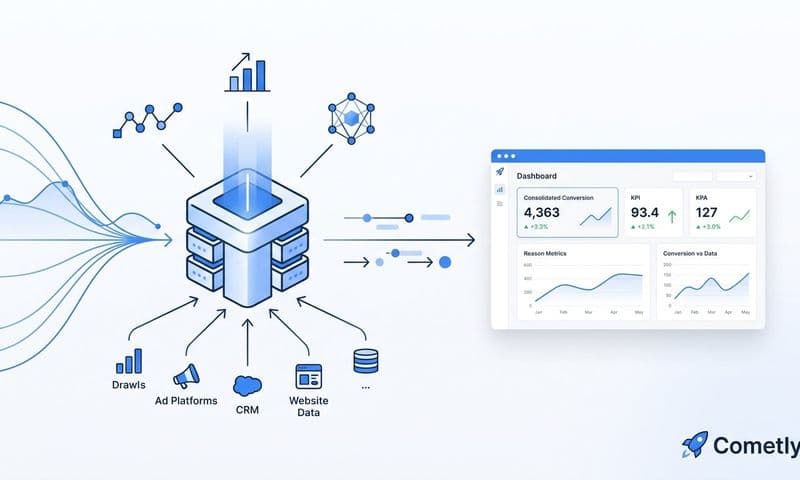
Your ad platforms need to talk to your website analytics. Your website analytics need to connect to your CRM. Your CRM needs to feed data back to your ad platforms. Most importantly, every touchpoint in the customer journey needs to be captured and connected to the same customer record. Effective marketing data integration is what makes this unified view possible.
This means implementing proper tracking across every channel. When someone clicks a Facebook ad, that click needs to be recorded with a unique identifier. When they visit your website, that session needs to be linked to the same identifier. When they fill out a form, that lead needs to carry the same identifier into your CRM. And when they eventually purchase, that revenue needs to be connected back to every touchpoint that influenced the decision.
Building this connected infrastructure requires integration tools that can pass data between systems accurately and in real time. You need UTM parameters configured consistently across campaigns. You need form tracking that captures source information. You need CRM webhooks that send conversion data back to ad platforms.
Creating Your Single Source of Truth
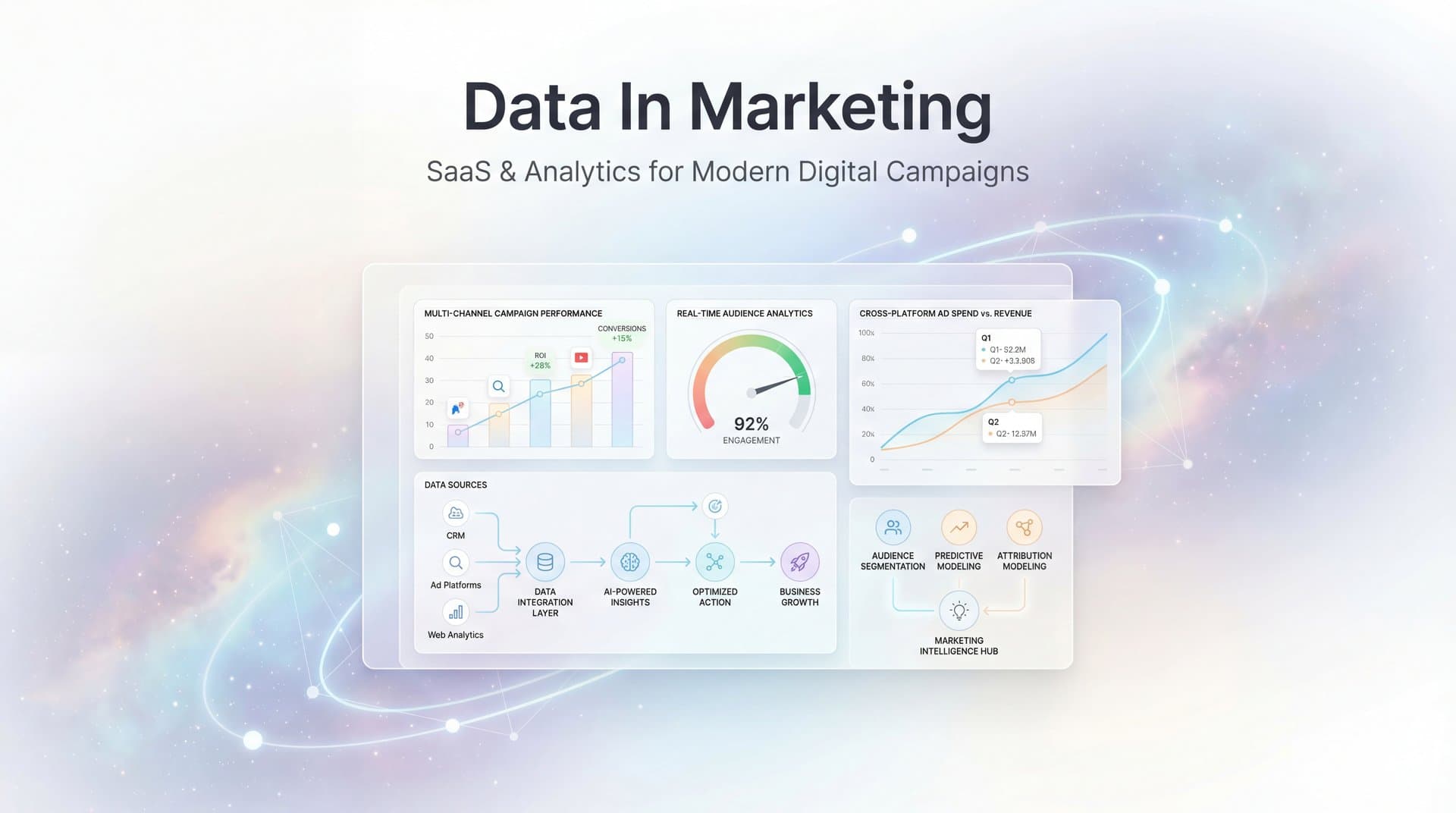
The goal of connected infrastructure is creating what marketers call a "single source of truth"—one place where you can see the complete customer journey from first impression to final purchase, with every touchpoint accurately attributed.
This isn't about replacing your existing tools. Your ad platforms, analytics, and CRM all serve important purposes. The single source of truth sits on top of these systems, pulling data from each and connecting it into coherent customer journeys. Many organizations achieve this through a marketing data warehouse solution that centralizes information from all sources.
Think of it like a conductor coordinating an orchestra. Each instrument (each platform) plays its part, but the conductor sees the complete composition. Your single source of truth does the same for your marketing data—it knows that the Facebook click, the Google search, the email open, and the CRM conversion all belong to the same customer journey.
With this complete view, you can finally answer questions that were previously impossible: How many touchpoints does a customer need before converting? Which channel combinations work best together? What's the true ROI of each marketing channel when you account for assist conversions, not just last-click attribution?
Building this infrastructure takes effort upfront, but it's the difference between making marketing decisions based on fragmented platform reports versus making decisions based on complete, accurate data about what actually drives revenue in your business.
From Raw Data to Revenue Insights: Attribution Models Explained
Once you're capturing complete customer journey data, the next challenge is interpreting it correctly. This is where attribution models come in—frameworks for assigning credit to different touchpoints in the path to conversion.
Understanding Multi-Touch Attribution Models
Single-touch attribution models assign all credit to one touchpoint. First-touch attribution gives 100% credit to whatever introduced the customer to your brand. Last-touch attribution gives all credit to the final interaction before conversion. Both are simple but misleading—they ignore the reality that most conversions involve multiple touchpoints working together.
Multi-touch attribution distributes credit across multiple touchpoints in the customer journey. The question is how to distribute that credit fairly. Choosing the right multi-touch marketing attribution software can make this process significantly easier.
Linear attribution spreads credit evenly across all touchpoints. If a customer had five interactions before converting, each gets 20% credit. This acknowledges that multiple touchpoints mattered but assumes they all mattered equally—which often isn't true.
Time-decay attribution gives more credit to touchpoints closer to the conversion. The logic is that recent interactions had more influence on the decision. This works well for businesses with short sales cycles where recency matters most.
Position-based (U-shaped) attribution gives more credit to the first and last touchpoints—typically 40% each—with the remaining 20% distributed among middle interactions. This model recognizes that introducing someone to your brand and closing the deal are often the most critical moments.
Data-driven attribution uses machine learning to analyze your actual conversion patterns and assign credit based on which touchpoints statistically correlate with conversions. Instead of applying a predetermined formula, it learns from your data what actually drives results in your specific business.
Choosing the Right Attribution Model
There's no universally "correct" attribution model. The right choice depends on your sales cycle, business model, and what questions you're trying to answer.
For businesses with very short sales cycles—think e-commerce impulse purchases—last-touch attribution might be sufficient. If customers typically convert on their first or second visit, you don't need complex multi-touch models.
For B2B companies with long sales cycles involving multiple decision-makers and many touchpoints, multi-touch attribution becomes essential. You need to understand which early-stage touches are effective at generating awareness, which middle touches nurture consideration, and which closing touches drive the final decision.
Many sophisticated marketers don't choose just one model. They analyze their data through multiple attribution lenses to understand different aspects of their marketing performance. First-touch shows which channels are best at generating new awareness. Last-touch shows which channels are best at closing deals. Multi-touch models reveal which combinations work together most effectively.
Using Attribution to Identify Real Performance
The purpose of attribution modeling isn't academic—it's about making better budget allocation decisions. When you understand which channels and campaigns actually drive conversions, you can invest more in what works and cut what doesn't.
Attribution data reveals patterns that platform reporting misses. You might discover that LinkedIn ads rarely get last-click credit but are present in 80% of your highest-value customer journeys. Without multi-touch attribution, you might cut LinkedIn thinking it's underperforming. With proper attribution, you recognize it as a crucial awareness driver that enables other channels to close deals.
You might find that certain keyword campaigns generate clicks that don't immediately convert but appear consistently in journeys that convert weeks later. Or that email campaigns rarely get conversion credit but significantly increase conversion rates for customers who engage with them.
This is the shift from measuring clicks to measuring actual revenue impact. Attribution modeling connects your marketing activities to business outcomes, showing not just which campaigns got interactions but which campaigns actually drove customers to purchase. Learning how to use data analytics in marketing effectively is what separates high-performing teams from the rest.
Turning Marketing Data Into Action
Collecting accurate data and understanding attribution is valuable, but the real ROI comes from acting on those insights quickly and systematically. Data-driven marketing isn't just about having better reports—it's about making better decisions faster.
Optimizing Ad Spend in Real Time
When you have accurate, connected data showing which campaigns drive actual conversions, budget optimization becomes straightforward. You reallocate spend from underperforming campaigns to high-performers, scaling what works while cutting what doesn't.
The key word is "real time." Traditional marketing optimization happened in monthly or quarterly reviews—you'd analyze last month's performance and adjust next month's budget. By the time you made changes, market conditions had shifted and opportunities had passed.
Real-time data access enables daily or even hourly optimization. If a campaign is crushing performance goals, you can increase its budget immediately to capitalize on momentum. If another campaign is underperforming, you can pause it before wasting more budget. If you spot a winning audience segment, you can create lookalike audiences and launch new campaigns while the opportunity is hot.
This agility compounds over time. Small optimizations made daily add up to significant performance improvements over months. You're constantly fine-tuning your marketing engine instead of making large, infrequent adjustments based on outdated data.
Feeding Better Data Back to Ad Platforms
Modern ad platforms like Facebook and Google use machine learning to optimize campaign delivery. Their algorithms decide which users see your ads, when they see them, and how much you bid. The quality of these AI-driven decisions depends entirely on the quality of conversion data you feed back to the platforms.
When you're only tracking browser-based conversions, ad platforms are optimizing on incomplete data. They're missing conversions that happened but weren't tracked due to privacy restrictions. This teaches their algorithms incorrect patterns—they think certain audiences don't convert when they actually do.
Server-side tracking and conversion API integration solve this. When you feed complete, accurate conversion data back to ad platforms, their algorithms learn better patterns. They can identify which users are actually converting, which creative elements work, and which targeting parameters drive results.
The improvement in campaign performance can be dramatic. Ad platforms that receive accurate conversion data can optimize delivery more effectively, often reducing cost per acquisition while increasing conversion volume. You're not just seeing better reporting—you're getting better actual results because the platform AI is working with better information.
This creates a virtuous cycle. Better data leads to better AI optimization, which leads to better campaign performance, which generates more conversion data to further improve optimization. Marketers who implement proper conversion tracking and data feedback consistently see their campaign efficiency improve over time as the algorithms learn and adapt. Implementing proven data-driven marketing strategies accelerates this improvement cycle.
Building Data-Driven Testing Frameworks
Accurate data enables systematic testing that actually produces reliable insights. When you can trust your attribution and conversion tracking, you can run experiments that tell you definitively what works and what doesn't.
This means testing different audience segments to find your highest-value customers. Testing various creative approaches to identify which messages resonate. Testing landing page variations to optimize conversion rates. Testing different attribution windows to understand your true customer decision timeline.
The key is having confidence in your data. When tracking is incomplete or inaccurate, test results are unreliable. You might think variation A outperformed variation B when the difference was actually just noise in your tracking. Or you might miss winning variations because conversions weren't properly attributed.
With solid data infrastructure, you can implement rigorous testing frameworks. You know your sample sizes are accurate. You can calculate statistical significance confidently. You can identify winning variations and scale them aggressively because you trust the data telling you they work.
This systematic approach to testing and optimization is what separates growing marketing teams from stagnant ones. Instead of making decisions based on hunches or best practices from other companies, you're making decisions based on what actually works in your specific business with your specific customers.
Putting It All Together: Your Data-Driven Marketing Roadmap
Mastering data in marketing is a journey from fragmented, unreliable reporting to connected, accurate insights that drive confident decisions. Let's recap the path forward and the key metrics you should track to measure progress.
The Journey from Data Collection to Action
It starts with recognizing that first-party data is your foundation. You need to own the data collection process—tracking every touchpoint in the customer journey through infrastructure you control, not just relying on what ad platforms report.
Next comes building connected systems. Server-side tracking captures conversions that browser-based methods miss. Integration between your ad platforms, analytics, and CRM creates a complete view of each customer's path to purchase. This connected infrastructure becomes your single source of truth—the place where you can see what actually drives revenue, not just what platforms claim credit for.
Then you apply proper attribution modeling. Multi-touch attribution reveals which channels work together to drive conversions. You move beyond simplistic last-click reporting to understand the full value each marketing touchpoint provides. This shows you where to invest more and where to cut back.
Finally, you act on insights quickly. Real-time data enables daily optimization. You feed accurate conversion data back to ad platforms to improve their AI targeting. You build systematic testing frameworks to continuously improve performance. Data stops being just reports you review—it becomes the engine driving every marketing decision. Following best practices for using data in marketing decisions ensures you're extracting maximum value from your investment.
Key Metrics to Track and Review Regularly
As you build your data-driven marketing operation, focus on metrics that connect marketing activities to business outcomes. Track customer acquisition cost across channels, but calculate it using accurate attribution, not platform reporting. Monitor return on ad spend, but measure it based on actual revenue, not just conversion events.
Pay attention to your data quality metrics. What percentage of conversions are you capturing compared to what's actually happening? How complete is your customer journey data? Are you seeing attribution discrepancies between systems, and if so, where are the gaps?
Review your attribution data across multiple models. Which channels excel at generating awareness versus closing deals? Which combinations of touchpoints produce the highest-value customers? How long is your typical customer journey, and are you giving enough credit to early-stage touchpoints that enable later conversions? Effective marketing data visualization makes these patterns easier to identify and act upon.
Monitor the feedback loop with ad platforms. As you feed better conversion data back to Facebook, Google, and other platforms, you should see improvements in their optimization performance—lower CPAs, higher conversion rates, better audience targeting. If you're not seeing improvement, it's a signal that your conversion data integration needs work.
Stop Guessing, Start Scaling with Confidence
The difference between marketers who scale successfully and those who plateau often comes down to data confidence. When you trust your data, you can make aggressive optimization decisions. You can test boldly, scale winners quickly, and cut losers without hesitation.
But when your data is fragmented and unreliable, every decision feels risky. You second-guess campaign changes because you're not sure if the data is telling you the truth. You miss opportunities because you can't identify what's actually working. You waste budget because you're optimizing based on incomplete information.
Cometly solves this by connecting every touchpoint in your marketing stack—from ad clicks to CRM conversions—into one complete view of the customer journey. With AI-powered recommendations, you get actionable insights that show exactly which campaigns drive revenue and where to invest next. Server-side tracking captures conversions that traditional methods miss. Conversion sync feeds accurate data back to ad platforms to improve their targeting and optimization.
Ready to elevate your marketing game with precision and confidence? Discover how Cometly's AI-driven recommendations can transform your ad strategy—Get your free demo today and start capturing every touchpoint to maximize your conversions.