You're staring at three dashboards, five spreadsheets, and a dozen performance reports. Your Meta Ads Manager shows 847 conversions. Google Analytics reports 1,203. Your CRM says 412 deals closed. Which number is right? More importantly, which campaigns actually drove those deals?
This is the paradox of modern marketing: we've never had more data, yet we've rarely felt more uncertain about what's working. Every platform promises "insights," but what you get are metrics—endless streams of numbers that raise more questions than they answer.
The difference between data and digital marketing insights isn't semantic. Data tells you what happened. Insights tell you why it happened and what to do about it. One fills dashboards. The other fills pipelines.
This article will show you how to bridge that gap. You'll learn how to extract genuine insights from fragmented data sources, connect marketing touchpoints to actual revenue, and build a systematic process for turning analysis into action. By the end, you'll understand why some marketers scale confidently while others just spend more and hope for better results.
Beyond Vanity Metrics: What Qualifies as a True Marketing Insight
Let's start with what an insight isn't. An insight is not "our CTR increased by 0.4%." That's a data point. It might be interesting, but it doesn't tell you anything actionable.
A digital marketing insight is actionable intelligence derived from data analysis that directly informs decision-making. It has three essential components: context, causation, and clear next steps.
Context: The insight situates the data within your business reality. "Our CTR increased by 0.4%" becomes meaningful when you add: "Our CTR increased by 0.4% after we switched from feature-focused headlines to outcome-focused ones, while our competitors' CTRs remained flat."
Now you're not just observing a change—you're understanding what drove it and how it positions you relative to the market.
Causation: True insights identify what caused the change, not just that something changed. This is where most marketers get stuck. They see correlation (sales went up after we increased ad spend) and assume causation (therefore, more ad spend equals more sales).
A genuine insight digs deeper. Maybe sales increased because you shifted budget toward your highest-converting audience segment. Maybe it's because you started running ads when your target audience is actually online. The specific cause matters because it determines whether the pattern is repeatable.
Clear Next Steps: An insight without action is just an interesting observation. The best insights come packaged with obvious implications. "Our video ads showing customer results convert 3x better than product demos" immediately suggests: create more result-focused video content, test this approach across other platforms, and reduce budget allocation to demo-style creatives.
Think of it like this: vanity metrics make you feel good. Insights make you money.
Impressions, reach, and engagement rates are vanity metrics when they stand alone. They become components of insights when you connect them to business outcomes. "We reached 50,000 people" is a vanity metric. "Our audience of 50,000 includes 12,000 in our highest-value customer segment, and when we target them specifically, our cost per acquisition drops by 40%" is an insight.
The shift from metrics to insights requires asking better questions. Instead of "How many clicks did we get?" ask "Which traffic sources produce visitors who actually convert?" Instead of "What's our engagement rate?" ask "Which types of engagement predict eventual purchases?" Understanding digital marketing performance metrics in this context helps you distinguish between vanity numbers and actionable intelligence.
The Five Data Sources That Fuel Meaningful Insights
Insights don't emerge from a single data source. They come from connecting multiple streams of information to reveal patterns that no individual platform can show you.
Ad Platform Data: Your Meta Ads Manager, Google Ads, TikTok Ads, and LinkedIn Campaign Manager each provide performance metrics for their respective channels. You see impressions, clicks, conversions, and cost data specific to each platform.
The limitation? Each platform only knows about interactions within its own ecosystem. Meta can tell you someone clicked your ad, but it can't tell you if they later searched for your brand on Google, visited your site directly, and then converted three days later.
This creates a fragmented view where each platform claims credit for conversions, leading to the "412 vs. 847 vs. 1,203" problem from our introduction.
Website Analytics: Tools like Google Analytics track user behavior once visitors land on your site. You see page views, session duration, bounce rates, and conversion paths.
Website analytics reveal what happens after the click—which pages engage visitors, where people drop off, and how different traffic sources behave once they arrive. This is where you discover that traffic from LinkedIn might cost more per click but produces visitors who spend twice as long on your site and view three times as many pages. Mastering analytics in digital marketing is essential for understanding these behavioral patterns.
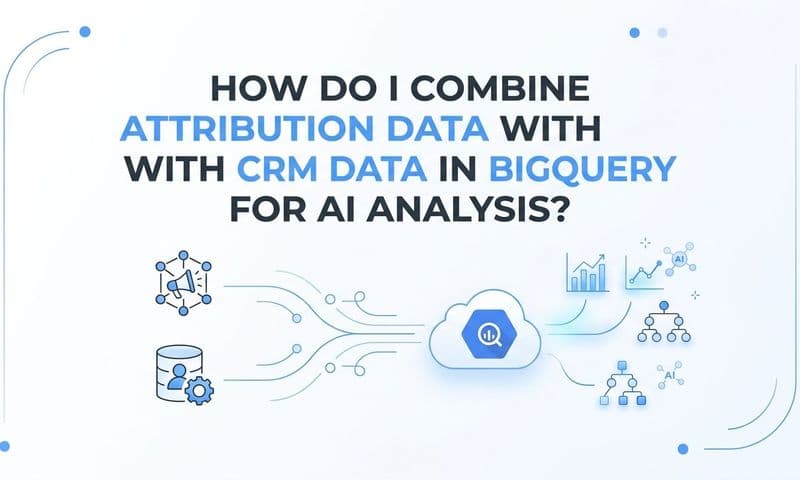
CRM and Sales Data: Your customer relationship management system holds the ultimate truth: which marketing touchpoints actually resulted in revenue. This is where digital marketing insights become business insights.
When you connect CRM data to your marketing channels, you stop optimizing for conversions that might be low-value and start optimizing for conversions that actually drive revenue. You might discover that your cheapest cost-per-lead channel produces leads that rarely close, while a more expensive channel consistently delivers high-value customers.
Server-Side Tracking Data: As browser-based tracking becomes less reliable due to privacy changes and cookie restrictions, server-side tracking provides a more accurate view of customer behavior. Instead of relying on pixels that can be blocked or degraded, server-side tracking captures conversion events directly from your server.
This matters because incomplete data leads to incomplete insights. When you're missing 30% of your conversions due to tracking limitations, you're making decisions based on a distorted reality. Understanding the digital marketing strategy that tracks users across the web helps you overcome these limitations.
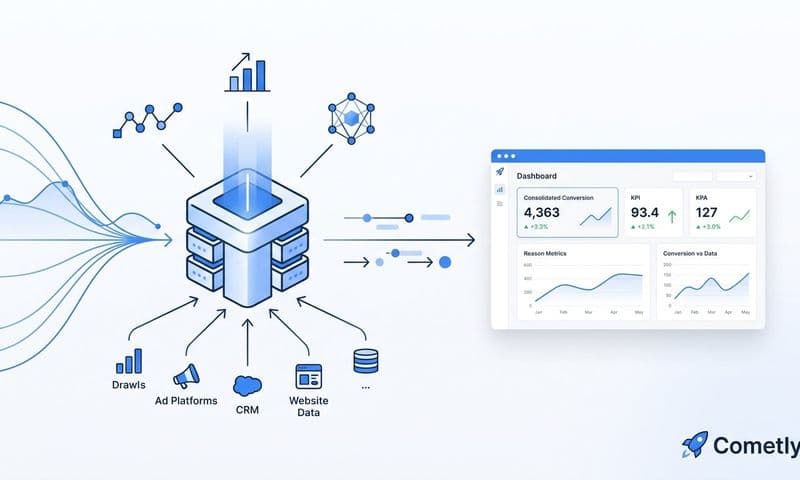
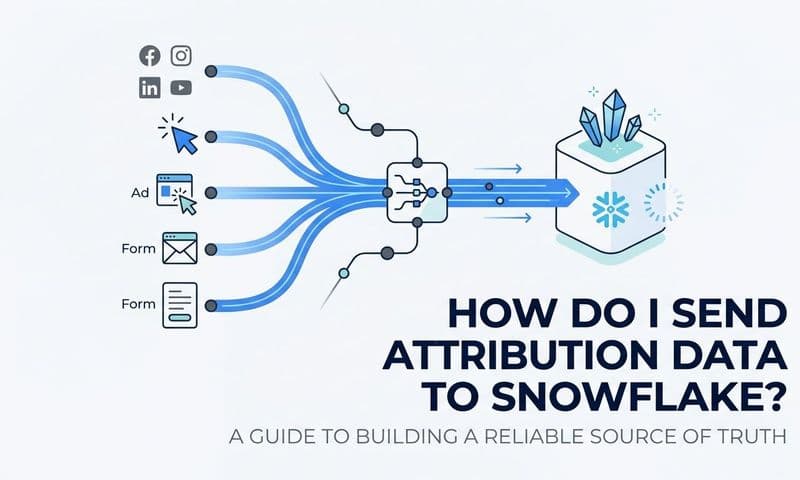
Cross-Platform Attribution Data: This is where everything connects. Attribution platforms unify data from all your sources—ad platforms, website analytics, CRM, and server-side tracking—to show you the complete customer journey.
Instead of seeing isolated touchpoints, you see sequences: someone saw your Meta ad, clicked it, didn't convert, later searched for your brand, read three blog posts, received two emails, and then converted after clicking a retargeting ad. Attribution data reveals which combinations of touchpoints drive results, not just which individual channels claim credit.
From Scattered Data to Connected Customer Journeys
Here's the fundamental challenge: customers don't convert in straight lines. They see your ad on Instagram, visit your site, leave, see another ad, Google your brand, read reviews, come back, and maybe—maybe—they convert.
Each platform only sees its piece of this journey. Meta sees the initial ad click. Google sees the branded search. Your website analytics sees two separate sessions. Your CRM sees one conversion. Who gets credit?
This is the attribution challenge, and how you solve it determines whether your insights reflect reality or just reinforce platform bias. Learning what is digital marketing attribution provides the foundation for solving this puzzle.
First-Touch Attribution: This model gives all credit to the first touchpoint in the customer journey. If someone saw your Meta ad, then later converted through a Google search, Meta gets 100% of the credit.
Use first-touch attribution when you're focused on awareness and top-of-funnel performance. It answers: "What's introducing people to our brand?" This model works well for businesses where the initial discovery is the hardest part—once people know you exist, conversion is relatively straightforward.
Last-Touch Attribution: This model credits the final touchpoint before conversion. In the same scenario, Google would get 100% of the credit because the branded search was the last interaction.
Last-touch attribution makes sense when you're optimizing for direct response and bottom-of-funnel performance. It shows you what's closing deals right now. The risk is undervaluing the touchpoints that made that final conversion possible.
Linear Attribution: This model distributes credit equally across all touchpoints in the journey. If someone had five interactions before converting, each touchpoint gets 20% of the credit.
Linear attribution provides a more balanced view, recognizing that every touchpoint contributed to the conversion. It's useful when you want to ensure you're not starving channels that play important supporting roles in your marketing mix.
Data-Driven Attribution: This approach uses machine learning to analyze thousands of customer journeys and determine which touchpoints actually influence conversion probability. Instead of applying arbitrary rules, it calculates the statistical impact of each interaction. Exploring attribution models in digital marketing helps you choose the right approach for your business.
Data-driven attribution reveals patterns that might contradict your assumptions. You might discover that seeing a particular ad creative early in the journey increases conversion likelihood by 40%, even if that ad didn't get the final click. Or you might find that certain touchpoint sequences convert at 3x the rate of others.
But here's the problem: all attribution models are only as good as the data they analyze. And that data has become increasingly incomplete.
iOS privacy changes, browser restrictions, and cookie deprecation have created massive gaps in tracking. When someone clicks your ad on their iPhone, converts three days later on their laptop, and you can't connect those two events, your attribution model is working with incomplete information.
This is where server-side tracking becomes essential. By capturing conversion events directly from your server rather than relying on browser-based pixels, you get more accurate data about what's actually happening. When your tracking is more complete, your attribution insights become more reliable, and your optimization decisions become more effective.
Extracting Insights That Actually Move the Needle
Once you have connected data, the next step is knowing what to look for. The most valuable digital marketing insights fall into patterns that directly impact performance.
Creative Performance Patterns: Not all ads are created equal, and understanding why certain creatives outperform others is one of the highest-leverage insights you can extract.
Look beyond surface-level metrics like CTR. Dig into which creative elements correlate with actual conversions. You might discover that ads featuring customer testimonials convert 2x better than product-focused ads, even if they get slightly lower click-through rates. Or you might find that video ads under 15 seconds drive more conversions than longer formats, despite conventional wisdom suggesting otherwise.
The insight isn't just "Video A performed better than Video B." It's understanding the specific elements—messaging angle, visual style, opening hook, or call-to-action—that made the difference. This allows you to replicate success systematically rather than hoping your next creative test works out.
Channel Performance Reality Checks: Every marketer has channels they love and channels they tolerate. The channels you love often stick around longer than they should, draining budget while delivering diminishing returns.
The key insight here is identifying underperformers before they become serious problems. Set up alerts for when channel efficiency drops below acceptable thresholds. If your LinkedIn cost per acquisition suddenly increases by 40% while conversion rates stay flat, that's not normal fluctuation—it's a signal that something changed and you need to investigate. Implementing channel attribution for revenue tracking makes these reality checks systematic rather than sporadic.
Equally important is recognizing when a channel you've written off deserves another look. Maybe TikTok didn't work six months ago, but your product has evolved, your creative approach has improved, or the platform's audience has matured. Regular performance reviews surface these opportunities before your competitors discover them.
Audience Segment Goldmines: Within your broad target audience, certain segments convert at dramatically different rates. Finding these high-value segments is like discovering a vein of gold in a mountain you've been mining for copper.
Look for patterns in demographic data, behavioral signals, and engagement history. You might find that people who visit your pricing page twice before converting have a 60% higher lifetime value than those who convert on their first visit. Or you might discover that customers from a specific industry vertical have 3x lower churn rates than your average customer.
These insights allow you to shift budget toward acquiring more of your best customers rather than just acquiring more customers in general. The difference in ROI is substantial.
Timing and Seasonality Insights: When you run ads matters as much as what you say in them. Analyzing performance by day of week, time of day, and seasonal patterns reveals optimization opportunities that most marketers miss.
You might discover that your ads perform 40% better on Tuesday afternoons than Sunday evenings, or that your conversion rate doubles during the first week of each month when budgets refresh. These patterns allow you to concentrate spend during high-efficiency windows rather than spreading it evenly across all hours and days.
Turning Insights Into Action: The Optimization Loop
Insights without action are just expensive observations. The marketers who win aren't those who extract the most insights—they're the ones who act on them fastest and most systematically.
The Insight-to-Action Framework: Create a structured process for moving from insight to implementation. When you identify a pattern worth acting on, document three things: what you learned, what you'll change, and how you'll measure impact.
For example: "Insight: Video ads showing customer results convert 3x better than product demos. Action: Shift 60% of creative production budget toward result-focused videos. Measurement: Track conversion rate changes over the next two weeks and compare cost per acquisition to previous period."
This framework prevents insights from getting lost in the noise. You're not just noticing patterns—you're systematically testing whether acting on those patterns improves performance. Building a solid digital marketing strategy framework ensures this process becomes repeatable.
Budget Reallocation Based on Real Performance: Most marketers set budgets at the beginning of a quarter and make minor adjustments along the way. This approach ignores the continuous stream of performance data telling you where money should flow.
Build a weekly review process where you analyze which channels, campaigns, and audience segments are delivering the best returns. Then move budget accordingly. If Channel A is producing $50 cost per acquisition while Channel B is at $200, and you've verified that Channel A's conversions are equally valuable, the decision is obvious.
The key is acting on this data systematically rather than waiting for quarterly planning cycles. Small, frequent optimizations compound into significant performance improvements.
AI-Powered Optimization at Scale: As your marketing complexity increases—more channels, more campaigns, more audience segments—human analysis hits a ceiling. You can't manually review every combination of variables to find optimization opportunities.
This is where AI-powered recommendations become valuable. Machine learning algorithms can analyze thousands of data points simultaneously, identifying patterns and opportunities that would take humans weeks to discover. They can surface insights like "Campaign X performs 40% better when running between 2-4 PM on weekdays" or "Audience segment Y has a 3x higher conversion rate when targeted with creative style Z." Exploring the best AI tools for digital marketing can accelerate your optimization capabilities significantly.
The advantage isn't just speed—it's comprehensiveness. AI doesn't get tired, doesn't have biases about which channels it prefers, and doesn't miss subtle patterns hidden in the data.
Conversion Sync: Feeding Intelligence Back to Ad Platforms: Here's a strategy most marketers overlook: the quality of data you send back to ad platforms directly affects how well their algorithms optimize your campaigns.
Ad platforms like Meta and Google use conversion data to improve targeting and bidding. But if you're only sending basic conversion events, you're leaving performance on the table. When you sync enriched conversion data—including customer value, purchase category, and downstream revenue—ad platform algorithms can optimize for outcomes that actually matter to your business.
This creates a virtuous cycle: better data leads to better algorithmic optimization, which leads to better results, which generates more data to improve optimization further.
Building Your Insight-Driven Marketing Stack
The difference between having data and having insights often comes down to your technology infrastructure. The right stack doesn't just collect information—it connects, analyzes, and surfaces actionable intelligence.
Essential Capabilities to Prioritize: Your marketing stack needs three core capabilities to generate valuable insights consistently.
Real-time tracking ensures you're making decisions based on current performance, not yesterday's data. When a campaign starts underperforming, you need to know immediately, not when you check your weekly report. Real-time visibility allows you to catch problems early and capitalize on opportunities while they're hot.
Cross-platform visibility breaks down the silos that fragment your understanding of customer journeys. When all your data sources feed into a unified view, you can see how channels work together rather than competing for credit. This is where you discover that your Meta ads and Google Search campaigns aren't redundant—they're complementary touchpoints in a sequence that drives conversions. Implementing multi-channel attribution in digital marketing is essential for achieving this unified perspective.
Revenue attribution connects marketing activities to actual business outcomes. Optimizing for leads or conversions is fine, but optimizing for revenue is better. When you can see which campaigns drive high-value customers versus low-value ones, you make fundamentally different budget allocation decisions.
The Role of Marketing Attribution Platforms: Attribution platforms serve as the connective tissue between your various data sources. They integrate with your ad platforms, website analytics, CRM, and other tools to create a unified view of marketing performance.
The value isn't just centralization—it's the analysis layer that sits on top. Attribution platforms apply the models we discussed earlier (first-touch, last-touch, data-driven) to show you which touchpoints drive results. They track customer journeys across devices and sessions, solving the fragmentation problem that makes it impossible to understand performance from platform-native reporting alone. Reviewing digital marketing attribution software options helps you find the right solution for your needs.
Look for platforms that offer server-side tracking to ensure data accuracy despite privacy restrictions. The more complete your data, the more reliable your insights.
Dashboard Design That Surfaces Insights: Most marketing dashboards are metric museums—they display numbers but don't tell you what to do about them. An insight-driven dashboard is different.
Instead of showing every available metric, focus on the KPIs that actually drive decisions. Highlight variances and anomalies that require attention. Use visual cues to draw attention to performance changes that matter.
Build dashboards around questions you need to answer: "Which campaigns should I scale?" "Where am I wasting budget?" "What's my true return on ad spend across all channels?" When your dashboard answers these questions at a glance, you've moved from reporting to insight generation.
Making Digital Marketing Insights Your Competitive Advantage
The gap between average marketers and exceptional ones isn't access to data—everyone has plenty of that. It's the ability to extract insights from that data and act on them systematically.
You've seen how genuine insights differ from vanity metrics. You understand how to connect fragmented data sources into complete customer journey views. You know which patterns to look for and how to turn observations into optimizations.
The marketers who win in 2026 and beyond won't be those with the biggest budgets. They'll be those who understand what's actually working, why it's working, and how to do more of it. They'll be the ones who can confidently answer "Which campaigns should I scale?" because they have the insights to back up their decisions.
This requires more than good intentions. It requires infrastructure that captures every touchpoint, connects them to revenue outcomes, and surfaces actionable intelligence in real time. It requires moving beyond platform-specific reporting to understand how your entire marketing ecosystem works together.
Most importantly, it requires treating insights as your primary competitive advantage rather than just another metric to track. When you build your entire marketing operation around extracting and acting on genuine insights, you stop guessing and start growing.
Ready to elevate your marketing game with precision and confidence? Discover how Cometly's AI-driven recommendations can transform your ad strategy—Get your free demo today and start capturing every touchpoint to maximize your conversions.