You're running campaigns across Meta, Google, LinkedIn, and email. The conversions are rolling in. Your dashboard shows results. But when your CFO asks the question every marketer dreads—"which channel actually drove that sale?"—you freeze.
You know the customer clicked a Facebook ad three weeks ago. They also searched your brand name on Google last week. They opened two emails. They visited your site four times. So which one gets credit for the $5,000 deal that just closed?
This isn't just an academic question. It's the difference between scaling the channels that actually drive revenue and throwing budget at the ones that just happened to be last in line. Multi channel attribution solves this problem by connecting every touchpoint to revenue, giving you a complete picture of what's actually working.
This guide breaks down how multi channel attribution works, which models fit different business types, and how to turn attribution data into confident budget decisions. Whether you're running a fast-moving ecommerce operation or managing a complex B2B sales cycle, you'll learn how to track what actually drives revenue.
Why Single-Touch Attribution Leaves Money on the Table
The typical B2B buyer doesn't see one ad and convert. They research. They compare. They come back multiple times before making a decision. A SaaS prospect might discover you through a LinkedIn ad, read three blog posts over two weeks, attend a webinar, and finally convert after clicking a retargeting ad.
Single-touch attribution models—whether first-click or last-click—only capture one moment in that journey. First-click gives all credit to the initial LinkedIn ad. Last-click gives everything to the retargeting campaign. Both approaches create dangerous blind spots that undermine your channel attribution in digital marketing revenue tracking efforts.
Here's what happens when you rely on last-click attribution: Your retargeting campaigns look like heroes because they're always present at the conversion moment. Meanwhile, your top-of-funnel content and awareness campaigns get zero credit, even though they introduced prospects to your brand and built the trust that made that final conversion possible.
The result? You cut budget from channels that are actually driving discovery and consideration. You pour more money into bottom-funnel tactics that only work because other channels did the heavy lifting first. Your cost per acquisition climbs because you're starving the top of your funnel.
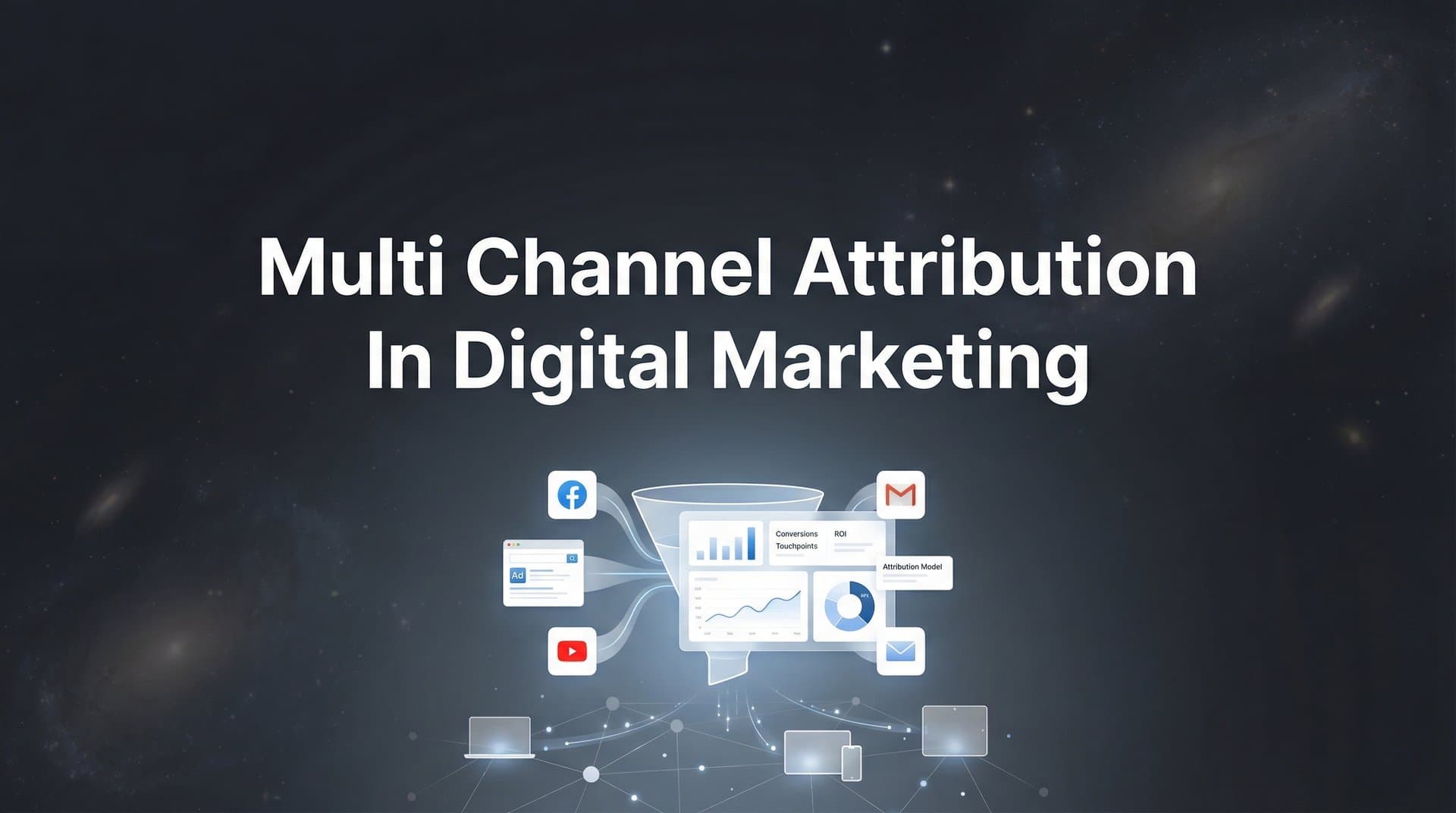
Multi channel attribution captures the complete customer journey from first impression to closed deal. Instead of crediting one touchpoint, it acknowledges that multiple interactions across different channels worked together to drive the conversion. This complete view reveals which channels assist conversions, which channels close deals, and how they work together in your marketing ecosystem.
For B2B companies especially, this matters enormously. When deals take weeks or months to close and involve multiple decision-makers, understanding the full journey isn't optional. It's the only way to accurately measure what's working and allocate budget intelligently.
Breaking Down the Core Attribution Models
Once you move beyond single-touch attribution, you enter a spectrum of models that distribute credit across multiple touchpoints. Each model has different logic for how it assigns value, and understanding these differences helps you choose the right approach for your business.
Linear Attribution: This model gives equal credit to every touchpoint in the customer journey. If someone had five interactions before converting, each one gets 20% of the credit. Linear attribution works well when you genuinely believe every touchpoint contributes equally, or when you're just starting with multi touch attribution in marketing and want a simple baseline to understand your full funnel.
The limitation? It treats a quick website visit the same as a 30-minute product demo. It doesn't account for the reality that some interactions matter more than others in moving prospects toward a purchase decision.
Time-Decay Attribution: This model recognizes that interactions closer to the conversion are often more influential. It assigns progressively more credit to recent touchpoints while still acknowledging earlier interactions. A touchpoint from yesterday gets more credit than one from three weeks ago.
Time-decay makes sense for businesses with shorter sales cycles where momentum matters. If you're running ecommerce campaigns where people typically convert within a few days of discovering you, giving more weight to recent interactions reflects the buying psychology. For longer B2B sales cycles, however, this model might undervalue important early-stage education and awareness efforts.
Position-Based Attribution (U-Shaped): This model emphasizes both the first and last touchpoints while still giving credit to interactions in between. Typically, the first and last touches each get 40% of the credit, and the remaining 20% is distributed among middle interactions.
Position-based attribution acknowledges two critical moments: the introduction to your brand and the final conversion action. It's particularly useful when you want to value both demand generation efforts that bring in new prospects and conversion-focused tactics that close deals. The middle touchpoints get some credit for nurturing the relationship, but the model recognizes that discovery and decision moments often matter most.
Data-Driven Attribution: Instead of using predetermined rules, data-driven models use machine learning to analyze your actual conversion patterns and assign credit based on what the data shows. The algorithm looks at the paths that led to conversions versus those that didn't, identifying which touchpoints actually increased the likelihood of a sale.
This is the most sophisticated approach because it's customized to your specific business and customer behavior. If your data shows that webinar attendance is a strong conversion predictor, the model weights it accordingly. If email opens rarely lead to conversions, they get less credit. The model evolves as your customer behavior changes.
The catch? Data-driven attribution requires substantial conversion volume to work effectively. The algorithms need enough data to identify meaningful patterns. For businesses with lower conversion volumes or very long sales cycles, rule-based models often provide more reliable insights. Understanding these attribution models in digital marketing helps you select the right approach for your situation.
The Technical Foundation: How Multi Channel Tracking Actually Works
Understanding attribution models is one thing. Actually tracking customer journeys across multiple channels and devices requires solving some serious technical challenges. Modern multi channel attribution depends on connecting several data sources into a unified view.
The foundation starts with connecting your ad platforms, CRM systems, and website analytics into a unified data layer. When someone clicks your Facebook ad, that interaction needs to be tracked. When they later visit your website from a Google search, that needs to be captured too. When they finally fill out a form and enter your CRM, all those previous touchpoints need to connect to that conversion event.
This connection happens through several mechanisms working together. UTM parameters tag your ad links so analytics platforms can identify the source of website visits. Tracking pixels on your website record visitor behavior and can match it back to ad platform user IDs. Your CRM captures form submissions and deal data. The attribution platform ties all these data streams together by matching user identifiers across systems.
But here's where it gets complicated: iOS privacy changes and browser limitations have made traditional pixel-based tracking less reliable. When Apple introduced App Tracking Transparency, it gave users the option to block cross-app tracking. Many users opted out, creating gaps in the data that pixels could collect. Browser changes limiting third-party cookies created similar challenges for web tracking.
Server-side tracking has emerged as the solution to these limitations. Instead of relying solely on browser-based pixels that users can block, server-side tracking sends data directly from your server to analytics platforms. When someone converts on your website, your server sends that conversion event—along with any available user identifiers—to your attribution system and ad platforms.
This approach has several advantages. It's not affected by browser restrictions or ad blockers. It gives you more control over what data gets shared and when. It improves data accuracy because you're working with first-party data from your own systems rather than trying to piece together signals from third-party cookies.
First-party data collection becomes crucial in this environment. This means data you collect directly from customer interactions: form submissions, account creation, purchase history, email engagement. This data belongs to you, isn't subject to third-party restrictions, and provides the most reliable foundation for attribution marketing tracking.
The technical implementation typically involves several components working together: tracking scripts on your website that capture visitor behavior, server-side APIs that send conversion data to attribution platforms, integrations between your CRM and marketing tools, and a data warehouse or attribution platform that reconciles all these data streams into coherent customer journeys.
Choosing the Right Model for Your Marketing Stack
There's no universal "best" attribution model. The right choice depends on your sales cycle, channel mix, and what questions you're trying to answer. Understanding these factors helps you select an approach that actually improves decision-making rather than just generating reports.
Sales cycle length fundamentally shapes which models make sense. Ecommerce businesses with short sales cycles—where customers often convert within hours or days of first discovering the brand—can use simpler models effectively. Time-decay attribution works well here because recent interactions genuinely matter more when purchase decisions happen quickly.
B2B SaaS companies with longer sales cycles face different realities. When deals take weeks or months to close, that initial awareness touchpoint from eight weeks ago might have been just as important as last week's demo. Position-based or data-driven models typically provide better insights for these longer journeys because they don't discount early-stage interactions.
Your channel mix also influences model selection. If you're running a simple two-channel strategy—say, just Google Ads and email—you don't need a complex attribution model to understand what's working. But when you're running campaigns across Meta, Google, LinkedIn, email, content marketing, and events, multichannel marketing attribution becomes essential for understanding how these channels interact.
Consider your business goals when choosing a model. If your primary objective is understanding which channels generate initial awareness, position-based attribution that emphasizes first touch might align well. If you're focused on conversion optimization and want to credit the tactics that push prospects over the finish line, last-click or time-decay models might provide more actionable insights.
Here's a powerful approach many sophisticated marketing teams use: implement multiple models simultaneously. You don't have to choose just one. Running both position-based and data-driven attribution in parallel lets you compare different perspectives on your marketing performance. One model might reveal that your content marketing drives valuable early-stage engagement, while another shows which channels most reliably close deals.
The key is matching your attribution approach to your actual decision-making needs. If you're trying to decide whether to increase LinkedIn ad spend, you need to understand both how often LinkedIn ads introduce new prospects and how often they assist in conversions. A single attribution model might not answer both questions clearly.
For businesses just starting with multi channel attribution, beginning with a simpler model like linear or position-based makes sense. These models are easier to explain to stakeholders and provide immediate insights into your full funnel. As you build confidence in your attribution data and accumulate more conversion volume, you can layer in more sophisticated approaches like multi channel attribution modeling.
Turning Attribution Data Into Budget Decisions
Attribution models generate reports. But reports don't improve marketing performance. The value comes from using attribution insights to make smarter budget allocation decisions and optimize campaign performance. Here's how to bridge that gap.
Start by identifying undervalued channels—the ones that assist conversions but rarely get last-click credit. Your attribution data might reveal that LinkedIn ads introduce 40% of your eventual customers, but only get last-click credit for 10% of conversions. That's a channel worth investing more in, even though traditional last-click reporting makes it look less valuable.
Look for patterns in high-value customer journeys. When you close your biggest deals, which touchpoints were consistently present? If enterprise customers almost always attend a webinar before converting, that insight should shape how you allocate budget and structure campaigns. Attribution data can reveal these patterns that aren't obvious from single-touch reporting.
Use attribution insights to optimize ad platform algorithms with better conversion data. When you send enriched conversion events back to Meta, Google, and other platforms—events that include attribution data and customer value information—their algorithms can optimize more effectively. Instead of just optimizing for any conversion, they can prioritize the channels and audiences that drive your most valuable customers.
This feedback loop between attribution data and campaign optimization is where the real value lives. Your attribution platform identifies which campaigns drive high-value conversions. You feed that data back to your ad platforms. They use it to find more similar customers. Your attribution data gets better as you accumulate more conversions. The cycle continues.
Build testing frameworks informed by attribution insights. If your data shows that prospects who engage with both paid search and email convert at higher rates, test campaigns designed to drive that multi-channel engagement. Create email sequences that reference the ad content people clicked. Build retargeting campaigns that complement your email messaging.
Don't just reallocate budget based on attribution data—use it to inform creative strategy and messaging. If attribution reveals that prospects typically discover you through LinkedIn but convert after seeing Google search ads, your LinkedIn creative should focus on awareness and education while your search ads emphasize conversion-focused messaging. This approach directly improves your cross channel attribution marketing ROI.
Set up regular attribution reviews with your team. Monthly or quarterly, analyze which channels are gaining or losing influence in your conversion paths. Market dynamics change. Customer behavior evolves. Your attribution data should inform ongoing strategy adjustments, not just one-time budget shifts.
Common Attribution Pitfalls and How to Avoid Them
Even with solid attribution models and clean data, several common mistakes can undermine the value of your insights. Recognizing these pitfalls helps you avoid wasting time on misleading analysis.
The biggest trap: over-relying on platform-reported conversions. Facebook's Ads Manager, Google Ads, and LinkedIn Campaign Manager all report conversions. Add up what each platform claims credit for, and you'll often find they collectively claim 150% or more of your actual conversions. Each platform uses its own attribution window and methodology, and they all want to show strong results.
Your attribution platform needs to be the source of truth. It should deduplicate conversions and assign credit based on a consistent methodology across all channels. When platforms disagree with your attribution data—and they will—trust the system that has visibility into the complete customer journey. Understanding these attribution challenges in digital marketing helps you build more reliable measurement systems.
For B2B companies, ignoring offline touchpoints creates a dangerously incomplete picture. Sales calls, in-person meetings, conference attendance, and direct sales outreach all influence deals. If your attribution system only tracks digital interactions, you're missing crucial parts of the story. The solution requires connecting your CRM data and sales activity logs to your attribution platform so offline interactions get proper credit.
Lookback windows matter more than many marketers realize. Set your window too short, and you miss important early-funnel interactions. Set it too long, and you credit touchpoints that had minimal influence. For most B2B companies, a 30-60 day lookback window captures the relevant conversion path without including noise. Ecommerce businesses with faster sales cycles might use 7-14 day windows.
Another common mistake: treating all conversions equally. A $500 customer and a $50,000 customer shouldn't receive the same attribution analysis. Revenue-based attribution—where credit is weighted by actual deal value—provides more actionable insights for businesses with variable customer values. This approach helps you understand which channels drive your most valuable customers, not just the highest volume. Implementing marketing revenue attribution ensures you're measuring what actually matters to your bottom line.
Don't ignore statistical significance. If a channel only drove three conversions last month, the attribution data isn't reliable enough to make major budget decisions. You need sufficient volume for patterns to be meaningful. Focus your analysis on channels with enough activity to generate trustworthy insights.
Building Your Attribution Advantage
Multi channel attribution isn't just about tracking—it's about making confident decisions with complete data. When you understand which ads and channels actually drive revenue, you stop guessing and start scaling what works.
The marketers who win in this environment are the ones who see the complete customer journey. They know which channels introduce prospects, which ones nurture consideration, and which ones close deals. They use that knowledge to build integrated multi channel marketing strategies where every channel plays its proper role.
This complete view creates a genuine competitive advantage. While your competitors argue about whether Facebook or Google drives better results, you're optimizing the interplay between all your channels. While they cut budget from channels that don't get last-click credit, you're investing in the full funnel that actually drives revenue.
The technical challenges are real—connecting data sources, implementing server-side tracking, choosing the right models. But solving these challenges unlocks clarity that transforms how you run marketing. You stop defending budget allocation with gut feeling and start showing exactly which investments drive returns.
Ready to elevate your marketing game with precision and confidence? Discover how Cometly's AI-driven recommendations can transform your ad strategy—Get your free demo today and start capturing every touchpoint to maximize your conversions.