You're staring at your Facebook Ads Manager at 11 PM on a Tuesday. The dashboard shows 847 clicks this week, 23 "conversions" according to Facebook's pixel, and a respectable 4.2x ROAS. You feel pretty good about it—until you check your actual sales data and count 61 new customers. The math doesn't add up. Facebook claims credit for 23 conversions, but 61 people actually bought. Which ads drove those extra 38 sales? Were they even from Facebook? Did someone click your ad three weeks ago, forget about you, then convert after seeing a Google ad yesterday?
This is the attribution mystery that haunts every Facebook advertiser in December 2026. You're spending real money—maybe $3,000 a month, maybe $30,000—but you're making budget decisions based on incomplete data. It's like trying to navigate with a map that only shows half the roads.
Here's what makes this so frustrating: customers don't follow straight lines. They see your Facebook ad on mobile during their morning commute. Three days later, they click a retargeting ad on desktop at work but don't purchase. That evening, they search your brand name on Google, read reviews, check your Instagram, and finally convert via direct traffic. Facebook takes credit for the conversion because of that desktop click three days ago—but did that click cause the sale, or did the initial mobile impression plant the seed? Or was it the combination of both touches plus everything that happened outside Facebook's view?
The stakes are higher now than ever before. iOS privacy changes have created bigger blind spots in your tracking. Cross-device behavior is the norm, not the exception. And every day you operate without understanding the true customer journey, you're making decisions that could be killing your most profitable campaigns while scaling the wrong ones.
What Is the Facebook Customer Journey?
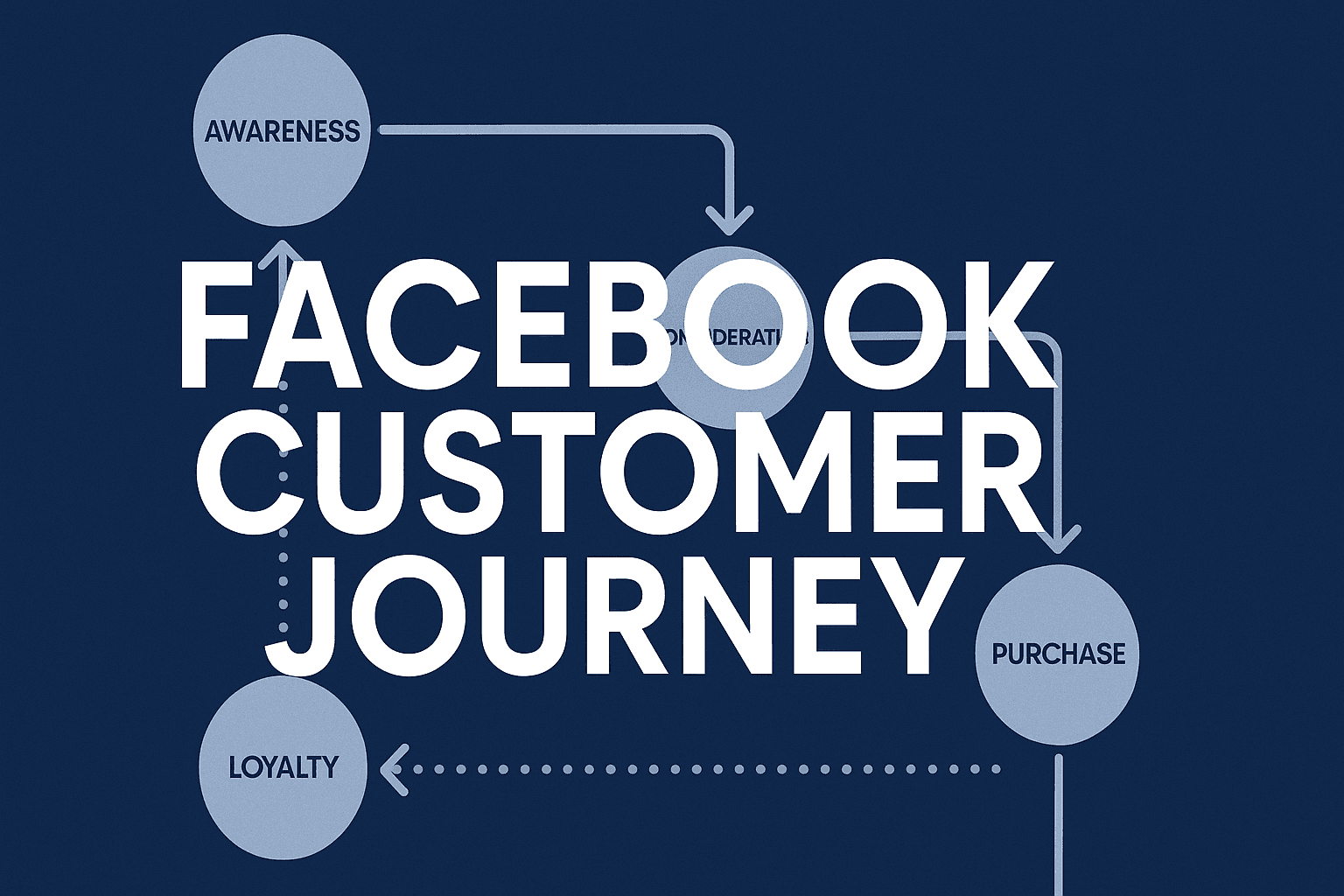
The Facebook customer journey is the complete path someone takes from first seeing your ad to becoming a paying customer—including all the touchpoints, platforms, and decisions that happen along the way. It's not just about clicks and conversions inside Facebook. It's about understanding how your Facebook ads fit into the bigger picture of how people actually discover, research, and buy from you.
Think of it this way: when you create a successful Facebook ad, you're not creating a standalone sales machine. You're creating one touchpoint in a journey that might span days, weeks, or even months. That journey typically includes multiple stages, each with different behaviors and needs.
The awareness stage is where someone first encounters your brand through a Facebook ad. Maybe they're scrolling through their feed during lunch, see your video ad, watch three seconds of it, and keep scrolling. Facebook doesn't count this as anything meaningful in their dashboard—no click, no engagement metric that matters. But that three-second impression planted a seed. Your brand name is now somewhere in their subconscious.
The consideration stage is where things get messy. That same person might see your retargeting ad two days later, this time on desktop. They click through, browse your product pages, read some reviews, but don't buy. They close the tab. Facebook records this as a click and maybe some engagement, but no conversion. What Facebook doesn't see is that this person then opens a new tab, searches "[your brand] reviews" on Google, reads a Reddit thread about your product, checks your Instagram, and adds your website to their bookmarks.
The decision stage is where attribution breaks down completely. Three days later, this person is ready to buy. But they don't click another Facebook ad. They type your URL directly into their browser, or they click a Google ad for your brand name, or they come back through an email you sent. They purchase. Facebook's pixel fires and records a conversion, attributing it to that desktop click from three days ago. But was that click really the thing that drove the sale? Or was it the initial mobile impression? Or the combination of everything that happened across multiple platforms?
This is why understanding comprehensive multi-touch attribution becomes critical for anyone running Facebook campaigns at scale. The platform's native attribution only shows you the last click or the last touch within their ecosystem. It completely misses the cross-platform, cross-device reality of how people actually buy.
Here's what makes the Facebook customer journey particularly complex in 2025: iOS 14.5+ privacy changes have made tracking even harder. When someone sees your ad on their iPhone, clicks through, but doesn't convert immediately, Facebook often can't track what happens next. If they later convert on desktop, Facebook might not connect those dots. The journey has gaps that Facebook's pixel simply cannot fill.
The journey also varies dramatically by product type and price point. If you're selling a $30 impulse-buy product, the journey might be simple: see ad, click ad, buy immediately. But if you're selling a $3,000 course or a $500 SaaS subscription, the journey could involve dozens of touchpoints across weeks. Someone might see your Facebook ad, visit your site, leave, see your ad again, click through, watch a webinar, receive email follow-ups, see more retargeting ads, read case studies, and finally convert through direct traffic. Facebook's attribution model will credit one of those ad clicks, but which one actually drove the sale?
The customer journey also includes touchpoints that Facebook can never see. Someone might see your ad, screenshot it, and text it to their spouse asking "should we buy this?" That conversation happens entirely outside Facebook's tracking. Or they might see your ad, remember your brand name, and a week later ask their friend if they've heard of you. Their friend recommends you, and they convert through direct traffic. Facebook gets zero credit, even though the ad was the initial catalyst.
This is why so many advertisers struggle with Facebook attribution. They're trying to understand a multi-dimensional journey using one-dimensional data. Facebook shows you clicks and conversions, but it doesn't show you the awareness impressions that didn't result in immediate clicks. It doesn't show you the cross-device behavior. It doesn't show you the external research people do after seeing your ads. It doesn't show you the word-of-mouth referrals that started with someone seeing your Facebook ad.
The real Facebook customer journey looks more like a web than a straight line. Someone might see your ad five times before clicking. They might click, leave, come back through Google, leave again, see another ad, click again, and finally convert. Or they might see your ad, never click it, but remember your brand and convert weeks later through organic search. Every one of these scenarios is a real customer journey, but Facebook's attribution only captures fragments of it.
Why Facebook's Native Attribution Falls Short
Facebook's Ads Manager gives you attribution data, but it's built on a foundation that fundamentally misunderstands how people buy in 2025. The platform uses last-click attribution by default, which means it gives 100% credit to the last Facebook ad someone clicked before converting. This creates a distorted picture of reality that leads to bad budget decisions.
Here's the core problem: last-click attribution ignores everything that happened before that final click. Let's say someone sees your awareness campaign ad on mobile, doesn't click. Three days later, they see your retargeting ad on desktop, click through, browse but don't buy. A week later, they see another retargeting ad, click, and purchase. Facebook gives all the credit to that final retargeting ad. But what about the awareness ad that introduced them to your brand? What about the first retargeting ad that got them to your site and let them research your product? Those touchpoints get zero credit, even though they were essential parts of the journey.
This creates a dangerous feedback loop. You look at your Facebook data, see that retargeting campaigns have amazing ROAS, and decide to scale them. Meanwhile, your awareness campaigns show poor ROAS, so you cut their budget. But here's what you don't see: those awareness campaigns were feeding your retargeting audiences. When you cut awareness spend, you're starving your retargeting campaigns of new prospects. Three weeks later, your retargeting ROAS crashes, and you don't understand why. The data told you to cut awareness, but the data was incomplete.
Facebook does offer attribution windows—1-day click, 7-day click, 1-day view, 7-day view—but these don't solve the fundamental problem. They just let you choose how far back Facebook looks before giving credit to a Facebook ad. If someone clicked your Facebook ad 8 days ago and converts today, even the 7-day window misses it. And none of these windows account for what happens outside Facebook's ecosystem.
The iOS privacy changes made this worse. When Apple introduced App Tracking Transparency with iOS 14.5, they gave users the ability to opt out of cross-app tracking. Most users opted out. This means Facebook's pixel often can't track what happens after someone clicks your ad on their iPhone. They might click your ad, visit your site on mobile Safari, leave without converting, and later purchase on their desktop. Facebook can't connect those dots anymore. The pixel sees a click with no conversion, and it sees a conversion with no click, but it doesn't know they're the same person.
This creates ghost conversions—sales that happen but that Facebook can't attribute to any ad. You see these as direct traffic or organic conversions in your analytics, but some percentage of them actually started with a Facebook ad. You just can't prove it. So when you're looking at your Facebook ROAS, you're seeing an undercount. The real ROAS might be 30% higher, but you're making budget decisions based on the incomplete number.
Facebook's attribution also struggles with cross-device behavior. Someone sees your ad on mobile during their commute, clicks through, browses on their phone but doesn't buy. That evening, they're on their laptop, remember your brand, type your URL directly, and purchase. Facebook's pixel fires on both devices, but if the person isn't logged into Facebook on both devices, or if they've cleared cookies, or if they're using different browsers, Facebook can't connect these as the same person. The mobile click gets no credit, and the desktop conversion appears as direct traffic.
The attribution window problem goes deeper than just time limits. Facebook's windows are based on when someone clicked or viewed an ad, not on when they actually started their buying journey. Someone might see your ad, not click it, but remember your brand. Two weeks later, they search your brand name on Google, click your Google ad, and convert. Facebook gets zero credit because there was no click within the attribution window. But that initial Facebook impression was the catalyst for everything that followed. How do you value that impression? Facebook's attribution model says it's worth nothing.
There's also the problem of view-through attribution. Facebook offers 1-day and 7-day view-through windows, which give credit to ads people saw but didn't click. This sounds good in theory, but in practice, it's almost impossible to validate. If someone saw your ad, didn't click, and converted three days later, did the ad cause the conversion? Or were they already planning to buy and would have converted anyway? Facebook counts it as a view-through conversion, inflating your reported ROAS. But you can't actually know if that impression mattered.
The multi-platform reality makes this even more complex. Your customer journey doesn't stay inside Facebook. Someone might see your Facebook ad, then see your Google ad, then get an email from you, then see your Instagram ad, then convert through organic search. Which channel deserves credit? Facebook says Facebook. Google says Google. Your email platform says email. Everyone wants to claim 100% credit for the same conversion. When you add up all the attributed conversions across all your platforms, you get 250% attribution—which is mathematically impossible but reflects the reality of overlapping attribution models.
This is why many advertisers who learn how to run Facebook ads effectively eventually hit a wall. They can optimize within Facebook's dashboard, but they can't see the bigger picture of how Facebook fits into their overall marketing mix. They don't know if they should spend more on Facebook and less on Google, or vice versa. They don't know which campaigns are actually driving new customer acquisition versus which ones are just capturing demand that already existed.
The Real Cost of Attribution Blindness
When you can't see the full customer journey, you make expensive mistakes. These aren't small optimization tweaks you're missing—they're fundamental strategic errors that compound over time and cost you real money. Let me show you exactly what attribution blindness costs you, with numbers that reflect what's actually happening in your account right now.
The first cost is killing profitable campaigns. You're looking at your Facebook Ads Manager, and you see a campaign with a 2.1x ROAS. Your target is 3x, so you pause it. But here's what you don't see: that campaign was driving awareness impressions that led to conversions 10-14 days later through other channels. Those conversions showed up as direct traffic or organic search, not as Facebook conversions. The campaign's real ROAS was 4.2x, but you killed it because you only saw half the picture. You just cut a campaign that was actually your most profitable channel.
This happens constantly. Awareness and top-of-funnel campaigns almost always show lower ROAS in Facebook's attribution because they're starting the journey, not finishing it. Someone sees your awareness ad, doesn't click, but remembers your brand. A week later, they search for you on Google and convert. Google gets the credit, Facebook gets nothing, and you conclude that awareness campaigns don't work. So you shift all your budget to retargeting, which shows great ROAS in Facebook's dashboard. But retargeting only works if you have new people to retarget. Three weeks later, your retargeting audience is exhausted, your overall conversion volume drops, and you don't understand why.
The second cost is scaling the wrong campaigns. You see a retargeting campaign with a 6x ROAS, so you triple its budget. But that ROAS was inflated because Facebook was taking credit for conversions that were actually driven by multiple touchpoints. When you scale the campaign, the ROAS drops to 3.5x. You're confused—why doesn't it scale? The answer is that the original ROAS was never real. It was based on last-click attribution that gave your retargeting campaign credit for conversions that were actually driven by your awareness campaigns, your email marketing, your Google ads, and your organic content all working together.
This is the scaling paradox that many Facebook ads companies encounter: campaigns that show great ROAS at low spend often don't maintain that ROAS when you scale them. Part of this is normal—you exhaust your best audiences and have to expand to colder prospects. But part of it is attribution distortion. The campaign was never as profitable as it appeared because it was stealing credit from other channels.
The third cost is budget misallocation across channels. You're spending $10,000 a month on Facebook and $5,000 on Google. Facebook reports $40,000 in attributed revenue (4x ROAS). Google reports $20,000 in attributed revenue (4x ROAS). Based on this data, you decide to shift more budget to Facebook. But here's the reality: there's significant overlap in those attributed conversions. Many of the people Facebook is claiming credit for also clicked a Google ad. Some of them saw your Facebook ad first, then converted through Google. When you shift budget away from Google, your Facebook ROAS actually drops because Google was playing a crucial role in the customer journey that Facebook's attribution couldn't see.
The fourth cost is creative testing failures. You launch a new creative in your awareness campaign. After a week, it shows a 1.8x ROAS while your existing creative shows 2.5x ROAS. You kill the new creative. But the new creative was actually resonating better with cold audiences and driving more brand awareness. Those people it reached were converting 2-3 weeks later through other channels. The creative's real ROAS was 3.2x, but you killed it after a week because you only measured immediate conversions. You just eliminated your best-performing creative based on incomplete data.
This is especially costly with video content and brand-building creative. These formats often drive awareness and consideration without immediate clicks. Someone watches 75% of your video ad, doesn't click, but remembers your brand. Two weeks later, they convert through direct traffic. Facebook's attribution gives that video ad zero credit. You conclude that video doesn't work and shift to direct response image ads. But you just killed the top-of-funnel content that was feeding your entire funnel.
The fifth cost is audience strategy mistakes. You're running campaigns to multiple audiences: cold prospecting, website visitors, engaged audiences, and past purchasers. Facebook's attribution shows that your past purchaser campaign has an 8x ROAS while your cold prospecting has a 1.5x ROAS. You shift budget away from prospecting and into past purchasers. But here's what you're missing: past purchasers were already likely to buy again. Many of them would have purchased even without seeing your ad. You're getting credit for conversions you didn't actually cause. Meanwhile, your cold prospecting was bringing in genuinely new customers who would never have found you otherwise. The real incremental ROAS of prospecting was 3.5x, while the real incremental ROAS of past purchasers was 2x. You just made exactly the wrong budget decision.
The sixth cost is seasonal misreads. It's November, and you're preparing for Black Friday. You look at last year's data in Facebook Ads Manager. Your retargeting campaigns showed a 5x ROAS during the holiday season, so you plan to scale them heavily. But what you don't see is that last year's holiday success was driven by a massive increase in awareness spend in September and October that built up your retargeting audiences. This year, you didn't increase awareness spend early enough. When Black Friday hits, your retargeting campaigns underperform because you don't have enough people to retarget. You blame the creative or the offer, but the real problem was strategic—you didn't understand the delayed impact of awareness campaigns.
The seventh cost is competitive disadvantage. Your competitors are using Facebook advertising reporting software that tracks the full customer journey. They can see which campaigns are actually driving new customer acquisition. They know the real value of their awareness campaigns. They understand cross-channel attribution. This means they can profitably bid higher than you on the same audiences because they know the true lifetime value of a customer acquired through Facebook. You're bidding based on Facebook's incomplete attribution data, so you're consistently outbid on the best audiences. You think your competitors are overpaying, but they're actually seeing data you can't see.
How to Track the Complete Facebook Customer Journey
Tracking the real customer journey requires going beyond Facebook's native tools and building a system that captures every touchpoint across devices, platforms, and time. This isn't about adding one more tracking pixel—it's about fundamentally changing how you collect and connect data about your customers' paths to purchase.
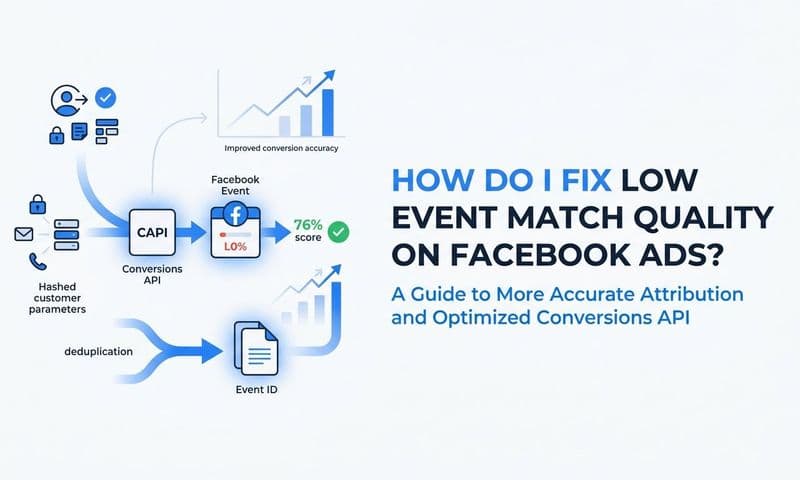
The foundation is server-side tracking. Facebook's pixel is a browser-based tracker, which means it only works when someone's browser allows it to work. With iOS privacy changes and browser cookie restrictions, the pixel misses a huge percentage of conversions. Server-side tracking solves this by sending conversion data directly from your server to Facebook, bypassing browser restrictions. When someone purchases on your site, your server tells Facebook about the conversion, even if the browser pixel was blocked. This immediately closes one of the biggest gaps in Facebook's attribution.
But server-side tracking alone isn't enough. You need a way to connect the dots across multiple sessions and devices. This requires implementing a persistent user ID system. When someone first visits your site from a Facebook ad, you assign them a unique ID and store it in your database. Every time they come back—whether from another Facebook ad, a Google ad, an email, or direct traffic—you recognize them by that ID. Now you can see their complete journey: first touch from Facebook, second touch from Google, third touch from email, final conversion from direct traffic.
This is where a Facebook ads reporting dashboard that integrates with your CRM becomes essential. You're not just tracking clicks and conversions—you're tracking people and their journeys. You can see that Customer #4,829 first saw your Facebook ad on mobile 14 days ago, clicked a retargeting ad on desktop 7 days ago, received three emails, clicked a Google ad yesterday, and converted this morning through direct traffic. That's the real journey, and it tells you something completely different than Facebook's last-click attribution.
The next layer is UTM parameter consistency and tracking. Every Facebook ad should have detailed UTM parameters that identify the campaign, ad set, ad, and even the creative. But here's where most advertisers fail: they add UTMs, but they don't actually use the data. You need a system that captures those UTM parameters when someone first visits, stores them with that user's ID, and then connects them to the eventual conversion—even if that conversion happens weeks later through a completely different channel. This lets you see that a conversion that appears as "direct traffic" in Google Analytics actually started with a specific Facebook ad 18 days ago.
You also need to implement cross-device identity resolution. This is technically complex, but the concept is simple: when someone visits your site on mobile and later on desktop, you need to recognize them as the same person. The most reliable way to do this is through email capture. If someone enters their email on mobile and later converts on desktop using the same email, you can connect those sessions. This requires integrating your email capture forms with your tracking system so that the email becomes the linking key across devices.
Multi-touch attribution modeling is where this all comes together. Instead of giving 100% credit to the last click, you distribute credit across all the touchpoints in the journey. There are several models you can use. Linear attribution gives equal credit to every touchpoint. Time-decay attribution gives more credit to recent touchpoints. Position-based attribution gives more credit to the first and last touches. U-shaped attribution emphasizes the first touch and the conversion touch. The right model depends on your business, but any multi-touch model is better than last-click because it shows you the real value of each channel and campaign.
Here's what this looks like in practice. You run an awareness campaign, a consideration campaign, and a conversion campaign. Facebook's last-click attribution shows the conversion campaign with a 5x ROAS, the consideration campaign with a 2.5x ROAS, and the awareness campaign with a 1.2x ROAS. But when you implement multi-touch attribution tracking the full journey, you see something different. Many of the conversions that Facebook attributed to the conversion campaign actually started with the awareness campaign. When you redistribute credit using a time-decay model, the awareness campaign's real ROAS is 3.8x, the consideration campaign is 3.2x, and the conversion campaign is 4.1x. All three campaigns are profitable, but you were about to kill the awareness campaign based on Facebook's incomplete data.
You also need to track view-through conversions more accurately than Facebook does. Facebook's view-through attribution is binary—someone either saw your ad or they didn't. But there's a huge difference between someone who saw your ad for 0.5 seconds while scrolling and someone who watched your entire 60-second video. You need to track video engagement metrics and connect them to conversions. When you see that people who watched 75% of your video ad are converting at 3x the rate of people who watched 10%, you understand the real value of video content—even if those viewers didn't immediately click.
Incrementality testing is the final piece. This is where you measure what would have happened without your Facebook ads. You create a holdout group—a segment of your audience that doesn't see your ads—and compare their conversion rate to the group that does see your ads. The difference is your true incremental impact. This is the only way to know if your retargeting campaigns are actually driving conversions or just taking credit for people who would have bought anyway. Most advertisers skip this because it requires deliberately not showing ads to some people, which feels like leaving money on the table. But without incrementality testing, you're flying blind on which campaigns are actually causing conversions versus which ones are just correlated with conversions.
The technical implementation requires integrating multiple systems. Your Facebook pixel and Conversions API need to send data to a central tracking platform. That platform needs to connect to your CRM, your email system, your Google Analytics, and your other ad platforms. Every conversion needs to be enriched with the complete journey data—all the touchpoints, all the channels, all the timestamps. This data then feeds into your attribution model, which calculates the distributed credit for each touchpoint.
This is complex, which is why many Facebook ads company partners and agencies invest in attribution platforms that handle this infrastructure. But even if you're building it yourself, the core principle is the same: capture every touchpoint, connect them to individual users, track those users across devices and sessions, and attribute conversions based on the complete journey rather than the last click.
Optimizing Budget Based on True Journey Data
Once you can see the complete customer journey, your budget decisions change dramatically. You're no longer optimizing based on Facebook's last-click attribution—you're optimizing based on how each campaign actually contributes to conversions across the entire funnel. This requires a different approach to budget allocation, one that accounts for delayed conversions, cross-channel impact, and the real incremental value of each campaign.
The first shift is recognizing that awareness campaigns have delayed ROI. When you launch a new awareness campaign targeting cold audiences, you shouldn't judge its performance after three days or even a week. These campaigns plant seeds that take time to grow. Someone sees your ad today, doesn't click, but remembers your brand. Two weeks later, they search for you and convert. If you're only looking at Facebook's 7-day attribution window, you miss this completely. You need to track conversions that happen 14, 21, or even 30 days after someone was exposed to your awareness campaign.
Here's how to operationalize this: when you launch an awareness campaign, set a longer evaluation period—at least 21 days. Track not just immediate conversions, but also downstream metrics like branded search volume, direct traffic, and conversions from other channels among people who were exposed to your awareness ads. You'll often find that an awareness campaign that shows a 1.5x ROAS in Facebook's dashboard is actually driving a 3.5x ROAS when you account for all the delayed and cross-channel conversions it influences.
This changes your budget allocation strategy. Instead of shifting budget away from low-ROAS awareness campaigns, you maintain or even increase their budget because you understand their true value. You're not optimizing for immediate ROAS—you're optimizing for total customer acquisition over a 30-day window. This means you might run awareness campaigns at an apparent loss in Facebook's dashboard while they're actually profitable when you measure their full impact.
The second shift is understanding campaign interdependence. Your retargeting campaigns don't exist in isolation—they depend on your awareness campaigns to fill the retargeting audiences. If you cut awareness spend, your retargeting performance will decline 2-3 weeks later when the audience pool shrinks. This means you can't optimize each campaign independently. You need to optimize them as a system.
Here's a practical framework: calculate the ratio of awareness spend to retargeting spend that maximizes total conversions. Start by tracking how many people enter your retargeting audiences each week and what percentage of awareness campaign reach becomes retargetable. Then track how retargeting conversion rates change as audience size changes. You'll typically find an optimal ratio—maybe $3 of awareness spend for every $1 of retargeting spend, or maybe $2 to $1. This ratio becomes your budget allocation guide. When you want to scale retargeting, you first need to scale awareness to feed it.
The third shift is channel-level budget optimization based on incremental value. You're running Facebook, Google, email, and maybe other channels. Each channel reports its own attributed conversions, and there's overlap—the same conversion gets credited to multiple channels. To optimize budget across channels, you need to know each channel's incremental contribution, not just its attributed conversions.
Run incrementality tests by temporarily pausing one channel and measuring what happens to total conversions. If you pause Facebook for a week and total conversions drop by 40%, then Facebook is driving 40% incremental conversions—even if it was claiming credit for 60% in its attribution. This tells you Facebook's true value, which should guide how much you invest in it relative to other channels. You might find that Facebook is claiming credit for 100 conversions but only driving 60 incrementally, while Google is claiming 80 but driving 70 incrementally. This means Google deserves more budget, even though Facebook shows higher attributed conversions.
The fourth shift is creative-level optimization based on journey stage performance. Not all creative performs the same at different journey stages. A video ad might be excellent for awareness but poor for conversion. A carousel ad might be great for consideration but weak for awareness. When you track the complete journey, you can see which creative works best at each stage and allocate budget accordingly.
Here's how to implement this: tag your creative by type and stage intent. Track not just immediate conversions, but also how each creative performs at moving people to the next stage. An awareness video might have a low immediate conversion rate but a high rate of driving people into your retargeting audience who later convert. That video is actually high-performing—you just need to measure the right metric. Use Facebook ads software that tracks these stage transitions so you can optimize creative for stage-specific goals, not just overall ROAS.
The fifth shift is audience-level budget optimization based on true customer value. Facebook's attribution tells you which audiences have the highest ROAS, but it doesn't tell you which audiences bring the highest lifetime value customers. Someone might convert quickly from a retargeting ad (high ROAS in Facebook's dashboard) but churn after one purchase (low LTV). Someone else might take three weeks to convert after seeing an awareness ad (low ROAS in Facebook's dashboard) but become a repeat customer worth $5,000 over two years (high LTV).
Track which Facebook audiences and campaigns are bringing in high-LTV customers by connecting your Facebook data to your customer database. Calculate the average LTV of customers acquired from each campaign. You'll often find that your highest-ROAS campaigns are bringing in low-LTV customers, while your lowest-ROAS campaigns are bringing in high-LTV customers. This should completely change your budget allocation. You might be willing to pay $200 to acquire a customer from an awareness campaign if their LTV is $3,000, even though the immediate ROAS looks poor. Meanwhile, you should reduce spend on retargeting campaigns that show great ROAS but bring in one-time buyers with $150 LTV.
The sixth shift is seasonal budget planning based on delayed impact. If you want strong performance during Q4, you can't just increase budget in November. You need to increase awareness spend in September and October to build up your retargeting audiences for the holiday season. This requires planning your budget quarters in advance based on how long your customer journey typically takes.
Track your average time-to-conversion by journey stage. If people typically convert 18 days after first seeing an awareness ad, then you need to increase awareness spend 18 days before your target conversion period. If you want 1,000 conversions during Black Friday week, work backwards: you need X people in your retargeting audience, which requires Y awareness impressions, which requires Z budget, which needs to be spent 18 days before Black Friday. This turns seasonal planning from guesswork into math.
The seventh shift is bid strategy optimization based on true conversion value. Facebook's automated bidding optimizes for conversions within its attribution window. But if you know that a conversion from an awareness campaign is actually worth more (because it's a new customer with high LTV) than a conversion from a retargeting campaign (which might be a repeat customer you would have gotten anyway), you should bid differently. Use value-based bidding and pass the true customer value to Facebook, not just the transaction value. This helps Facebook's algorithm optimize for the conversions that actually matter most to your business.
Ready to elevate your marketing game with precision and confidence? Discover how Cometly's AI-driven recommendations can transform your ad strategy—**Get your free demo** today and start capturing every touchpoint to maximize your conversions.