You're spending $10,000 per month on Facebook ads. Ads Manager shows 50 conversions. But when you check your actual sales dashboard, you only see 32 purchases. The numbers don't match, and you have no idea which campaigns are actually driving revenue.
This isn't a tracking glitch. It's a fundamental problem with how Facebook measures success.
Facebook's default attribution system only captures the last touchpoint within a limited time window—typically 7 days for clicks and 1 day for views. If a customer clicks your ad on Monday but doesn't convert until the following Tuesday, Facebook doesn't count it. If someone sees your awareness campaign, then searches your brand name three days later and converts through a retargeting ad, Facebook only credits the retargeting campaign.
The result? You're making budget decisions based on incomplete data. You're scaling campaigns that look profitable in Ads Manager but aren't actually driving revenue. You're cutting campaigns that generated critical early-stage touchpoints because Facebook's attribution window doesn't capture their impact.
iOS 14.5 and subsequent privacy updates have made this problem significantly worse. When users opt out of tracking—and many do—traditional pixel-based tracking loses visibility into their behavior. Conversions happen, but Facebook can't connect them back to the ads that influenced them. The attribution gap widens.
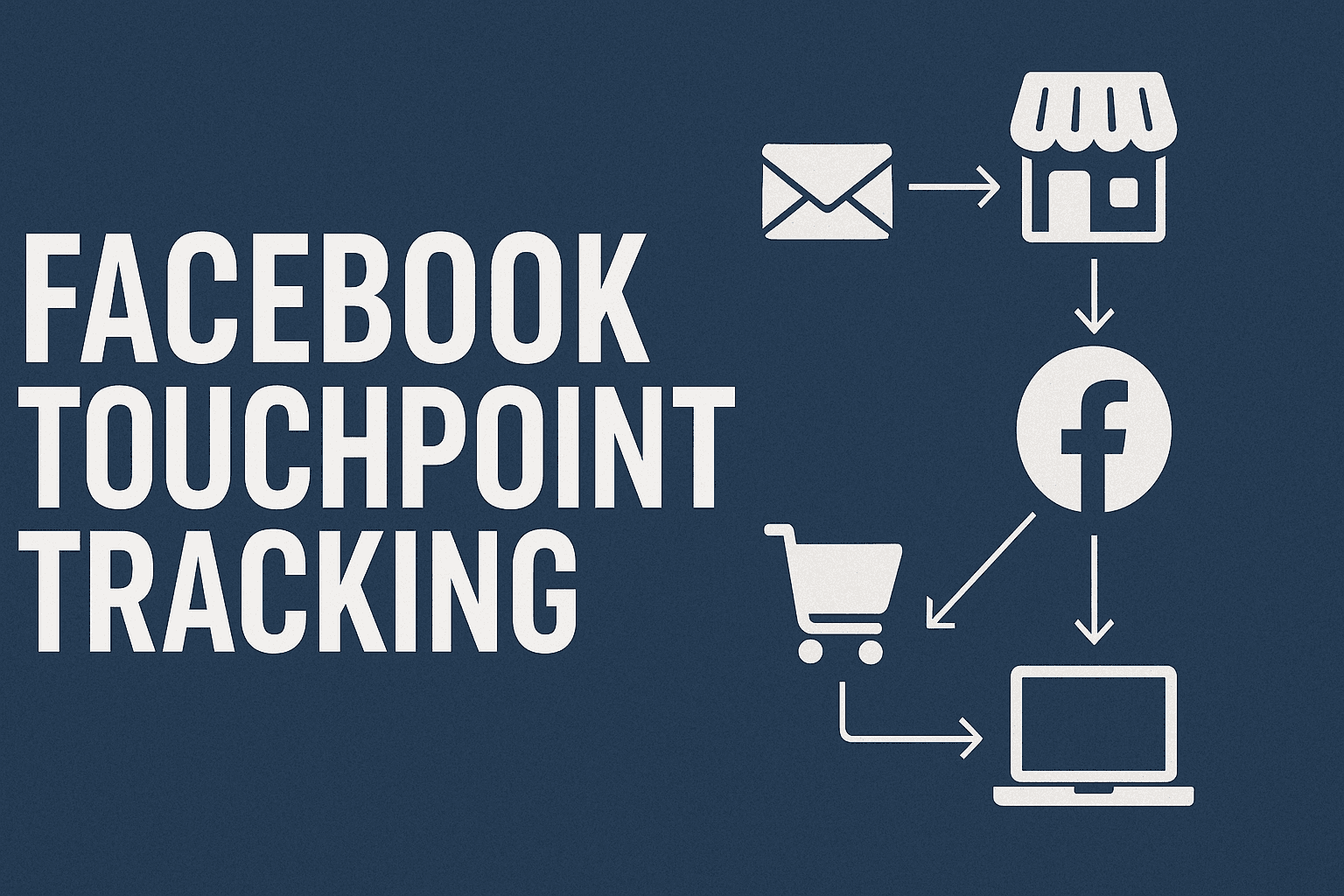
Here's what most marketers don't realize: the average customer interacts with your brand multiple times across several days before converting. They might see your Facebook ad, visit your website, leave, see another ad, search your brand name, read reviews, receive an email, and finally convert through a retargeting campaign. That's six touchpoints. Facebook's default attribution only shows you the last one.
This guide shows you how to build a complete Facebook touchpoint tracking system—one that captures every interaction from first awareness to final purchase. You'll learn how to implement both Facebook Pixel and Conversions API for maximum data accuracy, connect Facebook data with your CRM and other marketing channels, and set up multi-touch attribution that reveals the true customer journey.
By the end, you'll know exactly which Facebook campaigns drive real revenue, which touchpoints influence conversions at different journey stages, and how to allocate budget based on actual performance rather than Facebook's limited attribution view.
Let's walk through how to build this system step-by-step.
Step 1: Set Up Comprehensive Facebook Event Tracking
Most marketers install Facebook Pixel, verify it's firing, and call it done. That approach worked in 2019. In 2025, it leaves 30-40% of your conversions invisible.
The reality is that Facebook Pixel alone can't capture the complete picture anymore. iOS privacy restrictions, browser tracking prevention, and ad blockers systematically block pixel-based tracking. When a customer converts on an iPhone with tracking prevention enabled, your pixel often doesn't fire. Facebook thinks the conversion never happened, even though you just made a sale.
This is why you need both Facebook Pixel and Conversions API working together. Think of them as a redundant system—pixel captures what it can through the browser, while Conversions API sends conversion data directly from your server, bypassing all the browser-based restrictions that block traditional tracking.
Installing Facebook Pixel and Conversions API Together
Start with Facebook Pixel installation. In your Facebook Events Manager, navigate to Data Sources and select your pixel. Copy the base pixel code—it looks like a JavaScript snippet starting with "fbq('init', 'YOURPIXELID')". Add this code to your website's header section, right before the closing tag. If you're using a platform like Shopify, WordPress, or Webflow, they typically have built-in Facebook Pixel integration fields where you can paste just your pixel ID.
Install the Facebook Pixel Helper Chrome extension and visit your website. The extension icon should light up, showing that your pixel is active and firing the PageView event. This confirms basic installation is working.
Now comes the critical part: Conversions API setup. This is where server-side tracking transforms your data accuracy. Unlike the pixel, which depends on browser cooperation, Conversions API sends conversion data directly from your server to Facebook's servers. This server-to-server communication captures conversions that pixel-based tracking misses—especially from iOS users and privacy-conscious browsers.
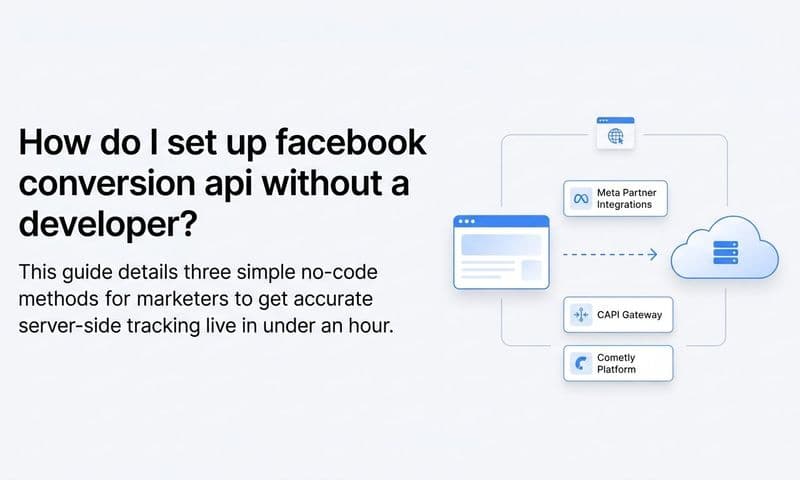
For Conversions API implementation, you have three options. First, if you're using a platform like Shopify, WooCommerce, or similar, check for native Conversions API integration in their Facebook app settings. Second, use a tag management solution like Google Tag Manager with server-side tagging capability. Third—and often most effective—use an marketing attribution software like Cometly that handles both pixel and Conversions API integration automatically while enriching your conversion data with additional customer journey information.
For a deeper dive into this space, see our WooCommerce image ad tool guide.
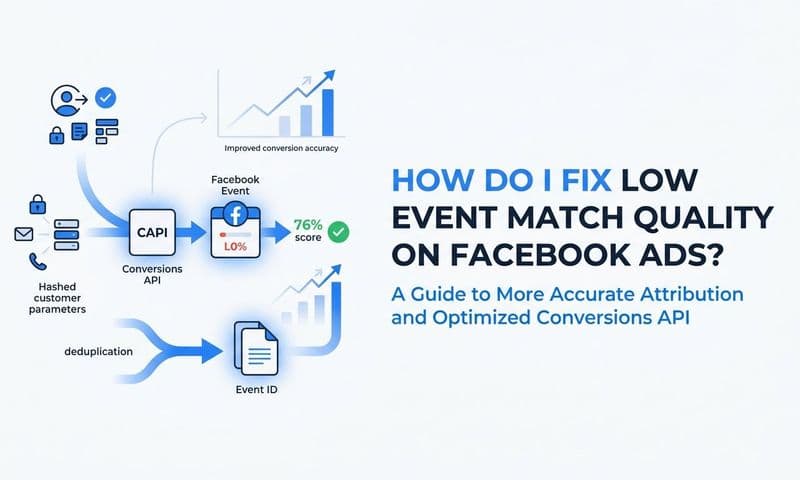
The crucial technical detail: event deduplication. When both pixel and Conversions API are active, they can send the same conversion event twice, inflating your conversion counts. Prevent this by including an eventid parameter in both pixel and CAPI events. Facebook uses this ID to recognize duplicate events and count them only once. Your eventid should be unique per conversion—typically a combination of order ID and timestamp.
Verify both tracking methods in Facebook Events Manager. Navigate to your pixel's Overview tab and check that both "Browser" and "Server" event sources show as active. Your Event Match Quality score should be above 6.0—this indicates you're sending enough customer information parameters for Facebook to match conversions accurately.
Configuring Custom Events Beyond Standard Events
Standard Facebook events like Purchase, AddToCart, and Lead capture the obvious conversion actions. But the real insight comes from tracking the micro-conversions that happen before someone buys. These intermediate touchpoints reveal which content resonates, which objections need addressing, and which journey paths lead to conversions.
Set up custom events for actions that indicate buying intent: video views beyond 50%, pricing page visits, calculator tool usage, comparison chart interactions, FAQ section engagement, and demo request form starts. Modern ad tracking tools make it easier to capture these nuanced behaviors that traditional event tracking misses.
For each custom event, define clear trigger conditions in your Events Manager. A "High Intent Page View" might fire when someone visits your pricing page and stays for more than 30 seconds. A "Product Research" event could trigger when someone views three or more product pages in a single session. These custom events become powerful signals for retargeting and attribution analysis.
The key is balancing granularity with manageability. Track enough events to understand the journey, but not so many that your data becomes noise. Focus on the 5-7 actions that genuinely indicate progression toward purchase in your specific business model.
Step 2: Connect Facebook Data to Your CRM and Analytics
Facebook Pixel and Conversions API capture your touchpoints accurately. But that data lives in Facebook's walled garden—isolated from your CRM, email platform, and other marketing channels. This creates a critical blind spot.
The reality? Your customers don't experience marketing channels in isolation. They see your Facebook ad, search your brand name on Google, receive your email campaign, then convert through a retargeting ad. Facebook Ads Manager only shows you the final retargeting conversion—missing the three touchpoints that preceded it.
This section shows you how to break down those walls and create a unified view of your customer journey.
Why Isolated Facebook Data Tells an Incomplete Story
Here's what happens when you rely solely on Facebook's attribution: A customer clicks your awareness campaign on Monday. They don't convert immediately—most don't. Instead, they search your brand name on Wednesday, land on your website via organic search, and browse your pricing page. Thursday, they receive your email nurture sequence. Friday, they see your Facebook retargeting ad and finally purchase.
Facebook Ads Manager attributes this conversion to the retargeting campaign. Your awareness campaign—the one that introduced this customer to your brand—gets zero credit. Your organic search traffic looks artificially strong because Facebook's attribution window missed the initial ad click.
This isn't a Facebook problem specifically. It's a fundamental limitation of platform-specific attribution. Every advertising platform operates in its own silo, claiming credit for conversions based on its own attribution rules and windows. The result? Your conversion counts don't add up across platforms, and you have no clear picture of which touchpoints actually influenced the purchase.
The average B2C customer interacts with a brand 4-6 times before converting. For B2B, that number climbs to 8-12 touchpoints. Facebook might be responsible for two of those interactions, Google for another two, email for one, and direct traffic for the final conversion. Without integration, you're making budget decisions based on 20% of the story.
Setting Up UTM Parameters for Facebook Campaigns
UTM parameters are the foundation of cross-platform tracking. They're small pieces of code appended to your URLs that tell your analytics platform exactly where traffic originated. When implemented correctly, UTMs create a common language that connects Facebook data with every other marketing channel.
For Facebook campaigns, structure your UTMs consistently: utmsource=facebook, utmmedium=paidsocial, utmcampaign=[yourcampaignname], utmcontent=[yourad_name]. This structure ensures that when someone clicks your Facebook ad and eventually converts, your analytics platform knows exactly which campaign and ad drove that initial touchpoint—even if the conversion happens days later through a different channel.
Facebook makes this easier with dynamic parameters. Instead of manually adding UTMs to every ad, use Facebook's built-in variables: {{campaign.name}}, {{adset.name}}, and {{ad.name}}. These automatically populate with your actual campaign, ad set, and ad names, ensuring consistency and saving hours of manual work.
Here's a complete UTM structure for Facebook: https://yoursite.com/landing-page?utmsource=facebook&utmmedium=paidsocial&utmcampaign={{campaign.name}}&utm_content={{ad.name}}. When someone clicks this link, your sales tracking software captures the exact Facebook campaign that drove this touchpoint, even if they don't convert until days later through a different channel.
The critical mistake most marketers make: inconsistent UTM naming conventions. One campaign uses "facebook" as the source, another uses "Facebook" with a capital F, and a third uses "fb" as shorthand. Your analytics platform treats these as three separate sources, fragmenting your data. Establish a naming convention document and enforce it across your entire team.
Beyond basic UTMs, consider adding custom parameters for deeper analysis. Add utmterm for audience targeting (utmterm=lookalike-purchasers or utmterm=interest-marketing-tools), or use utmcontent to differentiate creative variations (utmcontent=video-testimonial or utmcontent=carousel-features). These additional parameters enable granular analysis of which targeting strategies and creative approaches drive the best results.
Integrating Facebook with Your CRM System
UTM parameters capture the initial touchpoint, but your CRM holds the complete customer record—every subsequent interaction, email open, sales call, and ultimately, the revenue value of each customer. Connecting these systems reveals which Facebook campaigns attract your highest-value customers, not just which campaigns drive the most conversions.
Most modern CRMs offer native Facebook integration through Facebook's Conversions API. In HubSpot, Salesforce, or similar platforms, navigate to your integrations marketplace and search for Facebook Lead Ads or Facebook Conversions API. These integrations automatically sync lead data from Facebook into your CRM and send conversion events back to Facebook for attribution.
The real power comes from passing customer lifetime value (LTV) data back to Facebook. When a customer who originated from a Facebook ad makes their second purchase six months later, that revenue should be attributed back to the original Facebook campaign. Most ad tracking software companies now offer this capability through their CRM integrations.
Set up custom fields in your CRM to capture Facebook-specific data: original campaign name, ad set, ad creative, and audience targeting. When a lead converts to a customer, these fields reveal exactly which Facebook elements drove that acquisition. Over time, you build a database showing which campaigns attract customers who stick around versus those who churn quickly.
Building a Unified Customer Journey View
With Facebook data flowing into your CRM and analytics platform, you can finally see the complete customer journey. But raw data isn't insight. You need a system that connects the dots between touchpoints and reveals patterns.
Start by creating a customer journey report that shows every touchpoint chronologically. For each customer, display: first touchpoint (often a Facebook awareness ad), subsequent interactions (website visits, email opens, retargeting ad clicks), and final conversion source. This timeline view immediately reveals whether Facebook campaigns are generating first-touch awareness or closing sales.
Look for common journey patterns. Do customers who see your Facebook video ad and then visit your pricing page convert at higher rates than those who only see image ads? Do awareness campaigns lead to conversions within days, or do they require weeks of nurturing? These patterns inform both your Facebook strategy and your broader marketing mix.
For a deeper dive into this space, see our Shopify image ad generator guide.
Advanced ai brand visibility tracking tools can automatically identify high-performing journey paths and recommend budget allocation adjustments. Instead of manually analyzing thousands of customer journeys, AI surfaces the patterns that matter—like discovering that customers who interact with Facebook ads three times before converting have 40% higher LTV than those who convert after a single touchpoint.
Our roundup of the best tracking software for Facebook ads can help you shortlist.
Implementing Multi-Touch Attribution Models
Last-click attribution gives all credit to the final touchpoint. First-click attribution credits only the initial interaction. Both are wrong because they ignore the reality that multiple touchpoints influence every conversion.
Multi-touch attribution distributes credit across all touchpoints based on their actual influence. A linear model gives equal credit to every interaction. A time-decay model gives more credit to touchpoints closer to conversion. A position-based model emphasizes first and last touches while acknowledging middle interactions.
For Facebook campaigns specifically, position-based attribution often reveals the most actionable insights. It shows which campaigns excel at generating initial awareness (first-touch credit) and which campaigns effectively close sales (last-touch credit). Your awareness campaigns might generate 40% of first-touch conversions but only 10% of last-touch conversions—indicating they're excellent at introducing prospects but require retargeting support to drive purchases.
Implement multi-touch attribution through your analytics platform or a dedicated data analytics marketing tool. The key is consistency—choose one attribution model and use it for all budget decisions. Switching between models creates confusion and makes performance comparisons meaningless.
Track these metrics under each attribution model: cost per first-touch conversion, cost per last-touch conversion, and cost per assisted conversion. A campaign with a high cost per last-touch conversion but low cost per first-touch conversion is doing its job—generating awareness efficiently. Don't kill it because it doesn't close sales directly.
Step 3: Analyze and Optimize Based on Complete Touchpoint Data
You've built the tracking infrastructure. You're capturing every Facebook touchpoint and connecting it to your broader customer journey data. Now comes the critical part: turning that data into decisions that improve your ROI.
Most marketers stop at reporting. They build beautiful dashboards showing all their touchpoints, then continue making the same budget decisions they made before. The data exists, but it doesn't change behavior.
This section shows you how to actually use your touchpoint data to optimize campaigns, reallocate budget, and scale what works.
Identifying High-Value Touchpoint Sequences
Not all touchpoint sequences are created equal. Some paths lead to high-value customers who stick around for years. Others attract one-time buyers who never return. Your optimization strategy should focus on scaling the sequences that drive real business value.
Start by segmenting customers by lifetime value. Identify your top 20% of customers by revenue, then trace their journey backwards. What was their first Facebook touchpoint? How many times did they interact with your ads before converting? Which ad formats and messages resonated?
You'll often discover that your highest-value customers follow different paths than your average customers. They might interact with educational content first, then product comparisons, then case studies before converting. Lower-value customers might convert immediately after seeing a discount offer. This insight fundamentally changes your campaign strategy—you should be optimizing for the high-value path, not the path that generates the most conversions.
Create custom audiences in Facebook based on these high-value journey patterns. Build lookalike audiences from customers who followed your identified high-value paths. When you target people similar to your best customers and guide them through the same touchpoint sequence, you systematically improve customer quality while scaling spend.
Optimizing Campaign Budget Allocation
Traditional budget allocation looks at cost per conversion in Facebook Ads Manager and scales the campaigns with the lowest cost. This approach systematically underinvests in awareness campaigns and overinvests in retargeting—because retargeting always shows better last-click metrics.
With complete touchpoint data, you can allocate budget based on true contribution to revenue. Calculate the assisted conversion value for each campaign—the total revenue from customers who interacted with that campaign at any point in their journey, not just at the final touchpoint.
An awareness campaign might show a $50 cost per conversion in Ads Manager. But when you factor in assisted conversions, you discover it influenced $500,000 in total revenue over the past quarter. That same campaign suddenly looks like your most valuable investment, not your worst performer.
Implement a budget allocation framework based on multi-touch attribution: 40% to campaigns with the best first-touch efficiency, 40% to campaigns with the best last-touch efficiency, and 20% to experimental campaigns testing new audiences or creative approaches. This balance ensures you're investing in both awareness generation and conversion optimization while maintaining room for innovation.
Using Conversion Tracking for Continuous Improvement
Effective conversion tracking isn't just about measuring what happened—it's about understanding why it happened so you can replicate success and avoid repeating failures.
Set up weekly touchpoint analysis sessions. Review the customer journeys from the past week, focusing on both successful conversions and abandoned journeys. For successful conversions, identify common patterns: which ad creative appeared most frequently in high-value journeys? Which audience segments showed the shortest time-to-conversion? Which touchpoint sequences had the highest conversion rates?
For abandoned journeys, look for drop-off points. Do prospects frequently click your awareness ad, visit your website, but never return? That suggests a disconnect between ad messaging and landing page content. Do they interact with multiple retargeting ads but never convert? That might indicate pricing concerns or missing trust signals.
Use these insights to create a continuous optimization cycle: test new ad creative based on successful journey patterns, adjust audience targeting to focus on segments with the best conversion rates, and refine your retargeting strategy to address common drop-off points. Each week's data informs next week's tests, creating a compounding improvement effect.
Advanced Tracking with Fingerprint Technology
Even with Facebook Pixel and Conversions API working together, some conversions remain invisible—particularly when customers switch devices or browsers during their journey. They might click your Facebook ad on their phone during their morning commute, then convert on their work laptop three days later. Traditional cookie-based tracking can't connect these dots.
This is where fingerprint tracking adds an additional layer of accuracy. Instead of relying solely on cookies, fingerprinting creates a unique identifier based on device characteristics, browser settings, and behavioral patterns. When combined with traditional tracking methods, it significantly improves cross-device attribution accuracy.
Implement fingerprinting through your attribution platform's advanced tracking features. The technology works in the background, requiring no additional setup beyond enabling the feature. The result: 15-25% more conversions properly attributed to their originating Facebook campaigns, particularly for longer sales cycles where device switching is common.
The key is using fingerprinting as a supplement to, not a replacement for, traditional tracking methods. The combination of Facebook Pixel, Conversions API, UTM parameters, and fingerprinting creates a redundant system where if one method fails to capture a touchpoint, another method fills the gap.
Putting It All Together
You now have a complete system for tracking every Facebook touchpoint—from the first awareness ad a prospect sees to the final retargeting campaign that drives conversion. This isn't just better data. It's the foundation for making smarter budget decisions based on what actually drives revenue.
Start with the fundamentals: implement both Facebook Pixel and Conversions API to capture complete conversion data, even when browser restrictions block traditional tracking. Set up proper UTM parameters so you can track Facebook touchpoints across your entire analytics ecosystem. Then connect everything to an attribution platform that shows the complete customer journey across all your marketing channels.
The real power comes when you move beyond last-click attribution to multi-touch models that reveal how Facebook campaigns influence conversions at different journey stages. You'll discover that your awareness campaigns generate critical first touchpoints that lead to conversions weeks later. You'll see which ad creative drives engagement versus which drives purchases. You'll understand exactly how Facebook fits into your broader marketing mix.
Most importantly, you'll stop making budget decisions based on Facebook's limited 7-day attribution window and start optimizing based on the complete customer journey. That's the difference between guessing which campaigns work and knowing with certainty which investments drive real business results.
Ready to see the complete picture of your Facebook performance? Get your free demo of Cometly's AI-powered attribution platform and start tracking every touchpoint that leads to revenue.