
You are spending money on Facebook ads, but your numbers do not add up. Your Facebook Ads Manager shows 50 conversions, your CRM shows 30, and Google Analytics reports something different entirely. Sound familiar?
Facebook ads tracking issues have become increasingly common since iOS 14.5 rolled out and browser privacy features tightened. The result is incomplete data, misattributed conversions, and marketing decisions based on guesswork rather than reality.
This guide walks you through a systematic process to diagnose and fix your Facebook ads tracking problems. You will learn how to identify exactly where your tracking breaks down, implement proven fixes for common issues, and set up more reliable attribution methods that give you confidence in your data.
Whether you are dealing with pixel firing errors, conversion API gaps, or attribution window confusion, each step builds on the last to restore accuracy to your Facebook advertising data. Let's get started.
Step 1: Audit Your Current Tracking Setup with Facebook Events Manager
Before you can fix tracking issues, you need to know exactly what is broken. Facebook Events Manager is your diagnostic center for identifying where data collection fails.
Start by logging into your Facebook Business Manager and navigating to Events Manager from the main menu. Click on your pixel or dataset in the Data Sources section. This is where you will see the health status of your tracking setup at a glance.
The Diagnostics tab is your first stop. This section shows active errors, warnings, and recommendations directly from Facebook. Look for red error indicators that signal critical problems preventing data collection. Common errors include pixel not firing on key pages, incorrect event parameters being passed, or domain verification issues blocking data flow.
Next, use the Test Events tool to verify your pixel fires in real time. Open a new browser tab, navigate to your website, and watch the Test Events feed as you complete actions like viewing products, adding items to cart, or completing a purchase. Each action should trigger the corresponding event in the feed within seconds.
Pay close attention to the event parameters being passed. Are you capturing the correct currency, value, and content information? Missing or incorrect parameters reduce your ability to optimize for revenue and can throw off your reporting entirely. Understanding Facebook ads tracking pixel issues helps you identify these problems faster.
Document everything you find. Create a simple spreadsheet listing each conversion event you expect to track, whether it fires correctly, any error messages you see, and which pages or actions trigger problems. This becomes your roadmap for the fixes ahead.
Watch for these common issues during your audit: duplicate pixels firing on the same page, which inflates your event counts and wastes money on optimization. Incorrect event names or custom parameters that do not match Facebook's standard event structure. Domain verification problems that prevent iOS event tracking from working at all.
If you see multiple pixels installed on your site, identify which one belongs to your current ad account and remove the others. Leftover pixels from old campaigns or previous agencies create data chaos and make optimization impossible.
The Overview tab in Events Manager shows your event activity over the past seven days. Look for sudden drops in event volume or days with zero activity. These patterns reveal when tracking broke and help you correlate issues with website changes, campaign launches, or platform updates.
Step 2: Verify Domain Ownership and Configure Aggregated Event Measurement
Domain verification is not optional anymore. Without it, Facebook cannot track iOS users properly, and you lose visibility into a significant portion of your audience.
Navigate to Business Settings in your Facebook Business Manager, then click on Brand Safety and Domains. Add your domain if it is not already listed. Facebook offers two verification methods: adding a DNS TXT record through your domain registrar or placing a meta tag in your website header.
The DNS method is more reliable because it cannot be accidentally removed during website updates. Log into your domain registrar, access your DNS settings, and add the TXT record Facebook provides. Verification typically takes 24 to 72 hours to complete.
Once your domain is verified, you unlock access to Aggregated Event Measurement settings. This is where iOS tracking limitations Facebook ads hit hardest. Apple's App Tracking Transparency framework limits Facebook to tracking just eight conversion events per domain for iOS users who opt out of tracking.
Here is why this matters: if you have ten different conversion events set up but have not prioritized them, Facebook randomly chooses which eight to track for iOS users. The other two simply vanish from your data, creating gaps you cannot see or fix.
Access Aggregated Event Measurement by going to Events Manager, clicking on your pixel, and selecting Aggregated Event Measurement from the left menu. You will see a list of your conversion events with the option to prioritize up to eight.
Think strategically about your priority order. Place your most valuable conversion events at the top. For most businesses, this means Purchase or Lead events rank first, followed by Add to Cart, Initiate Checkout, and then upper-funnel events like View Content or Add Payment Info.
The priority order determines which events Facebook optimizes for when data is limited. If Purchase is your top priority but sits at position six in your list, Facebook might optimize for less valuable actions instead, wasting your budget on clicks that do not drive revenue.
After configuring your event priorities, test that they work correctly. Use an iOS device or simulator to complete actions on your site. Check Events Manager to confirm the prioritized events appear in your data while lower-priority events may not register for iOS users.
Remember that Aggregated Event Measurement affects optimization, not just reporting. When Facebook's algorithm cannot see all conversion events, it makes decisions based on incomplete information. Proper prioritization ensures the algorithm focuses on the outcomes that actually matter to your business.
Step 3: Implement and Troubleshoot the Conversions API
Browser-based pixel tracking alone no longer cuts it. Ad blockers, browser privacy settings, and iOS restrictions create blind spots that lose you 20 to 40 percent of your conversion data. The Conversions API fixes this by sending event data directly from your server to Facebook, bypassing browser limitations entirely.
Think of it this way: your pixel is like a security camera that only works when customers allow it. The Conversions API is a direct phone line that always gets through, regardless of browser settings or privacy tools.
You have three implementation options. Platform integrations work if you use Shopify, WordPress, or other popular platforms with built-in Conversions API support. Partner integrations connect through tools like Google Tag Manager Server-Side or dedicated attribution platforms. Direct API implementation gives you maximum control but requires developer resources.
For most marketers, platform or partner integrations offer the best balance of reliability and ease of setup. If you run Shopify, install the Facebook channel app and enable Conversions API in the settings. For WordPress, use the official Facebook for WordPress plugin or a partner solution like PixelYourSite.
The critical piece many marketers miss is event deduplication. When you run both pixel and Conversions API, the same conversion can be reported twice unless you configure deduplication properly. Facebook uses an event_id parameter to identify duplicate events and count them only once.
Every event sent through both pixel and CAPI must include an identical event_id. This unique identifier tells Facebook that a pixel Purchase event and a server Purchase event represent the same transaction. Without it, your conversion counts inflate artificially, and your cost per conversion metrics become meaningless. Learn more about how to fix Facebook conversion tracking to avoid these pitfalls.
After implementing Conversions API, check your Event Match Quality score in Events Manager. This metric shows how well your customer data parameters match Facebook users. Scores range from zero to ten, with higher scores improving attribution accuracy and ad delivery.
Improve your Event Match Quality by passing additional customer parameters with each event. Include email addresses, phone numbers, first and last names, city, state, and zip code when available. Hash this information using SHA-256 before sending it to protect customer privacy while enabling better matching.
Use the Test Events tool to verify your Conversions API setup works correctly. Select "Server" as the event source in the dropdown menu, then trigger a conversion on your site. You should see the server event appear in the feed with all the parameters you configured.
Monitor your Events Manager Overview tab for changes in event volume after implementing CAPI. You should see an increase in total events captured as server-side tracking fills gaps left by browser-based tracking. If event volume does not increase, your CAPI implementation likely has configuration errors that need troubleshooting.
Step 4: Fix Attribution Window Mismatches and Reporting Discrepancies
Attribution windows determine how long after someone clicks your ad Facebook can claim credit for a conversion. Get this wrong, and you either over-credit Facebook for conversions it did not drive or under-credit it for sales that took time to close.
Facebook offers several attribution window options: 1-day click, 7-day click, and 1-day view. The default setting for campaign optimization is now 7-day click, meaning Facebook attributes conversions that happen within seven days of someone clicking your ad.
Here is the problem: if your average customer takes 14 days to convert, a 7-day attribution window misses half your conversions. If your product sells within hours, a 7-day window over-credits Facebook by claiming conversions that other channels actually drove. Understanding Facebook ads attribution window limitations helps you make better decisions.
Review your customer buying cycle before choosing attribution windows. Pull data from your CRM showing the average time from first click to purchase. For impulse purchases and low-ticket items, a 1-day click window often reflects reality better. For considered purchases and B2B sales, you might need longer windows or multi-touch attribution models.
Access your attribution settings in Ads Manager by clicking on the columns dropdown and selecting "Customize Columns." Here you can add conversion metrics with different attribution windows to compare how they affect your reported results.
Now compare Facebook reported conversions against your actual backend data. Export your Facebook conversion data for the past 30 days, then pull the same date range from your CRM or e-commerce platform. Match conversions by date and look for patterns in the discrepancies.
You will likely see Facebook reporting fewer conversions than your backend shows. This underreporting stems from iOS users, ad blockers, and privacy features preventing Facebook from seeing all conversions. The gap tells you how much data Facebook misses and helps you calibrate your decision-making.
Understand that Facebook now uses modeled conversions to estimate events it cannot directly measure. These appear in your reporting alongside confirmed conversions. Modeled conversions help fill tracking gaps but represent estimates based on statistical patterns, not actual observed events.
Create a reconciliation process to regularly compare platform data with actual sales. Every week, pull your Facebook conversion numbers and compare them to your CRM or payment processor data. Track the percentage difference over time to identify when tracking degrades or improves.
Use this reconciliation data to create conversion multipliers for budget planning. If Facebook consistently reports 70 percent of your actual conversions, you know to multiply Facebook's numbers by 1.43 to estimate true performance when making budget decisions.
Step 5: Set Up UTM Parameters and Cross-Platform Tracking
UTM parameters give you an independent tracking layer that does not rely on Facebook's pixel or attribution logic. When Facebook's data looks questionable, UTM tracking provides a second opinion you can trust.
Create consistent UTM naming conventions before launching any new campaigns. Decide on your structure for campaign source, medium, campaign name, and content parameters. Stick to lowercase, use hyphens instead of spaces, and document your naming system so your entire team follows it.
For Facebook ads, your source should always be "facebook," your medium should be "cpc" or "paid-social," and your campaign name should match your Facebook campaign name exactly. This consistency makes cross-platform analysis possible. A marketing campaign tracking spreadsheet can help you maintain this organization.
Use dynamic UTM parameters to automatically capture campaign, ad set, and ad level data without manually building URLs for every ad. Facebook supports dynamic parameters like {{campaign.name}}, {{adset.name}}, and {{ad.name}} that populate automatically when someone clicks your ad.
A complete Facebook ad URL with dynamic UTMs looks like this: yoursite.com/?utm_source=facebook&utm_medium=cpc&utm_campaign={{campaign.name}}&utm_content={{adset.name}}_{{ad.name}}. This structure captures the full hierarchy of your campaign organization in every click.
Connect your UTM data to your CRM or analytics platform to track the full customer journey. When a lead enters your system, capture the UTM parameters from their first visit and associate them with that contact record. This lets you track which Facebook campaigns generated leads that eventually became customers, even if the sale happens weeks later.
Build reports that compare Facebook reported data with UTM tracked conversions. Pull conversion data from Google Analytics or your CRM filtered by utm_source=facebook, then compare it to Facebook's reported conversions for the same date range. The difference reveals how much Facebook over or under reports relative to your independent tracking.
Identify where tracking gaps occur by analyzing discrepancies between data sources. If Facebook reports 100 conversions but your UTM data shows 80, you know Facebook is either attributing conversions from other sources or using modeled data. If UTM tracking shows 120 conversions while Facebook shows 80, Facebook is missing conversions due to tracking limitations.
These discrepancies do not mean one source is right and the other is wrong. They mean each tracking method has blind spots. Facebook cannot see conversions from users who block tracking. UTM parameters cannot track users who click an ad, leave, then return directly to convert later. Understanding both perspectives gives you a more complete picture than either source alone.
Step 6: Implement Server-Side Tracking for Complete Data Capture
Server-side tracking represents the future of marketing attribution because it captures conversions that browser-based tracking misses entirely. Ad blockers cannot stop it. Browser privacy settings do not affect it. iOS restrictions do not limit it.
Here is how it works: instead of relying on JavaScript pixels that run in the user's browser, server-side tracking sends conversion data directly from your server or CRM to your ad platforms. When someone becomes a customer in your database, that event gets transmitted to Facebook regardless of cookies, pixels, or browser permissions.
Evaluate whether your current setup captures conversions that happen outside the initial session. Many businesses lose attribution when customers click an ad, fill out a form, then convert days later through sales calls or email follow-up. Browser-based tracking cannot connect these dots because the original cookie expired or was cleared.
Server-side tracking solves this by connecting your CRM events to your ad platforms. When a lead marked "closed-won" in your CRM originated from a Facebook ad click, that conversion gets sent back to Facebook with the original click ID, properly attributing the sale even if it happened 30 days later. Using first party data tracking for ads ensures you maintain control over this valuable information.
For marketers running lead generation campaigns with longer sales cycles, this changes everything. You stop optimizing for form fills that never close and start optimizing for form fills that actually become customers. Facebook's algorithm learns which audiences and creatives drive real revenue, not just cheap leads.
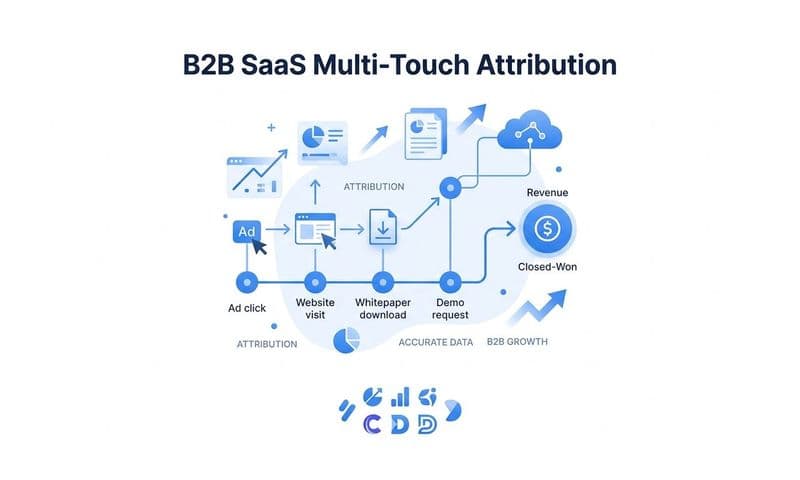
Attribution platforms like Cometly specialize in unifying data from Facebook, your website, and your CRM in one view. These tools capture every touchpoint from initial ad click through CRM conversion, then feed enriched conversion data back to Facebook to improve ad optimization and targeting.
The feedback loop works like this: Cometly tracks which Facebook ads drive leads, monitors those leads through your sales process, identifies which ones become customers, then sends conversion events back to Facebook with enhanced data about customer value, product purchased, and lifetime revenue potential.
Facebook's algorithm uses this enriched data to find more customers who look like your actual buyers, not just people who click ads or fill out forms. Your cost per acquisition drops because you are optimizing for real business outcomes instead of proxy metrics. Discover how ad tracking tools can help you scale ads using this accurate data.
Implementation requires connecting your CRM to your attribution platform, mapping your conversion events to match Facebook's event structure, and configuring the platform to send server events back to Facebook via Conversions API. Most attribution platforms provide step-by-step setup guides and support to get this running.
The result is complete visibility into what drives revenue. You see which campaigns generate leads that close, which ad creative attracts high-value customers, and which audiences deliver the best return on ad spend. You stop making decisions based on incomplete platform data and start using the full picture of customer behavior from click to conversion.
Bringing It All Together
Fixing Facebook ads tracking issues is not a one-time task but an ongoing process of monitoring, testing, and refining your setup. The tracking landscape changes constantly as privacy regulations evolve and platforms update their systems.
Start with your audit in Events Manager to identify exactly what is broken. Work through domain verification and event prioritization to ensure iOS tracking functions properly. Implement Conversions API to capture data that browser-based tracking misses. Align your attribution windows with your actual sales cycle to avoid over or under crediting Facebook.
Layer in UTM tracking for independent verification of your Facebook data. Finally, consider server-side tracking solutions that connect your CRM conversions back to your ad platforms for complete attribution across the entire customer journey.
Quick checklist before you finish: Events Manager shows no critical errors. Your domain is verified and events are prioritized in Aggregated Event Measurement. Conversions API is active with Event Match Quality scores above seven. Attribution windows match your sales cycle length. UTM parameters are consistent across all campaigns. You have a system to reconcile Facebook data with actual conversions.
For marketers who want to move beyond the limitations of platform-native tracking, tools like Cometly connect every touchpoint from ad click to CRM conversion. You get AI-driven recommendations showing which campaigns actually drive revenue, not just which ones generate clicks or form fills.
The goal is not perfect tracking, which is impossible in today's privacy landscape. The goal is accurate enough data to make confident decisions about where to invest your ad budget. When you know which campaigns drive real customers instead of just traffic, you scale what works and cut what does not.
Ready to elevate your marketing game with precision and confidence? Discover how Cometly's AI-driven recommendations can transform your ad strategy. Get your free demo today and start capturing every touchpoint to maximize your conversions.