Running Google Ads without proper optimization is like throwing money into a black hole—you might see some results, but you'll never know which campaigns actually drive revenue. The difference between a mediocre Google Ads account and a high-performing one often comes down to systematic optimization rather than random tweaks.
Think about it: two marketers could spend the same budget on identical keywords, but one sees 3x the return. The difference? A repeatable optimization framework that connects every click to actual business outcomes.
This guide walks you through a proven six-step framework for Google Ads optimization that transforms scattered data into clear action items. Whether you're managing campaigns for an e-commerce brand, SaaS company, or lead generation business, these steps will help you identify what's working, eliminate waste, and scale the campaigns that truly drive conversions.
Here's what makes this approach different: instead of chasing vanity metrics like impressions or clicks, you'll focus on the numbers that actually matter to your business—revenue, qualified leads, and customer lifetime value. Each step builds on the previous one, creating a compound effect that improves performance month over month.
By the end, you'll have a repeatable process for turning your Google Ads data into actionable insights that improve ROI. Let's get started.
Step 1: Audit Your Conversion Tracking Setup
Before you optimize anything, you need to know if your data tells the truth. This is where most Google Ads optimization efforts fail—not because marketers lack strategy, but because they're making decisions based on incomplete or inaccurate tracking.
Here's the reality: if your conversion tracking only captures final purchases or form submissions, you're missing crucial data about what happens between the first click and the final conversion. Many businesses track the destination but ignore the journey.
Start with a tracking verification exercise. Pull your Google Ads conversion data for the past 30 days and compare it against your CRM or sales records. Do the numbers align? If Google Ads reports 100 conversions but your CRM shows 85 actual leads, you've got a tracking problem that will sabotage every optimization decision you make.
Common tracking gaps include missing micro-conversions like newsletter signups, demo requests, or add-to-cart actions. These touchpoints matter because they reveal campaign performance at different funnel stages. A campaign might not drive many final sales but could excel at generating qualified leads that convert later.
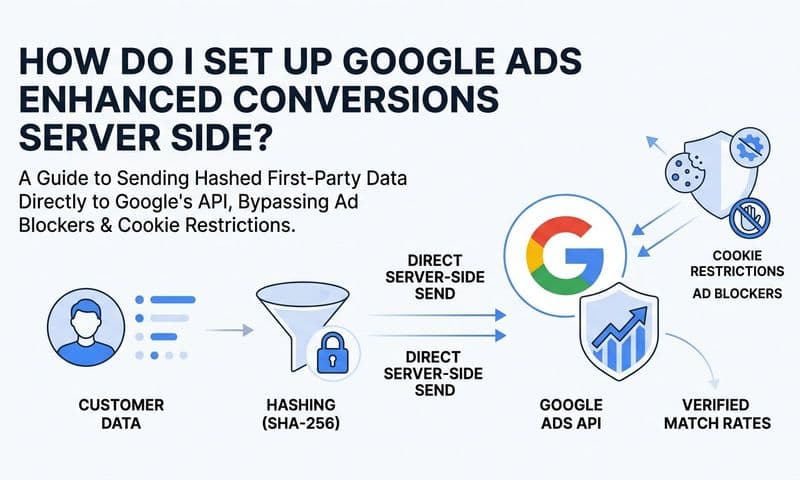
Browser privacy changes have made client-side tracking less reliable. iOS updates, cookie restrictions, and ad blockers mean that traditional Google Ads tags miss a significant portion of conversions. Server-side tracking solves this by capturing conversion data directly from your server, bypassing browser limitations entirely.
To implement server-side tracking, you'll need to set up server-to-server postbacks that send conversion events directly to Google Ads when they occur in your CRM or backend system. This ensures you're feeding Google's algorithm complete data, which directly impacts bid optimization performance.
Check for attribution blind spots. If you're using last-click attribution, you're likely undervaluing campaigns that initiate customer journeys. A prospect might discover your brand through a broad match search campaign, research through multiple touchpoints, then convert via a branded search. Last-click attribution credits only the final branded search, making your awareness campaigns look ineffective.
Your success indicator for this step: conversion counts in Google Ads should align within 10% of your actual CRM or sales data. If the gap is larger, pause optimization efforts and fix your tracking first. Everything else depends on accurate data.
Step 2: Analyze Campaign Structure and Budget Allocation
Once you trust your data, it's time to examine how your campaigns are organized and where your budget actually goes. Most Google Ads accounts suffer from structural problems that make optimization unnecessarily difficult.
Pull up your campaign list and ask yourself: can I quickly identify the purpose of each campaign? If you're running campaigns named "Campaign 1" or "Search - General," you've already created a management nightmare. Clear campaign structure means organizing by intent level, audience segment, or funnel stage.
We compare the leading options in our ad spend management software roundup.
Identify budget bottlenecks immediately. Look for campaigns marked "Limited by budget" that are actually performing well versus campaigns spending freely but generating poor returns. Many advertisers spread budget evenly across campaigns, which means their best performers are starved while underperformers waste money.
Here's where revenue data becomes critical. Two campaigns might both generate 50 conversions, but if Campaign A drives $10,000 in revenue while Campaign B drives $2,000, they shouldn't receive equal budget. Yet many advertisers allocate spend based on conversion volume alone, missing this crucial distinction.
Segment campaigns by customer journey stage. Top-of-funnel awareness campaigns need different optimization approaches than bottom-of-funnel conversion campaigns. A campaign targeting broad, informational keywords should be evaluated on its ability to generate qualified traffic and micro-conversions, not immediate sales.
Review your campaign hierarchy for redundancy and overlap. Are multiple campaigns targeting the same keywords? This creates internal competition where your campaigns bid against each other, driving up costs while confusing performance data. Consolidate or restructure to eliminate cannibalization.
Calculate revenue-per-click for each campaign. This metric reveals true efficiency better than cost-per-conversion because it accounts for conversion value. A campaign with a higher CPA but much higher average order value might actually be your most profitable. Understanding marketing spend optimization principles helps you make these budget decisions with confidence.
If you're evaluating vendors, our marketing campaign management software breakdown can help.
Reallocate budget based on this analysis. Shift spend from campaigns with low revenue-per-click to those with high revenue-per-click, but do it gradually—sudden budget changes can disrupt Smart Bidding algorithms that rely on historical performance data.
Your success indicator: budget flows to campaigns with the highest revenue-per-click, and you can clearly explain the purpose and audience of every active campaign in your account.
Step 3: Refine Keyword Strategy and Match Types
Your keyword strategy determines who sees your ads and how much you pay for each click. Even small improvements here create compound effects across your entire account.
Start by mining your search terms report—this shows the actual queries triggering your ads. You'll discover two goldmines: high-intent search terms you should add as exact match keywords, and irrelevant queries you need to block with negative keywords.
Look for patterns in converting search terms. If "enterprise project management software demo" consistently converts while "free project management tools" never does, you've identified a high-value query variation to target specifically. Create dedicated ad groups for these high-performers with tailored ad copy.
The broad match versus exact match debate has evolved with Smart Bidding. Broad match now works more effectively when paired with automated bidding because Google's algorithm can identify valuable variations. However, this only works if you're feeding the algorithm accurate conversion data—another reason Step 1 matters so much. For a deeper dive into match type strategies, explore our guide on Google Ads keyword optimization.
Test a hybrid approach. Use exact match for your proven, high-converting keywords to maintain control and predictable costs. Use broad match with Smart Bidding for discovery, allowing Google to find valuable search variations you might miss manually. Monitor performance closely and graduate successful broad match terms to exact match campaigns.
Identify keyword cannibalization by searching for the same keywords across multiple campaigns. When identical keywords exist in different campaigns, Google enters an internal auction that can inflate costs and muddy performance data. Consolidate duplicate keywords into single campaigns for cleaner optimization.
Build comprehensive negative keyword lists. Create account-level negative lists for terms that never convert: "free," "cheap," "DIY," job-seeking queries, competitor research terms. Update these lists weekly based on search term reports. Every irrelevant click you prevent is money saved for valuable traffic.
Pay attention to close variants and misspellings. Google's matching has become more liberal, which means your carefully chosen keywords might trigger ads for loosely related searches. Regular search term audits catch these issues before they drain budget.
Calculate a search term relevance score. Take a sample of 100 search terms from the past 30 days and manually rate how many are truly relevant to your offering. If less than 80% are relevant, you need tighter keyword controls through more exact match keywords, phrase match restrictions, or expanded negative lists.
Your success indicator: search term relevance above 80% and a declining trend in irrelevant impressions month over month. You should also see improved Quality Scores as keyword relevance increases.
Step 4: Optimize Ad Creative and Landing Page Alignment
Even perfect keyword targeting fails if your ad creative doesn't connect with searcher intent or if your landing page breaks the promise your ad makes.
Responsive search ads give you flexibility to test multiple headline and description combinations, but many advertisers treat them as "set it and forget it" assets. Instead, review your asset performance reports monthly to identify which headlines and descriptions actually drive clicks and conversions.
Match your ad messaging to search intent. Someone searching "how does marketing attribution work" wants education, not a hard sales pitch. Someone searching "marketing attribution software pricing" is ready to evaluate vendors. Your ad copy should reflect these different intent levels.
Google's Ad Strength indicator provides useful guidance, but don't optimize for Ad Strength alone. An ad with "Excellent" strength but poor CTR and conversion rate is still a losing ad. Focus on performance metrics first, then use Ad Strength suggestions to improve already-working ads.
Test systematically, not randomly. Create a hypothesis before each test: "Adding specific benefit statements to headlines will improve CTR for bottom-funnel keywords." Run the test for at least two weeks or until you reach statistical significance, then implement winners and test the next variable.
Landing page alignment matters more than most advertisers realize. If your ad promises "instant demo access" but the landing page requires a lengthy form and sales call, you've created friction that kills conversions. The message match between ad and landing page should be seamless. Implementing conversion rate optimization best practices on your landing pages amplifies the impact of your ad spend.
Review your Quality Scores regularly. While Quality Score isn't a direct optimization target, declining scores signal problems with keyword relevance, ad copy, or landing page experience. Improving these elements not only boosts Quality Score but also reduces your cost-per-click.
A/B test landing pages tied to specific ad groups. Your enterprise software campaign might need a different landing page than your small business campaign, even if both promote the same product. Segment by audience needs and test variations that speak directly to each segment.
Use ad extensions strategically. Sitelinks, callouts, and structured snippets provide additional real estate and information. But don't just fill them with generic content—use extensions to address common objections, highlight differentiators, or provide specific value propositions relevant to each campaign.
Your success indicator: Quality Score improvements across your top-spending keywords and measurable increases in conversion rates from your ad creative and landing page tests.
Step 5: Configure Smart Bidding with Accurate Conversion Data
Smart Bidding can dramatically improve performance, but only if you configure it correctly and feed it complete data. Many advertisers enable automated bidding without understanding what actually drives the algorithm.
Choosing the right bid strategy starts with understanding your business goal. Target CPA works when you have a clear cost-per-acquisition goal and relatively consistent conversion values. Target ROAS makes sense when conversion values vary significantly—like e-commerce with different product prices. Maximize Conversions focuses purely on volume, useful for lead generation with consistent lead quality.
Here's what most advertisers get wrong: they set targets based on wishful thinking rather than historical performance. If your actual CPA over the past 90 days is $150, setting a Target CPA of $50 won't magically reduce costs—it will just limit your campaign's ability to spend and find conversions.
Start with targets that match your recent performance, then gradually improve them by 10-15% increments as the algorithm optimizes. This gives Smart Bidding room to learn while still pushing for better efficiency.
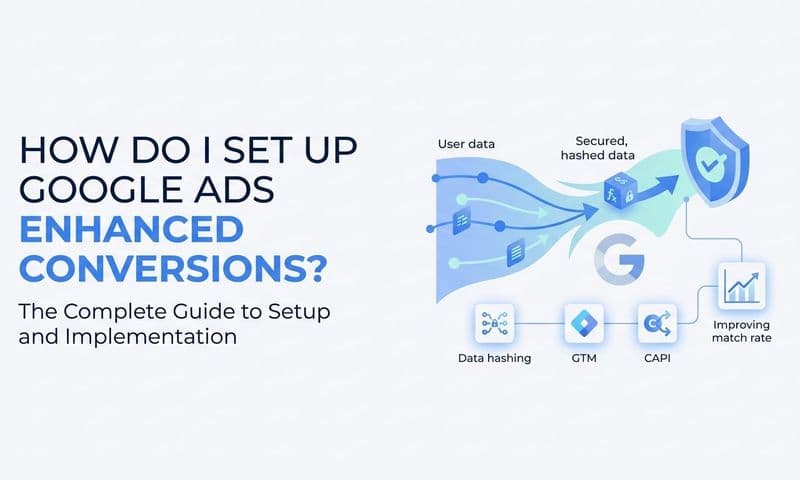
The quality of your conversion data directly impacts Smart Bidding performance. If you're only tracking final conversions and missing micro-conversions, the algorithm has limited data to optimize against. If your server-side tracking captures 30% more conversions than client-side tracking, Smart Bidding with complete data will outperform significantly. Learn how enhanced conversions in Google Ads can improve your data quality for better algorithmic performance.
Use conversion value rules to weight leads by quality or revenue potential. Not all conversions are equal—a demo request from an enterprise prospect is worth more than a newsletter signup. By assigning different values to different conversion types, you help Smart Bidding prioritize high-value outcomes.
Give Smart Bidding time to learn. The algorithm needs at least 30 conversions in a 30-day period to optimize effectively. If you're switching bid strategies or making major changes, expect a 2-3 week learning period where performance might fluctuate. Don't panic and revert changes during this phase.
Monitor your CPA and ROAS trends, not daily fluctuations. Smart Bidding optimizes over time, so day-to-day volatility is normal. What matters is the weekly and monthly trend—are you seeing stable or improving efficiency with increasing conversion volume?
Combine Smart Bidding with audience signals. Adding customer match lists, similar audiences, or in-market segments gives the algorithm additional context about who's likely to convert. This is especially powerful for campaigns with limited conversion history. Understanding ad platform algorithm optimization strategies helps you maximize the effectiveness of automated bidding.
Your success indicator: stable or improving CPA/ROAS with increasing conversion volume month over month. You should also see the algorithm confidently spending your full budget without constant "Limited by budget" warnings.
Step 6: Build a Continuous Optimization Cadence
The difference between accounts that plateau and accounts that improve month after month comes down to having a documented, repeatable optimization process.
Create a weekly review schedule focused on immediate issues. Check for campaigns hitting budget limits, review search terms for new negatives, identify any sudden performance drops that need attention. This shouldn't take more than 30 minutes but prevents small problems from becoming expensive disasters.
Your monthly review should go deeper. Analyze trends in CPA, ROAS, and conversion rates. Review ad creative performance and launch new tests. Evaluate campaign structure and budget allocation based on the previous month's revenue data. Update audience targeting based on what's working.
Quarterly reviews are for strategic decisions. This is when you assess overall account health, consider major structural changes, evaluate new campaign opportunities, and set goals for the next quarter. Look at year-over-year performance to identify seasonal patterns that should inform your strategy.
Key metrics to monitor at each interval matter more than the sheer volume of data you review. Weekly: spend pacing, search term quality, budget-limited campaigns. Monthly: CPA trends, conversion rate changes, Quality Score movements. Quarterly: overall ROI, market share growth, competitive positioning. Using a marketing campaign tracking spreadsheet can help you organize and document these reviews systematically.
Multi-touch attribution reveals the complete customer journey that single-touch attribution misses. A prospect might interact with five different campaigns before converting—awareness search, remarketing display, YouTube ad, consideration search, branded search. Understanding this journey helps you value each touchpoint appropriately rather than crediting only the last click.
We compare the leading options in our AI YouTube ad generator roundup.
Scale winners based on revenue data, not vanity metrics. A campaign with high click-through rates but low revenue isn't a winner—it's just expensive. Conversely, a campaign with modest CTR but strong revenue-per-click deserves more budget. Let actual business outcomes guide your scaling decisions.
Pause losers decisively but not impulsively. If a campaign has spent 2-3x your target CPA without generating conversions, pause it and analyze why before trying again. Don't let underperformers drain budget from your winners while you hope they'll improve.
Document your optimization process. Create a simple checklist or spreadsheet that tracks what you reviewed, what changes you made, and why. This documentation helps you identify what works over time and prevents you from repeating failed experiments. Mastering PPC campaign optimization requires this kind of disciplined, documented approach.
Your success indicator: you have a documented process that produces consistent month-over-month improvements in your key metrics, and you can quickly explain what changed and why when performance shifts.
Putting It All Together
Google Ads optimization isn't a one-time project—it's an ongoing discipline that compounds over time. The marketers who consistently win with Google Ads are those who connect every click to actual business outcomes and make decisions based on complete, accurate data.
By following this six-step framework, you've established the foundation for sustainable Google Ads success. You've verified that your tracking captures the full customer journey, restructured budgets around revenue performance, refined keywords to eliminate waste, improved creative alignment, configured smarter bidding with complete data, and built a sustainable review cadence.
Here's your quick checklist to verify you're on track:
✓ Conversion tracking verified against CRM data with less than 10% variance
✓ Budget allocated based on revenue-per-click, not just conversion volume
✓ Negative keywords updated weekly from search term reports
✓ Ad creative tested systematically with documented results
✓ Smart Bidding configured with accurate, complete conversion data
✓ Weekly, monthly, and quarterly review cadence documented and followed
Start with Step 1 today—audit your tracking—because every optimization decision downstream depends on accurate data. If your conversion tracking doesn't align with your actual business results, you're optimizing toward the wrong goals.
The compound effect of systematic optimization is real. Small improvements in each area—tracking accuracy, budget allocation, keyword relevance, ad performance, bidding efficiency—multiply together to create significant ROI gains over time.
Ready to elevate your marketing game with precision and confidence? Discover how Cometly's AI-driven recommendations can transform your ad strategy—Get your free demo today and start capturing every touchpoint to maximize your conversions.