Running ads across Meta, Google, TikTok, and LinkedIn simultaneously? You're not alone—but you're probably also struggling to answer one critical question: which platform is actually driving revenue?
The challenge isn't running multi-platform campaigns. It's getting a clear, unified view of performance when each platform uses different attribution windows, tracks conversions differently, and inevitably takes credit for the same sale.
Picture this: Meta reports 50 conversions. Google claims 45. LinkedIn says 12. But your CRM shows only 38 actual sales. Someone's math doesn't add up—and that someone is costing you serious budget.
This guide walks you through exactly how to set up cross-platform ad tracking that gives you accurate, actionable data. You'll learn how to establish consistent tracking foundations, connect your data sources, implement server-side tracking for accuracy, build unified dashboards, and optimize based on real attribution insights.
By the end, you'll have a system that shows you the complete customer journey—from first ad click to closed revenue—across every platform you use. No more guessing. No more inflated platform claims. Just clear visibility into what's actually working.
Step 1: Audit Your Current Tracking Setup and Identify Data Gaps
Before you can fix your tracking, you need to understand exactly where it's broken. This audit reveals the gaps between what you think you're measuring and what you're actually capturing.
Start by creating a simple spreadsheet that lists every ad platform you're currently using. For each one, document what conversion events it tracks, what attribution window it uses, and how it defines a conversion. You'll quickly notice that Meta might use a 7-day click attribution window while Google defaults to 30 days—meaning they're measuring completely different timeframes.
Next, pull conversion data from each platform for the same date range. Then compare those numbers to your actual sales data from your CRM or payment processor. The discrepancy you find isn't just interesting—it's the cost of bad tracking. If platforms report 150 total conversions but you only closed 80 deals, you're making budget decisions based on fiction.
Document your UTM structure: Pull up your recent campaign URLs and examine the parameters you're using. Are they consistent? Does your team use "utm_source=facebook" on some campaigns and "utm_source=meta" on others? These inconsistencies make cross-platform analysis impossible.
Map your conversion tracking methods: Note whether each platform uses pixel-based tracking, conversion APIs, or both. Identify which platforms still rely entirely on browser-based pixels—these are your biggest vulnerability points, especially for iOS traffic. Understanding what a tracking pixel is and how it works helps you identify these weaknesses.
Check for tracking conflicts: Look for duplicate conversion tracking where multiple platforms might fire for the same event. If both your Meta pixel and Google tag track the same "Purchase" event, you're double-counting conversions before you even start analyzing.
Success looks like this: a complete document showing every platform, every tracked event, every attribution window, and every gap where data goes missing. This becomes your roadmap for the fixes ahead.
Step 2: Establish a Unified UTM and Naming Convention System
Without consistent naming conventions, your cross-platform data is just noise. You need a system that lets you instantly identify which platform, campaign, and creative generated each conversion—across every tool you use.
Build your UTM structure around these five parameters, used consistently everywhere. Use "utm_source" to identify the platform (meta, google, tiktok, linkedin). Use "utm_medium" to categorize the ad type (cpc, social, display, video). Use "utm_campaign" to name the specific campaign following your convention. Use "utm_content" to differentiate ad variations or placements. Use "utm_term" for paid search keywords when applicable.
Create a naming convention template: Your campaign names should follow a predictable pattern that makes reporting easy. Consider a format like: Platform_CampaignType_Audience_Objective_Date. For example: "Meta_Prospecting_B2B_Leads_Q1" or "Google_Retargeting_Cart_Sales_Jan".
The key is consistency. If you use underscores in campaign names, use them everywhere. If you abbreviate months as three letters (Jan, Feb, Mar), never switch to numbers (01, 02, 03). Small inconsistencies create massive reporting headaches when you're analyzing thousands of clicks. Learning what UTM tracking is and how it helps your marketing provides the foundation for this system.
Build a shared tracking document: Create a spreadsheet or document that your entire team can access. Include your UTM structure rules, naming convention examples, and a campaign URL builder that automatically formats URLs correctly. This prevents team members from improvising their own systems.
Implement systematically across active campaigns: Don't just apply this to new campaigns. Go back and update your active campaigns to match the new convention. Yes, this breaks historical continuity temporarily, but the long-term benefit of consistent data outweighs short-term comparison challenges.
Test your system by building URLs for each platform and verifying they appear correctly in your analytics. Click through a test ad on Meta, then check if the source shows as "meta" (not "facebook" or "Facebook" or "fb"). Consistency at this level determines whether your cross-platform analysis actually works.
Success indicator: Every ad click can be traced back to its exact source with consistent parameters. When you filter your analytics by "utm_source=meta," you see only Meta traffic—no stray Facebook references, no missing data, no confusion.
Step 3: Implement Server-Side Tracking to Capture Accurate Data
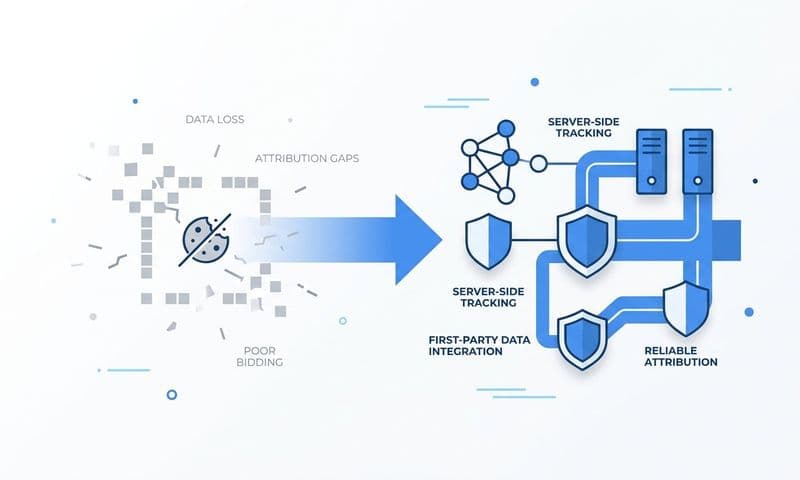
Browser-based tracking is dying, and if you're still relying on pixels alone, you're missing up to 30% of your conversions. iOS privacy changes, ad blockers, and cookie restrictions have made client-side tracking increasingly unreliable.
Here's what's happening: When someone clicks your ad on an iPhone, visits your site, and converts, their browser might block your tracking pixel from firing. The conversion happens—you get the sale—but the ad platform never knows about it. So it can't optimize toward similar audiences, and you can't accurately measure which campaigns drove revenue.
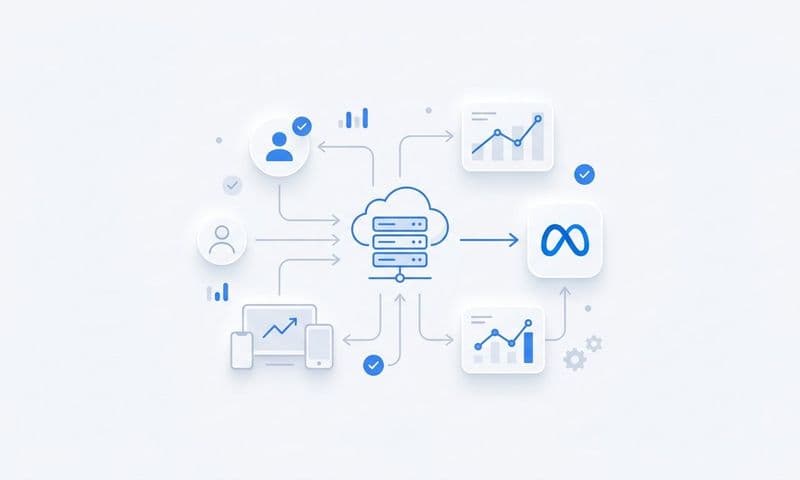
Server-side tracking solves this by sending conversion data directly from your server to ad platforms, bypassing browser restrictions entirely. When a purchase completes on your backend, your server immediately sends that event to Meta's Conversion API, Google's conversion tracking, and your analytics platform—regardless of what the user's browser allows. Our detailed guide on how to set up server-side tracking walks you through the technical implementation.
Set up Conversion APIs for your ad platforms: Meta, Google, TikTok, and LinkedIn all offer server-side conversion tracking. You'll need to configure your backend to send conversion events with user identifiers (hashed email, phone number, or click ID) so platforms can match conversions back to ad interactions.
Connect your CRM and payment systems: The real power of server-side tracking comes from connecting actual revenue data. When a lead converts in your CRM or a payment processes through Stripe, that event should trigger a server-side conversion with the actual dollar amount—not just a generic "purchase" event.
This is where platforms like Cometly become essential. Rather than building custom integrations with every ad platform's API, a unified attribution system handles the server-side connections for you. It captures conversion events from your CRM and payment processor, then automatically sends enriched data back to Meta, Google, and other platforms.
Verify data accuracy: After implementing server-side tracking, compare the conversion counts. You should see server-side events matching or exceeding pixel-based counts, especially for iOS traffic. If server-side shows significantly more conversions, that's the gap you were missing before. You can compare different server-side tracking tools to find the right fit for your stack.
Don't abandon pixel tracking completely—use both. Pixels still provide valuable behavioral data for retargeting and audience building. But for conversion measurement and attribution, server-side data gives you the accuracy you need to make confident budget decisions.
Success indicator: Conversion data that reflects real transactions, not inflated platform estimates. When you compare platform-reported conversions to actual CRM sales, the numbers align within a reasonable margin.
Step 4: Connect All Data Sources Into a Single Attribution Platform
You've fixed your tracking foundation. Now you need to bring all that data together so you can actually see the complete customer journey across platforms.
The problem with analyzing each platform separately is that customers don't experience your marketing in silos. Someone might see your TikTok ad, search for your brand on Google, click a retargeting ad on Meta, and then convert through a LinkedIn message. If you only look at platform-level data, you'll never understand how these touchpoints work together.
Integrate your ad platforms into one system: Connect Meta Ads, Google Ads, TikTok Ads, LinkedIn Ads, and any other platforms you use into a central attribution platform. This integration should pull in spend data, impression data, click data, and conversion data from each platform automatically. The right performance marketing tracking software makes this consolidation seamless.
Marketing attribution platforms like Cometly specialize in this consolidation. They connect directly to ad platform APIs, pulling fresh data continuously so you're always working with current information. The alternative—manually exporting CSVs and combining them in spreadsheets—becomes impossible to maintain as your campaigns scale.
Connect your website tracking: Your attribution platform needs to capture on-site behavior, not just ad clicks. Implement tracking that shows which pages visitors view, how long they stay, what actions they take, and how they move through your funnel. Learning how to track website visitors effectively provides this crucial context.
Link your CRM for revenue attribution: This is the critical connection most marketers miss. When a lead becomes an opportunity, closes as a customer, or churns, that information needs to flow back to your attribution system. Only then can you connect revenue to specific touchpoints and see which campaigns drive actual business outcomes.
The technical implementation varies based on your stack, but the concept remains consistent: every customer interaction—from ad impression to closed deal—should be tracked and connected through a unique identifier. This might be an email address, a user ID, or a combination of data points that let you stitch together the journey.
Map the complete customer journey: Once everything's connected, you should be able to pull up any customer and see their entire path. First saw a TikTok ad on January 5th. Clicked a Google search ad on January 8th. Visited the site directly on January 10th. Clicked a Meta retargeting ad on January 12th. Converted via email on January 15th. Understanding how to track customer journey touchpoints is essential for this visibility.
Success indicator: A unified view showing every touchpoint for each customer. When you look at a conversion, you don't just see the last click—you see the entire journey that led to that moment.
Step 5: Configure Multi-Touch Attribution Models for Accurate Credit Assignment
Now that you can see the complete customer journey, you need to decide how to assign credit for conversions. This is where attribution models come in—and where most marketers realize their budget allocation has been completely wrong.
Different attribution models assign credit differently, and the model you choose dramatically impacts which channels appear to be working. Understanding these models helps you see past platform bias and identify which touchpoints truly drive revenue.
First-touch attribution gives all credit to the initial interaction. If someone first discovered you through a TikTok ad, then clicked five more ads before converting, TikTok gets 100% credit. This model helps you understand which channels are best at generating awareness and bringing new people into your funnel.
Last-touch attribution gives all credit to the final interaction before conversion. If that same customer clicked a Google search ad right before purchasing, Google gets 100% credit. This is what most ad platforms use by default—which is why they all claim responsibility for the same conversions.
Linear attribution distributes credit equally across all touchpoints. If a customer had five interactions before converting, each one gets 20% credit. This model acknowledges that multiple touchpoints contributed, but it treats a quick view equally with a high-intent action.
Time-decay attribution gives more credit to recent interactions. Touchpoints closer to the conversion receive higher credit, while earlier interactions receive less. This model assumes that recent marketing had more influence on the final decision.
Data-driven attribution uses machine learning to analyze conversion patterns and assign credit based on what actually influences purchases. It compares journeys that converted with those that didn't, identifying which touchpoints make the biggest difference. Finding the best software for tracking marketing attribution helps you implement these models effectively.
Choose your model based on your sales cycle and buying behavior. If you have a long B2B sales cycle where early touchpoints matter significantly, linear or first-touch models provide valuable insights. If you have a short transactional cycle where the last interaction usually drives the decision, time-decay or last-touch makes sense.
But here's the key insight: don't choose just one model. Compare multiple models side-by-side to understand the full picture. When you view the same conversion data through first-touch, last-touch, and linear attribution, you'll discover which channels are undervalued in traditional reporting.
You might find that TikTok generates tons of first-touch conversions but few last-touch ones—meaning it's excellent for awareness but needs other channels to close deals. Or you might discover that LinkedIn consistently appears in conversion paths but rarely gets last-click credit—suggesting you're underinvesting in a channel that plays a crucial supporting role. Learning how to analyze multi-channel ad performance helps you extract these insights.
Success indicator: Clear visibility into how each platform contributes to conversions at different stages. You can confidently explain why you're spending money on channels that don't show strong last-click performance—because you see their role in the broader journey.
Step 6: Build Dashboards and Optimize Based on Unified Data
You've built the tracking infrastructure. Now it's time to turn that data into decisions that improve your ROAS across every platform.
Create a cross-platform performance dashboard: Build a single view that shows performance metrics for all platforms side-by-side. Include spend, impressions, clicks, conversions, revenue, and ROAS for each channel. But don't just show platform-reported conversions—show attributed conversions based on your multi-touch model. A robust ad performance tracking system makes building these dashboards straightforward.
This dashboard becomes your daily command center. Instead of logging into five different ad platforms and trying to mentally combine the data, you see everything in one place with consistent methodology. You can instantly spot which platforms are hitting targets and which need attention.
Set up automated performance alerts: Configure notifications for significant changes in performance. If your Meta ROAS drops 30% day-over-day, you need to know immediately—not three days later when you check your dashboard. If Google conversions suddenly spike, that might signal a tracking issue or a genuine opportunity to scale. Using real-time ad performance monitoring tools ensures you catch these changes instantly.
These alerts prevent small problems from becoming expensive disasters. They also help you capitalize on unexpected wins before they disappear.
Use attribution insights to reallocate budget: This is where unified tracking pays off. When you see that TikTok drives strong first-touch awareness and LinkedIn consistently appears in high-value conversion paths, you can confidently shift budget toward these channels—even if their last-click numbers look mediocre in platform reporting.
Make incremental changes and measure the impact. Increase spend on your highest-performing campaigns by 20% and watch how it affects overall conversion volume. Cut budget from channels that rarely appear in conversion paths and see if it impacts results. Your unified data lets you test these decisions with confidence. Understanding how to improve ROAS with better tracking guides these optimization decisions.
Feed accurate conversion data back to ad platforms: Here's a strategy most marketers miss: use your server-side tracking to send enriched conversion data back to ad platforms through their Conversion APIs. When you send Meta not just "Purchase" events but "Purchase" events with actual revenue values and customer quality scores, their algorithm can optimize toward your most valuable conversions.
Platforms like Cometly excel at this feedback loop. They capture accurate conversion data from your CRM and automatically sync it back to Meta, Google, and other platforms. This improves each platform's optimization algorithm, leading to better targeting and higher ROAS over time.
The result is a compounding advantage: better data leads to better optimization, which leads to better results, which leads to even better data for future optimization.
Schedule regular attribution reviews: Set a weekly or monthly cadence to review your attribution data with your team. Look for patterns in high-value customer journeys. Identify which combinations of touchpoints consistently lead to conversions. Use these insights to inform creative strategy, audience targeting, and budget allocation.
Success indicator: Data-driven budget decisions based on actual revenue attribution, not platform claims. You can explain exactly why you're investing in each channel and point to unified data that supports those decisions.
Putting It All Together
Cross-platform ad tracking isn't just about collecting more data—it's about finally seeing which marketing dollars actually drive revenue. With these six steps implemented, you'll move from guessing which platform deserves credit to knowing exactly where to invest your next dollar.
Here's your quick-start checklist to get moving:
Complete your tracking audit: Document all platforms, attribution windows, and data gaps. Compare platform-reported conversions to actual sales and identify the discrepancies costing you budget.
Implement standardized UTM parameters: Build your naming convention system and apply it across every active campaign. Create a shared tracking document your team can reference to maintain consistency.
Set up server-side tracking: Configure Conversion APIs for your major ad platforms to bypass browser limitations. Connect your CRM and payment systems to track actual revenue, not just pixel fires.
Connect all platforms into a unified attribution system: Integrate your ad platforms, website tracking, and CRM into one central platform. Capture the complete customer journey from first touch through conversion and beyond.
Configure multi-touch attribution: Compare different attribution models to understand how each channel contributes at different stages. Use these insights to identify undervalued platforms and optimize your mix.
Build dashboards and start optimizing: Create a cross-platform performance view with consistent metrics. Set up alerts, reallocate budget based on real attribution data, and feed accurate conversion data back to ad platforms to improve their algorithms.
The transformation this creates is profound. Instead of making budget decisions based on which platform shouts loudest about their conversions, you'll see the actual customer journey. You'll understand which channels work together to drive revenue. You'll optimize based on reality, not platform bias.
This is how modern marketing teams operate—with complete visibility into every touchpoint, accurate attribution across platforms, and the confidence to scale what truly works.
Ready to elevate your marketing game with precision and confidence? Discover how Cometly's AI-driven recommendations can transform your ad strategy—Get your free demo today and start capturing every touchpoint to maximize your conversions.