You're spending more on ads every month, but your ROAS refuses to budge. You've tested new creatives, adjusted targeting, and even hired specialists—yet the needle barely moves. Before you blame your strategy or creative team, consider this: the problem might not be what you're doing with your ads. It might be what you're not seeing.
Most marketers operate with incomplete tracking data. iOS privacy restrictions block pixels. Ad blockers filter out tracking scripts. Conversion events fail to fire. UTM parameters go missing. The result? You're making budget decisions based on a fraction of the actual customer journey.
When your tracking foundation is broken, you're optimizing blind. You credit the wrong channels. You scale campaigns that don't actually drive revenue. You cut budgets from touchpoints that matter. And your ad platform algorithms? They're learning from incomplete data, which means they're optimizing for the wrong outcomes.
The good news: fixing your tracking setup creates immediate, measurable improvements in ROAS. Not because your ads suddenly got better, but because you can finally see which ones were working all along—and feed that intelligence back to your ad platforms for smarter optimization.
This guide walks through six practical steps to build a tracking foundation that captures every touchpoint, attributes revenue accurately, and unlocks ROAS improvements that compound over time. By the end, you'll have a clear action plan to implement in your own campaigns, whether you're spending $10,000 or $1 million per month.
Step 1: Audit Your Current Tracking Setup for Data Gaps
Before you fix anything, you need to know what's broken. Most marketers assume their tracking works because they see some data flowing in. But "some data" isn't the same as "complete data"—and those gaps are costing you.
Start by creating a comprehensive tracking audit checklist. Open a spreadsheet and list every ad platform you use: Meta, Google, LinkedIn, TikTok, whatever else is in your stack. For each platform, document three critical metrics.
First, verify your pixel firing rates. Visit your website and use browser extensions like Meta Pixel Helper or Google Tag Assistant to confirm pixels fire on every page where conversions happen. Check your thank-you pages, checkout confirmations, form submissions, and any other conversion points. Understanding what a tracking pixel is and how it works helps you diagnose these issues faster.
Second, audit your UTM parameter consistency. Pull a report of all traffic sources from the past 30 days. Look for gaps: organic social traffic that should have campaign tags, paid ads missing source parameters, or inconsistent naming conventions that make analysis impossible. When UTM parameters are missing or inconsistent, you can't connect ad clicks to downstream revenue. If you're unsure about proper implementation, review what UTM tracking is and how it can help your marketing.
Third, compare conversion counts across platforms. Pull conversion data from Meta Ads Manager, Google Ads, and your website analytics. They should roughly align—but they probably don't. Significant discrepancies reveal tracking gaps. If Meta reports 100 conversions but your analytics only shows 60, you're missing 40% of the picture.
Now check your conversion match rates. In Meta Events Manager and Google Ads, look at how many conversion events successfully match to user profiles. Low match rates mean ad platforms can't optimize effectively because they can't connect conversions back to the people who clicked your ads.
Document everything you find. Note which pages have pixel issues. List campaigns with missing UTMs. Calculate the percentage gap between platform-reported conversions and your actual data. This audit reveals exactly where you're losing visibility—and where you'll see the biggest wins from fixing your setup.
Most marketers discover they're capturing less than 70% of their actual conversion data. The rest disappears into tracking blind spots created by iOS restrictions, ad blockers, and configuration errors. Once you know where those gaps are, you can systematically close them. Learning how to fix attribution discrepancies in data becomes essential at this stage.
Step 2: Implement Server-Side Tracking to Capture Lost Conversions
Browser-based tracking is dying. iOS privacy features block third-party cookies. Safari's Intelligent Tracking Prevention limits pixel accuracy. Ad blockers filter out tracking scripts entirely. If you're still relying solely on client-side pixels, you're missing a significant portion of your conversion data.
Server-side tracking solves this by capturing conversion data directly from your server, bypassing browser limitations entirely. When someone converts on your website, your server sends that conversion event directly to ad platforms through their APIs—no pixels required, no browser restrictions to worry about.
Here's how to implement it effectively. First, you need a server-side tracking solution that can receive conversion events from your website or app. This could be a tag management server, a dedicated tracking platform, or a built-in feature of your analytics stack. The key is that it runs on your server, not in the user's browser. For detailed guidance, follow a server-side tracking implementation guide.
Next, configure your website to send conversion events to your server when they occur. This typically involves adding server-side event tracking to your checkout process, form submissions, or wherever conversions happen. Instead of relying on a pixel to fire in the browser, your backend code sends the event data directly to your tracking server.
Then, connect your server-side tracking to ad platform APIs. Meta's Conversions API and Google's offline conversion imports allow you to send conversion data directly from your server to their systems. Set up these integrations so every conversion event your server receives gets forwarded to the relevant ad platforms.
The immediate benefit? You'll start seeing conversions that were previously invisible. Browser-based tracking might have captured 60-70% of actual conversions. Server-side tracking recovers much of that lost data because it doesn't depend on cookies, pixels, or browser permissions. This is why server-side tracking is more accurate than traditional methods.
To verify success, compare your conversion counts before and after implementation. Pull a report for the week before you launched server-side tracking and the week after. You should see a noticeable increase in tracked conversions—not because more people are converting, but because you're finally capturing conversions that were always happening but never being tracked.
One important note: server-side tracking requires technical implementation. If you're not comfortable with APIs and backend code, consider using a platform that handles this for you. The investment pays for itself quickly when you can finally see and optimize based on complete conversion data.
Step 3: Connect Your CRM to Track the Full Customer Journey
Ad platforms show you clicks and conversions. But they don't show you which clicks turn into paying customers three months later. That disconnect between ad data and revenue data is where ROAS calculations fall apart.
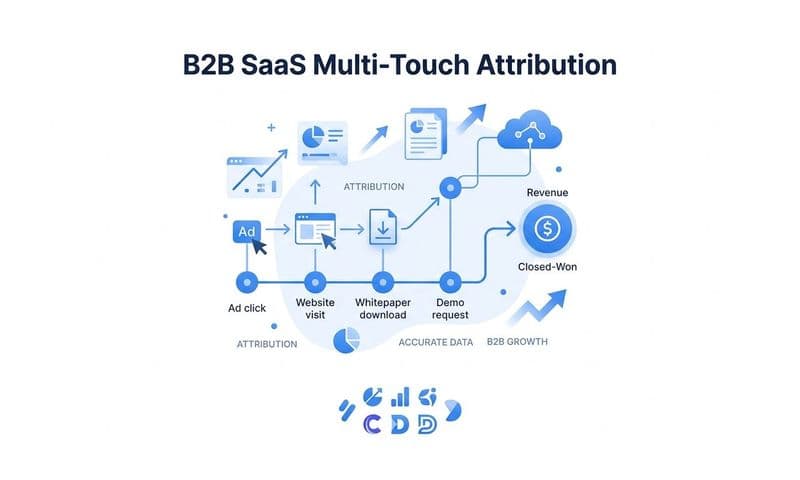
Connecting your CRM to your tracking system closes this gap. When you can follow a prospect from first ad click through to closed deal, you finally see which campaigns drive actual revenue—not just leads that go nowhere.
Start by identifying which CRM or sales system holds your customer data. Salesforce, HubSpot, Pipedrive, whatever you use to track deals and revenue. This is where the truth lives: which customers paid you, how much they paid, and when they became customers. If you're using HubSpot, explore HubSpot attribution tracking capabilities to streamline this process.
Next, integrate your CRM with your attribution platform. The goal is to pass CRM events back to your tracking system so you can connect them to the original ad touchpoints. When a deal closes in your CRM, that event should flow back to your attribution platform along with the revenue amount and customer details.
This integration reveals the complete picture. You'll see that the Facebook ad someone clicked six weeks ago led to a $50,000 deal that closed yesterday. Or that the Google search ad that generated a form fill actually resulted in zero revenue because that lead never converted to a customer. Implementing customer journey tracking software makes this visibility possible.
The impact on ROAS calculations is dramatic. Instead of measuring return based on leads or conversions, you're measuring return based on actual revenue. A campaign might look mediocre based on cost-per-lead but exceptional based on cost-per-customer. Without CRM data, you'd never know the difference.
To verify this step works, check whether you can now see revenue attributed to specific campaigns and ads. Pull up a campaign in your attribution platform. You should see not just conversion counts, but actual revenue numbers tied to those conversions. If you can trace a closed deal back to the original ad that started the journey, your integration is working.
For B2B companies and businesses with longer sales cycles, this connection is absolutely critical. The gap between ad click and revenue can span weeks or months. Without CRM integration, you're flying blind during that entire period.
Step 4: Choose and Apply the Right Attribution Model
Now that you're capturing complete data, you need to decide how to credit different touchpoints in the customer journey. This is where attribution models come in—and choosing the wrong one can lead you to optimize for the wrong channels.
Attribution models determine how credit gets distributed across multiple touchpoints. Someone might see your Facebook ad, click a Google search ad a week later, and then convert through an email campaign. Which touchpoint gets credit for that conversion? The answer depends on your attribution model.
Last-touch attribution gives all credit to the final touchpoint before conversion. In the example above, the email campaign gets 100% credit. This model is simple but misleading—it ignores everything that happened earlier in the journey. You might cut Facebook budget because it never gets credit, even though it introduced customers to your brand.
First-touch attribution does the opposite: all credit goes to the first touchpoint. The Facebook ad gets 100% credit, while the Google ad and email get nothing. This works if you're focused on awareness, but it ignores the touchpoints that actually closed the deal.
Linear attribution splits credit evenly across all touchpoints. Each interaction gets equal weight. This is more balanced but still oversimplified—not every touchpoint has equal impact on the final decision.
Data-driven attribution uses machine learning to assign credit based on which touchpoints actually influence conversions. It analyzes thousands of customer journeys to determine which interactions matter most. This is the most sophisticated approach, but it requires significant data volume to work effectively. Reviewing the best software for tracking marketing attribution can help you find tools that support advanced models.
So which model should you use? It depends on your business. E-commerce companies with short sales cycles often find last-touch or linear attribution sufficient. B2B companies with complex, multi-month journeys benefit from data-driven models that capture the full nurture process.
Here's how to decide: run side-by-side comparisons. Most attribution platforms let you view the same data through different attribution lenses. Pull up your top campaigns and switch between attribution models. Watch how credit shifts. If Facebook looks like a waste under last-touch but drives significant first-touch conversions, that tells you something important about its role in your funnel.
Validate your chosen model against reality. Talk to your sales team. Review closed deal notes. Do the attribution results match what actually happens in customer conversations? If sales says customers consistently mention seeing your ads before booking a call, but your attribution model gives ads zero credit, something's wrong.
The right attribution model helps you invest budget where it actually drives results. The wrong one leads you to scale low-impact channels and cut high-impact ones. Take the time to get this right.
Step 5: Feed Enriched Conversion Data Back to Ad Platforms
You've fixed your tracking. You're capturing complete conversion data. But there's one more critical step: feeding that data back to your ad platforms so their algorithms can optimize based on accurate information.
Ad platforms use machine learning to find people most likely to convert. But they can only optimize based on the conversion data you send them. If you're feeding them incomplete data from browser-based pixels, their algorithms are learning from a skewed sample. Better data in means better targeting out.
This is where conversion sync comes in. Instead of relying solely on pixels, you send enriched conversion events directly to ad platforms through their APIs. For Meta, that's the Conversions API. For Google, it's offline conversion imports and enhanced conversions. Other platforms have similar mechanisms. Understanding Facebook attribution tracking helps you maximize this integration for Meta campaigns.
Here's what makes this data "enriched": you're sending more than just "a conversion happened." You're including customer details, revenue amounts, product information, and any other data that helps ad platforms understand the quality of each conversion. A $10,000 customer looks different from a $100 customer—and ad platforms can optimize differently when they know the difference.
Set this up by configuring your attribution platform or tracking system to automatically sync conversion events to ad platforms. When someone converts, the event goes to Meta, Google, and any other platform that contributed to that journey. The platforms receive complete conversion data even when their pixels missed it.
The impact shows up in your ad platform dashboards. Check your conversion match rates in Meta Events Manager. This metric shows what percentage of conversions can be matched back to specific users. Higher match rates mean better optimization. Many marketers see match rates jump from 60-70% with pixel-only tracking to 85-95% with proper conversion sync.
Over time, you'll notice improvements in audience targeting quality. Your lookalike audiences become more accurate because they're built from complete conversion data, not partial samples. Your automated bidding strategies make better decisions because they're optimizing toward actual revenue, not just tracked conversions.
To verify this step works, monitor your conversion match rates weekly. They should improve steadily as ad platforms receive more complete data. Also watch your cost-per-acquisition trends. As algorithms learn from better data, they should find conversions more efficiently, driving CPA down even as you maintain or increase spend.
This feedback loop is where everything compounds. Better tracking leads to better data. Better data leads to better optimization. Better optimization leads to better ROAS. And it all starts with feeding accurate conversion information back to the platforms doing the heavy lifting.
Step 6: Analyze, Optimize, and Scale Based on Accurate Data
Now you have what most marketers lack: trustworthy data. Every touchpoint is tracked. Attribution is accurate. Ad platforms are optimizing based on complete information. This is where ROAS improvements accelerate.
Start by identifying your top-performing campaigns based on actual revenue, not vanity metrics. Pull a report showing revenue attributed to each campaign over the past 30 days. Sort by ROAS. The campaigns at the top are your winners—these deserve more budget.
Look for patterns in what's working. Are certain ad formats consistently driving higher-value customers? Do specific audience segments convert at better rates? Does one platform outperform others for particular products or services? Your data now reveals these insights clearly because it's complete. Learning how to use data analytics in marketing helps you extract maximum value from these insights.
Next, identify underperformers. These are campaigns with low or negative ROAS despite receiving significant budget. Before you had accurate tracking, you might have kept these running because they "seemed" to work or because platform metrics looked decent. Now you can see they're not driving actual revenue.
Make decisive cuts. Pause campaigns that consistently underperform. Reallocate that budget to proven winners. This sounds obvious, but most marketers hesitate to cut campaigns because they're not confident in their data. With accurate tracking, you can act decisively.
Then scale intelligently. Take your top ROAS campaigns and gradually increase budgets while monitoring performance. With complete data, you'll see exactly when scaling starts to show diminishing returns. Knowing how ad tracking tools can help you scale ads using accurate data gives you the confidence to push budgets higher.
Test with confidence. Launch new campaigns, audiences, or creative approaches. Let them run long enough to gather meaningful data. Then make clear go/no-go decisions based on whether they beat your ROAS benchmarks. No more guessing whether a test "worked"—your data tells you definitively.
Track ROAS improvements week-over-week. As you optimize based on accurate data, you should see steady gains. Maybe ROAS improves 10% in the first month as you reallocate budget away from underperformers. Then another 15% the next month as ad platform algorithms learn from better conversion data. These improvements compound.
The key difference: every decision is now grounded in reality rather than guesswork. You're not optimizing based on incomplete platform metrics that contradict each other. You're optimizing based on a single source of truth that tracks the full customer journey from first click to final revenue.
This is how sophisticated marketers operate. They don't just "run ads"—they systematically test, measure, and optimize based on complete data. The marketers still guessing which campaigns work are competing with one hand tied behind their backs.
Your Action Plan for Better Tracking and Better ROAS
Let's recap the six steps as a quick-reference checklist you can implement starting today:
Step 1: Audit your current tracking setup. Document pixel firing rates, UTM coverage, conversion match rates, and discrepancies between platforms. Identify exactly where you're losing data.
Step 2: Implement server-side tracking to bypass browser limitations and capture conversions that pixels miss. Compare before-and-after conversion counts to verify success.
Step 3: Connect your CRM to your tracking system so you can attribute revenue to specific campaigns and see which ads drive actual paying customers.
Step 4: Choose the right attribution model for your business. Run side-by-side comparisons and validate against real customer journey data.
Step 5: Set up conversion sync to feed enriched conversion data back to ad platforms through their APIs. Monitor conversion match rates to track improvement.
Step 6: Analyze your data to identify top performers, cut underperformers, and scale winners. Track ROAS improvements week-over-week as you optimize based on accurate information.
Better tracking isn't a one-time fix. It's an ongoing practice that compounds over time. The marketers who commit to tracking excellence pull further ahead every month because their optimization decisions are grounded in complete data while competitors are still guessing.
Start with your tracking audit today. You'll likely discover gaps you didn't know existed—and each gap you close translates directly to better ROAS. The improvements are immediate and measurable because you're not changing your ads or strategy. You're simply seeing what was always there.
If you're looking for a platform that handles server-side tracking, CRM integration, multi-touch attribution, and conversion sync in one place, Cometly brings all these capabilities together. From capturing every touchpoint to feeding better data back to your ad platforms, it's built specifically for marketers who want complete visibility into what's actually driving revenue.
Ready to elevate your marketing game with precision and confidence? Discover how Cometly's AI-driven recommendations can transform your ad strategy—Get your free demo today and start capturing every touchpoint to maximize your conversions.