
You're staring at your marketing dashboard at 2 AM, and the numbers don't add up. Google Ads reports 127 conversions this month. Facebook says 89. Your CRM shows 156 new leads. And your actual revenue? It suggests you should have seen closer to 200 conversions.
Which number do you trust? More importantly—which number are you using to make six-figure budget decisions?
This isn't just a reporting annoyance. Inaccurate conversion tracking is silently destroying marketing ROI across the industry. When your tracking captures only 60-70% of actual conversions, you're making strategic decisions based on incomplete data. You're scaling campaigns that might be underperforming. You're cutting budgets from channels that are actually driving revenue. You're essentially flying blind while competitors with accurate tracking are optimizing circles around you.
The stakes are real. For every $100,000 in monthly ad spend, poor tracking typically wastes $15,000-25,000 through misallocated budgets and missed optimization opportunities. Multiply that across a year, and you're looking at potential six-figure losses—not from bad marketing, but from bad measurement.
The root cause? A perfect storm of privacy regulations, browser restrictions, and fragmented tracking implementations. iOS 14.5 fundamentally changed the game. Third-party cookies are disappearing. Platform-native tracking is increasingly limited. And most marketing teams are still relying on client-side tracking methods that were designed for a world that no longer exists.
Here's the good news: fixing inaccurate conversion tracking isn't about buying expensive enterprise software or hiring a team of data engineers. It's about following a systematic process that addresses the root causes of tracking failures, implements modern measurement infrastructure, and establishes ongoing validation protocols.
By following this step-by-step guide, you'll build a tracking system that captures 95%+ of your actual conversions, provides accurate attribution across all marketing channels, and gives you the confidence to make data-driven decisions that actually drive growth. We'll walk through everything from diagnosing your current tracking gaps to implementing server-side infrastructure, configuring unified attribution models, and establishing validation protocols that keep your tracking accurate over time.
This isn't theory. These are the exact steps that marketing teams managing millions in ad spend use to maintain measurement accuracy in the post-iOS 14.5 world. Let's fix your tracking systematically, starting with understanding exactly what's broken in your current setup.
Step 1: Audit Your Tracking Foundation
Cross-Platform Data Reconciliation
Start by pulling conversion data from every platform in your marketing stack for the past 30 days. You need numbers from Google Analytics 4, each ad platform (Google Ads, Meta, LinkedIn, TikTok), your CRM, and your payment processor or lead management system. Export these into a single spreadsheet with one column per source.
Now calculate the variance. If Google Ads shows 100 conversions but GA4 shows 65, you have a 35% tracking gap. If your CRM shows 156 leads but your ad platforms combined report only 120, that's a 23% discrepancy. To effectively compare these metrics, you'll need reliable conversion tracking tools that can aggregate data from multiple sources and highlight these gaps automatically.
Here's the benchmark: variance under 10% is acceptable and typically reflects attribution window differences. Variance between 10-20% indicates tracking issues that need attention. Anything above 20% signals serious problems that are actively distorting your marketing decisions.
Map your customer journey touchpoints to identify where conversions are dropping off. Are people clicking ads but not triggering GA4 page views? Are form submissions firing in your CRM but not in your ad platforms? These drop-off points reveal exactly where your tracking infrastructure is failing.
Common Tracking Failure Diagnostics
Once you've identified discrepancies, diagnose the root causes. Start with iOS 14.5+ privacy impact. If you're running mobile app campaigns or targeting iOS users, you're likely experiencing 15-30% data loss from App Tracking Transparency restrictions. Check your platform reports for "modeled conversions" or "estimated conversions"—these are attempts to fill gaps from blocked tracking.
Next, audit your cookie consent implementation. Open your website in an incognito browser and check if tracking pixels fire before users accept cookies. Use browser developer tools (F12 in Chrome) to verify that Facebook Pixel, Google Analytics, and other tags are actually loading and sending data. Many sites accidentally block all tracking until consent, creating massive blind spots.
Compare your server-side versus client-side tracking coverage. If you're relying entirely on browser-based tracking, you're missing conversions from users with ad blockers, privacy browsers, and strict cookie settings. While manual diagnostics are valuable, comprehensive marketing analytics platforms can automate many of these diagnostic checks, providing real-time alerts when tracking discrepancies exceed acceptable thresholds.
Finally, run a UTM parameter consistency audit. Export your last 100 conversions from GA4 and check if source, medium, and campaign parameters are consistently formatted. Inconsistent UTM tagging (like "facebook" vs "Facebook" vs "fb") fragments your attribution data and makes accurate channel comparison impossible.
Create a tracking health scorecard that lists each identified issue with its estimated business impact. Prioritize fixes based on revenue impact, not technical complexity. A 30% tracking gap on your highest-spending channel deserves immediate attention, even if the fix is technically challenging.
Step 2: Implement Server-Side Tracking Infrastructure
Server-Side Tracking Foundation Setup
Understanding why server-side tracking is more accurate than traditional browser-based methods is crucial before implementing this infrastructure. Browser restrictions, ad blockers, and privacy settings can block up to 30-40% of client-side tracking events. Server-side tracking bypasses these limitations entirely by capturing conversion data on your server before sending it to ad platforms through secure APIs.
Start by creating a Google Tag Manager server container. Log into your GTM account, navigate to Admin, and select "Create Container." Choose "Server" as the container type. You'll need to deploy this container on a cloud platform—Google Cloud Platform offers the simplest integration, but AWS and Azure work equally well. The key is ensuring your server container has a custom subdomain on your domain (like tracking.yourdomain.com) rather than a generic GTM URL, which improves data accuracy and privacy compliance.
Once your server container is live, configure event forwarding by setting up a client in GTM that receives events from your website. Create a GA4 client first—this captures all events your website sends to Google Analytics. Then add clients for each ad platform you're using. The beauty of implementing server-side tracking is that your website sends events once to your server, and the server forwards them to multiple platforms, reducing page load impact while improving data reliability.
Test your server-side event firing using GTM's preview mode. Send a test conversion from your website and verify that your server container receives the event, processes it correctly, and forwards it to your configured platforms. Check that all critical event parameters (user ID, conversion value, product data) are passing through accurately. This validation step catches configuration issues before they affect your live tracking.
Platform-Specific Server-Side Configuration
Meta's Conversions API requires generating an access token from your Business Manager account. Navigate to Events Manager, select your pixel, click Settings, and generate a Conversions API token. In your GTM server container, add a Meta tag, paste your access token and pixel ID, and configure which events to send. The critical step is implementing event deduplication—send an event_id parameter from both your browser pixel and server-side API to prevent Meta from counting the same conversion twice.
Google Ads Enhanced Conversions works differently. In your Google Ads account, enable Enhanced Conversions for your conversion actions. Then configure your GTM server container to hash customer data (email, phone, address) using SHA-256 encryption before sending it to Google. This hashed data helps Google match conversions to users even when cookies are blocked, significantly improving attribution accuracy without compromising privacy.
For e-commerce implementations, ensure your server-side events include transaction IDs, product SKUs, and revenue values. For lead generation, pass through lead quality scores and source parameters. The richer your server-side event data, the better ad platforms can optimize delivery and the more accurate your attribution becomes.
While manual server-side setup requires significant technical expertise, enterprise conversion tracking tools automate this entire process, providing enterprise-level tracking infrastructure without the complexity. The platform handles server container deployment, API configurations, event deduplication, and ongoing maintenance—eliminating the need for dedicated developer resources while ensuring 95%+ tracking accuracy across all your marketing channels.
Step 3: Configure Unified Attribution Models
Multi-Touch Attribution Implementation
Here's where most marketers get attribution completely wrong: they trust whatever their ad platforms tell them. Google Ads claims credit for 100 conversions. Meta says it drove 85. LinkedIn reports 42. Add those up and you've somehow generated 227 conversions when your CRM only shows 156 actual customers.
The problem isn't that platforms are lying—it's that they're each telling their own version of the truth using different attribution models, different conversion windows, and different definitions of what counts as a conversion. You need a single source of truth that reflects actual customer behavior across the entire journey.
Start by configuring GA4's data-driven attribution model, which uses machine learning to analyze actual conversion paths and assign credit based on each touchpoint's statistical contribution. In GA4, navigate to Admin > Attribution Settings and select "Data-driven" as your preferred model. This requires at least 400 conversions per month and 15,000 clicks per conversion action to generate reliable results.
But here's the critical part most guides skip: you need to optimize your attribution windows to match your actual sales cycle. B2B companies with 30-60 day sales cycles need longer attribution windows than e-commerce brands with same-day purchases. In GA4, configure your conversion windows under Admin > Data Display > Attribution Settings. For most B2B scenarios, a 90-day click window and 30-day view window captures the full journey. E-commerce typically works with 30-day click and 7-day view windows.
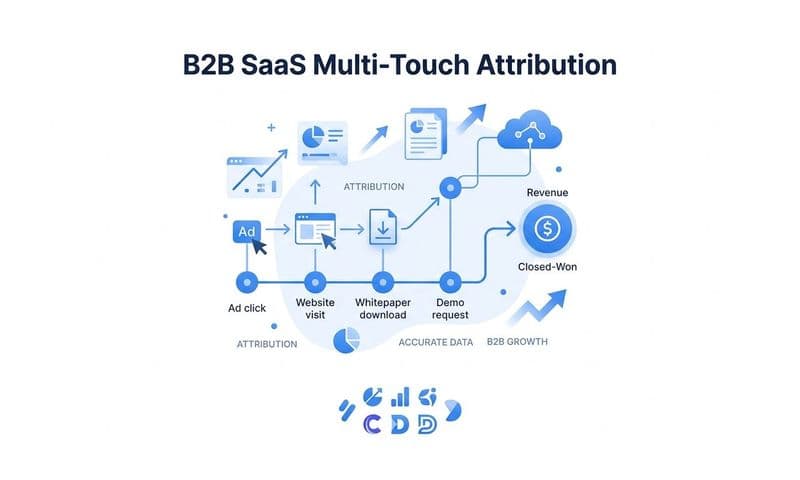
The real power comes from comparing attribution models side-by-side. Run a conversion path analysis in GA4 (Advertising > Attribution > Conversion Paths) to see how first-click, last-click, linear, and data-driven models assign credit differently. You'll often discover that channels you thought were underperforming (like display or social) actually play crucial roles in the customer journey—they just don't get last-click credit.
Cross-Platform Attribution Alignment
Now comes the hard part: getting all your platforms to speak the same attribution language. Without standardization, you're comparing apples to oranges to pineapples.
Start with UTM parameter governance. Create a standardized naming convention and enforce it religiously. Every campaign URL must include utmsource, utmmedium, utmcampaign, utmcontent, and utmterm where applicable. Use lowercase, hyphens instead of spaces, and consistent naming patterns. "facebook-prospecting-q1-2026" not "FacebookProspecting_Q1" or "fb-prospect-jan." Inconsistent UTMs are the silent killer of accurate attribution.
Modern marketing attribution software solutions are essential for enterprises managing attribution across Facebook, Google, TikTok, and other channels simultaneously. These platforms unify data from disparate sources and apply consistent attribution logic across all channels.
Next, align your conversion windows across all platforms. If GA4 uses a 30-day click window, configure Google Ads and Meta to use 30-day windows as well. Mismatched windows create artificial discrepancies that make cross-platform comparison impossible. In Google Ads, set this under Tools > Conversions > Settings. In Meta, configure this in Events Manager under your conversion event settings.
Step 4: Optimize Conversion Event Architecture
Your tracking infrastructure is only as good as the events you're measuring. Even with perfect server-side tracking and unified attribution, poorly structured conversion events will give you incomplete insights and limit your optimization capabilities.
Think of your event architecture as the foundation of your entire analytics strategy. A well-designed event hierarchy tells you not just that a conversion happened, but how valuable it was, which customer segment it came from, and what specific actions led to it. This level of detail transforms your tracking from simple counting to strategic intelligence.
Strategic Event Hierarchy Development
Start by mapping your conversion events to actual business value. Too many marketers treat all conversions equally—a newsletter signup gets the same tracking weight as a $10,000 purchase. This creates optimization blind spots where ad platforms can't distinguish between high-value and low-value actions.
Primary Conversion Events: These are your revenue-driving actions—completed purchases, qualified sales leads, subscription signups, or contract signings. Assign actual dollar values to these events based on average order value or customer lifetime value. If your average customer is worth $2,500, tell your tracking that. Ad platforms use this value data to optimize for revenue, not just volume.
Secondary Conversion Events: These are meaningful engagement actions that indicate purchase intent—email signups, demo requests, product page views, or content downloads. Assign estimated values based on historical conversion rates. If 20% of demo requests convert to $5,000 deals, that demo request is worth approximately $1,000 in expected value.
Micro-Conversions: Track engagement signals like video views, scroll depth, or time on site. These don't get dollar values, but they provide crucial context for understanding customer journey patterns and identifying optimization opportunities.
For B2B SaaS companies, a typical hierarchy might look like: Trial Signup ($500 estimated value) → Product Activation ($1,200) → Paid Conversion ($3,000) → Annual Renewal ($3,600). Each stage gets tracked separately, allowing you to optimize for the specific conversion that matters most at each funnel stage.
Enhanced Event Parameter Configuration
Raw conversion counts tell you what happened. Custom event parameters tell you why it happened and how to replicate it.
Customer Lifetime Value Integration: Pass actual or predicted CLV as an event parameter. This allows you to segment high-value customers in your analytics and optimize ad delivery toward audiences that generate the most long-term revenue. If you're using a CRM like HubSpot or Salesforce, pull this data directly from customer records.
Lead Quality Scoring: For B2B marketers, not all leads are equal. Pass lead score, company size, industry, or job title as event parameters. This lets you analyze which campaigns drive qualified leads, not just lead volume. You might discover that LinkedIn drives fewer total leads but 3x more enterprise-qualified prospects.
Product and Margin Data: E-commerce businesses should pass product category, SKU, margin percentage, and inventory status. This reveals which campaigns drive high-margin products versus low-margin volume sellers, enabling you to optimize for profitability rather than just revenue.
Putting It All Together
You've just built a conversion tracking system that most enterprise marketing teams would pay six figures to implement. More importantly, you've created a measurement foundation that will compound in value over time as you accumulate more accurate data and refine your optimization strategies.
The difference between 70% tracking accuracy and 95% tracking accuracy isn't just 25% better data—it's the difference between guessing and knowing which marketing investments actually drive growth. It's the confidence to scale winning campaigns aggressively instead of cautiously. It's the ability to cut underperforming spend without second-guessing whether your data is reliable.
Start with the audit. Spend one day documenting your current tracking gaps and their business impact. Then prioritize the fixes that will close your largest revenue leaks first. For most businesses, that means implementing conversion tracking infrastructure before worrying about advanced attribution models.
Remember: perfect tracking doesn't exist, but 95%+ accuracy is achievable with the right infrastructure and ongoing validation. The marketing teams winning in 2026 aren't the ones with the biggest budgets—they're the ones with the most accurate measurement systems.
Ready to elevate your marketing game with precision and confidence? Discover how Cometly's AI-driven recommendations can transform your ad strategy—**Get your free demo** today and start capturing every touchpoint to maximize your conversions.