You've just launched campaigns across Meta, Google, TikTok, and email. The clicks are rolling in—hundreds, maybe thousands. Your dashboard shows activity everywhere. But here's the question that keeps you up at night: which of those clicks actually turned into revenue?
Most marketers can tell you how many people clicked their links. Far fewer can tell you which clicks mattered. That's the difference between click tracking and link analytics.
Link analytics transforms raw click data into marketing intelligence. It connects every link interaction to real business outcomes—showing you not just who clicked, but who converted, who bought, and which touchpoints actually influenced the decision. Without this visibility, you're optimizing campaigns based on incomplete information, scaling the wrong ads, and missing the channels that quietly drive your best customers.
This guide breaks down everything you need to know about link analytics: how it works, why traditional click tracking fails modern marketers, and how to build a system that connects every click to revenue. You'll learn the metrics that matter, the attribution connection that makes optimization possible, and the practical steps to implement link analytics that actually drives results.
Beyond Click Counts: What Link Analytics Actually Reveals
Link analytics is the practice of tracking, measuring, and analyzing how users interact with links across your marketing channels. But it goes far beyond counting clicks.
Think of basic click tracking as knowing someone walked into your store. Link analytics tells you which door they used, what caught their attention on the way in, how long they browsed, what they looked at, and whether they bought anything. It's the difference between vanity metrics and actionable intelligence.
When you implement proper link analytics, you capture a rich dataset for every interaction. You see the exact timestamp of each click, revealing patterns about when your audience engages most. You track geographic location, showing you which markets respond to specific messages. Device type tells you whether your mobile experience matches your desktop performance.
But the real power emerges when you track referral sources and user journey progression. You can see that a customer clicked your LinkedIn ad three weeks ago, returned through a Google search last week, and finally converted after clicking your email campaign yesterday. Each link becomes a breadcrumb in the customer journey.
The critical distinction is conversion correlation. Basic click tracking stops at the click. Link analytics follows that user through your funnel, connecting the initial click to form submissions, demo requests, purchases, and lifetime value. It answers the question every marketer needs answered: did this link contribute to revenue?
This is where most marketing teams miss the mark. They celebrate high click-through rates without knowing if those clicks led anywhere meaningful. They optimize for engagement without understanding which engagement predicts conversion. They treat all clicks equally when some are worth thousands of dollars and others are worth nothing.
Comprehensive link analytics creates a continuous feedback loop. You learn which ad creatives generate clicks that convert. You discover which landing pages keep visitors engaged versus which ones bounce immediately. You identify the specific UTM parameters that correlate with your highest-value customers.
The data points you capture become the foundation for every optimization decision. When you know that clicks from a specific campaign, placement, or audience segment consistently lead to revenue, you can confidently scale that approach. When you see that another source drives high click volume but zero conversions, you can cut spending before wasting more budget.
Why Traditional Click Tracking Falls Short in Multi-Channel Campaigns
Here's the problem with relying on platform-native click data: it only shows you what happens inside that platform's walled garden. Meta tells you about Meta clicks. Google reports on Google clicks. Your email platform tracks email clicks. But none of them talk to each other.
This fragmentation creates blind spots that sabotage optimization. A customer might see your Meta ad, click through to your site, leave without converting, then search for your brand on Google and convert through that click. Meta sees an unconverted click. Google sees a conversion. Neither platform understands the relationship between these events.
You end up with siloed data that tells incomplete stories. Your Meta dashboard shows strong engagement but weak conversion rates, so you consider cutting budget. Meanwhile, your Google Ads account shows excellent performance on branded search terms—but you don't realize Meta is driving that branded search volume. Cut Meta, and your "high-performing" Google campaigns collapse.
The situation has gotten worse with privacy changes. iOS App Tracking Transparency fundamentally broke the tracking that platforms relied on for attribution. When users opt out of tracking, platforms lose visibility into post-click behavior. They can tell you someone clicked, but they can't reliably tell you what happened next. Understanding how to navigate these attribution challenges in marketing analytics has become essential for modern marketers.
Cookie deprecation compounds the problem. Third-party cookies once allowed platforms to track users across the web, connecting ad clicks to website behavior. As browsers phase out these cookies, that visibility disappears. Platform-native tracking becomes increasingly unreliable for understanding true conversion paths.
The result is attribution chaos. Platforms use modeling and estimation to fill the gaps, but these models often conflict with each other. Meta might claim credit for a conversion that Google also attributes to itself. Your actual conversion count is 50, but when you add up what each platform reports, you get 83. Someone is wrong, but you don't know who.
This creates a more insidious problem: marketers over-credit last-click channels while undervaluing awareness-building touchpoints. A customer sees your display ad, watches your YouTube video, reads your blog post, and finally converts after clicking a retargeting ad. The retargeting platform gets full credit. The channels that introduced your brand and built interest get nothing.
When you optimize based on this incomplete data, you systematically defund the top-of-funnel activities that fill your pipeline. You chase short-term conversion metrics while undermining long-term growth. Your cost per acquisition looks great until you realize you're only converting people who were already ready to buy—and you've stopped creating new demand.
The Core Metrics That Drive Smarter Marketing Decisions
Click-through rate gets obsessive attention in most marketing teams. High CTR feels like validation—your creative works, your targeting resonates, your message lands. But CTR without context is a vanity metric that can mislead as often as it informs.
A 5% CTR means nothing if those clicks bounce immediately or never convert. A 1% CTR might be exceptional if every click turns into a qualified lead. The metric that matters is conversion correlation: what happens after the click?
This is why link-to-lead and link-to-revenue metrics transform how you evaluate performance. Link-to-lead tracking shows you which links generate form submissions, demo requests, or trial signups. Link-to-revenue goes further, connecting specific clicks to closed deals and actual revenue.
When you track these metrics, patterns emerge that CTR alone would never reveal. You might discover that clicks from LinkedIn generate fewer conversions than Facebook, but LinkedIn leads close at twice the rate and spend three times more. Suddenly, the "underperforming" LinkedIn campaign becomes your most valuable channel. Mastering LinkedIn ads analytics helps you uncover these hidden performance insights.
Engagement quality signals add another layer of intelligence. Time on page post-click tells you whether your landing page holds attention or loses it immediately. Scroll depth shows whether visitors engage with your content or bounce after a quick glance. Secondary actions—like clicking to another page, watching a video, or downloading a resource—indicate genuine interest versus accidental clicks.
These signals help you distinguish between traffic quality and traffic volume. A campaign might drive massive click volume with terrible engagement—people clicking out of curiosity or confusion, then leaving when they realize the content doesn't match their expectations. Another campaign might generate modest clicks but exceptional engagement, with visitors spending minutes exploring your content and taking multiple actions.
The engagement data also reveals messaging alignment issues. If your ad promises one thing but your landing page delivers something else, you'll see high click-through rates paired with immediate bounces. The disconnect between expectation and reality shows up in the data before it shows up in your conversion rates.
Segment-level performance becomes visible when you analyze these metrics across different dimensions. You can compare engagement quality across ad creatives, audiences, placements, and devices. You might find that mobile clicks convert at half the rate of desktop clicks—signaling either a mobile experience problem or an audience quality issue worth investigating. Understanding which marketing analytics metrics to track makes this analysis possible.
The key is moving beyond aggregate metrics to granular analysis. Total clicks don't tell you much. Clicks segmented by source, campaign, creative, audience, and device—then correlated with engagement quality and conversion outcomes—tell you everything you need to know about what's working and what's wasting budget.
Connecting Clicks to Revenue: The Attribution Connection
Link analytics becomes truly powerful when it feeds into multi-touch attribution models. This is where you stop asking "did this click convert?" and start asking "how did this click contribute to the conversion?"
Multi-touch attribution recognizes that customer journeys rarely follow a straight line. Someone might click your Meta ad, visit your site, leave, see your retargeting ad, click again, subscribe to your email list, read three emails, search for your brand, click a Google ad, and finally convert. Every touchpoint played a role. Link analytics captures all of them.
When you track the complete customer journey—from first ad click through CRM events to final purchase—you can assign appropriate credit to each touchpoint. First-touch attribution shows which links introduce new prospects. Last-touch reveals which links close deals. Linear attribution distributes credit evenly. Time-decay gives more weight to recent interactions. Position-based emphasizes first and last touches while acknowledging middle touchpoints.
The model you choose matters less than having visibility into the full journey. Without comprehensive link analytics, you're forced into last-click attribution by default—not because it's accurate, but because it's all you can measure. With proper tracking, you can experiment with different models and understand how each channel contributes throughout the funnel. A robust marketing attribution analytics approach gives you this flexibility.
This visibility transforms budget allocation decisions. Instead of asking "which channel has the lowest cost per click?" you can ask "which channels contribute most to revenue across the entire customer journey?" The answers often surprise marketers who've been optimizing based on incomplete data.
You might discover that your podcast sponsorships generate almost no direct conversions but consistently appear early in the journey of your highest-value customers. Cut podcast spending based on last-click attribution, and three months later your pipeline dries up. Understand the attribution connection, and you recognize podcasts as a critical awareness channel worth scaling.
The same principle applies to content marketing, social media engagement, and other activities that traditional attribution models undervalue. When you can connect early-stage link interactions to eventual conversions, you can justify investment in channels that build long-term value rather than just harvesting existing demand.
Proper link analytics also enables you to optimize spend based on revenue contribution, not just click volume. A campaign driving 10,000 clicks at $0.50 each looks efficient until you realize it generated zero revenue. Another campaign driving 100 clicks at $5 each looks expensive until you see it produced $50,000 in sales. The cost per click metric becomes irrelevant when you can measure cost per revenue dollar.
This shift in perspective changes everything. You stop chasing cheap clicks and start investing in valuable ones. You recognize that not all traffic is created equal. You build campaigns designed to attract customers who convert, not just visitors who click.
Implementing Link Analytics: A Practical Framework
Building an effective link analytics system starts with UTM parameter strategy. UTM parameters are the tags you add to URLs to track campaign performance—but their value depends entirely on consistent implementation.
Create a naming convention and enforce it across your entire team. Decide how you'll label sources (utm_source), mediums (utm_medium), campaigns (utm_campaign), content variations (utm_content), and keywords (utm_term). Document these conventions and make them non-negotiable. Inconsistent tagging creates data chaos that undermines every analysis you attempt.
Many marketers use different naming schemes across platforms or let individual team members create their own conventions. You end up with "facebook," "Facebook," "FB," and "meta" all referring to the same source. Your analytics tool treats them as separate channels, fragmenting your data and making accurate performance comparison impossible.
The solution is a centralized UTM builder that enforces your conventions. When anyone creates a campaign link, they use the builder, which automatically applies consistent formatting and prevents variations. This small upfront investment in process saves countless hours of data cleanup later.
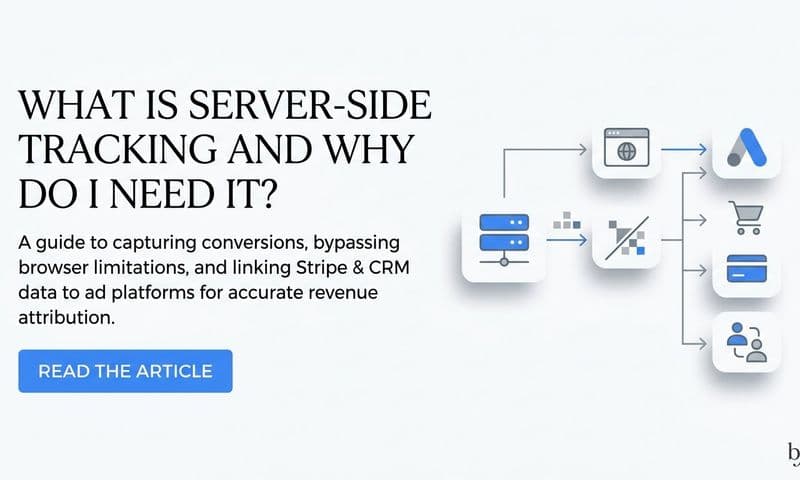
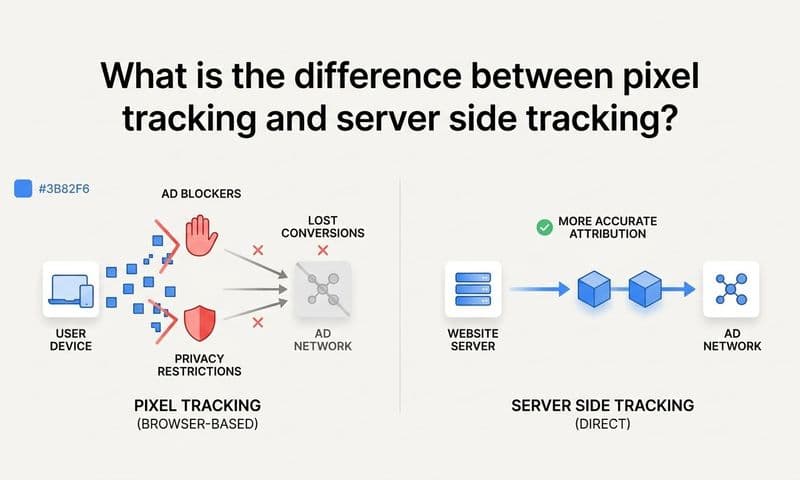
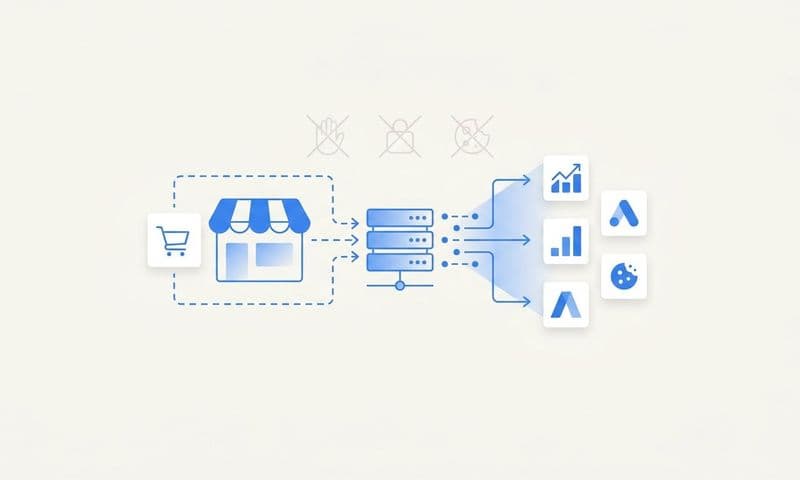
But UTM parameters alone aren't enough in the current privacy landscape. This is where server-side tracking becomes critical. Traditional browser-based tracking relies on cookies and pixels that increasingly fail due to privacy restrictions. Server-side tracking bypasses these limitations by capturing data on your server before it reaches the user's browser. Understanding how to prepare for iOS17 link tracking shield and similar privacy updates is crucial for maintaining data accuracy.
When a user clicks your link, the interaction is logged server-side, creating a reliable record that isn't subject to browser blocking, ad blockers, or privacy settings. You capture the click, the source, the timestamp, and the user identifier—all before browser-based restrictions can interfere. This dramatically improves data accuracy compared to pixel-only tracking.
Server-side tracking also enables you to enrich the data before sending it to analytics platforms or ad networks. You can append CRM data, combine multiple touchpoints into a single user journey, and send conversion events back to ad platforms with additional context that improves their optimization algorithms.
The integration requirements are straightforward but essential. Your link analytics system needs to connect three data sources: ad platforms, website analytics, and your CRM. Each provides a different piece of the puzzle.
Ad platforms tell you about impressions, clicks, and ad-level performance. Website analytics shows what happens after the click—page views, engagement, and on-site conversions. Your CRM reveals what happens in the real world—sales calls, demos, closed deals, and revenue. Learning how to integrate Google Analytics with Salesforce is one example of connecting these critical data sources.
When these systems talk to each other, you create a unified view of link performance. You can see that a specific Meta ad generated 47 clicks, 12 of which became leads in your CRM, 4 of which booked demos, and 2 of which closed for $30,000 in revenue. That level of visibility makes optimization obvious.
Turning Link Data Into Campaign Optimization
Link analytics only matters if you use it to make better decisions. The data becomes valuable when it reveals which ad creatives, placements, and audiences are worth scaling—and which are wasting budget.
Start by analyzing performance at the creative level. You're probably running multiple ad variations within each campaign. Link analytics shows you which specific images, headlines, and calls-to-action generate clicks that convert. You might discover that one creative drives 60% of your conversions despite receiving only 30% of impressions. Scale that creative. Kill the underperformers.
We compare the leading options in our AI marketing image generator roundup.
The same principle applies to placements and audiences. Your link data might reveal that Instagram Story placements convert at twice the rate of feed placements, or that a specific custom audience consistently delivers your highest-value customers. These insights let you reallocate budget toward what works and away from what doesn't.
But the optimization opportunity goes beyond internal decision-making. When you feed enriched conversion data back to ad platforms, you improve their targeting algorithms. Platforms like Meta and Google use conversion signals to optimize who sees your ads. The more accurate and complete your conversion data, the better they perform.
This is where server-side tracking creates compound benefits. You're not just capturing better data for your own analysis—you're sending better signals back to the platforms, which helps them find more people like your best customers. The platforms learn which types of users convert, which creative elements work, and which placements drive results. They use this learning to improve delivery automatically. Leveraging AI marketing analytics can accelerate this optimization process significantly.
The feedback loop becomes self-reinforcing. Better link analytics leads to better conversion tracking. Better conversion tracking improves platform optimization. Better platform optimization drives more qualified clicks. More qualified clicks generate more conversions. More conversions create more data to refine your strategy.
This compounds over time. In month one, you might see modest improvements as you identify obvious winners and losers. By month three, the platforms have learned from hundreds of conversion events and are delivering significantly better results. By month six, your cost per acquisition has dropped while conversion volume has increased—the holy grail of campaign optimization.
The key is treating link analytics as an ongoing practice, not a one-time audit. Set up weekly reviews of your link performance data. Look for patterns, anomalies, and opportunities. Test new audiences, creatives, and placements, then let the data tell you what works. Build a culture where optimization decisions are based on evidence, not opinions or hunches. Visualizing this data through a data analytics dashboard makes these reviews more efficient and actionable.
Putting It All Together
Link analytics is the foundation that makes data-driven marketing possible. Without it, you're optimizing based on incomplete information, scaling campaigns that feel right instead of campaigns that perform, and missing the attribution insights that separate efficient growth from budget waste.
The goal isn't just tracking clicks—it's understanding how every link contributes to revenue. It's connecting the dots between first touch and final purchase. It's building a system that shows you which marketing activities actually drive business outcomes and which are vanity metrics disguised as progress.
This requires more than UTM parameters and platform dashboards. It demands a comprehensive approach that captures every touchpoint, connects link interactions to conversions, and feeds enriched data back to ad platforms to improve their optimization. It means implementing server-side tracking to bypass privacy limitations, integrating your ad platforms with your CRM, and building attribution models that reflect the complexity of modern customer journeys.
When you get this right, optimization becomes obvious. You know which campaigns to scale, which creatives to kill, and which channels deserve more investment. You stop guessing and start knowing. You build confidence in your marketing decisions because they're backed by complete data that connects every click to real business outcomes.
Cometly captures every touchpoint across your marketing channels and connects link interactions to actual revenue. The platform tracks the complete customer journey—from first ad click through CRM events to final purchase—giving you the attribution visibility you need to optimize with confidence. AI-powered recommendations identify your top-performing ads and campaigns, while server-side tracking ensures data accuracy despite privacy restrictions. Conversion sync feeds enriched data back to Meta, Google, and other platforms, improving their targeting algorithms and driving better results over time.
Ready to elevate your marketing game with precision and confidence? Discover how Cometly's AI-driven recommendations can transform your ad strategy—Get your free demo today and start capturing every touchpoint to maximize your conversions.