

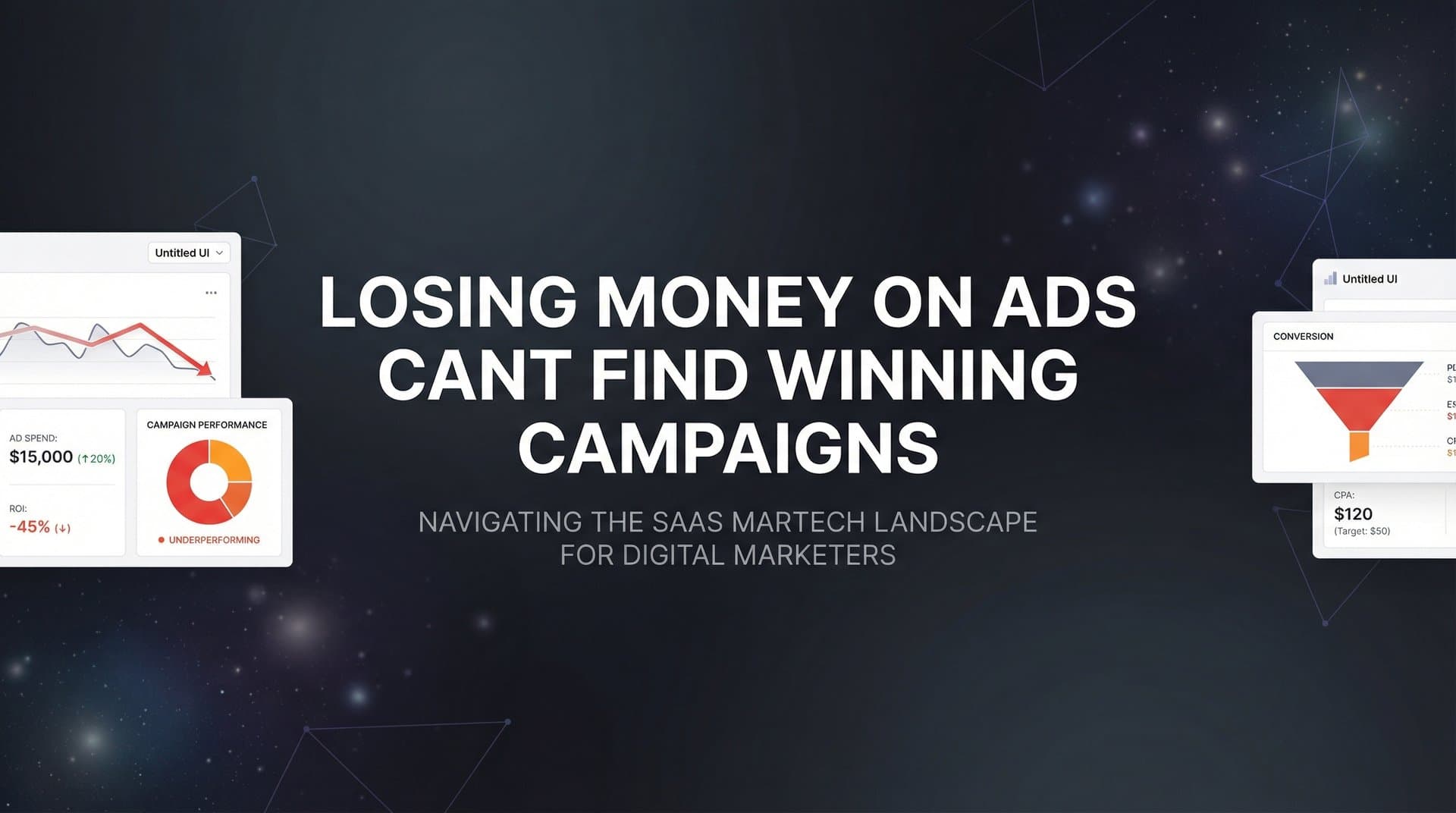
The frustration of watching ad spend disappear without clear results is one of the most common challenges marketers face today. You launch campaigns, monitor metrics, and adjust budgets, yet identifying which ads actually drive revenue feels like searching for a needle in a haystack.
The problem often is not your creative or targeting. It is the gap between what your ad platforms report and what actually happens after someone clicks.
When you cannot connect ad clicks to real revenue, every campaign feels like a gamble. This guide walks you through seven actionable strategies to stop the bleeding, gain clarity on performance, and finally identify the campaigns worth scaling.
1. Connect Your Ad Data to Actual Revenue
The Challenge It Solves
Most ad platforms report conversions based on pixel tracking, but those numbers rarely match what your CRM shows. You might see 50 conversions in Facebook Ads Manager, but only 30 actual sales in your system. This disconnect makes it impossible to calculate true ROAS or identify which campaigns genuinely drive revenue. You end up making budget decisions based on incomplete or misleading data.
The Strategy Explained
Revenue-connected attribution links your ad platform data directly to your CRM and sales systems. Instead of relying on platform-reported conversions, you track the complete path from ad click through to closed deal and actual payment. This gives you a single source of truth that shows which campaigns drive real business outcomes.
The approach involves integrating your advertising platforms with your CRM, payment processor, and analytics tools. When someone clicks an ad, that interaction gets tracked alongside every subsequent touchpoint until they become a paying customer. You can then attribute revenue back to specific campaigns, ad sets, and even individual ads.
Implementation Steps
1. Audit your current data sources and identify where revenue data lives (CRM, payment processor, subscription management system).
2. Set up integrations that connect your ad platforms to these revenue sources, ensuring customer identifiers match across systems.
3. Create custom dashboards that display ad spend alongside actual revenue generated, not just platform-reported conversions.
4. Establish a regular reconciliation process to verify that your attribution data matches your actual financial records.
Pro Tips
Start by connecting your highest-value revenue source first. If most of your revenue comes through Stripe or HubSpot, prioritize that integration. Once you see accurate revenue data for your top campaigns, you will quickly identify which ones deserve more budget and which ones are secretly draining your resources.
2. Track the Full Customer Journey
The Challenge It Solves
Single-touch attribution models credit only one interaction, usually the first click or last click, with the entire conversion. This approach ignores the reality that most customers interact with multiple ads and touchpoints before buying. You might pause a Facebook campaign that introduced customers to your brand because a Google retargeting ad got credit for the final conversion. The result is cutting campaigns that actually play crucial roles in your funnel.
The Strategy Explained
Multi-touch attribution captures every interaction a customer has with your marketing before they convert. It tracks the Instagram ad they first clicked, the blog post they read three days later, the YouTube ad they watched the following week, and the Google search ad they finally converted through. Each touchpoint gets appropriate credit based on its role in the journey.
For a deeper dive into this space, see our AI YouTube ad generator guide.
This comprehensive view reveals which campaigns work together to drive conversions. You might discover that LinkedIn ads rarely get last-click credit but consistently introduce high-value leads who later convert through other channels. Without tracking the full journey, you would never see this pattern.
Implementation Steps
1. Implement tracking that captures every marketing touchpoint, including ad clicks, email opens, website visits, and content downloads.
2. Create a unique identifier for each visitor that persists across sessions and devices, allowing you to stitch together their complete journey.
3. Build journey visualization reports that show the sequence of interactions leading to conversions.
4. Analyze patterns in high-value customer journeys to understand which touchpoint combinations drive the best results.
Pro Tips
Pay special attention to campaigns that appear frequently in the early stages of high-value customer journeys. These awareness and consideration campaigns might show weak direct conversion numbers but play essential roles in your overall funnel. Cutting them often causes revenue to drop weeks later when the pipeline dries up. Learning how to track marketing campaigns effectively is essential for this analysis.
We compare the leading options in our marketing campaign management software roundup.
3. Implement Server-Side Tracking
The Challenge It Solves
Browser-based tracking through pixels has become increasingly unreliable. iOS privacy features block a significant portion of tracking, ad blockers prevent pixels from firing, and browser updates regularly break tracking scripts. Many marketers report losing visibility into 30 to 50 percent of their conversions. When you cannot see half your results, identifying winning campaigns becomes nearly impossible.
The Strategy Explained
Server-side tracking moves data collection from the browser to your server. Instead of relying on JavaScript pixels that users can block, your server directly sends conversion events to ad platforms. When someone converts on your website, your server captures that action and sends the data to Facebook, Google, and other platforms through their APIs.
This approach bypasses browser restrictions and ad blockers entirely. The data flows directly from your server to the ad platforms, creating a reliable stream of conversion information. You recover visibility into conversions that pixel-based tracking would miss, giving you a more accurate picture of campaign performance.
Implementation Steps
1. Set up server-side tracking infrastructure that can capture conversion events from your website or application.
2. Configure API connections to your ad platforms (Meta Conversions API, Google Ads API, TikTok Events API) to send conversion data directly.
3. Implement deduplication logic to prevent double-counting when both pixel and server-side tracking capture the same conversion.
4. Monitor data quality by comparing server-side conversion volumes to your pixel-based tracking baseline.
Pro Tips
Server-side tracking works best when combined with first-party data collection. Use customer email addresses, phone numbers, or user IDs to create stronger matches between your conversions and ad platform user profiles. This improves match rates and helps platforms optimize more effectively. If you are struggling with tracking paid ads after iOS updates, server-side implementation is critical.
4. Compare Attribution Models
The Challenge It Solves
Relying on a single attribution model gives you only one perspective on campaign performance. Last-click attribution might show Google Search as your top performer while completely ignoring the Facebook campaigns that introduced those customers to your brand. First-click attribution does the opposite, crediting awareness campaigns while undervaluing the retargeting that closed the deal. Using just one model means missing campaigns that deserve more investment.
The Strategy Explained
Attribution model comparison involves analyzing your campaign performance through multiple lenses simultaneously. You examine the same conversion data using first-click, last-click, linear, time-decay, and position-based models. Each model distributes conversion credit differently, revealing which campaigns excel at different stages of the funnel.
When you compare models side by side, patterns emerge. A campaign might rank poorly in last-click attribution but show strong performance in first-click attribution, indicating it excels at generating awareness. Another campaign might dominate last-click but barely register in first-click, suggesting it works best for closing warm leads. Understanding the differences between Facebook Ads attribution vs Google Ads attribution helps you interpret these patterns correctly.
Implementation Steps
1. Set up reporting that displays the same conversion data across multiple attribution models simultaneously.
2. Create comparison charts that show how each campaign ranks under different attribution approaches.
3. Identify campaigns that perform dramatically better or worse depending on the model used.
4. Adjust your campaign strategy based on what each model reveals about campaign roles in your funnel.
Pro Tips
Look for campaigns with large discrepancies between first-click and last-click attribution. These campaigns often play specialized roles in your funnel. A campaign with high first-click but low last-click attribution is your awareness driver. One with the opposite pattern is your closer. Budget both appropriately instead of picking winners based on a single model.
5. Feed Better Conversion Data to Platforms
The Challenge It Solves
Ad platforms use machine learning to optimize delivery, but their algorithms only work as well as the data you feed them. When tracking is incomplete or inaccurate, platforms optimize toward the wrong outcomes. Facebook might think a campaign is performing well because it sees conversions that never actually resulted in revenue. Google might pause campaigns that drive high-value customers because it cannot see those conversions happening.
The Strategy Explained
Conversion data enrichment involves sending detailed, accurate conversion events back to your ad platforms. Instead of just telling Facebook that a conversion happened, you send the actual revenue amount, customer lifetime value prediction, and conversion quality indicators. This enriched data helps platform algorithms distinguish between a $10 customer and a $10,000 customer.
The process works through conversion APIs and offline conversion uploads. Your system tracks not just the initial conversion but also what happens afterward. When a lead becomes a customer, when a customer makes a repeat purchase, or when a trial converts to paid, you send that information back to the platforms. They use this data to find more people likely to take those valuable actions. This approach helps improve Facebook Ads conversion tracking significantly.
Implementation Steps
1. Configure your conversion tracking to capture revenue values, not just conversion counts.
2. Set up automated feeds that send post-conversion events (trial-to-paid, repeat purchases, high-value actions) back to ad platforms.
3. Use conversion value optimization in your campaign settings to tell platforms to prioritize high-value conversions.
4. Monitor how platform optimization changes as you feed better data, watching for improvements in average order value and customer quality.
Pro Tips
Start sending offline conversion data within seven days of the initial click. Most platforms have attribution windows that close after a week, so delayed data loses its optimization value. Automate the process of sending conversion updates as soon as they happen in your CRM or payment system.
6. Use AI-Powered Insights
The Challenge It Solves
Manual analysis of cross-channel campaign data is overwhelming. You have hundreds of campaigns across multiple platforms, each with dozens of metrics to track. Identifying patterns, spotting opportunities, and catching problems early requires analyzing thousands of data points daily. By the time you notice a winning campaign, you have already missed days of scaling opportunity. By the time you catch a losing campaign, you have already wasted budget.
The Strategy Explained
AI-powered analytics continuously monitors all your campaign data, identifies patterns humans would miss, and surfaces actionable recommendations. The system analyzes performance across channels, compares current results to historical patterns, and flags both opportunities and risks. Instead of manually reviewing dashboards, you receive specific recommendations about which campaigns to scale, which to pause, and which need optimization. Leveraging AI ads optimization recommendations can dramatically accelerate this process.
Advanced AI systems go beyond simple threshold alerts. They understand context, recognize seasonal patterns, account for external factors, and predict future performance. When a campaign starts trending upward, AI can distinguish between random variance and a genuine opportunity worth scaling. When performance dips, it can identify whether the issue is temporary or indicative of a larger problem.
Implementation Steps
1. Implement analytics tools that use machine learning to analyze campaign performance across all your ad platforms.
2. Configure the AI to understand your specific business goals, whether that is maximizing ROAS, minimizing CPA, or hitting revenue targets.
3. Review AI-generated recommendations daily and act on high-confidence suggestions about budget reallocation.
4. Track the performance of campaigns you scale or pause based on AI recommendations to validate the system's accuracy.
Pro Tips
Use AI to identify cross-channel patterns that single-platform analysis would miss. You might discover that LinkedIn campaigns perform best when running alongside Facebook retargeting, or that Google Search converts better when YouTube awareness campaigns are active. These insights only emerge when AI analyzes all your channels simultaneously. Consider exploring AI ads management software to streamline this workflow.
For a deeper dive into this space, see our ad spend management software guide.
7. Build a Revenue-Focused Testing Framework
The Challenge It Solves
Testing campaigns based on vanity metrics leads to scaling the wrong winners. A campaign might generate impressive click-through rates but attract tire kickers who never buy. Another campaign might have mediocre engagement metrics but consistently bring in high-value customers. When you optimize for clicks, impressions, or even conversion counts instead of revenue, you end up scaling campaigns that look good in dashboards but drain profitability.
The Strategy Explained
Revenue-focused testing structures every campaign experiment around actual business outcomes. You define success based on metrics that matter to your bottom line: customer acquisition cost relative to lifetime value, revenue per click, or contribution margin. Every test has clear revenue targets and runs long enough to capture post-conversion behavior.
This approach requires patience. Instead of declaring winners after a few days based on conversion rates, you wait until you have statistically significant revenue data. You track not just whether campaigns generate conversions but whether those conversions turn into paying customers, what those customers spend, and whether they stick around. The campaigns that win revenue-focused tests are the ones actually worth scaling.
Implementation Steps
1. Define your primary success metric in revenue terms (ROAS, CAC:LTV ratio, revenue per visitor) and make it the deciding factor in all campaign tests.
2. Set minimum test durations based on your sales cycle length, ensuring you capture complete conversion and revenue data before making decisions.
3. Create testing protocols that require statistical significance in revenue metrics, not just conversion counts, before scaling winners.
4. Document the revenue performance of scaled campaigns to validate that test results translate to sustained performance at higher budgets.
Pro Tips
Build cohort analysis into your testing framework. Track the 30-day, 60-day, and 90-day revenue from customers acquired during each test period. Some campaigns attract customers who spend more over time, while others bring one-time buyers. This long-term view prevents you from scaling campaigns with strong initial metrics but weak customer retention. If you are wondering which ads drive actual revenue, cohort analysis provides the clearest answers.
Putting It All Together
Finding winning campaigns is not about luck or endless testing. It is about having the right data infrastructure to see which ads actually drive revenue.
Start by connecting your ad platforms to your CRM and revenue data. This foundation gives you visibility into which campaigns generate real business outcomes, not just platform-reported conversions. Then implement multi-touch attribution to understand the full customer journey and recognize campaigns that play supporting roles in your funnel.
Add server-side tracking to recover data lost to privacy changes and ad blockers. Compare attribution models to reveal hidden winners that single-touch approaches miss. Feed enriched conversion data back to platforms so their algorithms can optimize toward your most valuable customers.
Use AI-powered tools to analyze performance across channels and surface recommendations you would never find through manual analysis. Finally, structure all your testing around revenue metrics rather than vanity numbers.
When you can see the complete picture, identifying winners becomes straightforward. The campaigns worth scaling reveal themselves through accurate, revenue-connected data. You stop guessing and start making confident budget decisions based on what actually drives growth.
Ready to elevate your marketing game with precision and confidence? Discover how Cometly's AI-driven recommendations can transform your ad strategy. Get your free demo today and start capturing every touchpoint to maximize your conversions.



