Your marketing budget just doubled, but your revenue stayed flat. You're tracking dozens of metrics across Google Ads, Facebook, LinkedIn, and your CRM—yet when your CFO asks which channels actually drive revenue, you're staring at conflicting data and making educated guesses. Sound familiar?
You're not alone. The average business now manages 8-12 marketing platforms simultaneously, each reporting different conversion numbers for the same campaigns. Facebook claims 100 conversions while Google Analytics shows 60. Your CRM says something else entirely. Meanwhile, you're spending 20 hours a week creating reports instead of optimizing campaigns.
This is where marketing analytics consultants come in.
These specialists don't just look at your data—they decode it. They bridge the gap between technical analytics and strategic business decisions, transforming the chaos of multi-platform reporting into clear, actionable insights that actually move revenue. While general marketing consultants might recommend "increase social spend," analytics consultants specify exactly which campaigns to scale, by how much, and why—backed by attribution analysis that proves ROI.
The demand for this expertise has exploded. Since iOS privacy changes fundamentally broke traditional attribution models, businesses face 10x more complexity in tracking customer journeys. Cookie deprecation, first-party data requirements, and platform reporting discrepancies have turned marketing analytics from a general skill into a specialized discipline that most teams simply don't have in-house.
Here's everything you need to know about marketing analytics consultants—what they actually do, why their expertise became essential in 2026, how they work, and most importantly, how to maximize your investment in their specialized knowledge. Whether you're considering hiring a consultant or just trying to understand what separates good ones from great ones, this guide will show you exactly what to expect and how to prepare for success.
Decoding the Marketing Analytics Consultant Role
The Specialist Behind Your Data Strategy
A marketing analytics consultant is a data interpretation specialist who transforms complex marketing metrics into actionable business insights. Unlike general marketing consultants who focus on strategy and creative direction, analytics consultants live in the numbers—building attribution models, optimizing performance across channels, and proving exactly which marketing investments drive revenue.
Think of it this way: a traditional marketing consultant might recommend "increase your social media presence" based on industry trends. Marketing analytics consultants specialize in the intersection of marketing and business analytics, transforming campaign data into strategic business decisions that impact revenue and growth. They'll tell you to reallocate 30% of your display budget to Facebook Advantage+ campaigns because their 14-day attribution analysis shows those placements drive 2.3x higher customer lifetime value.
The difference is precision. Analytics consultants bridge the gap between technical data infrastructure and strategic business decisions, translating what's happening in your marketing stack into clear recommendations that CFOs and CMOs can act on with confidence.
Core Responsibilities and Deliverables
Marketing analytics consultants deliver specific, measurable outcomes through systematic data analysis. At the heart of every consultant engagement is rigorous data analysis that transforms raw numbers into strategic recommendations with clear ROI projections. You're not paying for general advice—you're paying for concrete deliverables that change how your marketing operates.
Attribution Modeling and Cross-Platform Analysis: Consultants build custom attribution models that show the true customer journey across every touchpoint. They reconcile conflicting data from Google Analytics, Facebook Ads Manager, and your CRM to create a single source of truth for marketing performance.
Performance Optimization with Specific Recommendations: Expect detailed optimization plans with projected impact. A good consultant doesn't just identify problems—they prioritize fixes by effort versus expected return, giving you a clear roadmap for improvement.
Data Infrastructure Auditing: Consultants examine your entire marketing technology stack, identifying tracking gaps, pixel implementation issues, and data quality problems that skew your reporting. Many businesses discover they're missing 30-40% of conversions due to technical setup issues.
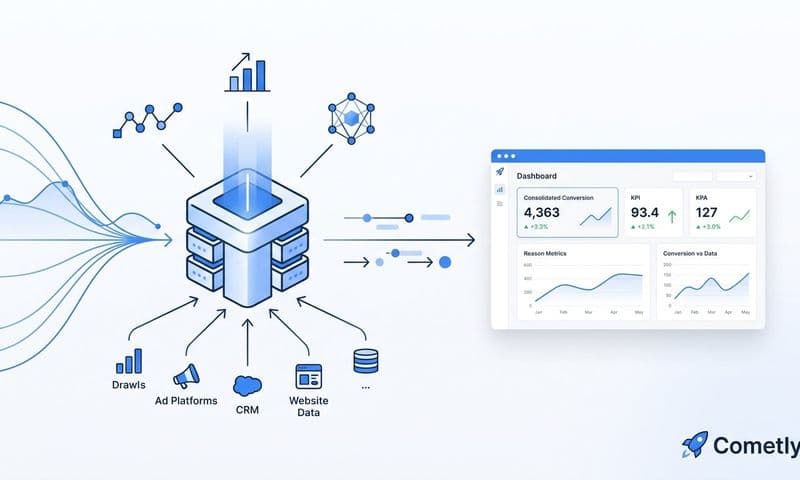
The deliverable you should expect? A unified dashboard that shows your complete customer journey from first ad click to final purchase, with clear attribution software across every channel and campaign.
When Smart Businesses Make the Investment
Companies typically hire marketing analytics consultants when they hit specific inflection points. The most common trigger? Managing five or more advertising platforms simultaneously while struggling to understand which channels actually drive revenue.
You'll know it's time when your marketing team spends more time creating reports than optimizing campaigns, when platform data conflicts make budget allocation feel like guesswork, or when executive leadership starts questioning marketing ROI with questions you can't confidently answer.
The investment makes sense when the cost of wrong decisions exceeds the consultant fee. If you're spending $50,000+ monthly on advertising without clear attribution, a consultant who helps you reallocate that budget more effectively pays for themselves in weeks, not months.
The Technical Expertise That Sets Them Apart
Analytics Platform Mastery
Marketing analytics consultants possess deep technical knowledge across the entire analytics ecosystem. They're fluent in Google Analytics 4, Adobe Analytics, and specialized platforms like Mixpanel or Amplitude, understanding not just how to use these tools but how to extract insights that most users miss.
This expertise extends beyond basic reporting. Consultants understand the technical implementation details—how tracking pixels fire, how cookies work (and increasingly don't work), how server-side tracking differs from client-side, and how to build measurement frameworks that survive privacy changes and platform updates.
They also master marketing analytics platforms that unify data from multiple sources, creating comprehensive views of customer behavior that single-platform analytics can't provide. This technical depth allows them to diagnose tracking issues, validate data accuracy, and build reliable measurement systems that executives can trust.
Statistical Analysis and Modeling Skills
Beyond platform expertise, consultants bring statistical rigor that transforms raw data into predictive insights. They understand regression analysis, cohort analysis, and statistical significance—ensuring recommendations are based on meaningful patterns rather than random noise.
Attribution modeling represents a core competency. Consultants build custom models that reflect your specific customer journey, whether that's first-touch, last-touch, linear, time-decay, or algorithmic attribution. They understand when each model applies and how to explain the differences to stakeholders who need to trust the numbers.
This statistical foundation also enables predictive analytics. Good consultants don't just report what happened—they forecast what will happen based on current trends, helping you make proactive decisions rather than reactive adjustments.
Business Intelligence and Visualization
Technical skills mean nothing if insights can't be communicated effectively. Marketing analytics consultants excel at data visualization, transforming complex analyses into clear dashboards that non-technical stakeholders immediately understand.
They're proficient in tools like Tableau, Looker, or Power BI, building custom dashboards that surface the metrics that matter most to your business. More importantly, they understand which visualizations work for which audiences—executives need different views than campaign managers.
The best consultants also establish data governance frameworks, ensuring your team can maintain and update analytics systems after the engagement ends. They document processes, train internal teams, and build sustainable measurement practices rather than creating dependency on external expertise.
How Marketing Analytics Consultants Transform Business Performance
The Discovery and Audit Phase
Every engagement begins with comprehensive discovery. Consultants audit your current analytics setup, examining tracking implementation, data quality, reporting accuracy, and measurement gaps. This phase typically reveals significant issues—broken tracking pixels, misconfigured conversion events, or attribution models that fundamentally misrepresent performance.
They also assess your marketing technology stack, understanding how data flows between platforms and where integration gaps create blind spots. Many businesses discover they're making decisions based on incomplete data simply because systems don't communicate properly.
The audit deliverable is typically a detailed report prioritizing issues by impact and effort, giving you a clear roadmap for improvement. This document becomes the foundation for all subsequent optimization work.
Building Custom Attribution Models
With audit insights in hand, consultants build attribution models tailored to your specific customer journey. They analyze touchpoint sequences, conversion paths, and time-to-conversion patterns to understand how customers actually move through your funnel.
This work often reveals surprising insights. You might discover that channels you considered "top of funnel awareness plays" actually drive significant direct conversions, or that your highest-spending customers consistently interact with specific content combinations before purchasing.
The resulting attribution model provides accurate ROI measurement for every marketing channel and campaign, enabling confident budget allocation decisions. Instead of guessing which channels work, you know—backed by data that accounts for the complete customer journey.
Optimization and Continuous Improvement
With accurate measurement in place, consultants shift to optimization. They identify underperforming campaigns, recommend reallocation strategies, and test hypotheses about what drives better performance. This phase generates immediate ROI as budgets shift from low-performing to high-performing initiatives.
Consultants also establish testing frameworks, helping you run statistically valid experiments that generate learnings rather than just data. They determine appropriate sample sizes, test durations, and success metrics—ensuring your optimization efforts produce reliable insights.
The best consultants also train your internal team, transferring knowledge so you can maintain momentum after the engagement ends. They document processes, explain methodologies, and build internal capabilities that outlast the consulting relationship.
Choosing the Right Marketing Analytics Consultant
Essential Qualifications and Experience
When evaluating consultants, prioritize hands-on experience over certifications. Look for professionals who've managed analytics for businesses similar to yours—same industry, similar scale, comparable complexity. They should demonstrate deep familiarity with your specific challenges.
Technical certifications matter but shouldn't be the deciding factor. Google Analytics certification proves basic platform knowledge, but real expertise comes from solving complex attribution problems, building custom tracking implementations, and extracting insights from messy real-world data.
Ask about specific tools and methodologies. Strong candidates should be fluent in SQL for data extraction, comfortable with statistical analysis in R or Python, and experienced with major business intelligence platforms. They should also understand B2B marketing attribution challenges if you're in that space, as B2B customer journeys require different measurement approaches than B2C.
Red Flags and Warning Signs
Beware of consultants who promise immediate results without understanding your current state. Quality analytics work requires thorough discovery before recommendations can be made. Anyone offering quick fixes likely doesn't grasp the complexity involved.
Watch for over-reliance on automated tools or platform recommendations. While automation has its place, consultants who simply implement vendor-recommended setups without customization aren't providing real value. You need strategic thinking, not platform implementation.
Also be cautious of consultants who can't explain their methodologies in plain language. If they hide behind jargon or can't articulate why they recommend specific approaches, they may lack the depth of understanding you need. Great consultants make complex concepts accessible.
Questions to Ask Before Hiring
Start with specifics about their experience: "Describe a situation where you discovered a major tracking issue that was skewing a client's data. How did you identify it and what was the impact of fixing it?" This reveals problem-solving skills and attention to detail.
Ask about their approach to attribution: "How do you determine which attribution model is appropriate for a specific business?" Their answer should reference customer journey complexity, sales cycle length, and business goals—not just default to one model for everyone.
Inquire about knowledge transfer: "How do you ensure our internal team can maintain the systems you build?" Strong consultants prioritize sustainability, documenting processes and training teams rather than creating ongoing dependency.
Maximizing Your Investment in Analytics Consulting
Preparing Your Organization for Success
Before engaging a consultant, prepare your organization for change. Analytics insights only create value when acted upon, which requires buy-in from leadership and operational teams. Ensure decision-makers are ready to adjust budgets and strategies based on data recommendations.
Also audit your current data access and permissions. Consultants need comprehensive access to analytics platforms, advertising accounts, and CRM systems. Delays in granting access extend timelines and increase costs. Prepare this access in advance.
Set clear success metrics before the engagement begins. Define what "success" looks like—whether that's improved attribution accuracy, increased marketing ROI, or reduced reporting time. Clear goals enable focused work and objective evaluation of results.
Working Effectively with Your Consultant
Establish regular communication cadences with clear agendas. Weekly check-ins keep projects on track and ensure alignment between consultant recommendations and business priorities. These meetings should review progress, address blockers, and adjust priorities as needed.
Assign an internal point person who understands both your business and your marketing operations. This person bridges the gap between consultant expertise and organizational knowledge, ensuring recommendations account for real-world constraints and opportunities.
Be transparent about challenges and limitations. If budget constraints prevent implementing certain recommendations, say so upfront. Good consultants can adjust approaches to work within constraints, but only if they know what those constraints are.
Measuring Consultant Impact and ROI
Track specific metrics before and after consultant engagement to quantify impact. Common measures include marketing efficiency ratio (revenue per dollar spent), attribution accuracy (reduction in "unknown" or "direct" traffic), and time spent on reporting versus optimization.
Also measure decision confidence. Can your team now answer executive questions about marketing performance with data-backed certainty? Has budget allocation become more strategic and less based on intuition? These qualitative improvements often matter more than quantitative metrics.
Calculate ROI by comparing consultant fees against measurable improvements in marketing efficiency. If a consultant helps you reallocate $100,000 in monthly ad spend to channels with 30% better ROI, that's $30,000 in monthly value—easily justifying consultant costs.
The Future of Marketing Analytics Consulting
Emerging Trends and Technologies
Privacy-first measurement is reshaping the entire analytics landscape. Consultants now focus heavily on first-party data strategies, server-side tracking, and privacy-compliant measurement frameworks that don't rely on third-party cookies. This shift requires new technical skills and strategic approaches.
AI and machine learning are also transforming analytics capabilities. Consultants increasingly leverage predictive models, automated anomaly detection, and algorithmic attribution that adapts to changing customer behavior. These technologies enable insights that manual analysis simply can't achieve at scale.
Cross-device and cross-platform measurement continues to grow more complex and more critical. As customers interact with brands across mobile apps, websites, social platforms, and physical locations, consultants must build unified measurement frameworks that capture the complete journey.
Skills That Will Matter Most
Technical depth in privacy-compliant tracking will separate good consultants from great ones. Understanding consent management, first-party data collection, and privacy regulations across jurisdictions becomes essential as the regulatory landscape evolves.
Business acumen will matter more than ever. As analytics becomes more accessible through automated tools, consultants must differentiate through strategic insight—understanding not just what the data says, but what it means for business strategy and how to act on it.
Change management skills will also increase in importance. Implementing new measurement frameworks requires organizational change, and consultants who can drive adoption and behavioral change will deliver more value than those who simply build technical solutions.
Preparing for What's Next
If you're considering hiring a marketing analytics consultant, start by auditing your current measurement capabilities. Identify gaps, document questions you can't answer with current data, and quantify the cost of decisions made without adequate analytics support.
Build internal analytics literacy before engaging external expertise. When your team understands basic analytics concepts, they can better leverage consultant insights and maintain systems after engagements end. Consider investing in training or hiring junior analytics talent to support consultant work.
Most importantly, recognize that analytics consulting isn't a one-time fix. The most successful companies establish ongoing relationships with consultants, treating analytics as a continuous improvement discipline rather than a project with a defined end date. The marketing landscape changes too quickly for static measurement approaches.
Marketing analytics consultants bridge the gap between data complexity and business clarity. They transform the chaos of multi-platform reporting into strategic insights that drive revenue, helping you make confident decisions backed by accurate attribution and predictive analysis. As marketing becomes increasingly data-driven and privacy regulations reshape measurement capabilities, their specialized expertise becomes more valuable, not less. Whether you're struggling with attribution accuracy, drowning in conflicting platform data, or simply want to maximize marketing ROI, the right consultant can transform your analytics from a reporting burden into a strategic advantage.
Ready to elevate your marketing game with precision and confidence? Discover how Cometly's AI-driven recommendations can transform your ad strategy—**Get your free demo** today and start capturing every touchpoint to maximize your conversions.