You're looking at your analytics dashboard for the tenth time today. Meta says your campaigns generated $50,000 in revenue. Google claims credit for $45,000. Your CRM shows $60,000 in new deals. The numbers don't add up, and you're about to make a six-figure budget decision based on... what, exactly?
This is the paradox of modern marketing. We have more data than ever before—clicks, impressions, engagement rates, platform metrics flooding in from every channel. Yet when it comes to answering the questions that actually matter, we're often guessing. Which campaign drove that enterprise deal? Should you double down on TikTok or shift budget back to Google? Is your retargeting strategy working, or just taking credit for sales that would have happened anyway?
The problem isn't a lack of marketing analytics data. It's that most of that data is fragmented, conflicting, and disconnected from the outcomes you care about. This guide cuts through the noise to show you how to collect, connect, and use marketing analytics data that actually drives confident decisions. No fluff, no vanity metrics—just the practical framework for understanding what's really moving the needle in your marketing.
The Foundation: Understanding Your Marketing Data Ecosystem
Think of your marketing analytics data as a three-layer system, each serving a distinct purpose in understanding performance.
First-Party Data: Your Source of Truth
This is the data you own directly—website behavior, form submissions, email interactions, and CRM records. It's the most reliable because you control how it's collected and stored. When someone visits your pricing page, downloads a guide, or requests a demo, that's first-party data. It tells you what people actually do on your properties, not just what ad platforms claim happened.
First-party data becomes your foundation because it's not subject to platform biases or attribution games. Your website analytics knows exactly which pages a visitor viewed. Your CRM knows precisely when a deal closed and for how much. This data doesn't have an agenda—it simply reflects reality.
Ad Platform Data: Valuable But Incomplete
Every advertising platform—Meta, Google, TikTok, LinkedIn—provides its own analytics showing impressions, clicks, conversions, and attributed revenue. This data is valuable for understanding campaign performance within each platform. You can see which ad creative resonates, which audiences engage, and how your cost per result trends over time.
The limitation? Each platform views the world through its own lens. They track what happens in their ecosystem and use attribution models that often favor their own contribution to conversions. Meta sees the Facebook ad someone clicked. Google sees the search that happened later. Neither platform sees the full journey, and both want to claim credit for the sale.
Conversion and Revenue Data: Connecting Marketing to Outcomes
This is where marketing analytics data gets powerful. Conversion data links marketing touchpoints to actual business results—not just clicks or form fills, but qualified leads, closed deals, and revenue generated. It answers the question every executive asks: what did we get for that marketing spend?
The challenge is that conversion data often lives in your CRM or sales system, completely separated from your marketing data. Someone might click your Meta ad on Monday, search your brand on Wednesday, visit your site directly on Friday, and close as a customer two weeks later. Without connecting these dots, you're making decisions based on incomplete stories.
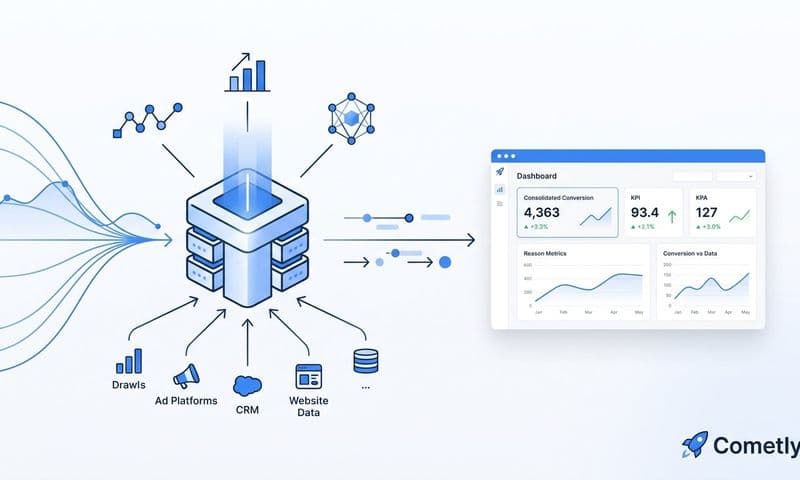
When you unify these three data layers—first-party behavior, ad platform metrics, and conversion outcomes—you create a complete view of marketing performance. That's when analytics data transforms from interesting numbers into actionable intelligence. Understanding data analytics and marketing integration is the first step toward building this unified view.
The Tracking Crisis: Why Your Data Probably Has Blind Spots
Here's an uncomfortable truth: if you're relying solely on traditional tracking methods, you're missing significant chunks of your customer journey. The digital landscape has fundamentally changed, and many marketers haven't adapted their data collection to match.
The iOS Privacy Shift Changed Everything
When Apple introduced App Tracking Transparency, they didn't just add a permission prompt—they created massive blind spots in mobile tracking. Users who decline tracking become invisible to traditional pixel-based systems. Your Facebook pixel might see someone click an ad, but if they don't allow tracking, that conversion disappears from your data.
The impact compounds across your funnel. That mobile user who discovered you through Instagram but converted on desktop three days later? Without proper tracking infrastructure, they look like a direct visitor with no marketing source. Your attribution data shows mystery traffic while your ad platforms show clicks that never converted.
Cookie Deprecation and Browser Restrictions
Browsers are actively blocking third-party cookies and limiting tracking scripts. Safari's Intelligent Tracking Prevention and Firefox's Enhanced Tracking Protection already restrict cookie lifespans. Chrome's planned cookie phase-out will affect the majority of web traffic. Every browser update makes pixel-based tracking less reliable.
This isn't just a future concern. It's happening now. If you're seeing a growing percentage of "direct" traffic in your analytics, it's often not actually direct—it's traffic where the referral source was stripped away by browser privacy features. These are among the most common attribution challenges in marketing analytics that teams face today.
The Platform Attribution War
Even when tracking works, you face another problem: every ad platform uses different attribution windows and methodologies. Meta might use a 7-day click, 1-day view window. Google might use last-click attribution. LinkedIn might use a 30-day window. They're all measuring the same conversions with different rulers, leading to the scenario where reported conversions exceed actual conversions by 200% or more.
This isn't intentional deception—each platform is simply reporting what they can see from their vantage point. But it makes your job impossible. How do you allocate budget when three platforms claim credit for the same sale?
Server-Side Tracking: The Modern Solution
The answer is moving tracking from browsers to servers. Server-side tracking sends conversion data directly from your server to ad platforms and analytics tools, bypassing browser restrictions and privacy blockers. When someone converts, your server records it and shares that data with the platforms that need it.
This approach is more reliable because it doesn't depend on cookies or pixels surviving in someone's browser. It's more accurate because it captures the full conversion regardless of browser settings. And it's more privacy-compliant because you control exactly what data gets shared and when.
The shift to server-side tracking isn't optional anymore—it's the difference between having reliable marketing analytics data and making decisions based on increasingly incomplete information.
From Data Points to Customer Stories: Understanding Attribution
Raw marketing analytics data is just a collection of events. The real insight comes from understanding how those events connect to form complete customer journeys. This is where attribution models transform disconnected touchpoints into coherent narratives.
The Attribution Model Landscape
Different attribution models answer different questions. First-touch attribution shows which channels are best at generating awareness—it credits the initial touchpoint that brought someone into your ecosystem. If your goal is understanding top-of-funnel effectiveness, first-touch tells you which campaigns are opening doors.
Last-touch attribution does the opposite, giving full credit to the final interaction before conversion. This model reveals which channels are strong closers. If you're optimizing for conversion efficiency, last-touch shows what's sealing deals.
Linear attribution distributes credit equally across all touchpoints. Someone who clicked a Facebook ad, then a Google search ad, then visited directly before converting would see each touchpoint credited with one-third of the conversion. This model acknowledges that multiple touches matter, but treats them all as equally important.
Time-decay attribution weights touchpoints based on proximity to conversion. Interactions closer to the sale get more credit than earlier touches. This reflects the reality that recent engagement often has more influence on buying decisions than awareness-stage interactions weeks earlier.
Position-based attribution (also called U-shaped) gives extra weight to the first and last touches, with remaining credit distributed among middle interactions. This model recognizes that both discovery and closing moments are critical while still acknowledging the nurture journey in between. Mastering marketing attribution analytics is essential for understanding which model works best for your business.
Mapping the Complete Journey
The power of marketing analytics data isn't in choosing the "right" attribution model—it's in seeing the complete journey across all models. A customer might discover you through organic social, click a retargeting ad, search your brand name, read comparison content, and finally convert through a direct visit. Each touchpoint played a role.
When you can see this full path, patterns emerge. You might notice that customers who engage with educational content before converting have higher lifetime value. Or that certain ad channels are excellent at generating awareness but rarely close deals alone. These insights only surface when you track the entire journey, not just isolated interactions.
Why CRM Integration Changes Everything
Here's where most marketing analytics falls short: it stops at the conversion event. Someone filled out a form or made a purchase, and that's where the data trail ends. But for many businesses, that's just the beginning of the real value story.
Integrating your CRM with marketing analytics data reveals which marketing sources generate qualified leads versus tire-kickers. You can see that LinkedIn campaigns have a lower volume but higher deal values. Or that webinar attendees convert at twice the rate of cold traffic. Or that customers acquired through certain channels have better retention rates.
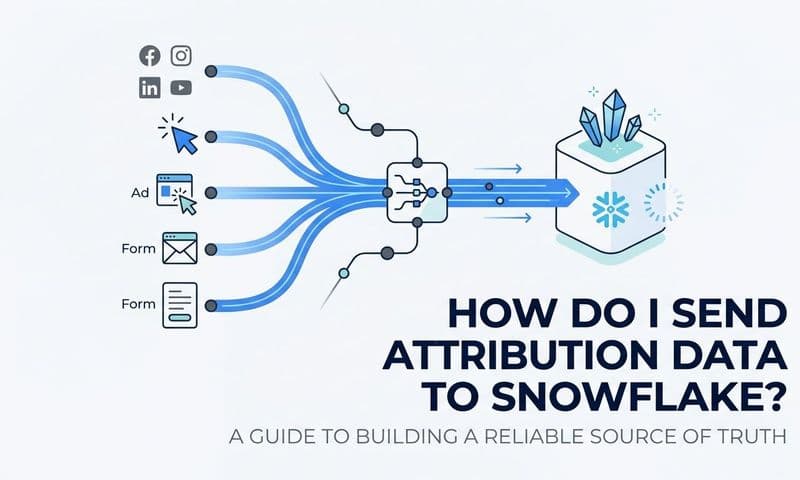
This closed-loop reporting—connecting marketing touchpoints all the way through to revenue and customer outcomes—is what transforms marketing from a cost center into a measurable revenue driver. You're no longer reporting on clicks and conversions. You're reporting on pipeline generated, revenue influenced, and customer lifetime value by channel. Learning how to setup a datalake for marketing attribution can help you build this comprehensive data infrastructure.
Making Data-Driven Decisions That Actually Drive Results
Having comprehensive marketing analytics data is pointless if it doesn't change what you do. The goal isn't better dashboards—it's better decisions that improve marketing performance. Here's how accurate, unified data transforms your approach.
Separating Real Performance from Vanity Metrics
Engagement rates, impressions, and click-through rates are interesting. But they're not outcomes. The question isn't whether people clicked your ad—it's whether the people who clicked became customers worth more than what you paid to acquire them.
When your marketing analytics data connects ad interactions to revenue outcomes, you can identify which campaigns drive actual business results versus which just generate activity. That Instagram campaign with amazing engagement but zero closed deals? It's not performing, no matter how good the surface metrics look. That Google campaign with a modest click-through rate but consistent high-value conversions? That's your winner. Understanding the right marketing analytics metrics helps you focus on what truly matters.
This shift in perspective changes everything. You stop optimizing for platform-defined success metrics and start optimizing for business outcomes. Your creative decisions, audience targeting, and budget allocation all align with what actually moves revenue.
Confident Budget Optimization
The most expensive mistake in marketing is scaling the wrong campaigns. When you lack reliable attribution data, you're guessing which channels deserve more budget. You might be doubling down on campaigns that look good in isolation but actually cannibalize conversions from other channels.
Accurate marketing analytics data removes the guesswork. You can see which campaigns generate incremental revenue versus which ones just intercept customers who would have converted anyway. You can identify the optimal budget level for each channel before diminishing returns kick in. You can test new channels with clear success criteria instead of vague "let's see what happens" experiments.
This confidence compounds. When you know what's working, you can scale aggressively without fear. When you know what's not working, you can cut budget without second-guessing. The result is more efficient spending and faster growth. Implementing data driven marketing strategies ensures every dollar works harder for your business.
Feeding Smarter Data to Ad Platform AI
Here's something most marketers miss: the quality of data you send back to ad platforms directly impacts their optimization performance. Facebook's algorithm, Google's Smart Bidding, TikTok's automated targeting—they all learn from the conversion signals you provide.
When you send accurate, enriched conversion data back to these platforms through their APIs, their machine learning systems can identify patterns in who actually becomes a valuable customer. They optimize for buyers, not just clickers. They find audiences that match your best customers, not just people who engage with ads.
This creates a virtuous cycle. Better data leads to better algorithmic optimization, which leads to better results, which generates more data to further improve optimization. Your marketing analytics data becomes the fuel that powers increasingly effective automated campaign management. Exploring AI marketing analytics can help you maximize this optimization potential.
Building a Marketing Analytics Infrastructure That Scales
Collecting marketing analytics data isn't about implementing one tool—it's about creating an integrated system where tracking, attribution, and reporting work together seamlessly. Here's what that infrastructure actually looks like.
The Three Essential Components
First, you need comprehensive tracking that captures every meaningful interaction. This means website analytics, ad platform pixels, and server-side tracking working in concert. When someone clicks an ad, visits your site, downloads content, or converts, that data needs to be captured reliably regardless of browser settings or device switching.
Second, you need attribution logic that connects these tracked events into customer journeys. This layer takes raw event data and applies your chosen attribution models to understand which touchpoints contributed to conversions. It's the intelligence that transforms a list of clicks and page views into a coherent story of how marketing drives revenue.
Third, you need reporting and analysis tools that surface insights from your attributed data. This includes dashboards showing performance by channel, campaign, and audience. It includes cohort analysis revealing how customer behavior differs by acquisition source. It includes forecasting tools that help you model the impact of budget changes. Reviewing the best marketing analytics tools available can help you build this foundation.
Integration: The Make-or-Break Factor
The power of marketing analytics data comes from integration. Your ad platforms need to send click and impression data. Your website needs to send behavior and conversion data. Your CRM needs to send lead qualification and revenue data. When these systems talk to each other, you get the complete picture.
This integration requirement is why point solutions often fail. A standalone analytics tool that can't see your CRM data will never tell you which campaigns drive quality leads. An attribution platform that doesn't integrate with your ad accounts can't send conversion data back to improve algorithmic optimization. The whole system needs to work together.
Modern attribution platforms handle these integrations through pre-built connections to major ad platforms, analytics tools, and CRMs. Rather than building custom integrations yourself, you connect your accounts and the platform handles the data flow. This turns a months-long engineering project into a days-long configuration process. Choosing the right marketing analytics platform is critical for seamless integration.
Real-Time Data: Why Speed Matters
Delayed reporting isn't just inconvenient—it costs you money. When your marketing analytics data updates in real-time, you can spot problems and opportunities as they happen. That campaign that's suddenly burning budget with no conversions? You can pause it now, not tomorrow when you check your weekly report.
Real-time data also enables faster testing and optimization. You can evaluate creative variations within hours instead of waiting days for statistical significance. You can adjust bids based on current performance rather than yesterday's results. You can capitalize on trending topics and seasonal moments while they're still relevant. Platforms that offer real-time conversion tracking give you this competitive advantage.
The infrastructure you build should prioritize data freshness. Look for platforms that update attribution in minutes, not hours or days. The faster you can see accurate performance data, the faster you can act on it.
Your Action Plan: From Data Chaos to Marketing Clarity
Start With Quick Wins
You don't need to rebuild your entire marketing stack overnight. Begin by implementing server-side tracking for your most important conversions. This immediately improves data accuracy and gives you a reliable baseline for measuring performance.
Next, audit your current attribution setup. Document which platforms you're tracking, what conversion events you're measuring, and where gaps exist. Often, you'll discover that valuable conversion events aren't being tracked at all, or that tracking is implemented inconsistently across channels.
Connect your CRM to your marketing analytics. Even a basic integration that shows which marketing sources generate closed deals will transform your understanding of campaign effectiveness. You'll quickly identify which channels look good on paper but fail to deliver qualified pipeline.
Build Your Long-Term Data Foundation
As you mature your approach, invest in a unified attribution platform that creates a single source of truth for marketing performance. This eliminates the platform attribution war by applying consistent logic across all channels. You'll finally have reliable answers to questions like "what's our real Meta ROAS?" and "should we increase LinkedIn budget?"
Implement conversion sync to send enriched data back to ad platforms. This improves their optimization algorithms and creates better campaign performance over time. The platforms get smarter about finding your ideal customers, and you get better results from the same budget.
Develop regular reporting rhythms that focus on actionable insights, not just data dumps. Weekly performance reviews that highlight what's working, what's not, and what you're testing next. Monthly deep dives that examine trends and inform strategic decisions. Quarterly analyses that connect marketing performance to broader business outcomes. Understanding how to use marketing analytics effectively ensures these rhythms drive real action.
The Competitive Advantage of Unified Data
Here's what most marketers don't realize: while they're drowning in fragmented, conflicting data, their competitors who've invested in unified marketing analytics are scaling with confidence. They know which campaigns work. They know where to allocate budget. They know how to prove marketing's impact on revenue.
This isn't a small edge—it's a fundamental advantage that compounds over time. Better data leads to better decisions. Better decisions lead to better results. Better results lead to more budget and resources. The gap between marketers with reliable analytics and those still guessing grows wider every quarter.
Transform Your Marketing Data Into Your Competitive Edge
Marketing analytics data is only valuable when it's accurate, unified, and actionable. The days of trusting platform-reported metrics and hoping for the best are over. The marketers winning today are those who've built data infrastructure that reveals truth instead of convenient fiction.
The shift from scattered platform metrics to a single source of truth isn't just about better reporting. It's about making confident decisions that drive real business growth. It's about proving marketing's impact on revenue. It's about scaling the campaigns that work and cutting the ones that don't, based on data you can actually trust.
You have two paths forward. You can continue wrestling with conflicting reports, making budget decisions based on incomplete information, and wondering why your marketing results feel unpredictable. Or you can build the data foundation that transforms marketing from an expensive guessing game into a predictable revenue driver.
The tools and infrastructure exist today to capture every touchpoint, connect every interaction to revenue outcomes, and feed smarter data back to ad platforms for better optimization. The question isn't whether this approach works—it's whether you'll implement it before your competitors do.
Ready to elevate your marketing game with precision and confidence? Discover how Cometly's AI-driven recommendations can transform your ad strategy—Get your free demo today and start capturing every touchpoint to maximize your conversions.