Healthcare marketing has changed dramatically. Patients no longer pick providers from phone books or rely solely on referrals. They research online, compare options, read reviews, and evaluate multiple touchpoints before booking an appointment. For healthcare marketers, this creates both opportunity and complexity.
You're running campaigns across Google Ads, Facebook, display networks, and maybe even traditional channels. You see impressions climbing, clicks rolling in, and form submissions trickling through. But here's the question that keeps you up at night: which of these efforts actually drives patients through your doors?
Many healthcare marketing teams operate in a fog of fragmented data. Your Google Ads dashboard shows one story. Facebook claims credit for conversions that Google also counted. Your website analytics tracks sessions but can't tell you which visitors became patients. Your CRM holds appointment data but isn't connected to your advertising platforms. The result? You're making budget decisions based on incomplete information, hoping your instincts are right.
Marketing analytics changes this equation entirely. When implemented correctly, analytics transforms scattered data points into a clear picture of how patients discover your practice, what influences their decisions, and which marketing investments actually generate revenue. This isn't about adding another dashboard to check. It's about building a system that connects every piece of your marketing ecosystem so you can see the complete patient journey from first click to booked appointment.
This guide walks you through exactly how to implement marketing analytics that matter for healthcare. We'll cover why traditional metrics mislead you, what capabilities you actually need, and how to turn data into decisions that improve patient acquisition while reducing wasted ad spend.
The Problem With Vanity Metrics in Healthcare Marketing
Open any advertising platform dashboard and you'll see numbers that look impressive. Thousands of impressions. Hundreds of clicks. Dozens of conversions. The problem? These metrics tell you almost nothing about whether your marketing actually works.
Impressions measure how many times your ad appeared. But in healthcare, awareness alone doesn't fill appointment slots. A patient might see your ad for knee replacement surgery dozens of times over months before they're ready to take action. Those impressions matter in the patient journey, but they don't directly correlate with revenue.
Click-through rates feel more meaningful because they indicate interest. Someone clicked your ad, visited your website, maybe even filled out a contact form. But here's where healthcare marketing gets complicated: the patient who clicks your ad today might not book an appointment for weeks or months. They're researching, comparing options, discussing with family, checking insurance coverage. That initial click is just the beginning of a long decision process.
Conversion tracking on ad platforms creates an even bigger problem. When you run campaigns across Google, Facebook, and other channels simultaneously, each platform wants to claim credit for the same patient acquisition. A prospective patient might click your Google ad, later see your Facebook retargeting campaign, then directly search your practice name and book an appointment. Google counts that as a conversion. Facebook counts it too. Your analytics show one patient, but your dashboards report two conversions. Multiply this across hundreds of patient acquisitions and your data becomes meaningless.
Healthcare's long consideration cycles amplify these issues. Unlike e-commerce where someone might buy a product within hours of first seeing an ad, healthcare decisions take time. A patient considering elective surgery might interact with your marketing across multiple channels over several months. They'll visit your website multiple times, read reviews, watch videos, download information guides, and engage with retargeting campaigns before finally booking a consultation.
Traditional metrics can't capture this complexity. They're designed for simple, linear customer journeys that don't exist in healthcare marketing. When you optimize campaigns based on platform-reported conversions, you're often rewarding channels that happened to be the last touchpoint rather than the ones that actually influenced the patient's decision. Understanding data analytics for digital marketing helps you move beyond these limitations.
The gap between what your dashboards show and what's actually happening creates serious business problems. You might cut budget from channels that play crucial roles early in the patient journey because they don't get last-click credit. You might overspend on retargeting because it appears highly effective when it's really just capturing demand created by other channels. Without accurate attribution, you're essentially guessing which marketing investments drive patient acquisition.
What Healthcare Marketers Actually Need From Analytics
Effective marketing analytics for healthcare requires capabilities that go far beyond basic platform reporting. You need systems that track the complete patient journey across every channel and touchpoint, then connect that journey data to actual business outcomes.
Cross-Channel Journey Tracking: Your analytics must follow individual patients as they move between channels. When someone clicks your Google ad, later engages with your Facebook campaign, then visits your website directly, your system needs to recognize this as one person taking multiple steps toward becoming a patient. This requires technology that can identify and track users across platforms while respecting privacy regulations. A cross-platform marketing analytics dashboard makes this visibility possible.
CRM and Appointment System Integration: Marketing data becomes valuable when connected to patient outcomes. Your analytics platform should integrate with your CRM and appointment scheduling systems so you can see which marketing touchpoints led to actual booked appointments. This connection transforms abstract metrics into concrete business results. Instead of tracking form submissions, you track patients who showed up for appointments and generated revenue.
Attribution Modeling Capabilities: Healthcare patient journeys involve multiple touchpoints, so your analytics must distribute credit appropriately across the channels that influenced the decision. Attribution modeling reveals which campaigns play important roles at different stages of the patient journey. You might discover that Facebook ads are excellent for initial awareness while Google search captures high-intent patients ready to book. Both matter, but they serve different functions.
Real-Time Performance Visibility: Waiting weeks for reports means missing optimization opportunities. Healthcare marketing moves quickly, especially in competitive markets. Real-time marketing analytics let you spot performance changes immediately. If a campaign suddenly starts driving more qualified leads, you can increase budget the same day. If cost per acquisition spikes, you can investigate and adjust before wasting significant budget.
Server-Side Tracking Implementation: Browser-based tracking faces increasing limitations from privacy features, ad blockers, and cookie restrictions. Server-side tracking captures data directly from your servers rather than relying on browser cookies. This approach maintains accuracy even as browser-based methods become less reliable. For healthcare marketers investing thousands or millions in advertising, tracking accuracy directly impacts ROI.
These capabilities work together to create a complete picture of marketing performance. When you can track patient journeys across channels, connect them to actual appointments, attribute credit appropriately, see performance in real time, and maintain tracking accuracy despite browser limitations, you finally have the foundation for data-driven decision making.
The difference this makes is substantial. Instead of wondering which campaigns work, you know. Instead of guessing where to allocate budget, you have data showing which channels drive patient acquisition at acceptable costs. Instead of reacting to month-old reports, you optimize based on current performance.
Building the Connection Between Ad Spend and Patient Acquisition
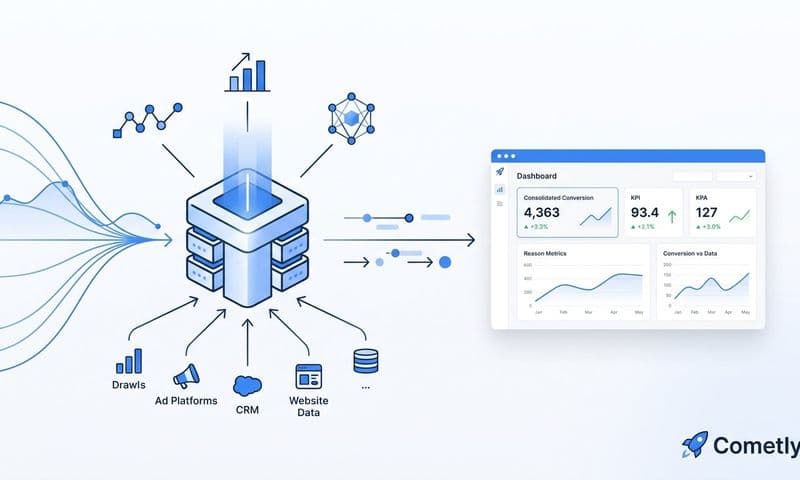
The most critical capability in healthcare marketing analytics is connecting advertising investment to actual patient revenue. This requires integrating data from ad platforms, your website, and your patient management systems into a unified view.
Start with ad platform integration. Your analytics system needs to pull performance data from every channel where you advertise: Google Ads, Facebook, Instagram, display networks, and any other platforms in your mix. But it can't stop at importing basic metrics like impressions and clicks. The integration must capture the specific campaigns, ad groups, and even individual ads that drove each interaction. This granular data becomes essential when you're trying to identify which creative messages resonate with different patient segments.
Website tracking forms the next layer. When someone clicks your ad and lands on your site, your analytics must maintain the connection to the original ad source while tracking their behavior. Which pages did they visit? How long did they spend researching different services? Did they watch videos or download resources? This behavioral data reveals intent and helps you understand which marketing messages move patients toward booking appointments.
The critical integration happens when you connect marketing data to your CRM and appointment systems. This is where abstract clicks become concrete patients. When someone books an appointment, your system should be able to trace back through their entire journey to identify every marketing touchpoint that influenced their decision. You see not just that Google Ads drove 50 appointments this month, but specifically which campaigns, keywords, and ads generated those patients. A unified marketing analytics platform brings all this data together seamlessly.
Server-side tracking makes this connection more reliable. Traditional browser-based tracking depends on cookies that can be blocked, deleted, or restricted by privacy features. Server-side tracking captures conversion events directly from your servers, maintaining accuracy regardless of browser limitations. When a patient books an appointment through your online scheduling system, the conversion is recorded server-side and connected to their marketing journey. This approach significantly improves data accuracy, especially important when you're making budget decisions based on cost per patient acquisition.
Conversion data should flow bidirectionally. Not only do you need to pull conversion information into your analytics platform, you should send enriched conversion data back to your ad platforms. When you feed Facebook or Google accurate information about which ad clicks led to actual appointments, their algorithms improve targeting. The platforms learn which audiences are most likely to become patients and automatically optimize delivery toward those segments. This creates a virtuous cycle where better data leads to better targeting, which drives more qualified patients at lower acquisition costs.
The technical implementation requires careful attention to data privacy and HIPAA compliance. You're tracking patient journeys without exposing protected health information. Modern analytics platforms handle this through tokenization and encryption, maintaining the connection between marketing touchpoints and outcomes while keeping patient data secure.
When these integrations work correctly, you gain unprecedented visibility into marketing performance. You can answer questions that were previously impossible: What's the average patient lifetime value from Facebook campaigns versus Google search? Which ad creative drives patients with the highest show-up rates? How does patient acquisition cost vary by service line and channel? This visibility transforms how you allocate marketing budget and measure success.
Understanding the Full Patient Journey With Multi-Touch Attribution
Healthcare patient journeys rarely follow simple paths. A prospective patient might see your Facebook ad while scrolling during lunch, later search for your practice on Google, visit your website multiple times over several weeks, read online reviews, and finally book an appointment after seeing a retargeting ad. Which channel deserves credit for that patient acquisition?
First-click attribution gives all credit to the initial touchpoint. In our example, Facebook would receive 100% credit because that's where the patient first encountered your marketing. This model values awareness and top-of-funnel activities but ignores everything that happened afterward. If you optimize based purely on first-click attribution, you'll likely overspend on awareness campaigns while underinvesting in the channels that actually convert interested prospects into patients.
Last-click attribution takes the opposite approach, crediting whichever channel immediately preceded the conversion. The retargeting ad gets all the credit, even though it was simply the final nudge after weeks of consideration influenced by multiple other touchpoints. Optimizing for last-click attribution often leads to overinvestment in retargeting and branded search while undervaluing the campaigns that created initial awareness and interest.
Both single-touch models miss the reality of healthcare marketing. Patients interact with multiple channels throughout their decision process, and each interaction plays a role. A multi-touch marketing attribution platform distributes credit across all the touchpoints that contributed to the conversion, providing a more accurate picture of how your marketing actually works.
Linear Attribution: This model gives equal credit to every touchpoint in the patient journey. If someone had five interactions with your marketing before booking, each touchpoint receives 20% credit. Linear attribution is simple and acknowledges that multiple channels matter, but it doesn't account for the fact that some touchpoints are more influential than others.
Time Decay Attribution: This approach gives more credit to touchpoints closer to the conversion. The logic is that recent interactions had more influence on the final decision than earlier awareness activities. Time decay works well when you want to emphasize channels that drive immediate action, but it can undervalue the important role that early-stage awareness campaigns play in healthcare decisions.
Position-Based Attribution: Also called U-shaped attribution, this model gives the most credit to the first and last touchpoints (typically 40% each) while distributing the remaining credit evenly across middle interactions. This recognizes that both creating initial awareness and closing the conversion are critical, while still acknowledging that middle touchpoints matter.
The right attribution model depends on your specific goals and patient journey characteristics. If you're focused on building awareness in a new market, first-click attribution might help you identify which channels effectively reach new audiences. If you're working with long consideration cycles where early touchpoints clearly influence later decisions, position-based attribution often provides the most balanced view.
Advanced analytics platforms let you compare multiple attribution models side-by-side. You might discover that a channel appears highly effective under last-click attribution but shows minimal impact in a first-click model. This suggests the channel is good at converting existing demand but doesn't create new awareness. Conversely, a channel that performs well in first-click but poorly in last-click is effective at generating initial interest but needs support from other channels to drive conversions.
These insights directly inform budget allocation. When you understand each channel's role in the patient journey, you can invest appropriately across the full funnel. You might maintain strong investment in awareness channels that don't get last-click credit but clearly influence downstream conversions. You can identify which combinations of channels work together most effectively and optimize your mix accordingly.
From Data to Decisions: Optimizing Healthcare Campaigns With Analytics
Analytics only create value when they drive better decisions. The goal isn't collecting data, it's using insights to improve patient acquisition efficiency and scale successful campaigns with confidence.
Start by identifying your highest-performing campaigns with precision. Look beyond surface metrics to find campaigns that drive patients at acceptable acquisition costs. A campaign might generate fewer total conversions than others but deliver patients with higher lifetime value or better show-up rates. Your analytics should reveal these nuances so you're optimizing for actual business outcomes rather than vanity metrics. Learning how to leverage analytics for marketing strategy transforms raw data into actionable insights.
When you identify winners, scale aggressively. This is where many healthcare marketers hesitate because they lack confidence in their data. But when your analytics accurately connect ad spend to patient acquisition, you can increase budget on proven performers knowing the returns will follow. If a specific Google search campaign consistently delivers patients at half your target acquisition cost, there's no reason to maintain conservative budgets. Scale until you see performance decline or hit market saturation.
AI-powered analytics platforms take this further by providing optimization recommendations you might miss manually. Modern systems analyze performance across all your campaigns, identify patterns, and suggest specific actions. The AI might notice that campaigns targeting certain demographics perform significantly better during specific days of the week, recommending budget shifts that improve efficiency. It might identify ad creative elements that consistently correlate with higher conversion rates, suggesting you emphasize those elements in new campaigns. Exploring an AI marketing analytics platform can accelerate these optimization efforts.
These AI recommendations become especially valuable as campaign complexity grows. When you're running dozens of campaigns across multiple platforms, manually analyzing every performance variable becomes impossible. AI processes all the data simultaneously, spots opportunities, and prioritizes recommendations by potential impact. You focus your attention where it matters most rather than drowning in spreadsheets.
Build feedback loops that continuously improve performance. When you send conversion data back to ad platforms, their algorithms learn which audiences are most likely to become patients. This automated optimization happens in real time, constantly refining targeting based on actual results. Combined with your own analysis and adjustments, you create a system that gets smarter and more efficient over time.
Test systematically rather than randomly. Your analytics should make it easy to set up controlled experiments comparing different approaches. Test new ad creative against established winners. Try different landing page designs. Experiment with audience targeting parameters. But always measure results against actual patient acquisition, not intermediate metrics. A landing page that generates more form submissions but fewer actual appointments isn't an improvement.
Use analytics to inform creative strategy, not just budget allocation. When you can see which messages resonate with different patient segments, you develop creative that connects more effectively. You might discover that patients seeking cosmetic procedures respond better to before-and-after imagery while those researching medical treatments prefer educational content and provider credentials. These insights help you create campaigns that speak directly to what each audience values.
The competitive advantage comes from speed and precision. While competitors make decisions based on delayed reports and platform-level data, you're optimizing in real time based on accurate attribution. You spot performance changes immediately and adjust before wasting budget. You identify opportunities to scale successful campaigns while competitors are still analyzing last month's results. This operational advantage compounds over time, driving better patient acquisition efficiency and sustainable growth.
Your Path to Analytics-Driven Healthcare Marketing
Implementing comprehensive marketing analytics doesn't require rebuilding your entire marketing operation overnight. Start with clear priorities and build systematically toward complete visibility.
First, audit your current tracking and identify gaps. Map out the patient journey from first ad exposure through appointment booking. Where do you lose visibility? Most healthcare marketers discover they track the beginning (ad clicks) and end (appointments) reasonably well but have blind spots in the middle where patients research and consider options. Identifying these gaps helps you prioritize which integrations and capabilities to implement first.
Implement server-side tracking as a foundation. This ensures data accuracy as browser-based tracking becomes less reliable. Work with your development team or analytics provider to set up conversion tracking that captures patient actions directly from your servers rather than depending on browser cookies. This investment pays dividends in data quality for years.
Connect your ad platforms, website analytics, and CRM systems. This integration is where analytics transform from interesting to essential. When you can trace individual patient journeys from ad click through appointment booking, you finally see which marketing investments drive real business results. Start with your highest-volume channels and expand the integration over time. A data warehouse for marketing analytics can serve as the central hub for all your marketing data.
Choose attribution models that match your business goals. If you're focused on building awareness, weight early touchpoints more heavily. If you're optimizing for immediate patient acquisition, emphasize later touchpoints. Most healthcare organizations benefit from position-based or time-decay models that recognize the importance of both awareness and conversion activities.
Focus on metrics that directly connect to business outcomes. Track cost per patient acquisition, patient lifetime value by channel, appointment show-up rates, and marketing ROI. These metrics matter more than impressions, clicks, or even form submissions. Your analytics should make it easy to see how marketing performance impacts the metrics that actually drive practice growth. A dedicated performance marketing analytics tool helps you track these critical metrics consistently.
Unified analytics platforms simplify this entire process. Rather than manually connecting disparate systems and building custom integrations, modern platforms handle the technical complexity while providing intuitive interfaces for analyzing performance and making decisions. They track patient journeys across channels, integrate with your existing marketing stack, apply attribution modeling, and surface actionable insights without requiring data science expertise.
The investment in proper analytics infrastructure pays for itself quickly. When you eliminate wasted ad spend by accurately identifying which campaigns drive patient acquisition, the savings alone often exceed the cost of implementing better analytics. Add the ability to confidently scale successful campaigns, and the ROI becomes substantial.
Making the Shift to Data-Driven Patient Acquisition
Healthcare marketing has evolved beyond the days when success meant getting your name in front of as many people as possible. Today's patients research extensively, compare options carefully, and interact with multiple channels before making decisions. Marketing effectively in this environment requires understanding the complete patient journey and knowing exactly which investments drive acquisition.
Marketing analytics transforms healthcare marketing from educated guessing to confident decision making. When you can see which campaigns truly drive patient appointments, you stop wasting budget on channels that look good in platform dashboards but don't deliver business results. When you understand the full patient journey across multiple touchpoints, you invest appropriately in awareness, consideration, and conversion activities rather than overweighting whichever channel happened to get last-click credit.
The competitive advantage is real and growing. Healthcare markets are increasingly competitive, with practices fighting for the same patient populations. The organizations that make faster, more accurate decisions based on comprehensive analytics will consistently outperform those relying on fragmented data and delayed reporting. They'll identify opportunities sooner, scale successful campaigns more aggressively, and eliminate wasted spend more quickly.
This isn't about adding complexity to your marketing operation. It's about replacing the complexity of managing multiple disconnected systems with a unified view that makes performance clear and decisions obvious. When your analytics accurately connect ad spend to patient acquisition, marketing becomes more straightforward, not more complicated.
The path forward starts with acknowledging that traditional metrics and platform-level reporting don't provide the visibility healthcare marketing requires. Patient journeys are too complex, consideration cycles too long, and touchpoints too numerous for simple attribution models to work. You need analytics built for the reality of how patients actually make healthcare decisions.
Ready to elevate your marketing game with precision and confidence? Discover how Cometly's AI-driven recommendations can transform your ad strategy. Get your free demo today and start capturing every touchpoint to maximize your conversions.