Picture this: A customer sees your Instagram ad during their morning coffee, clicks through to browse but doesn't buy. Three days later, they receive your email newsletter and visit again. A week passes. They search your brand name on Google, click your ad, and finally make a purchase. Your Google Ads dashboard celebrates the conversion. Your Meta Ads Manager also claims credit for the sale. Your email platform reports it as an email-driven purchase. Three platforms, one customer, three claimed conversions.
This is the reality of retail marketing in 2026. Your customers don't follow neat, linear paths to purchase anymore. They bounce between social media, search engines, email, comparison sites, mobile apps, and sometimes even physical stores before finally converting. The average retail customer now interacts with your brand across multiple touchpoints before making a purchase decision, and traditional analytics tools simply weren't built to handle this complexity.
Marketing analytics in retail has evolved far beyond basic sales tracking and simple conversion counts. Today's retail marketers need sophisticated attribution systems that can follow customers across their entire journey, accurately assign credit to the channels that truly drive revenue, and provide actionable insights in real time. The retailers who master this new analytics landscape are the ones scaling profitably while their competitors waste budget on channels that look good on paper but don't actually convert.
This guide will walk you through everything you need to know about modern retail marketing analytics—from understanding why traditional tracking methods are failing to building a tech stack that captures every touchpoint and turns data into revenue-driving decisions.
Why Traditional Retail Tracking No Longer Tells the True Story
The retail customer journey has fundamentally changed, and most analytics setups haven't kept pace. A decade ago, tracking was relatively straightforward. A customer saw an ad, clicked it, and bought. Maybe they came back directly a few days later to complete the purchase. Your analytics could handle that.
Today's reality is dramatically different. Retail customers now interact with brands across numerous touchpoints before converting. They might discover you through a TikTok ad, research your products on Google, sign up for your email list, abandon a cart, receive a retargeting ad on Facebook, search your brand name again, and finally purchase through a direct visit. That's seven touchpoints for a single conversion, and each one played a role in the final decision.
Here's where it gets problematic: most retailers are still using last-click attribution by default. In the scenario above, the direct visit gets 100% of the credit, even though six other channels did the heavy lifting of awareness, consideration, and intent-building. This creates a distorted view of what's actually working in your marketing mix. Understanding the attribution challenges in marketing analytics is essential for any retailer serious about accurate measurement.
The situation has become even more complex with privacy changes. Apple's App Tracking Transparency framework, introduced with iOS 14.5, fundamentally disrupted mobile advertising tracking. When users opt out of tracking, ad platforms lose visibility into post-click behavior, making their conversion reporting less accurate. Browser-based tracking faces similar challenges as Safari, Firefox, and now Chrome implement stricter cookie restrictions.
The result? Platform-reported metrics have become increasingly unreliable. When you look at your Meta Ads Manager, Google Ads dashboard, and email platform, the sum of their claimed conversions often exceeds your actual sales. Each platform attributes conversions based on its own last-click or limited-window model, creating massive overlap and inflated performance metrics.
This isn't just an academic problem. When your analytics tell you that Facebook is driving 100 conversions and Google is driving 80, but you only had 120 total sales, you can't trust either number for budget decisions. You might be over-investing in channels that assist conversions but don't actually close them, or under-investing in channels that play crucial early-stage roles in the customer journey.
The shift to multi-touch attribution isn't optional anymore. It's the only way to understand which channels truly drive revenue versus which ones simply get credit for being the last click before purchase. Retailers who continue relying on platform-reported metrics and last-click models are essentially flying blind, making budget decisions based on incomplete and often misleading data.
The Metrics That Separate Profitable Retailers From Everyone Else
Not all metrics deserve equal attention. Many retailers drown in data while missing the signals that actually matter for profitability. Let's focus on the core marketing analytics metrics that directly impact your bottom line and how to track them accurately across channels.
Customer Acquisition Cost by Channel: This is the foundation of profitable scaling. Your true CAC includes all marketing spend divided by new customers acquired, but the critical insight comes from breaking this down by channel and campaign. A channel might show a low cost per click but a high cost per acquisition if those clicks don't convert. Another channel might have expensive clicks but attract high-intent customers who convert quickly.
The key is tracking CAC with proper attribution. If a customer interacts with three channels before purchasing, how do you assign the acquisition cost? This is where multi-touch attribution becomes essential. You need to see both the blended CAC across all channels and the channel-specific CAC that accounts for assisted conversions, not just last-click conversions.
Return on Ad Spend and Its Retail Context: ROAS tells you how much revenue you generate for every dollar spent on advertising. A 3:1 ROAS means you get three dollars back for every dollar spent. Simple enough, but retail ROAS requires nuance that many marketers miss.
First, ROAS differs from ROI. ROAS measures revenue against ad spend, while ROI accounts for total costs including product costs, fulfillment, and overhead. A campaign with a 4:1 ROAS might have a negative ROI if your margins are thin. Second, ROAS varies dramatically by channel and campaign objective. Prospecting campaigns targeting cold audiences typically show lower immediate ROAS than retargeting campaigns, but they're essential for filling your funnel with future customers.
The mistake many retailers make is optimizing purely for immediate ROAS, which leads to over-investment in bottom-funnel retargeting and under-investment in top-funnel awareness. You need to track ROAS across the entire funnel and understand which channels drive new customer acquisition versus repeat purchases. Exploring enterprise marketing ROI analytics tools can help you measure these distinctions accurately.
Customer Lifetime Value and Attribution Windows: CLV is the total revenue you expect from a customer over their entire relationship with your brand. For retail businesses with repeat purchase behavior, CLV is often 3-5 times the initial purchase value. This fundamentally changes how you should evaluate marketing performance.
A channel that drives customers with high CLV deserves more budget even if its immediate ROAS looks lower than other channels. The challenge is connecting CLV back to the original marketing touchpoints. If a customer first discovered you through a Facebook ad six months ago, made their first purchase through a Google search, and has since made three repeat purchases through direct visits, which channel deserves credit for that lifetime value?
This is where attribution windows matter. Most platforms use short attribution windows (7-day click, 1-day view on Facebook, for example). But retail purchase cycles, especially for higher-consideration products, often extend beyond these windows. You need analytics that can track the full customer journey from first touch through repeat purchases, connecting long-term value back to the channels that initiated the relationship.
The retailers who win are those who track these metrics with proper attribution, understand the relationship between CAC, ROAS, and CLV across channels, and make budget decisions based on long-term profitability rather than short-term conversion counts. When you can see which channels acquire customers with the highest lifetime value at the lowest acquisition cost, scaling becomes a matter of following the data rather than guessing.
Attribution Models That Reveal Your True Revenue Drivers
Attribution models determine how credit for conversions gets distributed across the touchpoints in a customer journey. Choose the wrong model, and you'll systematically over-invest in channels that don't actually drive revenue while starving the channels that do. A deep understanding of marketing attribution analytics is critical for making informed decisions.
First-Touch Attribution: This model gives 100% of the credit to the first channel a customer interacted with. If someone discovered you through a Facebook ad, then later searched your brand name and purchased through Google, Facebook gets all the credit. First-touch attribution helps you understand which channels are best at generating awareness and initiating customer relationships. It's particularly useful for measuring top-of-funnel effectiveness and identifying channels that introduce new customers to your brand. However, it completely ignores the nurturing and conversion work done by subsequent touchpoints.
Last-Touch Attribution: The opposite approach—100% credit goes to the final touchpoint before purchase. This is what most platforms use by default because it's simple and makes their performance look good. If a customer's last interaction was clicking your Google ad before purchasing, Google gets all the credit, even if Facebook, email, and organic search did the heavy lifting earlier in the journey. Last-touch attribution favors bottom-funnel channels and retargeting, often leading to over-investment in channels that capture demand rather than create it.
Linear Attribution: This model distributes credit equally across all touchpoints. If a customer interacted with five channels before converting, each channel gets 20% of the credit. Linear attribution is simple and avoids the extreme bias of first or last-touch models. It works reasonably well for retailers with short sales cycles where all touchpoints contribute roughly equally. The downside is that it treats a brief banner ad impression the same as a detailed product research session, which doesn't reflect reality.
If you're evaluating vendors, our AI banner ad generator breakdown can help.
Time-Decay Attribution: Credit is distributed across all touchpoints, but recent interactions receive more weight than earlier ones. A touchpoint that happened yesterday gets more credit than one from two weeks ago. This model makes intuitive sense for retail—the interactions closest to purchase often have the strongest influence on the final decision. Time-decay works well for retailers with medium-length sales cycles where both awareness and conversion activities matter, but recent engagement is more predictive of purchase intent.
Position-Based Attribution: Also called U-shaped attribution, this model gives more credit to the first and last touchpoints (typically 40% each) while distributing the remaining 20% among middle interactions. It recognizes that both introducing a customer to your brand and closing the sale are critical, while still acknowledging the role of nurturing touchpoints in between. Position-based attribution works well for retailers who want to balance investment in both awareness and conversion activities.
Data-Driven Attribution: This is where attribution gets sophisticated. Data-driven models use machine learning to analyze thousands of customer journeys and determine which touchpoints actually influence conversions based on statistical patterns. Instead of applying a predetermined rule, the model learns from your specific data. For example, it might discover that email interactions two days before purchase are highly predictive of conversion, while social media impressions a week earlier have minimal impact.
Data-driven attribution is particularly powerful for omnichannel retailers because it can account for the complex interplay between online and offline touchpoints. It adapts to your specific customer behavior patterns rather than forcing your data into a generic model. The challenge is that it requires significant data volume to work effectively and sophisticated analytics infrastructure to implement. Learning how to use data analytics in marketing effectively is the foundation for implementing these advanced models.
Here's the reality: no single attribution model is perfect for every situation. The best retail marketers use multiple models to gain different perspectives on their marketing performance. You might use first-touch attribution to evaluate awareness channels, last-touch to understand conversion drivers, and data-driven attribution for overall budget allocation decisions.
The critical requirement is moving beyond platform-reported metrics that use inconsistent attribution models. When Facebook uses last-click attribution with a 7-day window while Google uses last-click with a 30-day window, comparing their performance is meaningless. You need a unified attribution system that applies consistent models across all channels, giving you an accurate view of what's actually driving revenue.
Server-side tracking has become essential for accurate attribution in the privacy-first era. Browser-based tracking misses conversions when users have ad blockers, clear cookies, or switch devices. Server-side tracking captures conversion events directly from your backend systems, ensuring that every purchase gets recorded and properly attributed regardless of browser settings or device changes. This accuracy gap between browser-based and server-side tracking can be substantial, especially for retailers with mobile-heavy traffic or privacy-conscious customer bases.
Building an Analytics Infrastructure That Captures Everything
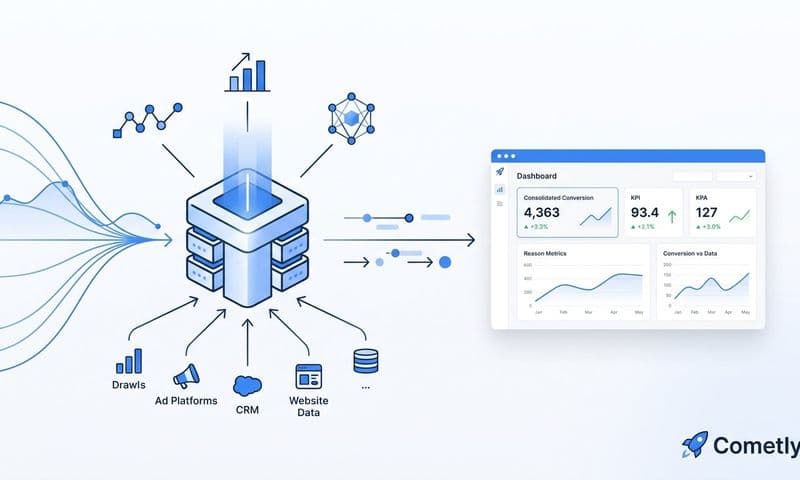
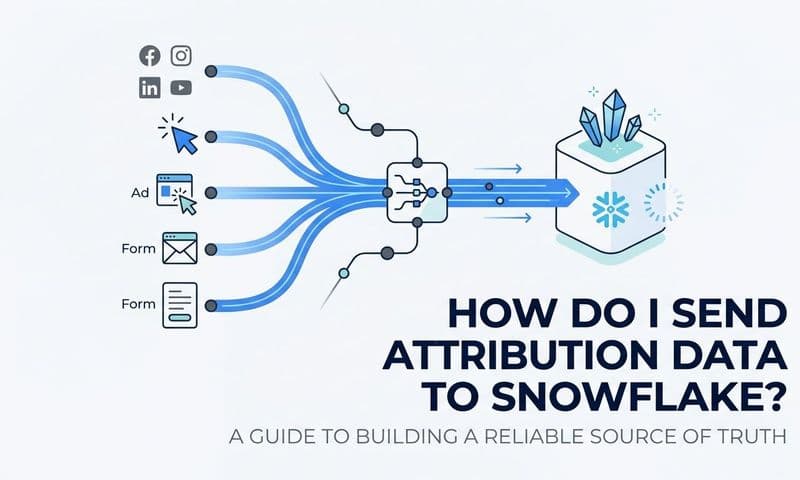
Your analytics are only as good as the data flowing into them. Most retailers have fragmented data scattered across disconnected platforms, making accurate attribution impossible. Building a unified analytics infrastructure requires connecting all your systems into a single source of truth.
The Essential Integrations: Start with your revenue sources. Your e-commerce platform holds the transaction data—what was purchased, when, and for how much. Your CRM contains customer information and interaction history. Your POS system tracks in-store purchases. These need to feed into your analytics platform so every conversion, regardless of where it happens, gets tracked and attributed properly.
Next, connect your marketing channels. Your ad platforms (Meta, Google, TikTok, Pinterest) need to send click and impression data to your analytics system. Your email platform should track sends, opens, and clicks. Your organic channels—SEO, social media, content marketing—need tracking parameters so you can see their contribution to conversions. Without these connections, you're blind to huge portions of the customer journey. Investing in the right marketing data analytics software makes these integrations seamless.
The technical implementation matters more than most marketers realize. Many retailers rely on client-side tracking through browser pixels and cookies. This approach has become increasingly unreliable. Browser privacy features, ad blockers, and iOS restrictions mean you're missing a significant percentage of conversions. Industry trends suggest that browser-based tracking can under-report conversions by substantial margins, especially on mobile devices.
Server-side tracking solves this by capturing conversion events directly from your backend systems rather than relying on browser behavior. When a customer completes a purchase, your server sends the conversion data directly to your analytics platform, bypassing all the browser-based restrictions. This ensures every conversion gets counted and properly attributed, giving you the accurate data foundation you need for smart budget decisions.
Conversion Sync and Algorithm Optimization: Here's where your analytics infrastructure becomes a competitive advantage, not just a reporting tool. Modern ad platforms like Meta and Google use machine learning algorithms to optimize ad delivery. They show your ads to users most likely to convert based on historical conversion patterns. But their algorithms are only as good as the conversion data they receive.
When you're using browser-based tracking, the ad platforms receive incomplete conversion data due to the same privacy restrictions that hurt your analytics. Their algorithms optimize based on a partial picture, leading to suboptimal ad delivery. Conversion sync solves this by sending enriched, accurate conversion data back to the ad platforms through their server-side APIs.
This creates a feedback loop that improves performance over time. Your attribution platform captures complete conversion data, enriches it with additional context (customer lifetime value, product category, purchase value), and feeds it back to the ad platforms. Their algorithms learn from this more complete data set, leading to better targeting and optimization. Retailers who implement conversion sync often see improved campaign performance as the ad platforms' machine learning gets trained on more accurate signals. Platforms that offer real-time conversion data give you a significant edge in this optimization process.
AI-Powered Analytics and Insight Generation: The volume of data in modern retail marketing exceeds what humans can effectively analyze manually. You might be running dozens of campaigns across multiple platforms, each with hundreds of ad variations, targeting different audiences and geographic regions. Manually reviewing all this data to find optimization opportunities is impractical.
AI-powered analytics tools process this data at scale, identifying patterns and opportunities that manual analysis would miss. They can spot when a specific ad creative is performing exceptionally well with a particular audience segment, or when a channel's performance is declining before it becomes obvious in aggregate metrics. They surface recommendations for budget reallocation, creative testing, and audience targeting based on statistical analysis of your entire data set. Understanding the power of AI marketing analytics can transform how you approach optimization.
The key is that these AI systems work with your complete, accurately attributed data rather than fragmented platform reports. They can see cross-channel patterns—for example, that customers who interact with both Facebook ads and email campaigns convert at higher rates than those who only see one channel. This enables recommendations that account for the full customer journey rather than optimizing channels in isolation.
From Data to Decisions: Making Analytics Drive Revenue
Analytics without action is just expensive reporting. The retailers who win are those who build decision-making processes around their data, using attribution insights to continuously optimize their marketing mix. Let's look at how to turn analytics into revenue-driving actions.
Real-Time Budget Reallocation: Traditional budget planning happens monthly or quarterly. You set budgets based on historical performance, launch campaigns, and hope for the best. By the time you review results and adjust, you've potentially wasted weeks of budget on underperforming channels while missing opportunities in high-performing ones.
With proper attribution data, you can reallocate budget in real time based on actual performance. When your analytics show that Instagram ads are currently driving conversions at a lower CAC than your target while Google Shopping is above target, you can shift budget immediately. This dynamic optimization compounds over time—instead of waiting a month to fix underperforming campaigns, you're optimizing weekly or even daily.
The key is setting clear performance thresholds and decision rules. Define your target CAC and ROAS for different channel types (prospecting versus retargeting, awareness versus conversion). When a channel or campaign exceeds targets, increase budget. When it falls below, reduce spend or pause. This systematic approach removes emotion from budget decisions and ensures you're always investing in what's working now, not what worked last quarter. Mastering marketing campaign analytics is essential for this level of optimization.
Optimizing for Customer Value, Not Just Conversions: Not all customers are equally valuable. A customer who makes a single $50 purchase and never returns is worth less than one who makes an initial $40 purchase and then buys monthly for years. Yet most attribution systems treat these conversions identically.
Advanced retail analytics connects first-purchase attribution to repeat purchase behavior, showing you which channels acquire customers with high lifetime value versus one-time buyers. This changes optimization strategy dramatically. A channel might show a higher CAC but acquire customers who become loyal repeat purchasers. Another channel might have a low CAC but attract deal-seekers who never buy again at full price.
Use this data to segment your marketing strategy. Channels that drive high-CLV customers deserve more investment even if their immediate ROAS looks lower. Channels that drive one-time buyers might still be valuable for clearing inventory or hitting short-term revenue targets, but they shouldn't dominate your long-term growth strategy. Structure your campaigns and budget allocation around customer value, not just conversion counts. Connecting sales and marketing analytics gives you the full picture of customer value across the entire funnel.
Automated Alerts and AI Recommendations: You can't watch your analytics dashboard 24/7, but opportunities and problems don't wait for your weekly review meeting. Setting up automated alerts ensures you catch important changes as they happen rather than discovering them days later when budget has been wasted or opportunities missed.
Configure alerts for performance thresholds that matter to your business. Get notified when a campaign's CAC exceeds your target by a certain percentage, when ROAS drops below profitable levels, or when conversion rates change significantly. Set positive alerts too—when a new campaign or creative is performing exceptionally well, you want to know immediately so you can scale it.
AI-powered recommendations take this further by not just alerting you to changes but suggesting specific actions. Instead of just telling you that Facebook's performance is declining, an AI system might recommend reallocating 20% of Facebook's budget to Google based on current performance trends and historical patterns. Instead of just noting that a specific product category is converting well, it might suggest creating dedicated campaigns for that category across multiple channels.
The most sophisticated retail marketers build feedback loops between analytics and execution. They review AI recommendations weekly, implement the highest-impact changes, and measure results. Over time, this creates a continuous optimization cycle where your marketing mix constantly evolves based on real performance data rather than assumptions or outdated benchmarks.
Your Roadmap to Analytics Excellence
Understanding what you should do is different from knowing where to start. Most retailers feel overwhelmed by the gap between their current analytics setup and where they need to be. Let's break down a practical implementation roadmap.
Start With a Data Audit: Before building new systems, understand what you're currently tracking and where the gaps are. Map out your customer journey from first touch to purchase and beyond. For each touchpoint, document whether you're currently tracking it, how accurate that tracking is, and whether it feeds into your attribution system.
Common gaps include: offline conversions that aren't connected to online marketing touchpoints, mobile app interactions that don't integrate with web analytics, phone calls and other offline inquiries that stem from digital campaigns, and repeat purchases that aren't linked back to the original acquisition source. Identifying these gaps shows you where to focus your implementation efforts for maximum impact. Understanding the role of analytics in digital marketing helps you prioritize which gaps to address first.
Prioritize Server-Side Tracking Implementation: If you're still relying primarily on browser-based tracking, this should be your first major upgrade. Server-side tracking future-proofs your analytics against continued privacy restrictions while immediately improving data accuracy. The implementation requires technical work—your developers need to set up server-side event tracking and configure conversion APIs for your ad platforms—but the accuracy improvement is substantial.
Start with your highest-volume conversion events: purchases, leads, sign-ups. Get these tracking server-side first, then expand to other valuable events like add-to-cart, product views, and email sign-ups. The goal is ensuring every important customer action gets captured and attributed accurately, regardless of browser settings or device changes.
Establish Your Analytics Cadence: Data without regular review and action is wasted. Set up a consistent schedule for analyzing attribution data and making optimization decisions. Weekly reviews for campaign-level performance—checking which specific campaigns and ad sets are hitting targets and which need adjustment. Monthly reviews for channel strategy—evaluating overall channel mix, testing new channels or approaches, and making larger budget allocation decisions. Quarterly reviews for attribution model validation—ensuring your attribution approach still reflects customer behavior patterns and business priorities.
This cadence creates a rhythm where analytics drives continuous improvement rather than being something you check occasionally when you remember. It also builds organizational discipline around data-driven decision making, moving away from gut-feel budget choices toward systematic optimization. Learning how to use marketing analytics effectively is what separates high-performing retail teams from the rest.
The retailers who execute this roadmap don't do it all at once. They prioritize based on their specific gaps and opportunities, implement systematically, and build momentum over time. The key is starting with the foundation—accurate tracking and proper attribution—then layering on optimization processes that turn that data into better marketing decisions.
The Analytics Advantage: Where Retail Marketing Is Heading
Marketing analytics in retail isn't optional anymore. It's the fundamental difference between retailers who scale profitably and those who waste budget on channels that look good in platform dashboards but don't actually drive revenue. The complexity of modern customer journeys, combined with privacy restrictions that have made traditional tracking unreliable, means you need sophisticated attribution systems to understand what's really working.
The retailers winning today share common characteristics: they capture every touchpoint across the entire customer journey, they use multi-touch attribution models that reveal true revenue drivers rather than relying on last-click metrics, they implement server-side tracking to ensure data accuracy despite privacy restrictions, and they act on their data systematically rather than letting it sit in dashboards.
This isn't about having more data. Most retailers are drowning in data from disconnected platforms that tell conflicting stories. It's about having the right data, properly connected and attributed, with clear processes for turning insights into actions. When you know which channels truly drive conversions, which campaigns acquire high-value customers, and which touchpoints play critical roles in the customer journey, budget decisions become straightforward. You invest more in what works and less in what doesn't.
The gap between retailers with sophisticated analytics and those still relying on platform-reported metrics will only widen. As privacy restrictions continue evolving and customer journeys become even more complex, accurate attribution becomes increasingly valuable. The time to build your analytics infrastructure is now, before the competitive advantage of better data becomes insurmountable.
Ready to elevate your marketing game with precision and confidence? Discover how Cometly's AI-driven recommendations can transform your ad strategy—Get your free demo today and start capturing every touchpoint to maximize your conversions.