You're staring at campaign data from Meta, Google, TikTok, LinkedIn, and your CRM—thousands of rows showing clicks, impressions, and conversions. Your CMO walks in asking which channels actually drive revenue and where to shift next quarter's budget. The paid media team insists their campaigns are performing, but sales says lead quality is dropping. Everyone's looking at different dashboards, and nobody agrees on what's working.
This is the daily reality for modern marketing teams. And it's exactly why the marketing analytics specialist has become one of the most critical roles in performance-driven organizations.
Marketing analytics specialists are the translators between raw campaign data and revenue-driving decisions. They don't just pull reports—they connect the dots across every touchpoint, identify what's actually converting, and give leadership the confidence to scale winners and cut losers. As tracking gets harder with privacy changes and campaigns span more platforms than ever, this role has shifted from "nice to have" to absolutely essential.
In this guide, we'll break down what marketing analytics specialists actually do day-to-day, the technical and strategic skills that separate great ones from average ones, how AI and attribution technology are reshaping the role, and what the career path looks like from entry-level to leadership. Whether you're considering this career or trying to understand what these specialists bring to your team, you'll walk away knowing exactly how this role drives real business impact.
The Engine Behind Data-Driven Marketing Teams
A marketing analytics specialist is the person who turns campaign chaos into clarity. While marketers execute campaigns and data analysts crunch numbers across the business, marketing analytics specialists live in the intersection—applying deep analytical skills specifically to marketing performance, attribution, and ROI measurement.
Think of them as the diagnostic engineers of your marketing engine. They don't just tell you that traffic is up or conversions are down. They explain why it happened, which channels deserve credit, and what to do next. They're fluent in both marketing strategy and technical data work, which makes them uniquely valuable.
Here's how this role differs from adjacent positions. A general data analyst might work across finance, operations, and marketing without deep domain expertise in any one area. A marketing manager focuses on campaign execution, creative strategy, and team coordination—they use data but don't build the systems that generate it. A business intelligence analyst typically supports enterprise-wide reporting and dashboards but lacks the marketing-specific knowledge to interpret campaign nuances.
The marketing analytics specialist sits at the center of it all. They understand attribution models, know why iOS tracking changes matter, can explain the difference between view-through and click-through conversions, and translate all of it into language that executives and media buyers actually understand.
Organizationally, these specialists usually report to the CMO, VP of Marketing, or Head of Growth. They collaborate closely with paid media teams who need performance insights, marketing operations teams managing tech stacks, sales operations to connect leads to revenue, and finance teams tracking customer acquisition costs. In smaller companies, they might be a team of one. At larger organizations, they often lead analytics teams responsible for measurement across all marketing channels.
The best marketing analytics specialists become strategic advisors, not just report builders. They're in budget planning meetings, they influence channel strategy, and they're the voice of data when marketing leadership debates where to invest next. This isn't a back-office role—it's a front-line position that directly shapes how companies allocate millions in ad spend.
Core Responsibilities That Drive Real Impact
The day-to-day work of a marketing analytics specialist centers on three core areas: campaign performance analysis, attribution modeling, and reporting that actually drives decisions. Let's break down what each of these looks like in practice.
Campaign Performance Analysis: This is where specialists dig into the numbers that matter most—ROAS (return on ad spend), CAC (customer acquisition cost), LTV (lifetime value), and conversion rates across every channel. But it's not just about calculating these metrics. It's about understanding what they mean in context.
A specialist might notice that Facebook campaigns show a lower ROAS than Google, but when you factor in LTV, Facebook customers are worth 40% more over twelve months. Or they might identify that LinkedIn has a high CAC but converts enterprise customers that sales closes at 3x the average deal size. These insights change budget allocation decisions completely.
They're also constantly testing hypotheses. If conversion rates dropped last week, was it creative fatigue, audience saturation, seasonal trends, or a tracking issue? They investigate, isolate variables, and provide answers backed by data—not guesses. Understanding marketing analytics metrics at this level separates effective specialists from those who simply generate reports.
Attribution Modeling: This is arguably the most complex and valuable part of the role. Attribution answers the fundamental question every marketer asks: which touchpoint gets credit for the conversion?
Most customer journeys aren't linear. Someone might see a Facebook ad, Google your brand three days later, click a retargeting ad, read a blog post, and finally convert through an email campaign. Which channel "caused" that conversion? The answer depends on your attribution model.
Marketing analytics specialists understand the strengths and limitations of different models—first-touch (credits the initial interaction), last-touch (credits the final click), linear (spreads credit equally), time-decay (gives more credit to recent touchpoints), and data-driven models that use algorithms to assign credit based on actual conversion patterns. Navigating the attribution challenges in marketing analytics requires both technical expertise and strategic thinking.
They don't just pick a model and stick with it. They compare models, explain trade-offs to leadership, and help teams understand that the "right" model depends on your goals. If you're focused on awareness, first-touch matters. If you're optimizing for conversions, last-touch or data-driven models might be more useful. The specialist makes these decisions strategic, not arbitrary.
Reporting and Visualization: Raw data doesn't drive decisions—clear, actionable dashboards do. Marketing analytics specialists build reporting systems that executives, media buyers, and cross-functional teams actually use.
This means knowing what metrics matter to each audience. The CFO cares about CAC and payback period. The paid media team needs daily ROAS by campaign. The CMO wants channel performance trends and budget recommendations. One dashboard rarely serves all these needs, so specialists create tailored views that answer specific questions.
They also automate what can be automated. Instead of manually pulling reports every Monday, they build dashboards that update in real time, set up alerts when performance drops below thresholds, and create self-service tools so teams can explore data without constantly asking for custom reports.
The best specialists don't just present data—they tell stories with it. They highlight what changed, explain why it matters, and recommend next steps. A great weekly report doesn't say "Facebook ROAS is 3.2x." It says "Facebook ROAS dropped from 3.8x to 3.2x this week due to creative fatigue in our top-performing ad set. Recommend testing three new creatives and pausing the underperforming variant. Expected impact: return to 3.5x+ ROAS within 10 days." Mastering marketing analytics and reporting is essential for turning insights into action.
Where Attribution Platforms Change Everything
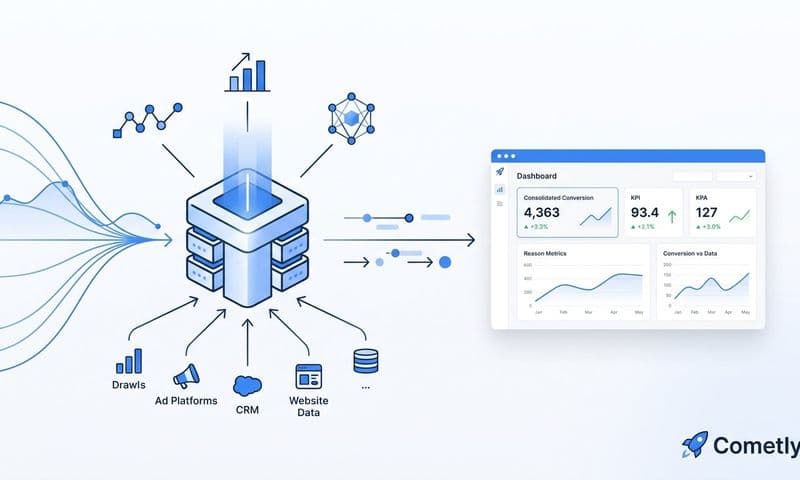
Modern specialists increasingly rely on marketing attribution analytics platforms that automatically track the full customer journey across ad clicks, website visits, CRM events, and revenue. These tools solve the technical challenges of connecting data from disconnected sources and provide the foundation for accurate multi-touch attribution. Instead of spending hours stitching together data from five platforms, specialists can focus on interpreting insights and making recommendations—which is where they add the most value.
Essential Skills and Technical Toolkit
Marketing analytics specialists need a blend of technical skills, analytical thinking, and communication abilities. Let's break down what actually matters in each category.
Technical Skills: SQL is non-negotiable for most specialist roles. You need to query databases, join tables, and pull custom datasets without waiting for engineering support. This doesn't mean you need to be a database architect, but you should be comfortable writing queries to answer questions like "What's the average time between first touch and conversion for customers who spent over $1,000?"
Spreadsheet mastery goes beyond basic formulas. You're using pivot tables, VLOOKUP, array formulas, and conditional formatting to manipulate large datasets and build ad-hoc analyses quickly. Many specialists do 80% of their work in Google Sheets or Excel because it's fast, flexible, and easy to share.
Visualization tools like Tableau, Looker, or Google Data Studio turn data into dashboards that stakeholders actually understand. You need to know how to design clean, intuitive visualizations that highlight insights without overwhelming viewers. Bad dashboards confuse. Good dashboards drive action.
Familiarity with attribution platforms is increasingly essential. Whether it's server-side tracking solutions or multi-touch attribution tools, specialists need to understand how these systems capture data, connect touchpoints, and feed insights back to ad platforms. This is where technical setup meets strategic measurement. Knowing what marketing analytics tools are available helps specialists build effective tech stacks.
Analytical Thinking: Statistical literacy matters more than most people realize. You don't need a PhD in statistics, but you should understand concepts like statistical significance, confidence intervals, and sample size. When someone says "conversions are up 15%," you need to know whether that's meaningful or just noise.
Hypothesis testing is how specialists move from observation to insight. Instead of just noticing that performance changed, they form hypotheses about why, design tests to validate them, and use data to confirm or reject their theories. This scientific approach separates real insights from random correlation.
Understanding correlation versus causation is critical. Just because two metrics move together doesn't mean one causes the other. Specialists know how to identify spurious correlations, control for confounding variables, and avoid making recommendations based on coincidence.
Communication Skills: Technical skills get you hired. Communication skills determine how much impact you have. The best marketing analytics specialists translate complex findings into clear, jargon-free language that non-technical stakeholders immediately understand.
This means knowing your audience. When presenting to the CMO, lead with business impact and strategic recommendations. When working with media buyers, provide tactical details they can act on immediately. When collaborating with finance, speak their language—CAC, payback period, unit economics.
You also need to be comfortable saying "I don't know" and explaining uncertainty. Data rarely provides perfect answers, and specialists who pretend it does lose credibility fast. The best ones quantify confidence, explain limitations, and recommend next steps even when data is incomplete.
The Soft Skills That Separate Good From Great
Curiosity drives the best specialists. They don't just answer the questions they're asked—they dig deeper, spot patterns others miss, and proactively surface insights that change strategy. They're also collaborative, not territorial. Marketing analytics is a team sport, and specialists who hoard data or talk down to non-technical colleagues limit their own impact.
How AI and Automation Are Reshaping the Role
The marketing analytics specialist role is evolving rapidly as AI and automation handle tasks that used to consume hours of manual work. This isn't replacing specialists—it's elevating what they do.
Five years ago, specialists spent significant time pulling data from multiple platforms, cleaning it, and formatting reports. Today, attribution platforms and automated dashboards handle most of that grunt work. Data syncs automatically, dashboards update in real time, and alerts flag anomalies without anyone clicking refresh.
This shift frees specialists to focus on what humans do best: strategic interpretation and recommendation. Instead of asking "What's our Facebook ROAS this week?" they're asking "Why did ROAS drop, which audience segments are underperforming, and where should we reallocate budget to maximize revenue next quarter?" Understanding AI marketing analytics has become essential for specialists who want to stay ahead.
AI-powered attribution tools now track full customer journeys automatically—from initial ad click through website behavior, CRM events, and final purchase. They connect touchpoints across devices and platforms, solve identity resolution challenges, and provide multi-touch attribution without manual data stitching. Specialists configure these systems, validate their accuracy, and interpret the insights they surface.
New Focus Areas: As automation handles routine reporting, specialists are taking on more strategic responsibilities. One major shift is feeding better data back to ad platform algorithms. Facebook, Google, and other platforms use conversion data to optimize who sees your ads. When tracking is inaccurate or incomplete, their algorithms optimize toward the wrong outcomes.
Modern specialists work with server-side tracking and conversion APIs to send enriched, accurate event data back to ad platforms. This improves targeting, optimization, and ultimately ROAS. It's a technical skill that directly impacts campaign performance—and it's becoming a core part of the role.
Another emerging focus is optimizing for downstream revenue, not just clicks or leads. Specialists are connecting marketing data to CRM and sales systems to understand which campaigns drive high-value customers, not just high volume. This means tracking metrics like lead-to-customer rate, average deal size by source, and revenue per channel—not just cost per lead. Learning how to use data analytics in marketing at this level transforms specialists into strategic business partners.
AI also enables specialists to run more sophisticated analyses faster. Instead of manually segmenting audiences and testing hypotheses one at a time, machine learning models can identify patterns across millions of data points and surface recommendations. Specialists validate these insights, provide context, and translate them into action.
What This Means for Your Career
If you're building a career in marketing analytics, lean into the skills that automation can't replace: strategic thinking, business acumen, communication, and the ability to connect data insights to revenue outcomes. Technical skills matter, but they're table stakes. The specialists who thrive in the AI era are the ones who use technology to amplify their impact, not compete with it.
Career Path: From Entry-Level to Analytics Leadership
The marketing analytics specialist career path offers multiple entry points and clear progression toward leadership roles. Here's what the journey typically looks like.
Entry Points: Most specialists start in one of three places. Marketing coordinators with a strong analytical bent often transition into specialist roles by taking ownership of reporting and performance analysis. Junior data analysts who develop marketing domain expertise can pivot into marketing-specific analytics. Marketing operations roles focused on tech stack management and data flow also serve as stepping stones.
Entry-level positions often focus on reporting, dashboard maintenance, and supporting senior analysts with data pulls and basic analysis. You're learning the tools, understanding how marketing campaigns work, and building fluency in metrics that matter.
Growth Trajectory: After 2-3 years as a specialist, high performers typically move into senior analyst roles. Here you're leading projects, designing attribution models, presenting to leadership, and mentoring junior team members. You own specific analysis areas—maybe paid media performance, maybe customer journey analysis—and you're trusted to make recommendations that influence budget decisions.
From senior analyst, the path splits. Some specialists move into management, becoming analytics managers who lead teams of analysts. Others become individual contributor experts, taking on titles like principal analyst or staff analyst with deep technical expertise and strategic influence.
At the director level, you're leading marketing analytics as a function. You own the measurement strategy, build and manage teams, influence company-wide decisions, and collaborate directly with executive leadership. Some directors of marketing analytics eventually move into VP of Growth or Chief Marketing Officer roles where analytics expertise becomes a strategic advantage.
Salary Expectations: Compensation varies significantly by industry, company size, and location, but general ranges provide useful context. Entry-level specialists typically earn between $60,000 and $80,000. Senior specialists with 3-5 years of experience often see salaries in the $90,000 to $120,000 range. Analytics managers and directors can earn $130,000 to $180,000+, with total compensation including bonuses and equity potentially reaching significantly higher at well-funded tech companies.
Factors that increase earning potential include working in high-growth industries like SaaS or e-commerce, developing expertise in specialized areas like attribution modeling or incrementality testing, earning certifications from major platforms, and demonstrating measurable impact on revenue and ROAS.
Building Your Marketing Analytics Career: Practical Next Steps
Whether you're starting from scratch or advancing your existing analytics career, here's how to position yourself for success in marketing analytics roles.
Certifications and Courses Worth Pursuing: Google Analytics certification is a practical starting point—it's free, widely recognized, and teaches foundational concepts in web analytics. Platform-specific certifications from Facebook Blueprint, Google Ads, and LinkedIn Marketing Labs demonstrate that you understand how these channels work, not just how to pull reports.
SQL courses through platforms like Mode Analytics, DataCamp, or Codecademy build querying skills that immediately increase your value. Visualization courses for Tableau or Looker help you turn data into compelling stories. Focus on certifications that teach skills you'll use weekly, not just credentials that look good on LinkedIn. Resources on learning digital marketing analytics can accelerate your development in this field.
Portfolio Projects That Demonstrate Real Thinking: Certifications prove you completed coursework. Portfolio projects prove you can think analytically and solve real problems. The best projects showcase your ability to ask good questions, analyze data, and make recommendations.
Consider building a case study where you analyze a real marketing campaign (your own side project, a volunteer organization, or anonymized data from a past role). Show how you identified underperforming segments, tested hypotheses, and recommended changes. Include visualizations, explain your methodology, and quantify the potential impact.
Another strong project: compare attribution models using sample data and explain when each model provides value. This demonstrates that you understand attribution conceptually, not just technically. GitHub repositories with SQL queries, data cleaning scripts, or dashboard templates also signal technical competence to hiring managers.
Positioning Yourself for Data-Forward Companies: Not all companies value analytics equally. Target organizations that treat marketing as a performance discipline, not just a creative function. SaaS companies, e-commerce brands, performance marketing agencies, and direct-to-consumer brands tend to be data-forward. Exploring SaaS marketing analytics platforms can help you understand what these companies look for in candidates.
When interviewing, ask questions that reveal how seriously they take measurement: "What attribution model do you currently use?" "How do you connect marketing data to revenue?" "What tools are in your analytics stack?" Companies with thoughtful answers are companies where specialists thrive.
Network strategically. Join marketing analytics communities, attend conferences focused on measurement and attribution, and connect with specialists at companies you admire. Many roles are filled through referrals, and demonstrating genuine interest in the craft makes you memorable.
Putting It All Together
Marketing analytics specialists have become indispensable as privacy changes, multi-channel complexity, and executive demands for ROI accountability make accurate attribution harder and more critical than ever. The specialists who succeed don't just report numbers—they connect data to revenue, translate complexity into clarity, and give teams the confidence to scale what's working.
This role sits at the intersection of technical skill and strategic thinking. You need SQL and spreadsheet mastery, but you also need the business acumen to know which questions matter and the communication skills to influence decisions. As AI and automation handle routine reporting, specialists are evolving into strategic advisors who interpret insights, optimize for downstream revenue, and feed better data back to ad platforms.
The career path is clear and rewarding. Entry-level roles focus on reporting and analysis. Mid-level specialists own measurement strategies and influence budget decisions. Senior leaders build teams, shape company-wide analytics functions, and drive growth at the executive level. Compensation reflects the value—specialists who demonstrate measurable impact on ROAS and revenue command strong salaries and advancement opportunities.
If you're building this career, focus on skills that automation can't replace: asking better questions, connecting data to business outcomes, and communicating insights that drive action. Pursue certifications that teach practical skills, build portfolio projects that showcase real analytical thinking, and target companies that treat marketing as a performance discipline.
The best marketing analytics specialists make their teams smarter, their campaigns more profitable, and their companies more confident in where to invest next. As marketing becomes more complex and data-driven, this role only becomes more valuable.
Ready to elevate your marketing game with precision and confidence? Discover how Cometly's AI-driven recommendations can transform your ad strategy—Get your free demo today and start capturing every touchpoint to maximize your conversions.