Your Facebook Ads Manager shows 150 conversions this month. Your Google Analytics dashboard reports 112. Your CRM says you closed 89 deals. Three different numbers for the same business reality.
This isn't a data glitch. It's the new normal for digital marketers navigating the post-cookie landscape.
Traditional cookie-based tracking, once the reliable foundation of digital attribution, is crumbling. Safari's Intelligent Tracking Prevention blocks third-party cookies by default. Firefox Enhanced Tracking Protection does the same. Chrome continues developing Privacy Sandbox alternatives that fundamentally change how tracking works. Meanwhile, GDPR and CCPA have turned privacy from a nice-to-have into a legal requirement, giving users more control over their data and more reasons to opt out.
The result? Attribution windows are shrinking. Conversion data is incomplete. Ad platform algorithms are optimizing with degraded signals. And marketers are left wondering which numbers to trust.
But here's the thing: this shift isn't a crisis. It's an evolution. Post cookie tracking solutions represent an upgrade to more accurate, privacy-compliant attribution that actually gives you better data than the old cookie-based system ever did. The marketers who understand this and adapt now will have a significant competitive advantage as the industry continues to evolve.
This guide breaks down exactly how modern marketers maintain attribution accuracy without relying on third-party cookies. You'll learn about server-side tracking, first-party data strategies, conversion APIs, and multi-touch attribution models that work in today's privacy-focused environment. More importantly, you'll understand how to implement these solutions to get clearer, more actionable data than you've ever had before.
The Collapse of Cookie-Based Tracking
Let's start with what actually broke. Third-party cookies were never designed to be the backbone of digital marketing attribution. They were created in 1994 to help websites remember user preferences. Marketers repurposed them into a cross-site tracking mechanism that followed users across the web, building profiles and measuring ad effectiveness.
That system worked reasonably well for two decades. Then everything changed.
Apple fired the first major shot in 2017 with Intelligent Tracking Prevention in Safari. ITP didn't just limit third-party cookies. It actively identified and restricted tracking scripts, reduced cookie lifespans to seven days, and eventually started purging client-side cookies after just 24 hours for certain scenarios. For marketers running campaigns with attribution windows longer than a week, Safari traffic became increasingly difficult to track accurately.
Firefox followed with Enhanced Tracking Protection, blocking third-party cookies by default for all users. Suddenly, two major browsers representing a significant portion of web traffic were actively hostile to traditional tracking methods. Understanding cookie based tracking problems is essential for adapting your strategy.
Google's approach has been more gradual but equally impactful. After multiple delays, Chrome continues developing Privacy Sandbox—a collection of APIs designed to enable ad targeting and measurement without third-party cookies. The timeline keeps shifting, but the direction is clear: third-party cookies are going away, and they're being replaced with fundamentally different tracking mechanisms.
Meanwhile, privacy regulations added legal pressure to technical restrictions. GDPR in Europe and CCPA in California require explicit user consent for tracking. Users now see cookie consent banners on every website, and many choose to opt out. Those who don't actively opt out often use ad blockers that prevent tracking scripts from loading in the first place.
The combined effect is devastating for traditional attribution. Your Facebook pixel might only capture 60-70% of actual conversions because browser restrictions prevent it from setting or reading cookies. Your Google Analytics data has gaps where users opted out or ad blockers interfered. Your attribution windows are artificially shortened because cookies expire before users convert.
Ad platform algorithms suffer too. Facebook's algorithm optimizes toward conversions, but if it only sees 70% of your actual conversions, it's optimizing with incomplete information. Google Ads uses conversion data to improve targeting, but degraded signals mean worse performance over time. The platforms try to compensate with modeled conversions and statistical estimates, but those are educated guesses, not actual data.
This is why your conversion numbers don't match across platforms. Each system sees a different slice of reality, filtered through different browser restrictions, privacy settings, and technical limitations. The cookie-based tracking foundation has become unreliable, and marketers need something better.
Server-Side Tracking Changes Everything
Server-side tracking solves the fundamental problem with cookie-based attribution: it doesn't rely on the browser at all.
Traditional tracking works like this: A user clicks your ad, lands on your website, and a JavaScript pixel fires in their browser. That pixel tries to set a cookie, read existing cookies, and send data to the ad platform. Browser privacy features can block any step in this process. Ad blockers can prevent the pixel from loading. Cookie restrictions can prevent data from being stored or read. The entire system depends on the browser cooperating, and browsers increasingly don't.
Server-side tracking takes a different approach. When a user interacts with your website, your server captures that data directly. No browser-based pixel required. No cookie that can be blocked or deleted. The server collects information about the user action, enriches it with additional data from your CRM or database, and sends it to ad platforms through secure server-to-server connections. Finding the best server-side tracking solution is critical for modern marketers.
Think of it like the difference between mailing a letter and having a private courier service. Browser-based tracking is like dropping a letter in a public mailbox and hoping it gets through. Server-side tracking is like handing it directly to a trusted courier who delivers it straight to the destination. No intermediaries. No opportunities for interference.
The advantages are significant. First, data retention improves dramatically. Browser cookies might expire in 7 days or get deleted when users clear their browsing history. Server-side data persists as long as you need it to, giving you accurate attribution even for long sales cycles. A user who clicks your ad today and converts three weeks later can be properly attributed, even if their browser cookies expired days ago.
Second, accuracy increases across devices and sessions. When users switch from mobile to desktop, or browse in incognito mode, cookie-based tracking often loses them. Server-side tracking can maintain identity through first-party identifiers like email addresses or customer IDs, connecting touchpoints across devices and browsing contexts.
Third, you bypass client-side restrictions entirely. Ad blockers can't block server-side tracking because there's no browser-based script to block. Intelligent Tracking Prevention can't limit what it can't see. Your tracking infrastructure operates independently of browser privacy features.
Implementation requires connecting your website, CRM, and ad platforms through a unified server-side infrastructure. When a user submits a form, makes a purchase, or takes any valuable action, your server captures that event along with relevant identifiers. It enriches the data with additional context from your CRM—customer lifetime value, previous purchases, lead score—and sends complete conversion data to your ad platforms through their conversion APIs.
This isn't just a workaround for cookie restrictions. It's a better way to track conversions because you're sending richer, more accurate data than browser pixels ever could. Ad platforms receive complete information about high-value conversions, not just the limited data a cookie can capture. Their algorithms optimize better because they're working with better signals.
First-Party Data Becomes Your Foundation
Server-side tracking solves the technical problem of bypassing browser restrictions. First-party data solves the identity problem of knowing who your users are across sessions and devices.
Third-party cookies worked by tracking users across different websites without their explicit knowledge. First-party data works by collecting information directly from users on your own properties—your website, your app, your email list. The difference is consent and control. Users choose to share information with you, and you control how it's stored and used. Implementing first-party data tracking solutions gives you this control.
Related reading: our complete guide to ad tracking without third party cookies.
The most effective first-party data strategy starts with authenticated user experiences. When users create accounts, sign up for newsletters, or log into your platform, they provide identifying information voluntarily. An email address becomes a persistent identifier that works across devices, browsers, and sessions. A customer ID in your CRM connects every touchpoint from initial ad click through multiple purchases over time.
Email capture is particularly valuable because it creates a bridge between anonymous ad traffic and known customers. A user clicks your Facebook ad anonymously, lands on your website, and downloads a resource in exchange for their email. Now you have a first-party identifier that connects their initial ad interaction to all future behavior—email opens, website visits, purchases. When they later convert, you can accurately attribute that conversion back to the original ad campaign, even if cookies expired weeks ago.
CRM integration takes this further by enriching every conversion with valuable business context. When someone fills out a lead form, your CRM captures not just their contact information but their company size, industry, and specific interests. When they become a customer, you know their purchase value, product preferences, and engagement level. This enriched data flows back to your ad platforms, helping algorithms identify similar high-value prospects.
First-party cookies still have a role even as third-party cookies disappear. Cookies set by your own domain remain functional and useful for tracking user behavior on your website. The key difference is scope: first-party cookies only work on your domain, not across the web. They can remember user preferences, maintain shopping cart state, and track session behavior without triggering browser privacy restrictions.
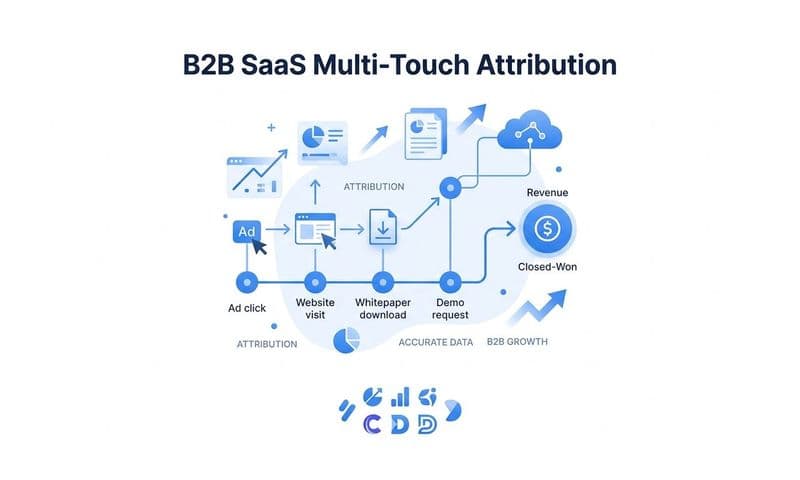
The goal is creating a unified customer view by connecting touchpoints from ad clicks through to CRM events and conversions. A complete customer journey might look like this: User sees your LinkedIn ad (anonymous), clicks through to your website (first-party cookie set), downloads a whitepaper (email captured), receives nurture emails (engagement tracked), visits your pricing page (first-party cookie recognizes returning visitor), requests a demo (CRM lead created), and eventually becomes a customer (conversion synced back to ad platforms).
Each touchpoint adds data to the customer profile. First-party identifiers connect the dots across sessions and devices. Your attribution system sees the complete journey, not just isolated interactions that cookies happened to capture.
This approach requires thinking differently about data collection. Instead of passively tracking users across the web, you actively build relationships that encourage users to share information. Valuable content in exchange for email addresses. Account creation that unlocks premium features. Personalized experiences that require authentication. Each interaction strengthens your first-party data foundation.
Conversion APIs Deliver Better Data to Ad Platforms
Having accurate conversion data on your server is valuable. Sending that data back to ad platforms where it can improve targeting and optimization is transformative.
This is where Conversions APIs come in. Meta's Conversions API, Google's Ads API, TikTok's Events API, and similar tools from other platforms allow you to send conversion data directly from your server to their advertising systems. Instead of relying on browser pixels that might be blocked or degraded, you establish secure server-to-server connections that deliver complete, accurate conversion information.
The technical process is straightforward: when a conversion happens on your website or in your CRM, your server sends an event to the ad platform's API with details about what happened, who did it, and what value it represents. The platform matches that conversion back to the ad impression or click that drove it, attributing the conversion to the right campaign, ad set, and creative.
Match rates improve significantly compared to pixel-only tracking. Browser-based pixels might achieve 60-70% match rates due to cookie restrictions and ad blockers. Server-side conversion APIs typically achieve 85-95% match rates because they can include multiple identifiers—email addresses, phone numbers, customer IDs—that help platforms confidently match conversions to ad interactions. This enables accurate ad tracking without cookies.
The quality of data you send matters enormously. Basic implementations might send just the conversion event and value. Advanced implementations send enriched conversion data that gives ad platforms much more context: customer lifetime value, product categories purchased, lead quality scores, subscription tier, business size, and any other signals that help algorithms understand what makes a valuable conversion.
Think about what this means for Facebook's algorithm. With pixel-only tracking, Facebook knows someone converted and spent $100. With enriched Conversions API data, Facebook knows someone converted, spent $100, is a mid-market B2B customer in the software industry, has a lead score indicating high purchase intent, and represents an estimated lifetime value of $5,000. The algorithm can now optimize toward high-value conversions, not just any conversion.
Google Ads works similarly. Enhanced conversions allow you to send hashed first-party data along with conversion events, improving match rates and enabling more sophisticated optimization. The platform can connect online conversions to offline events, attribute phone calls to specific keywords, and optimize bidding strategies based on actual business value rather than just click-through rates.
Syncing conversions across multiple ad platforms creates consistency in attribution and optimization across your entire media mix. When the same conversion is properly attributed to touchpoints on Facebook, Google, LinkedIn, and other channels, you can accurately compare performance and allocate budget based on real contribution to revenue. Your multi-touch attribution model has the complete data it needs to assign credit appropriately.
Implementation requires technical setup but pays ongoing dividends. You need to configure server-side tracking, connect your CRM or database, map conversion events to API endpoints, and ensure proper data formatting and security. Once configured, the system runs automatically, sending enriched conversion data to ad platforms every time a valuable action occurs.
The result is ad algorithms that optimize with better information, leading to improved targeting, higher conversion rates, and better return on ad spend. Platforms can find more users who look like your best customers because they know exactly what makes those customers valuable.
Multi-Touch Attribution Without Cookie Dependency
Last-click attribution made sense in a cookie-based world where tracking was simple but incomplete. A user clicked an ad, converted, and that ad got credit. Easy to implement, easy to understand, and completely misleading about how marketing actually works.
Modern customer journeys involve multiple touchpoints across weeks or months. A B2B buyer might see your LinkedIn ad, visit your website from organic search, read several blog posts, download a whitepaper, receive email nurture campaigns, attend a webinar, and finally request a demo. Which touchpoint deserves credit for the conversion? All of them contributed. Last-click attribution gives 100% credit to the demo request form, ignoring everything that made that final action possible.
Multi-touch attribution models distribute credit across the customer journey, recognizing that conversions result from cumulative marketing efforts. In a post-cookie world, this approach becomes even more valuable because it relies on first-party identifiers and deterministic matching rather than cookie-based tracking across sessions. Exploring cross-platform tracking solutions helps you understand your options.
First-touch attribution gives all credit to the initial interaction that brought someone into your funnel. This model values awareness and acquisition, highlighting which campaigns are best at generating new prospects. If your LinkedIn ad was the first touchpoint before a three-month nurture sequence, it gets full credit for the eventual conversion.
Linear attribution distributes credit equally across all touchpoints. Every interaction in the customer journey receives the same weight. This model recognizes that awareness, consideration, and conversion activities all matter, though it doesn't account for the varying importance of different touchpoints.
Time-decay attribution gives more credit to touchpoints closer to conversion. Early interactions receive some credit, but the weight increases as the customer moves through the funnel. This model reflects the reality that recent touchpoints often have more direct influence on the final decision.
Data-driven attribution uses machine learning to analyze conversion patterns and assign credit based on actual impact. By comparing journeys that converted versus those that didn't, algorithms identify which touchpoints truly influence outcomes. This model adapts to your specific business and customer behavior, providing the most accurate picture of what's actually driving conversions.
Implementing multi-touch attribution in a cookieless environment requires connecting touchpoints using first-party identifiers rather than relying on cookies that might expire or be deleted. When a user provides their email address early in the journey, that identifier connects every subsequent interaction—website visits, email opens, content downloads, demo requests—into a complete journey that your attribution model can analyze.
AI-powered analytics enhance this process by identifying patterns that humans might miss. Machine learning algorithms can analyze thousands of customer journeys to determine which combinations of touchpoints lead to high-value conversions. They might discover that users who engage with both blog content and webinars convert at 3x the rate of users who only engage with one content type, informing your content strategy and budget allocation.
The key advantage of modern multi-touch attribution is that it works with better data than cookie-based systems ever provided. You're tracking authenticated user journeys using persistent identifiers, not anonymous sessions that might represent different people using the same device. Your attribution model analyzes complete customer journeys, not fragmented data with gaps where cookies failed.
Choosing the right attribution model depends on your business context. E-commerce brands with short sales cycles might prefer time-decay models that emphasize recent touchpoints. B2B companies with long nurture sequences might value linear or data-driven models that recognize the importance of early awareness campaigns. The important thing is moving beyond last-click attribution to understand the full customer journey.
Assembling Your Modern Tracking Infrastructure
Building a post-cookie tracking stack isn't about replacing one tool with another. It's about creating an integrated system where server-side tracking, first-party data, conversion APIs, and attribution analytics work together to give you complete visibility into marketing performance.
Start with server-side tracking infrastructure as your foundation. This is the layer that captures user actions at the server level, bypassing browser restrictions and providing reliable data collection. Your implementation might use Google Tag Manager Server-Side, Segment, or a custom solution built on your existing technology stack. The key requirement is the ability to collect conversion events from your website and CRM, enrich them with additional data, and route them to multiple destinations. For online retailers, server-side tracking solutions for ecommerce offer specialized capabilities.
Layer on first-party data collection mechanisms that build authenticated user relationships. Email capture forms, account creation flows, and CRM integration ensure you're collecting persistent identifiers that connect user behavior across sessions and devices. This isn't just about tracking—it's about building a customer data platform that becomes more valuable over time as you accumulate more information about user preferences and behavior.
Connect conversion APIs from every ad platform in your media mix. Meta Conversions API, Google Ads API, LinkedIn Conversions API, TikTok Events API—each platform provides tools for server-side conversion tracking. Configure these connections to send enriched conversion data automatically whenever valuable actions occur. The initial setup requires technical work, but ongoing operation is automated.
Implement a unified attribution platform that ingests data from all sources and provides comprehensive analysis across your entire marketing funnel. This is where server-side tracking data, CRM information, and ad platform performance metrics come together into a single view of marketing effectiveness. You can compare attribution models, analyze customer journeys, identify high-performing campaigns, and make data-driven optimization decisions.
Evaluation criteria for choosing tools should emphasize integration capabilities and ease of use. The best server-side tracking infrastructure integrates seamlessly with your existing website platform, CRM, and ad accounts. Your attribution platform should connect to all your data sources without requiring custom development for every integration. Look for solutions that provide pre-built connectors to common marketing tools and platforms.
Data accuracy and match rates matter more than feature lists. A tracking solution that captures 95% of conversions with high match rates is far more valuable than one with impressive features but 70% data capture. Ask vendors about their match rate performance and how they handle identity resolution across devices and sessions. A thorough conversion tracking solutions comparison can help you evaluate options.
Getting started doesn't require implementing everything at once. Prioritize quick wins that deliver immediate value while building toward comprehensive tracking. A practical implementation sequence might look like this:
Start by implementing server-side conversion tracking for your most important conversion events—purchases, lead form submissions, demo requests. This immediately improves data accuracy and bypasses browser restrictions.
Add Meta Conversions API and Google Ads API to send server-side conversion data to your primary ad platforms. Even basic implementation improves match rates and optimization.
Enhance email capture across your website to build first-party identifiers that connect user journeys. Every email you collect improves attribution accuracy.
Implement CRM integration to enrich conversion data with business value information—deal size, customer lifetime value, lead quality scores.
Deploy comprehensive multi-touch attribution to analyze the full customer journey and optimize budget allocation across channels.
Each step builds on the previous one, creating a progressively more sophisticated tracking infrastructure that delivers better data and more actionable insights.
Your Competitive Advantage in a Privacy-First World
The shift away from third-party cookies isn't a limitation to work around. It's an opportunity to build better attribution infrastructure that delivers more accurate data, respects user privacy, and gives you a clearer picture of marketing performance than cookie-based tracking ever could.
Server-side tracking bypasses browser restrictions while capturing more complete conversion data. First-party data strategies build authenticated user relationships that persist across devices and sessions. Conversion APIs deliver enriched information to ad platforms, improving their optimization algorithms. Multi-touch attribution reveals the true customer journey using deterministic matching rather than fragmented cookie data.
Together, these components create a modern tracking stack that's more accurate, more reliable, and more privacy-compliant than traditional cookie-based systems. You're not losing capability by moving away from third-party cookies. You're gaining better data, stronger user relationships, and more effective marketing optimization.
The marketers who adapt now will have a significant competitive advantage. While others struggle with incomplete data and declining attribution accuracy, you'll have clear visibility into what's driving conversions and the ability to optimize confidently based on complete customer journey data. Your ad platforms will optimize better because you're feeding them richer conversion signals. Your attribution models will be more accurate because they're built on persistent first-party identifiers rather than ephemeral cookies.
This is the future of marketing attribution: privacy-compliant, user-consented, server-side tracking that delivers better insights than the cookie-based past. The technology exists. The implementation path is clear. The only question is whether you'll adopt these solutions proactively or reactively as cookie-based tracking continues to degrade.
Ready to elevate your marketing game with precision and confidence? Discover how Cometly's AI-driven recommendations can transform your ad strategy. Get your free demo today and start capturing every touchpoint to maximize your conversions.