The tracking landscape has shifted dramatically. Between browser restrictions on third-party cookies, Apple's App Tracking Transparency framework, and evolving privacy regulations like GDPR and CCPA, the old playbook for tracking ad performance is broken.
But here is the good news: losing access to invasive tracking methods does not mean losing visibility into what drives revenue. In fact, many marketers are discovering that privacy compliant tracking methods actually produce more reliable, higher-quality data than the cookie-dependent approaches they replace.
The key is knowing which methods to adopt and how to implement them effectively. This guide breaks down seven proven privacy compliant tracking methods that let you maintain accurate attribution, optimize ad spend, and scale campaigns confidently, all without relying on deprecated or invasive tracking techniques.
Whether you are running campaigns across Meta, Google, TikTok, or multiple platforms simultaneously, these strategies will help you build a tracking infrastructure that is both future-proof and performance-driven.
1. Server-Side Tracking
The Challenge It Solves
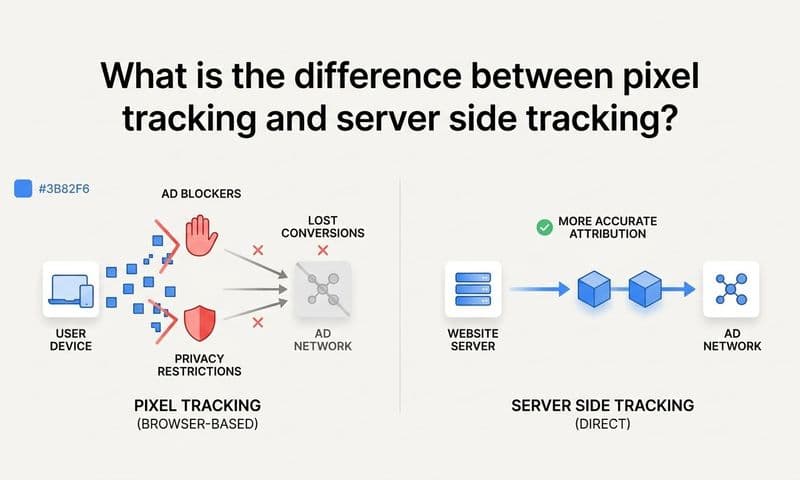
Browser-based tracking is under siege. Ad blockers, Intelligent Tracking Prevention in Safari, and cookie deprecation efforts all chip away at the data your pixel collects. The result is incomplete conversion data, skewed attribution, and ad platforms that optimize on signals that no longer reflect reality. Every missed conversion event is a missed optimization opportunity.
The Strategy Explained
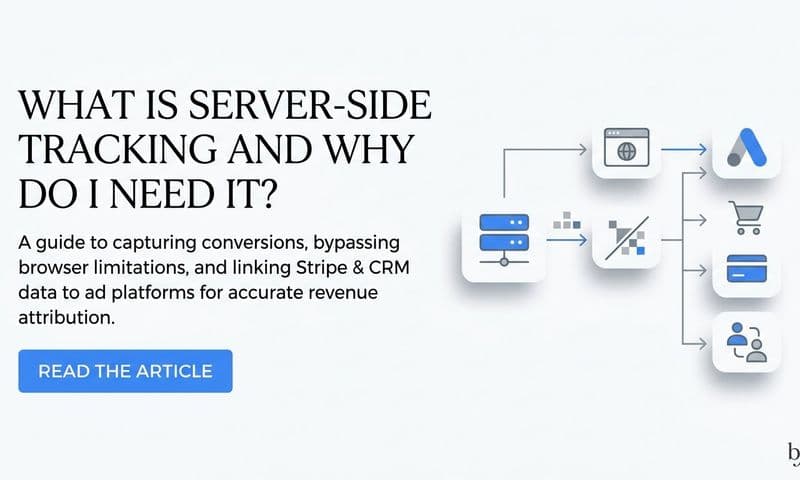
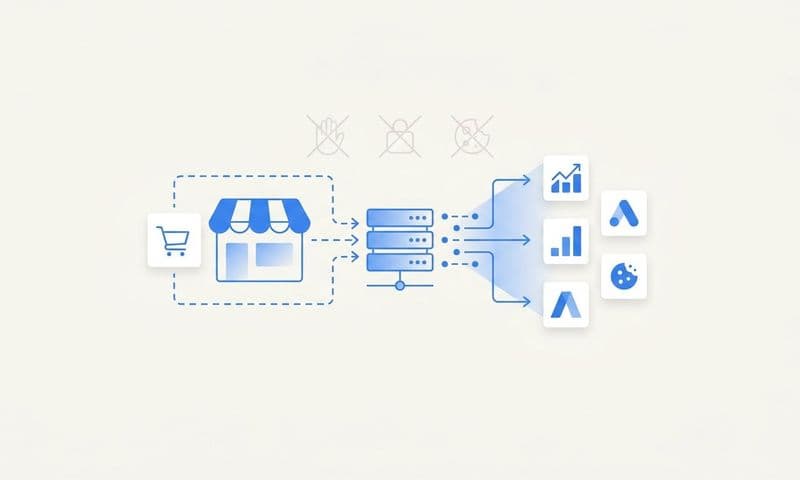
Server-side tracking moves data collection off the user's browser and onto your own server. Instead of a pixel firing in the browser where it can be blocked or degraded, your server captures the event and sends it directly to the ad platform. This bypasses ad blockers entirely and is unaffected by browser-level privacy restrictions. Understanding server-side tracking vs pixel tracking is essential for making this transition effectively.
Think of it like this: rather than having a conversation through a noisy, static-filled phone line, you are now communicating through a direct, private channel. The signal is cleaner, more complete, and far more reliable. You control what data gets sent, when it gets sent, and how it is formatted, giving you a level of data quality that client-side tracking simply cannot match in today's environment.
Implementation Steps
1. Set up a server-side tagging container using a platform like Google Tag Manager Server-Side or a dedicated tracking infrastructure.
2. Route your conversion events through your server before forwarding them to ad platforms like Meta, Google, and TikTok.
3. Ensure your server captures key first-party identifiers such as hashed email addresses or order IDs to improve event match quality.
4. Run your server-side setup in parallel with any existing browser-based tracking during a testing period to validate data parity.
Pro Tips
Host your server-side container on a subdomain of your own domain rather than a third-party domain. This signals to browsers that the tracking is first-party in nature, improving data collection further. Platforms like Cometly offer server-side tracking built directly into their attribution infrastructure, making this setup significantly more accessible for marketing teams without dedicated engineering resources.
2. First-Party Data Collection
The Challenge It Solves
Third-party data is disappearing. The targeting and measurement signals that marketers relied on for years, cross-site behavioral data, third-party audience segments, and shared identity graphs, are being systematically restricted. Without a strong first-party data foundation, your attribution becomes guesswork and your ad platform targeting loses precision over time.
The Strategy Explained
First-party data is information you collect directly from your customers and prospects through your own channels. This includes CRM records, purchase histories, email engagement, on-site behavioral events, and form submissions. Because you own this data and collected it with the user's knowledge, it is inherently privacy compliant and far more durable than any third-party alternative. For a deeper dive, explore our guide on understanding first-party data tracking.
The shift to first-party data is widely recognized across the marketing industry as the most sustainable path forward. Organizations like the IAB have published extensive guidance on this transition, and major ad platforms have built their measurement tools around the assumption that advertisers will supply first-party signals to supplement what the browser can no longer provide.
Implementation Steps
1. Audit your existing data collection touchpoints: website forms, checkout flows, loyalty programs, email sign-ups, and CRM integrations.
2. Implement on-site event tracking for key micro-conversions such as page views, button clicks, video plays, and scroll depth, all tied to identifiable user sessions where consent is given.
3. Connect your CRM to your attribution platform so that offline conversions and downstream revenue events enrich your ad performance data.
4. Establish a clear data taxonomy so that events are named and categorized consistently across every platform and tool in your stack.
Pro Tips
The quality of your first-party data matters as much as the quantity. Focus on capturing high-intent signals like purchases, demo requests, and subscription activations rather than just top-of-funnel page views. When you connect your CRM data to a platform like Cometly, you get a complete picture of the customer journey from the first ad click all the way through to closed revenue.
3. Multi-Touch Attribution Modeling
The Challenge It Solves
Last-click attribution was never accurate. It was just easy. In a privacy-constrained world where cross-site tracking is limited, relying on a single touchpoint to explain a conversion is even more misleading. Marketers who stick with last-click models end up over-investing in bottom-funnel channels and starving the awareness and consideration campaigns that actually build pipeline.
The Strategy Explained
Multi-touch attribution distributes conversion credit across every touchpoint in the customer journey, from the first ad impression to the final click before purchase. Instead of asking "which channel closed the deal," you are asking "which combination of channels and messages moved this customer toward conversion." Effective touchpoint attribution tracking is what makes this possible at scale.
Modern multi-touch models range from linear attribution, which splits credit equally, to time-decay models that weight recent touchpoints more heavily, to data-driven models that use machine learning to assign credit based on actual conversion patterns. Each model tells a different story, and the ability to compare them side by side is what gives you genuine strategic insight.
Implementation Steps
1. Define the conversion events you want to attribute: leads, purchases, demo bookings, or any other high-value action.
2. Map out the typical customer journey for your product or service, including which channels appear at each stage.
3. Choose an attribution model that fits your business model and sales cycle length, then test it against your existing last-click data to identify discrepancies.
4. Use your attribution insights to reallocate budget toward channels that contribute earlier in the funnel but have historically been undervalued.
Pro Tips
Do not just pick one model and commit to it permanently. The real value comes from comparing models over time. Cometly's multi-touch attribution capabilities let you view the same conversion data through multiple attribution lenses simultaneously, so you can make budget decisions based on a complete picture rather than a single, potentially misleading metric.
4. Conversion APIs and Direct Platform Integrations
The Challenge It Solves
When your browser pixel misses a conversion because of an ad blocker, a browser restriction, or a slow page load, that event disappears entirely from your ad platform's reporting. The algorithm never learns from it. Your cost-per-acquisition looks higher than it really is, and your campaigns optimize toward the wrong signals. Over time, this degrades targeting quality and inflates your ad spend. Understanding tracking pixel limitations and privacy updates helps explain why this problem is accelerating.
The Strategy Explained
Conversion APIs, including Meta's Conversions API (CAPI) and Google's Enhanced Conversions, allow you to send verified conversion events directly from your server to the ad platform, bypassing the browser entirely. Meta's own documentation notes that advertisers using CAPI alongside the pixel typically see improved event match quality, which directly benefits campaign optimization and audience targeting.
Google Enhanced Conversions works similarly, using hashed first-party data like email addresses and phone numbers to match conversions back to users who were exposed to your ads. Both approaches feed the ad platform's machine learning algorithms with higher-quality signals, which translates into better targeting, lower costs, and more accurate reporting.
Implementation Steps
1. Obtain API access credentials for each platform you advertise on: Meta Business Manager for CAPI, Google Ads for Enhanced Conversions, and TikTok Events API for TikTok.
2. Map your key conversion events to the standard event schema required by each platform to ensure proper matching and reporting.
3. Implement deduplication logic so that events captured by both your pixel and your server-side API are not double-counted in platform reporting.
4. Monitor event match quality scores in each platform's diagnostics dashboard and iterate on your data inputs to improve scores over time.
Pro Tips
The more customer data points you can include with each API event, such as hashed email, phone number, and order ID, the higher your match rate will be. Higher match rates mean better optimization signals for the ad platform. Cometly's Conversion Sync feature automates this process, sending enriched conversion events back to Meta, Google, and other platforms to improve their targeting and optimization without manual API management.
5. Consent-Based Tracking Frameworks
The Challenge It Solves
Privacy regulations including GDPR, CCPA, and a growing number of state-level US privacy laws make consent management a legal necessity. But beyond compliance, consent-based tracking frameworks present a real measurement challenge: when users decline tracking, you lose visibility into their conversion behavior. Without a structured approach to handling consent signals, your data becomes inconsistent and your attribution unreliable.
The Strategy Explained
Consent-based tracking frameworks use Consent Management Platforms (CMPs) to collect, store, and communicate user consent preferences to your tracking tools. Google Consent Mode v2, which has become increasingly important for advertisers operating in the EU and beyond, adjusts how Google tags behave based on the user's consent status. When consent is not given, Google uses modeled conversions to fill in the gaps rather than simply dropping the data entirely.
This approach lets you collect high-quality, fully consented data from users who opt in while still maintaining a modeled view of conversion activity from users who decline. Exploring the broader landscape of conversion tracking methods helps contextualize where consent frameworks fit within your overall measurement strategy.
Implementation Steps
1. Select a CMP that integrates with your tag management system and supports IAB TCF 2.2 compliance for GDPR markets.
2. Implement Google Consent Mode v2 by connecting your CMP to your Google tags so that consent signals are passed automatically.
3. Design your consent banner for clarity and accessibility, making it easy for users to understand what they are consenting to and how to change their preferences.
4. Audit your tag firing rules to ensure that no tracking fires before consent is given for users in regulated jurisdictions.
Pro Tips
Consent rate optimization is a real discipline. The design, copy, and placement of your consent banner significantly affect how many users opt in. A clear, transparent explanation of why you collect data and how it benefits the user typically outperforms a legalistic, jargon-heavy banner. Higher opt-in rates mean more usable data and better attribution accuracy across the board.
6. Probabilistic and Modeled Attribution
The Challenge It Solves
Even with server-side tracking and consent frameworks in place, there will always be gaps in your deterministic data. Some users decline consent, some conversions happen across devices without a common identifier, and some touchpoints occur in environments where direct tracking is simply not possible. Without a strategy for these gaps, you end up with attribution blind spots that distort your understanding of campaign performance.
The Strategy Explained
Probabilistic and modeled attribution uses AI and aggregated signals to estimate conversion paths when direct tracking data is unavailable. Rather than ignoring the conversions that fall outside your deterministic tracking window, modeled attribution uses statistical inference to fill in the gaps based on patterns in the data you do have.
This is the same approach that Google uses with its modeled conversions in Consent Mode, and it is increasingly how sophisticated marketers think about measurement in a privacy-first world. You are not fabricating data; you are using the signals available to make statistically sound estimates about the conversions you cannot directly observe. Investing in the right revenue attribution tracking tools is critical for making modeled attribution actionable.
Implementation Steps
1. Identify the gaps in your deterministic attribution data by comparing your tracked conversions against your actual revenue or lead volume from your CRM.
2. Enable modeled conversion features in your ad platforms, including Google's Consent Mode modeled conversions and Meta's advanced matching, to capture estimated conversions from non-consenting users.
3. Use a marketing mix modeling (MMM) approach for upper-funnel channels like display and video where direct attribution is inherently difficult.
4. Calibrate your probabilistic models regularly by comparing modeled estimates against periods where you have more complete data.
Pro Tips
Modeled attribution works best when it is layered on top of strong deterministic data, not used as a replacement for it. The more high-quality first-party signals you feed into your models, the more accurate the estimates become. Platforms like Cometly use AI to surface attribution insights across your entire campaign mix, helping you understand performance even in the gaps where direct tracking is limited.
7. UTM Parameters and Click ID Tracking
The Challenge It Solves
Many marketers overlook the simplest privacy compliant tracking method available to them. UTM parameters require no cookies, no cross-site tracking, and no user consent to function. They work by appending campaign data directly to the URL, making them inherently transparent and privacy-friendly. Yet without a consistent UTM strategy, your analytics data becomes fragmented and unreliable, with traffic misattributed to direct or organic when it actually came from paid campaigns.
The Strategy Explained
UTM parameters are structured URL tags that pass campaign information directly into your analytics platform when a user clicks a link. A properly tagged URL tells your analytics system exactly which campaign, ad set, ad, and channel drove that visit, regardless of what happens to cookies or browser tracking after the click. Our guide on UTM parameter tracking best practices covers the naming conventions and strategies that prevent common mistakes.
Click IDs, such as Google's GCLID and Meta's FBCLID, work similarly but are generated automatically by the ad platform and can be captured server-side to match ad clicks to conversions. Together, UTM parameters and click IDs form a lightweight, cookie-independent tracking layer that complements your server-side and first-party data strategies without adding privacy risk.
Implementation Steps
1. Establish a consistent UTM naming convention for your organization covering utm_source, utm_medium, utm_campaign, utm_content, and utm_term across all paid and owned channels.
2. Create a UTM builder template or spreadsheet that your team uses to generate tagged URLs, ensuring consistency and preventing naming errors.
3. Enable auto-tagging in Google Ads to capture GCLIDs automatically, and configure your server-side tracking to store click IDs for later conversion matching.
4. Audit your UTM data in your analytics platform regularly to identify untagged traffic sources, broken parameters, or inconsistent naming that is fragmenting your attribution data.
Pro Tips
UTM parameters are only as useful as the discipline behind them. A single team member using a different naming convention can create a separate traffic bucket in your analytics that obscures real performance data. Document your conventions, enforce them through templates, and audit them quarterly. When UTM data flows cleanly into a platform like Cometly, it becomes a powerful layer of your overall attribution stack, connecting ad clicks to full customer journey data across every channel.
Bringing It All Together: Your Privacy-First Tracking Roadmap
These seven methods are not competing approaches. They are complementary layers of a complete, privacy-compliant tracking stack that works together to give you accurate, actionable marketing data in a world where invasive tracking is no longer viable or acceptable.
Think of it as a foundation with layers built on top. Server-side tracking and first-party data collection form the base. Without these two elements in place, everything else is built on sand. Once your foundation is solid, you layer on conversion APIs to feed better signals back to ad platforms, consent frameworks to ensure regulatory compliance, and UTM structures to maintain clean campaign-level attribution across every channel.
Probabilistic and modeled attribution fills the inevitable gaps that remain, while multi-touch attribution modeling ensures that the data you do have is interpreted accurately rather than distorted by oversimplified last-click logic.
Recommended implementation order:
1. Start with server-side tracking to stabilize your data collection and bypass browser-level restrictions.
2. Build your first-party data infrastructure by connecting your CRM, purchase data, and on-site events.
3. Implement conversion APIs for Meta, Google, and any other platforms you actively advertise on.
4. Deploy a consent management framework and configure Google Consent Mode v2 for regulated markets.
5. Establish a consistent UTM and click ID strategy across all campaigns and channels.
6. Layer on multi-touch attribution modeling to interpret your data more accurately.
7. Incorporate probabilistic and modeled attribution to fill remaining gaps.
The good news is that you do not need to build and manage all of these layers independently. Cometly brings these methods together in a single platform, connecting your ad platforms, CRM, and website data to track the full customer journey accurately and in line with modern privacy standards. From server-side tracking and conversion sync to multi-touch attribution and AI-powered recommendations, it is built for marketers who need clarity and confidence in their data.
Ready to elevate your marketing game with precision and confidence? Discover how Cometly's AI-driven recommendations can transform your ad strategy. Get your free demo today and start capturing every touchpoint to maximize your conversions.