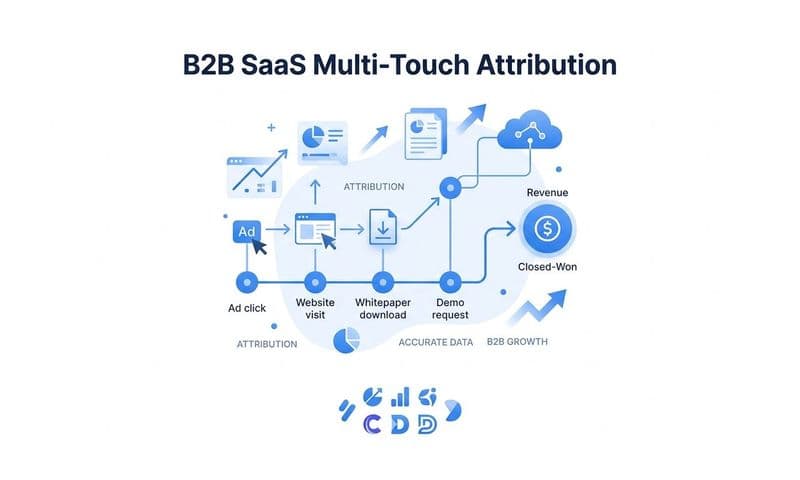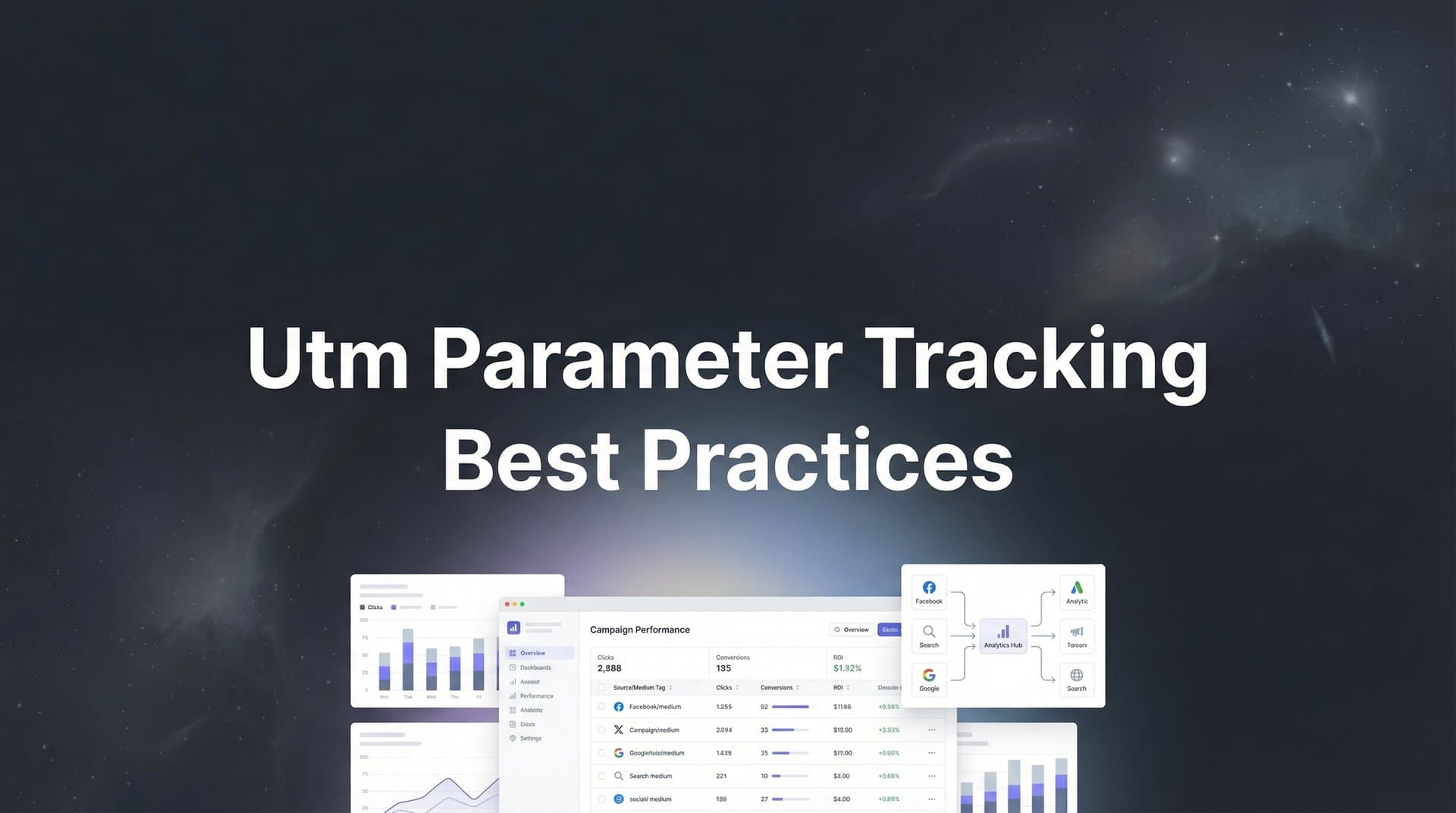
Every click on your paid ads tells a story—but without proper UTM parameter tracking, that story gets lost before it reaches your analytics. You're spending thousands on campaigns across Meta, Google, LinkedIn, and more, yet when it comes time to prove ROI, the data is fragmented, inconsistent, or simply missing.
UTM parameters are the foundation of accurate marketing attribution, connecting every ad click to the conversions that matter. When implemented correctly, they reveal exactly which campaigns, ads, and channels drive revenue—not just traffic.
Think of UTM parameters as the digital breadcrumbs that follow your customers from their first click to their final purchase. Without them, you're flying blind—guessing which campaigns work and which ones drain your budget. With them, you have a clear map of exactly what's driving results.
This guide walks you through the essential steps to build a UTM tracking system that actually works, from establishing naming conventions to validating your data flow. Whether you're setting up tracking for the first time or fixing a broken system, you'll leave with a practical framework you can implement today.
Step 1: Audit Your Current Tracking Setup and Identify Gaps
Before you build something new, you need to understand what you're working with. Start by pulling up every active campaign across your ad platforms and examining the destination URLs. You're looking for patterns, inconsistencies, and gaps.
Open a spreadsheet and document what you find. Check Meta Ads, Google Ads, LinkedIn, email campaigns—anywhere you're driving traffic. Look specifically at how UTM parameters are currently being used. You'll likely discover chaos: 'facebook' in some campaigns, 'Facebook' in others, 'fb' in a few more. Maybe some campaigns use underscores while others use hyphens. Perhaps entire campaigns are running without UTM parameters at all.
This inconsistency isn't just messy—it's expensive. When your analytics platform sees 'facebook', 'Facebook', and 'fb' as three different sources, your reporting becomes fragmented. You can't accurately measure which platform performs best because the data is split across multiple buckets.
Next, map your data flow from click to conversion. Click one of your tracked links and watch where the data goes. Does it show up in Google Analytics? Does it make it to your CRM when someone fills out a form? This is where you'll discover the real problems.
Common breaking points include redirect services that strip parameters, landing page builders that don't preserve query strings, and checkout flows that lose tracking data between steps. Mobile app handoffs are particularly problematic—when someone clicks an ad on mobile and opens your app, UTM parameters often vanish entirely. If you're experiencing these issues, our guide on UTM parameters not working properly can help you diagnose specific problems.
Document everything you find: which campaigns lack tracking, where parameters get stripped, and which conversion points aren't capturing source data. This audit becomes your roadmap for what needs fixing. The goal isn't perfection yet—it's visibility into the current state so you know exactly what to address.
Step 2: Establish a Standardized UTM Naming Convention
Consistency is everything in UTM tracking. Without clear rules, every team member will create their own system, and you'll end up with the same chaos you just audited. Your naming convention needs to be simple enough that anyone can follow it, yet detailed enough to provide meaningful insights.
Start with the five standard UTM parameters and define exactly how each one should be used. For utm_source, identify the platform: google, meta, linkedin, twitter. For utm_medium, specify the traffic type: cpc, social, email, display. The utm_campaign parameter should identify the specific campaign, like spring-sale-2026 or product-launch-q1.
Here's where most teams go wrong: they don't establish case rules. Pick lowercase and stick with it. Always. When you mix 'Google' and 'google', your analytics treats them as separate sources, splitting your data. The same goes for separators—choose either hyphens or underscores for spaces, then use that choice everywhere. If you pick hyphens, 'spring-sale' becomes your standard, not 'spring_sale' or 'SpringSale'.
Build a taxonomy document that serves as your team's single source of truth. This isn't just a suggestion—it's a requirement. Include approved values for each parameter. For utm_source, list every platform you advertise on. For utm_medium, define the exact terms you'll use: cpc for paid search, social for organic social posts, paid-social for social ads, email for email campaigns. Our comprehensive UTM parameter best practices guide provides detailed frameworks you can adapt for your organization.
Add date or quarter codes to campaign names for time-based analysis. Instead of just 'product-launch', use 'product-launch-2026q1'. This makes it trivially easy to compare performance across quarters or identify seasonal patterns. When you're analyzing data six months from now, you'll thank yourself for this clarity.
For utm_content, establish how you'll differentiate ad variations. Use descriptive identifiers like 'video-testimonial' or 'carousel-features' rather than vague labels like 'ad1' or 'version-a'. Future you needs to understand what performed well without having to cross-reference a dozen spreadsheets.
The utm_term parameter works best for paid search keywords, but you can adapt it for other targeting criteria. If you're running Facebook ads, use it to capture audience segments like 'lookalike-purchasers' or 'retargeting-cart-abandoners'. This level of detail becomes invaluable when optimizing campaigns.
Document all of this in a shared location—a Google Doc, Notion page, or internal wiki that every team member can access. Include examples of properly formatted URLs so there's no ambiguity. When someone new joins the team or you're rushing to launch a campaign, this document ensures consistency without requiring tribal knowledge.
Step 3: Build a UTM Generation and Management System
Now that you have rules, you need a system that enforces them. Relying on manual URL building guarantees errors—someone will forget a parameter, misspell a campaign name, or use the wrong case. Automation and validation are your friends here.
Create a centralized spreadsheet that serves as your URL builder and tracking repository. Set up columns for each UTM parameter with dropdown menus that only allow approved values from your taxonomy. When someone needs to create a tracked URL, they select from predefined options rather than typing freeform text. This single change eliminates 90% of naming inconsistencies.
Add data validation rules that catch common errors before they happen. Set character restrictions that prevent spaces, force lowercase, and block special characters that break URLs. Include a formula that automatically generates the full tracked URL based on the selected parameters, so there's no manual concatenation where mistakes creep in.
Store every generated URL in this shared document with metadata about when it was created, who created it, and where it's being used. This prevents duplicate URLs and gives you a complete audit trail. When a campaign underperforms, you can trace back to the exact URL and verify the tracking was set up correctly.
Consider using dynamic UTM parameters where platforms support them. Meta Ads allows variables like {{campaign.name}} and {{adset.name}} that auto-populate with actual campaign details. Google Ads offers ValueTrack parameters like {campaignid} and {keyword}. These dynamic values reduce manual work and ensure accuracy—the platform itself fills in the details, so there's no room for typos.
For teams running high volumes of campaigns, purpose-built UTM tracking tools can streamline this further. Look for solutions that integrate with your ad platforms, enforce your naming conventions automatically, and provide a searchable database of all tracked URLs. The investment pays for itself in time saved and errors prevented.
Set up a regular review process—weekly or monthly—where you audit newly created URLs against your standards. Catch drift early before bad habits become entrenched. If you notice team members consistently making the same mistakes, update your system to prevent those errors automatically rather than relying on training alone. For a detailed comparison of available solutions, check out our UTM parameter management tools comparison.
Step 4: Implement Server-Side Tracking to Preserve UTM Data
Client-side tracking—the traditional method where JavaScript in the browser captures UTM parameters—is increasingly unreliable. Browser privacy features, ad blockers, and iOS restrictions strip or block tracking data before it reaches your analytics. If you're relying solely on client-side tracking, you're losing visibility into a significant portion of your traffic.
Server-side tracking solves this by capturing UTM parameters on your server before browsers can interfere. When someone clicks a tracked link, your server receives the request with all UTM parameters intact. It stores this data in first-party cookies or session storage, then passes it through every step of the customer journey—form submissions, checkout pages, CRM entries.
Here's why this matters: when a visitor clicks your ad with UTM parameters, browses your site, then returns three days later through a direct visit to complete a purchase, client-side tracking loses the original source. Server-side tracking preserves it. The UTM data captured on that first visit persists through the entire journey, so you can accurately attribute the conversion to the original campaign.
Implementation requires coordination between your marketing and development teams. Your server needs to parse incoming URLs for UTM parameters, store them in first-party cookies with appropriate expiration windows, and include them in data sent to your analytics platform and CRM. Most modern marketing platforms and CDPs offer server-side tracking capabilities that handle this automatically. Our first-party data tracking setup guide walks through the technical implementation in detail.
Configure your website to pass UTM data through form submissions. When someone fills out a lead form, include hidden fields that capture the stored UTM parameters and submit them along with the contact information. This ensures your CRM knows exactly which campaign generated each lead, enabling accurate ROI calculation at the source level.
For e-commerce sites, pass UTM data through the entire checkout flow. Store the parameters when someone adds an item to their cart, preserve them through each checkout step, and include them in the final transaction data. This creates an unbroken chain from ad click to revenue, even if the purchase happens days after the initial visit.
Connect your UTM data to your CRM so you can attribute revenue back to specific campaigns. When a lead converts to a customer, your CRM should record which utm_source, utm_campaign, and utm_content brought them in. This closes the loop between marketing spend and actual revenue, not just conversions or leads.
Server-side tracking also helps you comply with privacy regulations while maintaining attribution accuracy. Since you're using first-party cookies and your own server infrastructure, you have more control over data collection and can implement proper consent management without losing all tracking capability.
Step 5: Configure Your Analytics Platform to Capture UTM Parameters Correctly
Having UTM parameters in your URLs means nothing if your analytics platform isn't configured to capture and organize them properly. Google Analytics 4, Adobe Analytics, or whatever platform you use needs the right setup to turn those parameters into actionable insights.
Start by verifying that your analytics platform is actually parsing UTM parameters into the correct dimensions. In Google Analytics 4, UTM parameters automatically populate the Session source, Session medium, and Session campaign dimensions. But you need to check that this is happening correctly—don't assume it works without testing. For deeper insights into GA4 configuration, our guide on event tracking in Google Analytics covers essential setup steps.
Set up channel groupings that align with your utm_medium naming conventions. If you're using 'cpc' for paid search, 'paid-social' for social ads, and 'email' for email campaigns, configure your channel groupings to recognize these exact terms. Default channel groupings often miss custom medium values, lumping everything into 'Other' and making your reporting useless.
Create custom reports that show campaign performance alongside conversion data. Build views that display utm_source, utm_campaign, and utm_content with metrics like sessions, conversion rate, and revenue. This gives you a clear picture of what's working without having to dig through multiple reports or export data to spreadsheets.
Configure custom dimensions if you need to track additional parameters beyond the standard five. Some teams add parameters like utm_audience for targeting segments or utm_placement for ad placements. Set these up as custom dimensions in your analytics platform so they're captured and available for reporting.
Test parameter capture by clicking your own tracked links and verifying the data appears correctly in your analytics. Open an incognito window, click a tracked URL, complete a conversion, then check your analytics platform to confirm the UTM parameters were recorded. Do this for multiple campaign types—paid search, social ads, email—to verify everything works across channels.
Set up conversion tracking that ties back to UTM parameters. When someone completes a goal—form submission, purchase, signup—your analytics should record which campaign drove that conversion. This requires proper goal configuration and event tracking, not just pageview tracking. Learn more about implementing this correctly in our best practices for tracking conversions accurately.
Monitor data quality regularly. Set up automated reports that flag campaigns with missing UTM parameters or unusual patterns. If you suddenly see a spike in 'direct' traffic, it often means tracking broke somewhere and you're losing attribution data. Catch these issues quickly before they corrupt weeks of campaign data.
Step 6: Validate Your Tracking and Troubleshoot Common Issues
Theory and practice diverge quickly in marketing attribution. You've built a system, but now you need to prove it works end-to-end under real conditions. Validation isn't a one-time task—it's an ongoing process of testing, monitoring, and fixing.
Run complete end-to-end tests that simulate real customer journeys. Click a tracked link from an ad, browse your site, fill out a form or complete a purchase, then verify the UTM data flows correctly to both your analytics platform and your CRM. Check that the source attribution matches what you expect—if you clicked a Meta ad, your CRM should show utm_source=meta.
Test across different devices and browsers. What works perfectly on desktop Chrome might break on mobile Safari due to iOS tracking restrictions. Click your tracked links on iPhone, Android, desktop, and tablet. Complete conversions on each platform and verify the data flows through correctly every time.
Check for parameter stripping by redirects, landing page builders, or payment processors. Some tools strip query strings from URLs as part of their processing. If you're using a redirect service, landing page platform like Unbounce or Leadpages, or a payment processor like Stripe, test whether UTM parameters survive the handoff. If they don't, you need to configure these tools to preserve query strings or find alternative solutions.
Monitor for data discrepancies between ad platforms and your analytics. Some gap is normal—ad platforms count clicks differently than analytics platforms count sessions, and not every click results in a page load. But large gaps indicate tracking problems. If Meta reports 1,000 clicks but your analytics shows only 300 sessions from Meta, something is broken.
Common culprits for data loss include aggressive bot filtering, slow page load times that cause users to bounce before tracking fires, and misconfigured tracking codes. Check your analytics setup, verify your tracking code is installed correctly on all pages, and review any bot filtering rules that might be too aggressive.
Set up alerts for campaigns running without UTM parameters. Create a report that shows traffic sources and flag any campaigns that appear as 'direct' or 'untracked' when they should have UTM data. This catches mistakes early—if someone launches a campaign without proper tracking, you'll know within hours, not weeks.
Document common issues and solutions in your team wiki. When you discover that your landing page builder strips parameters, document the fix. When you find that mobile app handoffs lose tracking data, record the workaround. Build institutional knowledge so you don't solve the same problem repeatedly.
Review attribution data weekly during the first month after implementing your new system. Look for patterns that don't make sense—if a high-performing campaign suddenly shows zero conversions, that's a tracking issue, not a performance issue. Catch these anomalies quickly and investigate before they skew your optimization decisions. For teams managing campaigns across multiple platforms, our attribution tracking for multiple campaigns resource provides additional troubleshooting strategies.
UTM Parameters for Affiliate Marketing: Cookie Windows, Deep Linking, and Tracking Schema
Affiliate marketing introduces tracking complexity that goes beyond standard UTM parameters. When a third-party publisher drives a click, you're no longer controlling the entire tracking chain — the affiliate link, the landing page redirect, and the attribution window all interact in ways that can silently break your data. Here's how to build an affiliate tracking setup that's both accurate and resilient.
Layering UTM Parameters on Affiliate Links
Affiliate networks generate their own tracking links, but those links alone won't tell you anything useful in your analytics platform. Always append UTM parameters to the destination URL that the affiliate link resolves to. A well-structured affiliate UTM looks like this:
utm_source=affiliatename
utm_medium=affiliate
utm_campaign=campaign-name-2026q2utm_content=placement-or-creative-id
Use utm_medium=affiliate consistently across all affiliate traffic so your channel groupings can aggregate affiliate performance cleanly. Follow the same lowercase, hyphen-separated naming convention you use for paid channels — affiliate data ends up in the same analytics platform, and inconsistency creates the same fragmented reporting problems.
Cookie Window Strategy
The cookie window (also called the attribution window or lookback window) determines how long after a click the affiliate receives credit for a conversion. Most affiliate programs use 30-day cookies, but the right window depends on your sales cycle. SaaS products with longer consideration phases often benefit from 60- or 90-day windows; impulse-purchase e-commerce products can use shorter 7-day windows without under-crediting affiliates.
Configure your cookie window in your affiliate platform, but also align it with the attribution windows you use in your paid ad platforms and analytics tool. Mismatched windows create a situation where one source claims credit for a conversion the other also claims — inflating assisted conversion counts and distorting your ROI calculations. Server-side tracking (covered in Step 4) is especially valuable here: first-party cookies you set server-side persist through browser sessions and can carry affiliate source data through the entire conversion journey.
Deep Linking for Mobile and App Traffic
When affiliate traffic comes from mobile and your product has a native app, standard HTTP links break the tracking chain. The user taps the affiliate link on their phone, the system opens your app instead of a browser, and the UTM parameters in the URL are never read — because apps don't parse query strings the way browsers do.
Deep links solve this by routing mobile users directly into specific screens of your app while preserving attribution data. Use a deep linking solution (Branch, AppsFlyer, Adjust, or similar) to create links that detect the device context and route accordingly: browser users get a normal web landing page with UTM parameters intact; mobile users with the app installed are deep-linked into the app with the attribution data handed off via the deep linking SDK. This is non-negotiable if a meaningful portion of your affiliate traffic converts on mobile.
Affiliate Tracking Schema Best Practices
A tracking schema is the documented system of conventions that governs how every affiliate link is built, tagged, and stored. Without a schema, different affiliate managers create URLs differently, sub-IDs conflict, and reporting becomes unreliable. Build your affiliate tracking schema around these elements:
- Sub-ID fields: Most affiliate networks allow sub-IDs (sometimes called sub1, sub2, aff_sub) appended to the affiliate link. Use these to pass granular data like the publisher's placement ID, the specific content page, or the creative variant — information that can't live in UTM parameters because the affiliate network controls the top-level link.
- Postback / server-to-server (S2S) pixels: Rather than relying on browser-based pixels to fire on your confirmation page, configure server-to-server postbacks that fire from your server when a conversion occurs. S2S postbacks are immune to ad blockers, browser privacy settings, and JavaScript errors — the same reliability benefits as server-side UTM tracking.
- Click ID passthrough: Major affiliate networks generate a unique click ID per click (ClickBank's
tid, Commission Junction'scjevent, Impact'sirclickid). Capture this ID in a hidden field on your landing page, store it alongside the UTM parameters in your first-party cookie, and include it in your CRM record. When a conversion dispute arises, the click ID is the ground truth that resolves it.
For teams managing affiliate programs at scale, pairing a dedicated affiliate platform with a marketing attribution tool like Cometly creates a closed loop: UTM and sub-ID data flows into Cometly's attribution model, so affiliate-driven revenue appears alongside paid search and social revenue in one unified view — no more reconciling spreadsheets from three different platforms.
Putting It All Together
Solid UTM tracking transforms your marketing data from guesswork into actionable intelligence. With a standardized naming convention, centralized management system, and server-side tracking in place, you can finally connect every ad dollar to actual revenue.
Here's your quick checklist before you launch: audit complete, naming convention documented, URL builder created, server-side tracking configured, analytics validated, and end-to-end test passed. If you can check all six boxes, you're ready to track campaigns with confidence.
The difference between good tracking and great tracking isn't complexity—it's consistency. Teams that succeed with UTM parameters don't use fancy tools or complicated systems. They establish clear rules, build simple processes that enforce those rules, and validate regularly that everything works as expected.
Remember that UTM tracking is a foundation, not the finish line. These parameters capture where traffic comes from, but connecting that to revenue requires proper conversion tracking, CRM integration, and attribution modeling. Each piece builds on the last to create a complete picture of marketing performance. For a deeper understanding of how these elements work together, explore our attribution marketing tracking complete guide.
Platforms like Cometly take this foundation further by automatically capturing every touchpoint—including UTM data—and connecting it to CRM conversions, so you can see exactly which campaigns drive revenue without manual data stitching. The AI analyzes your complete customer journey, identifies high-performing campaigns across every channel, and sends enriched conversion data back to ad platforms to improve their optimization algorithms.
Start with step one today, and build from there. Audit your current setup this week. Document your naming convention next week. Build your URL management system the week after. Progress compounds—each step makes the next one easier and more valuable.
Ready to elevate your marketing game with precision and confidence? Discover how Cometly's AI-driven recommendations can transform your ad strategy—Get your free demo today and start capturing every touchpoint to maximize your conversions.