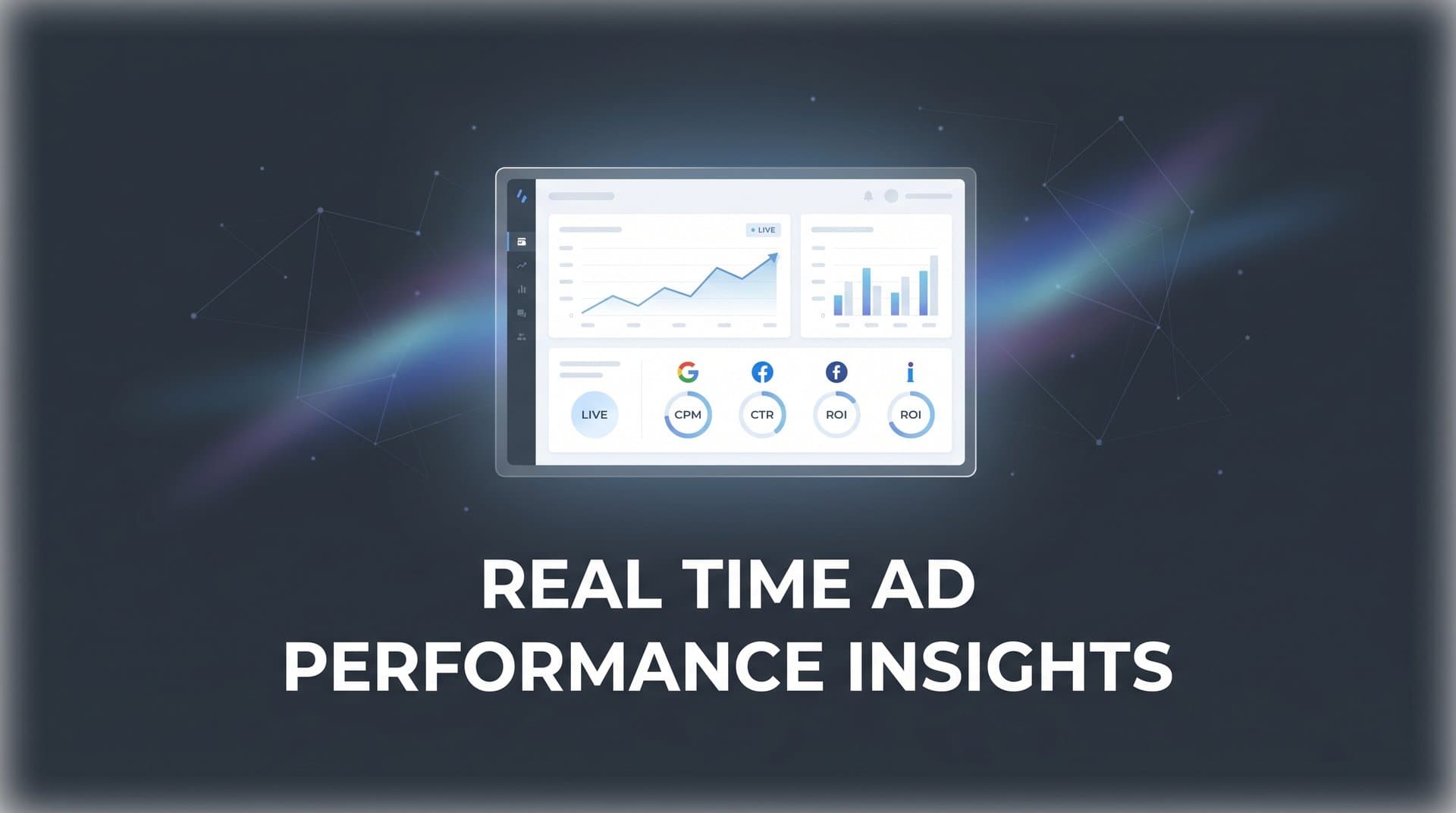
Digital marketers face a critical challenge: by the time traditional reports reveal underperforming campaigns, budget has already been wasted. Real time ad performance insights change this dynamic entirely, allowing teams to spot issues as they emerge and capitalize on winning creative before momentum fades.
This guide explores seven actionable strategies that help marketing teams transform live data into immediate, revenue-driving decisions. Whether you're managing campaigns across Meta, Google, TikTok, or multiple platforms simultaneously, these approaches will help you move from reactive reporting to proactive optimization.
1. Unify Cross-Platform Data Into a Single Live Dashboard
The Challenge It Solves
Most marketing teams waste hours each day switching between Meta Ads Manager, Google Ads, TikTok Ads, and analytics platforms. By the time you've opened four tabs, checked yesterday's performance, and compared metrics across platforms, you've lost valuable optimization time. More critically, this fragmented view creates blind spots where budget bleeds across underperforming channels while you're focused elsewhere.
The Strategy Explained
A unified dashboard consolidates all your advertising platforms into one continuously updating view. Instead of logging into separate interfaces, you see Meta, Google, TikTok, LinkedIn, and other channels side by side with standardized metrics. This approach eliminates the context-switching that slows decision-making and ensures you're comparing apples to apples across platforms.
The key is choosing a solution that pulls data directly from platform APIs and refreshes automatically throughout the day. You should be able to glance at one screen and immediately identify which campaigns are driving results and which are consuming budget without returns. A real-time marketing analytics dashboard makes this possible.
Implementation Steps
1. Connect all active advertising platforms to your attribution system using API integrations that support real-time data sync.
2. Standardize your key performance indicators across platforms so cost per acquisition, return on ad spend, and conversion rates use consistent calculation methods.
3. Configure your dashboard layout to prioritize the metrics that drive your specific business decisions, placing high-level performance summaries at the top with drill-down capabilities for detailed analysis.
Pro Tips
Set your dashboard to auto-refresh every 15-30 minutes during active campaign hours. Create separate views for different stakeholders: executives need high-level ROAS and revenue, while campaign managers need granular creative and audience performance. Save time by building custom filters that let you instantly view specific product lines, geographic markets, or campaign types without rebuilding reports.
2. Set Dynamic Alert Thresholds Based on Historical Performance
The Challenge It Solves
Static alerts create two problems: alert fatigue and missed opportunities. When you set a blanket rule like "notify me if cost per lead exceeds $50," you'll get bombarded with notifications for campaigns where $50 is actually excellent performance while missing red flags in campaigns that should deliver $15 leads. Your inbox fills with noise while real issues slip through.
The Strategy Explained
Dynamic alerts adapt to each campaign's unique performance baseline. Instead of arbitrary thresholds, these intelligent notifications trigger when a campaign deviates significantly from its own historical patterns. A campaign that typically delivers $30 cost per acquisition would alert you if it suddenly jumps to $45, while a different campaign with a $100 baseline wouldn't trigger false alarms at $45.
This approach recognizes that different products, audiences, and campaign objectives have different economics. Your brand awareness campaigns will never match your retargeting performance, and that's expected. Dynamic thresholds account for these differences automatically. Understanding real-time campaign performance monitoring helps you implement these intelligent alert systems.
Implementation Steps
1. Establish performance baselines by analyzing at least 30 days of historical data for each active campaign, calculating average metrics and standard deviation ranges.
2. Configure alerts to trigger when performance deviates by a meaningful percentage from the campaign-specific baseline, typically 20-30% for cost metrics and 15-25% for conversion rates.
3. Layer in time-based logic that accounts for day-of-week patterns and known seasonal variations, preventing false alerts during expected fluctuations.
Pro Tips
Start with a higher deviation threshold (30-40%) and gradually tighten it as you build confidence in your baseline data. Create separate alert channels for different severity levels: Slack for immediate attention items, email for notable changes worth reviewing, and weekly summaries for minor deviations. Review your alert accuracy monthly and adjust thresholds for campaigns that consistently trigger false positives.
3. Connect Ad Clicks to Downstream Revenue Events in Real Time
The Challenge It Solves
Ad platforms show you clicks and reported conversions, but there's often a significant gap between what Meta or Google claims as a conversion and what actually closes in your CRM. You might see 100 "conversions" in your ads dashboard while your sales team only logged 60 actual customers. This disconnect makes it impossible to know which campaigns truly drive revenue versus which just generate activity.
The Strategy Explained
Real-time revenue tracking connects the dots between ad clicks and actual business outcomes as they happen. When someone clicks your ad, fills out a form, and eventually becomes a paying customer, you see that complete journey linked together with the specific ad, creative, and keyword that started it. This goes beyond platform pixel tracking by synchronizing your CRM, payment processor, and ad platforms into one unified view.
The "real time" aspect means you're not waiting for nightly data syncs or manual exports. When a deal closes in your CRM at 2 PM, your attribution system reflects that revenue and connects it back to the originating ad campaign within minutes. Implementing real-time attribution tracking makes this seamless connection possible.
Implementation Steps
1. Implement server-side tracking that captures user actions beyond what browser-based pixels can detect, ensuring you track the complete customer journey even when cookies are blocked or users switch devices.
2. Integrate your CRM system with your attribution platform using webhooks or API connections that push conversion events immediately when deals progress through your sales pipeline.
3. Map your internal conversion definitions to match how you actually define success in your business, whether that's demo bookings, qualified leads, trial starts, or closed revenue.
Pro Tips
Tag your CRM records with UTM parameters and click IDs from ad platforms so you can trace revenue back to specific campaigns even weeks after the initial click. Build custom conversion events for each stage of your funnel (lead, qualified, opportunity, customer) rather than just tracking top-of-funnel form fills. This granularity helps you identify which campaigns drive quality leads versus volume.
4. Implement Rapid Creative Testing Cycles Using Live Feedback
The Challenge It Solves
Traditional creative testing requires weeks of data collection before you can confidently declare a winner. Meanwhile, losing creative variants continue consuming budget, and winning concepts sit in your design queue waiting for "statistically significant" results. By the time you identify what works, audience fatigue has already begun setting in, or market conditions have shifted.
The Strategy Explained
Rapid creative testing uses real-time engagement signals to identify patterns earlier in the testing cycle. Instead of waiting for conversion volume, you monitor early indicators like click-through rates, engagement rates, and time-to-first-action that reveal creative effectiveness within the first 24-48 hours. When a new ad variant shows significantly stronger engagement than your control, you can allocate more budget immediately rather than waiting for statistical certainty.
This approach doesn't eliminate proper testing methodology, but it helps you make faster directional decisions. You're still validating with conversion data, but you're not burning budget on obvious losers while you wait for perfect sample sizes. Learning how to improve Facebook Ads performance with data can accelerate your creative testing cycles significantly.
Implementation Steps
1. Launch new creative variants with equal budget allocation and monitor engagement metrics hourly during the first 24 hours to identify clear patterns before they impact your overall campaign performance.
2. Establish early-signal thresholds based on your historical data, such as click-through rates that are 50% below your account average or engagement rates in the bottom quartile of your creative library.
3. Create a decision framework that pauses underperforming variants quickly while allowing promising creative to scale budget gradually as conversion data validates the engagement signals.
Pro Tips
Test one variable at a time (headline, image, call-to-action) so you can identify which specific elements drive performance improvements. Keep a creative performance library that tracks which concepts, formats, and messaging angles have historically worked for your audience. Use these patterns to inform new creative development rather than starting from scratch each time.
5. Shift Budget Allocation Based on Intraday Performance Patterns
The Challenge It Solves
Most marketers set daily budgets and let platforms spend evenly throughout the day, but conversion rates rarely distribute evenly across hours. You might be spending 20% of your budget during morning hours when your conversion rate is half what it is during evening peak times. This misalignment between spend timing and conversion probability means you're either missing opportunities during high-performance windows or wasting budget during low-converting hours.
The Strategy Explained
Intraday optimization identifies when your specific audience is most likely to convert and adjusts budget pacing to concentrate spend during those windows. By analyzing conversion patterns by hour of day and day of week, you discover that perhaps Tuesday evenings convert at 3x your account average while Saturday mornings consistently underperform. Armed with this knowledge, you can use dayparting strategies or manual budget adjustments to align spending with opportunity.
Real-time monitoring makes this possible because you can see performance patterns as they unfold rather than discovering them in yesterday's reports. When Thursday afternoon starts outperforming expectations, you can increase budgets immediately to capitalize on the momentum. Explore real-time ad budget optimization strategies to master this approach.
Implementation Steps
1. Analyze at least 60 days of conversion data segmented by hour of day and day of week to identify statistically meaningful patterns in your audience behavior.
2. Configure ad scheduling rules that increase budgets by 25-50% during your highest-converting time windows while reducing spend during consistently underperforming periods.
3. Monitor real-time performance during your peak windows and be prepared to manually increase budgets when you see conversion rates exceeding historical averages.
Pro Tips
Account for time zone differences if you're running national or international campaigns. Your 8 PM peak might be different on the East Coast versus West Coast. Test dayparting changes gradually rather than making dramatic shifts all at once. Start by reducing budget 25% during your worst-performing hours and measure the impact before implementing more aggressive scheduling.
6. Feed Enriched Conversion Data Back to Ad Platform Algorithms
The Challenge It Solves
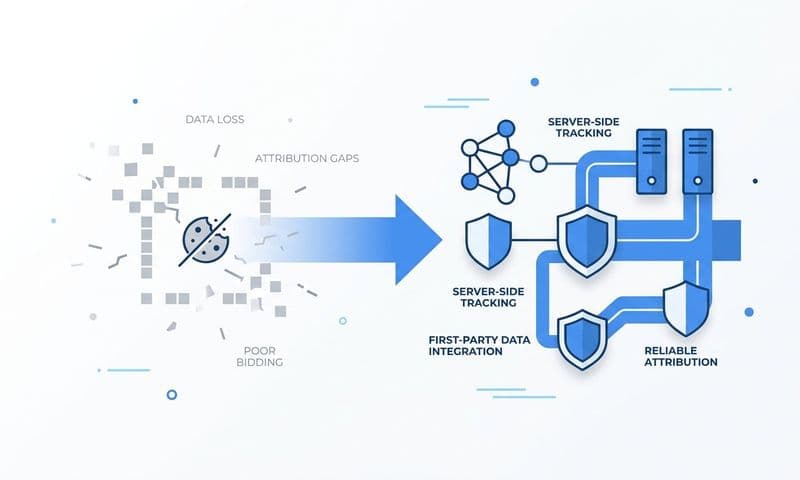
Ad platform algorithms optimize toward the conversion signals you send them, but browser-based pixel tracking often provides incomplete or delayed data. When iOS users block tracking or conversions happen offline, platforms like Meta and Google are optimizing with partial information. This leads to inefficient targeting and budget allocation because the algorithm doesn't know which clicks actually drove valuable outcomes.
The Strategy Explained
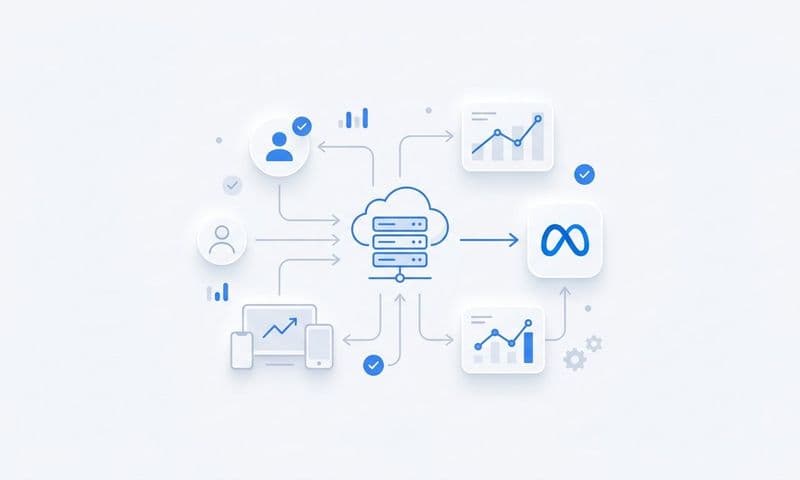
Server-side conversion tracking sends enriched event data directly from your servers to ad platforms, bypassing browser limitations entirely. Instead of just telling Meta "a conversion happened," you can send the actual revenue value, product purchased, customer lifetime value prediction, and other contextual data that helps the algorithm understand what "good" looks like for your business.
This creates a feedback loop where platforms receive more accurate signals about which users convert and how valuable those conversions are. Over time, the algorithm learns to find more users who match your highest-value customer profiles rather than just optimizing for volume. Understanding how ad performance declined after privacy changes helps explain why this strategy is essential.
Implementation Steps
1. Implement the Conversions API for Meta and Enhanced Conversions for Google Ads to send server-side events that capture conversions missed by browser pixels.
2. Enrich your conversion events with revenue values, product categories, and customer quality indicators that help platforms understand which conversions matter most to your business.
3. Set up event matching quality monitoring to ensure your server-side events are properly deduplicated with browser events and that user matching rates remain high.
Pro Tips
Send conversion events with actual purchase values rather than using a static value for all conversions. This helps platforms optimize toward revenue, not just conversion count. Include both immediate conversions and delayed conversions (like trial-to-paid upgrades) so the algorithm learns the complete value of different audience segments. Monitor your event match quality score weekly and troubleshoot any drops that indicate data quality issues.
7. Build Weekly Optimization Rituals Around Real Time Data Reviews
The Challenge It Solves
Access to real-time data doesn't automatically translate to better decisions. Many teams have dashboards they rarely check or make impulsive changes based on short-term fluctuations without considering broader patterns. Without structured review processes, real-time insights become just another distraction rather than a decision-making tool.
The Strategy Explained
Optimization rituals create regular touchpoints where your team reviews real-time performance data with a structured framework for decision-making. This might be a Monday morning review where you analyze the previous week's patterns, identify top performers and underperformers, and document specific optimization actions. The "ritual" aspect means it happens consistently, with defined participants, agenda items, and decision criteria.
These sessions combine the immediacy of real-time data with the discipline of strategic thinking. You're looking at live dashboards, but you're asking structured questions: What changed this week? Why did it change? What should we test next? What should we stop doing? Following best practices for real-time marketing optimization ensures your review sessions drive meaningful action.
Implementation Steps
1. Schedule recurring optimization sessions at consistent times each week, ensuring key stakeholders from media buying, creative, and analytics are present.
2. Create a standard review template that covers campaign performance, creative testing results, budget allocation decisions, and upcoming tests or launches.
3. Document every optimization decision with the reasoning behind it, creating an institutional knowledge base that helps you understand what worked, what didn't, and why.
Pro Tips
Start each session by reviewing the actions from the previous week to close the loop on whether your changes had the intended impact. Use a shared document or project management tool to track optimization decisions and their outcomes over time. This historical record helps you identify patterns in what works for your specific business. Assign clear ownership for each action item with deadlines, preventing good ideas from getting lost in the shuffle.
Putting It All Together
Implementing these seven strategies transforms real time ad performance insights from a nice-to-have dashboard feature into a genuine competitive advantage. Start by unifying your data sources into a single view, then layer in intelligent alerts and downstream revenue tracking. As your team becomes comfortable with live data, accelerate creative testing and budget optimization cycles.
The marketers who win are those who act on insights while they're still relevant, not those who simply have access to more data. Begin with the strategy that addresses your biggest current pain point. If you're drowning in platform-switching, start with unified dashboards. If you're struggling with creative performance, implement rapid testing cycles. If budget efficiency is your challenge, focus on intraday optimization patterns.
Master one strategy completely before expanding to the next. Real-time optimization is a muscle that strengthens with practice. Your team needs to build confidence in the data, develop decision-making frameworks, and establish processes that turn insights into action.
The most successful teams combine technology with discipline. They use platforms like Cometly to capture every touchpoint across their customer journey, feeding their AI complete data for accurate recommendations. They know what's really driving revenue because they've connected ad clicks to CRM conversions in real time. They get AI-powered recommendations that identify high-performing campaigns worth scaling. And they feed enriched conversion data back to ad platforms, improving targeting and optimization with every campaign.
Ready to elevate your marketing game with precision and confidence? Discover how Cometly's AI-driven recommendations can transform your ad strategy. Get your free demo today and start capturing every touchpoint to maximize your conversions.