
When evaluating marketing attribution platforms, comparing Rockerbox against competitors helps you find the right fit for your specific needs. Whether you're looking for more accurate tracking, better AI capabilities, or more flexible pricing, understanding how different solutions stack up is essential.
The challenge isn't just choosing a platform that collects data. It's finding one that delivers actionable insights you can trust, adapts to privacy changes, and helps you make confident scaling decisions.
This guide walks you through seven strategic approaches to comparing Rockerbox alternatives, helping you identify which platform will deliver the clearest picture of your marketing performance and drive better ROI decisions.
1. Evaluate Server-Side Tracking Capabilities
The Challenge It Solves
Browser-based tracking has become increasingly unreliable. iOS privacy updates, ad blockers, and cookie restrictions mean you're likely missing significant portions of your customer journey data. If your attribution platform relies primarily on client-side tracking, you're making decisions based on incomplete information.
This tracking gap creates a dangerous blind spot. You might be scaling campaigns that look profitable in your dashboard but are actually underperforming when you account for the conversions you can't see.
The Strategy Explained
Server-side tracking moves data collection from the user's browser to your server, bypassing many privacy restrictions and technical limitations. When comparing Rockerbox alternatives, prioritize platforms that offer robust server-side tracking as a core feature, not an afterthought.
Look for solutions that can track events directly from your server to the attribution platform. This approach captures conversions that browser-based methods miss, giving you a more complete view of campaign performance. For a deeper dive into available options, explore this server-side tracking tools comparison.
Platforms like Cometly have built their tracking infrastructure around server-side capabilities from the ground up, ensuring you capture the full customer journey even as privacy regulations evolve.
 7 Best Rockerbox Alternatives for Marketing Attribution in 2026
Implementation Steps
1. Request technical documentation from each platform showing how their server-side tracking works and what events they can capture beyond browser limitations.
2. Ask about their approach to handling iOS users specifically, since this is where browser-based tracking fails most dramatically.
3. Test each platform's ability to track conversions that occur after users close their browser or switch devices during the customer journey.
Pro Tips
Don't just ask if a platform offers server-side tracking. Ask what percentage of their customers actively use it and whether it requires significant development resources to implement. The best solutions make server-side tracking accessible without requiring a dedicated engineering team.
2. Compare Multi-Touch Attribution Model Flexibility
The Challenge It Solves
Single-touch attribution models oversimplify the customer journey. If you're only crediting the first or last touchpoint, you're missing the complex interplay of channels that actually drives conversions. This limitation makes it nearly impossible to optimize mid-funnel tactics or understand how different channels work together.
The right attribution model depends on your business. E-commerce brands with short sales cycles have different needs than B2B companies with six-month buying journeys.
The Strategy Explained
When evaluating Rockerbox alternatives, examine which attribution models each platform supports and how easily you can switch between them. The most valuable platforms offer multiple models so you can analyze your data from different perspectives. Review this multi-touch attribution platforms comparison to understand your options.
Look for platforms that provide first-touch, last-touch, linear, time-decay, and position-based models as standard options. More sophisticated platforms also offer custom or algorithmic models that weight touchpoints based on their actual influence on conversions.
The ability to compare models side by side reveals insights you'd miss with a single view. You might discover that your awareness campaigns deserve more credit than last-click attribution suggests, or that certain channels consistently appear in winning conversion paths.
Implementation Steps
1. List the attribution models each platform offers and verify they align with how your customers actually buy from you.
2. Request a demo showing how quickly you can switch between models and whether historical data gets recalculated automatically.
3. Test whether the platform allows you to create custom attribution rules based on your specific business logic and customer behavior patterns.
Pro Tips
Pay attention to how each platform explains attribution models. If their documentation is confusing or overly technical, that complexity will carry over into daily use. The best platforms make sophisticated attribution accessible to marketers who aren't data scientists.
3. Assess AI-Powered Optimization Features
The Challenge It Solves
Static dashboards force you to manually analyze data and draw your own conclusions. This approach is time-consuming and prone to human bias. You might overlook patterns in the data or continue investing in underperforming tactics simply because you haven't noticed the trend.
As campaign complexity grows, the volume of data becomes overwhelming. You need technology that doesn't just show you numbers but actively identifies opportunities and risks.
The Strategy Explained
Modern attribution platforms are moving beyond passive reporting toward active optimization recommendations. When comparing alternatives, distinguish between platforms that simply display data and those that use AI to surface actionable insights. This AI marketing tools comparison highlights key differences in capabilities.
Look for features that automatically identify your best-performing ad creatives, suggest budget reallocation opportunities, and flag campaigns that are trending downward before they significantly impact ROI. AI should analyze patterns across your entire account and highlight specific actions you can take today.
Cometly's AI Ads Manager represents this evolution. Rather than just showing you which ads performed well yesterday, it provides specific recommendations about where to increase spend, which audiences to scale, and which creatives to pause based on comprehensive performance analysis.
Implementation Steps
1. Ask each vendor for specific examples of the AI recommendations their platform provides and how frequently these insights update.
2. Evaluate whether the AI learns from your specific account data or relies on generic industry benchmarks that may not apply to your business.
3. Test how actionable the recommendations are by checking if they provide specific next steps rather than vague suggestions to "optimize performance."
Pro Tips
Be skeptical of platforms that claim AI capabilities but only offer basic alerts or threshold notifications. True AI optimization should identify non-obvious patterns and suggest actions you wouldn't have discovered through manual analysis alone.
4. Analyze Ad Platform Data Sync Capabilities
The Challenge It Solves
Ad platforms like Meta and Google rely on conversion data to optimize their algorithms. When tracking gaps prevent accurate conversion reporting, these algorithms make decisions based on incomplete information. Your campaigns underperform not because your targeting is wrong, but because the ad platform doesn't understand which users actually convert.
This creates a vicious cycle. Poor data leads to poor optimization, which leads to worse results, which makes you question the entire channel rather than recognizing the root cause is data quality.
The Strategy Explained
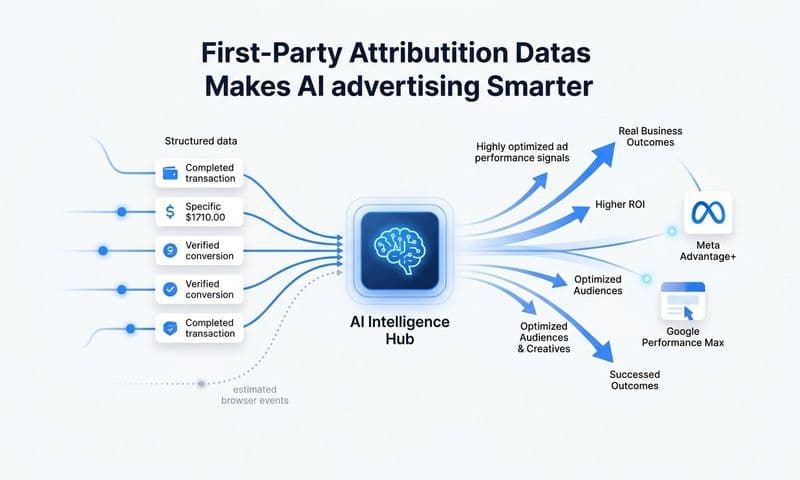
Conversion sync features send enriched conversion data back to your ad platforms, giving their algorithms the information they need to find more customers like your best converters. When evaluating attribution platforms, prioritize those that offer robust conversion sync capabilities.
The best platforms don't just pass back basic conversion events. They send detailed conversion data including revenue values, customer lifetime value predictions, and custom event parameters that help ad platforms understand which conversions matter most to your business. Understanding the nuances of Facebook Ads vs Google Ads tracking can help you evaluate sync requirements.
This feedback loop transforms ad performance. When Meta or Google receives accurate conversion data, their algorithms can optimize toward your actual business goals rather than proxy metrics that don't correlate with revenue.
Implementation Steps
1. Verify which ad platforms each attribution tool can sync conversion data to and whether they support advanced conversion events beyond basic purchases.
2. Ask about latency between when a conversion occurs and when it's sent back to ad platforms, since delays reduce optimization effectiveness.
3. Confirm whether the platform can send server-side conversion data that ad platforms will accept and use for optimization, not just for reporting.
Pro Tips
Request case examples of how conversion sync has improved campaign performance for similar businesses. The impact should be measurable in improved ROAS as ad platform algorithms receive better training data.
5. Review CRM and Full-Funnel Integration Depth
The Challenge It Solves
Marketing attribution that stops at the lead or purchase level misses the complete revenue picture. If you can't connect ad spend to actual customer lifetime value, deal closures, or recurring revenue, you're optimizing toward the wrong metrics.
This disconnect is especially problematic for businesses with longer sales cycles or subscription models. The ad that generated the most leads might not generate the most revenue if those leads don't convert to customers or churn quickly.
The Strategy Explained
True attribution connects every stage of your funnel, from initial ad click through CRM events to final revenue. When comparing platforms, evaluate how deeply they integrate with your CRM and whether they can attribute revenue back to specific marketing touchpoints. A comprehensive customer journey tracking tools comparison can guide your evaluation.
Look for platforms that offer native integrations with major CRMs and can track custom events that matter to your business. The integration should be bidirectional, pulling customer data to enrich attribution insights and pushing marketing data to inform sales conversations.
The depth of integration determines whether you're measuring marketing effectiveness by leads generated or revenue influenced. Platforms that excel here let you see which campaigns drive not just conversions, but high-value customers who stay longer and spend more.
Implementation Steps
1. Map out your complete customer journey from first touch to revenue and identify which systems each attribution platform needs to integrate with to track it.
2. Test how each platform handles custom events specific to your business model, such as trial starts, upgrade events, or contract renewals.
3. Verify whether the platform can attribute revenue that occurs weeks or months after the initial conversion, not just immediate transaction value.
Pro Tips
Ask about the technical requirements for each integration. Some platforms require extensive custom development while others offer plug-and-play connectors. Factor implementation time and ongoing maintenance into your decision.
6. Compare Pricing Structures and Value Alignment
The Challenge It Solves
Attribution platform pricing varies dramatically, and the structure often doesn't align with the value you receive. Some platforms charge based on ad spend, which penalizes you for success. Others have opaque pricing that makes budgeting difficult.
Choosing a platform with misaligned pricing creates tension as your business grows. You shouldn't have to choose between scaling your marketing and affording the tools that help you scale effectively.
The Strategy Explained
When evaluating alternatives, look beyond the initial price tag to understand the total cost of ownership and how pricing scales with your business. This marketing attribution pricing comparison breaks down common pricing models.
Compare what's included at each pricing tier. Some platforms charge extra for features like server-side tracking, additional users, or premium support that should be standard. Calculate your total cost including these add-ons, not just the base price.
Think about your growth trajectory. If you plan to double ad spend next year, how will that impact your attribution platform costs? The best pricing structures scale predictably without sudden jumps that force you to reconsider your tooling mid-growth phase.
Implementation Steps
1. Request detailed pricing information including all potential fees, user limits, data processing caps, and charges for premium features.
2. Calculate your projected costs at your current scale and at 2x and 5x your current ad spend to understand long-term affordability.
3. Ask about contract terms, cancellation policies, and whether pricing is locked in or subject to increases after the initial period.
Pro Tips
Don't optimize purely for the lowest price. A platform that costs more but delivers significantly better data accuracy or AI recommendations often provides better ROI than a cheaper tool that leaves you guessing about optimization decisions.
7. Test Real-Time Reporting and Data Accessibility
The Challenge It Solves
Attribution data that updates once daily or requires hours of processing becomes outdated before you can act on it. In fast-moving paid advertising, delays between campaign changes and performance visibility create blind spots that cost money.
You need to see the impact of budget changes, creative swaps, or audience adjustments quickly enough to double down on what works and cut what doesn't before wasting significant spend.
The Strategy Explained
Real-time or near-real-time reporting capabilities separate platforms built for modern performance marketing from legacy analytics tools. When comparing options, test how quickly data flows from conversion event to dashboard visibility. This marketing analytics platform comparison evaluates reporting speed across solutions.
The best platforms process data continuously rather than in batch jobs. You should be able to check performance during the day and see conversions that happened in the last hour, not just yesterday's results. This immediacy enables intraday optimization decisions.
Beyond speed, evaluate how accessible the data is. Can team members quickly find the insights they need, or does every question require building custom reports? Platforms with intuitive interfaces and AI-powered chat features let you ask questions in plain language and get immediate answers.
Implementation Steps
1. During demos, ask vendors to show you how long it takes from conversion event to dashboard visibility and whether this latency varies by traffic volume.
2. Test the platform's interface by trying to answer specific questions about your campaigns to see if the data is organized intuitively.
3. Evaluate mobile access if your team needs to check performance outside normal working hours or while away from their desks.
Pro Tips
Pay attention to how each platform handles data freshness during high-traffic periods. Some systems slow down or batch process when volume spikes, which is exactly when you need real-time visibility most.
Making Your Final Decision
Choosing the right Rockerbox alternative comes down to matching your specific needs with the platform's core strengths. Start by prioritizing server-side tracking and AI capabilities if accurate data is your main concern. Focus on CRM integration depth if connecting ad spend to revenue is your goal.
The platforms that excel in 2026 don't just collect data. They actively help you make better decisions through AI recommendations, feed better information back to your ad platforms through conversion sync, and provide real-time visibility into what's working.
Request demos from your top two or three options and test them with your actual data before committing. Pay attention to how intuitive the interface feels and whether the insights align with what you know about your business. The right attribution platform should confirm your successes and reveal opportunities you hadn't noticed.
Don't rush the decision based solely on pricing. A platform that costs more but delivers significantly better data accuracy often provides better ROI than a cheaper tool that leaves you guessing about optimization decisions. Calculate the value of making confident scaling decisions versus the cost of the platform.
Ready to elevate your marketing game with precision and confidence? Discover how Cometly's AI-driven recommendations can transform your ad strategy. Get your free demo today and start capturing every touchpoint to maximize your conversions.