
If you're a Shopify store owner, a dedicated Shopify sales tracker is your key to moving beyond basic reporting and finally understanding which marketing efforts are actually making you money. It connects the dots between ad clicks and real revenue, giving you the clarity to make profitable decisions.
Why Accurate Sales Tracking Is a Game-Changer for Shopify
Let's be honest: many Shopify brands are making huge budget decisions with shaky data. In a market that’s growing like crazy, relying on default analytics is like trying to navigate a superhighway with a blurry map. The results are painful—wasted ad spend, sales credited to the wrong channels, and a ton of missed growth opportunities.
Imagine launching a new campaign and having no real idea if it's working. That’s the exact problem a specialized Shopify sales tracker solves. It connects the dots, giving you a clear picture of performance in a very noisy market.
The Problem with Basic Shopify Analytics
While Shopify's built-in analytics are a great starting point for seeing your overall sales trends, they fall short when it comes to detailed marketing attribution. I see these limitations trip up brands all the time:
- Limited Attribution: It primarily uses a last-click model, which means it doesn't show you how other channels—like that blog post or an initial social media ad—influenced the final sale.
- Data Gaps: Ad blockers and privacy updates like iOS 14 can easily stop browser-based tracking from catching every conversion, leading to some serious discrepancies.
- Lack of Unification: Your data is siloed. You see what’s happening on Shopify, but then you have to manually compare it to what Facebook, Google, or TikTok are reporting. The numbers almost never match up.
Key Takeaway: Without a robust Shopify sales tracker, you're essentially guessing where your most valuable customers come from. You might end up scaling the wrong ad or cutting a campaign that was quietly fueling top-of-funnel awareness.
The Power of Granular Data
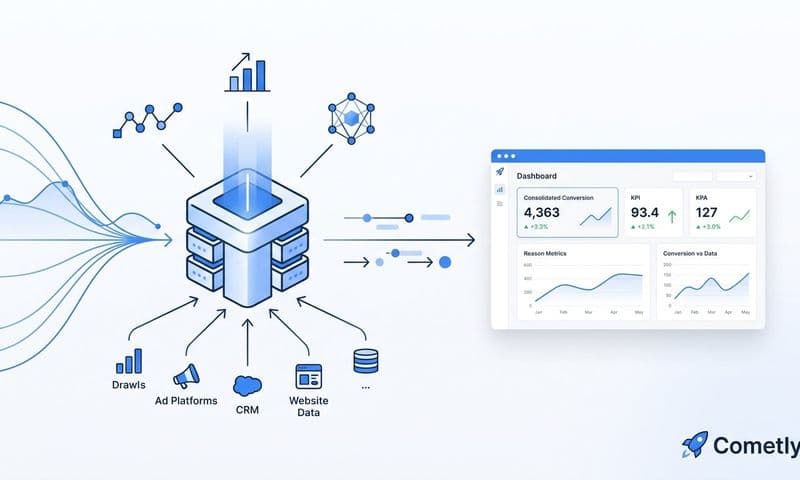
A dedicated tracker gives you the granular data you need to make genuinely informed decisions. The image below shows what a clear, unified dashboard can look like, pulling together data from multiple sources into one clean view.
 Your Ultimate Shopify Sales Tracker Guide for 2026
This level of detail lets you see not just total sales, but sales attributed to specific campaigns, ad sets, and even individual ads. You can finally answer the question, "Which ad on TikTok drove the most profit last week?"
The sheer scale of modern e-commerce makes this kind of precision non-negotiable. In 2024, Shopify merchants processed a staggering $292.3 billion in GMV—a figure that has more than doubled since 2020. Accurate sales tracking is the only way to effectively compete for a slice of that market.
This table breaks down the core differences between what Shopify gives you out of the box and what a real sales tracker can do.
Standard Shopify Analytics vs Advanced Sales Tracker
Ultimately, having clean, reliable data from a powerful tracker is the foundation for more advanced strategies like AI-driven ecommerce analytics, which can seriously boost your sales. When your data is solid, you unlock the ability to make much smarter optimizations. You can learn more about how to grow your Shopify store with better ad tracking in our related guide.
Choosing Your Tracking Foundation: Client-Side vs. Server-Side
Picking between client-side and server-side tracking is one of the most important decisions you'll make for your store. It's the foundation of your entire Shopify sales tracker system. Think of it like this: one is the standard, easy-to-install alarm system everyone used to have. The other is a modern, hard-wired security system that’s far more reliable.
Client-side tracking is that standard alarm system. It’s browser-based, which means a small piece of code—like a tracking pixel—runs on your customer’s browser and sends data back to your analytics and ad platforms. For a long time, this was how everyone did it.
But that method is breaking down. Fast. Ad blockers, now used by a reported 42.7% of internet users, can stop these pixels from ever firing. Worse, privacy updates like Apple's iOS 14+ now ask users to opt-in to tracking, and most people say no. The result? Massive data gaps that make your reports practically useless.
The Problem with Client-Side Tracking
Here’s a scenario I see all the time: your Facebook Ads Manager is showing 50 sales from a hot new campaign. You’re thrilled. But when you log into Shopify, you only see 35 sales for that same period. What happened to the other 15 attributed sales?
They disappeared into the tracking black hole. For those 15 customers, the Facebook Pixel was blocked by an ad blocker, a browser privacy setting, or an iOS opt-out. This isn't just a rounding error; it's a huge data integrity problem that forces you to make bad decisions.
When your ad platform and your store report different numbers, you can't confidently scale winning campaigns or cut losing ones. You’re essentially flying blind, making budget decisions based on incomplete and often misleading information.
The Rise of Server-Side Tracking
Now, let's talk about server-side tracking. This is your high-security, direct-wired system. Instead of talking to the customer's browser, it sends conversion data directly from your Shopify server to your ad platforms.
For a deeper dive into this space, see our Shopify ad design tool guide.
This creates a far more stable and trustworthy connection because it completely bypasses all the disruptions happening at the browser level.
- Immune to Ad Blockers: The data is sent from your server, so ad blockers on a user's browser can't touch it.
- Resistant to Browser Updates: Changes to browser tracking prevention (like ITP on Safari) have little to no impact on server-to-server communication.
- More Accurate Data: By using first-party data and a direct pipeline, it ensures what you see in Shopify actually matches what your ad platforms report.
Because of these massive advantages, any e-commerce brand spending serious money on ads is rapidly moving to a server-side solution for their Shopify sales tracker. Client-side tracking might be simple, but the data loss is just too expensive in today's privacy-first world. If you want to dive deeper into the technical nuts and bolts, you can learn more about the differences between server-side and client-side tracking in our complete guide.
Comparing Your Options Head-to-Head
Ultimately, the choice comes down to your tolerance for data loss. For any brand that relies on paid ads to scale, accuracy isn't a "nice-to-have"—it's everything.
Here’s a quick breakdown to help you decide:
While a hybrid approach can work well—using client-side for certain top-of-funnel signals and server-side for mission-critical conversion events—the server-side component is what guarantees your revenue data is rock-solid. It’s what lets you make decisions with confidence.
Alright, enough theory. Let’s get our hands dirty and set up a Shopify sales tracker that actually works. This is where we build a rock-solid data pipeline that you can rely on, moving beyond the shaky foundation of client-side pixels.
We'll be using a tool like Cometly to make this a code-free process. The end goal is to create a direct, server-to-server connection from your Shopify store to your ad platforms, making you immune to data loss from ad blockers and browser privacy updates.
Initial Setup in the Shopify App Store
First things first, you need to get the tracking tool installed on your store. Most modern server-side tracking platforms, Cometly included, live right in the Shopify App Store. This is great because it means the integration is built to be seamless.
Just search for your attribution platform of choice in the App Store and hit install. You’ll be guided through a one-click process that authorizes the app to access your store's data. This is what allows it to start seeing events like product views, add-to-carts, and—most importantly—purchases.
Once you’ve installed it, you’ll typically land on a dashboard to connect your store and confirm your domain. This simple step forges the link for your new Shopify sales tracker.
If you're evaluating vendors, our AI UGC for Shopify breakdown can help.
Deploying the Base Tracking Script
With the app installed, it's time to add the base tracking script. Don't let the word "script" scare you off; this is usually just a tiny snippet of code that acts as a "listener" on your site. Its job is to identify users and connect their on-site actions back to the ads they clicked.
For example, inside Cometly, you’ll get a single line of code. You just need to pop it into the <head> section of your theme.liquid file. You can find this in your Shopify admin by going to Online Store > Themes > Actions > Edit code.
This script is looking for the unique click IDs that platforms like Facebook and Google add to your URLs. When someone lands on your store from an ad, the script grabs that ID and stores it. This becomes the key that unlocks attribution, connecting a specific session to a specific campaign.
Pro Tip: Even if an app offers to install the script for you, I always recommend doing a quick manual check. Head into your theme's code and make sure it’s actually there. It takes 30 seconds and ensures your tracking foundation is solid from day one.
Mapping Your E-commerce Events
This is where your Shopify sales tracker starts to get really powerful. You need to tell it which actions matter. While most tools are smart enough to auto-detect standard Shopify events, you should always double-check that they’re mapped correctly.
The non-negotiable events you need to map are:
- View Content: A user lands on a product page.
- Add to Cart: A user adds a product to their cart.
- Initiate Checkout: A user begins the checkout flow.
- Purchase: The order is completed and paid for.
Inside your attribution tool's dashboard, you'll find an events mapping section. You’ll see a list of actions pulled from your store. Your job is to confirm that the Purchase event from Shopify is correctly tied to the Purchase event in your tracking tool, bringing its revenue and order ID along with it.
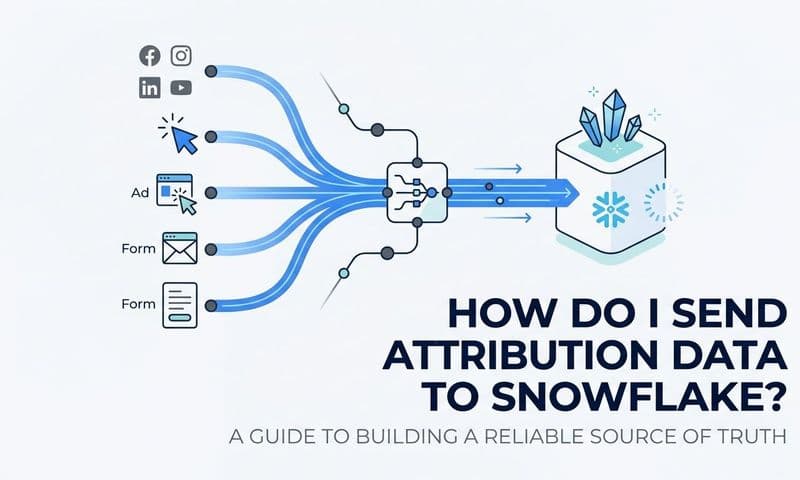
This flow chart nails the "why" behind server-side tracking. Browser data is flimsy and gets blocked, while a server-to-server connection is a direct, unbreakable line to your analytics.
 Your Ultimate Shopify Sales Tracker Guide for 2026
This visual makes it crystal clear why relying on the browser is a losing game for anyone serious about accurate sales data.
Connecting Your Ad Platforms
Your Shopify sales tracker is now gathering clean data on its own. The final piece of the puzzle is to push that pristine data back to your ad platforms. This is what feeds their algorithms with real results, allowing them to optimize your campaigns based on actual sales, not the partial data their own pixels are catching.
Platforms like Cometly make this simple with one-click integrations:
- Facebook/Instagram: Connect directly via the Conversions API (CAPI).
- TikTok: Integrate using the TikTok Events API.
- Google Ads: Send conversion data through offline conversion imports.
Setting these up is usually as simple as logging into your ad account and authorizing the connection. Your attribution platform then does the heavy lifting, passing verified purchase events—complete with value and customer details—straight to the ad network's server. This helps the ad platform’s algorithm find more people who look just like your actual buyers.
For a deeper dive, check out our comprehensive server-side tracking implementation guide for more advanced techniques.
This closes the loop. Now, the $100 sale you see in Shopify is the exact same $100 sale that Facebook or Google uses to calculate ROAS. With this setup, the frustrating discrepancies that plague client-side tracking are officially a thing of the past. You’ve just created a single source of truth for all your marketing.
Verifying Your Data and Finding Discrepancies
Your new server-side tracking is live. Congrats! But how do you know it’s actually working? Trusting your data is just as important as collecting it. This next step is your quality assurance check, ensuring your Shopify sales tracker is the source of truth you need it to be.
Don’t just assume everything is perfect. You have to actively test the entire data pipeline. The best way I’ve found to do this is by tracing a single, real transaction from start to finish.
Conducting a Live Test Order
The only way to be 100% sure is to place a real test order on your own store. This isn't just about making sure the checkout works; it's about following that specific purchase through every single stage of your new tracking system.
Here’s the right way to approach it:
- Create a unique discount code. Make a one-time code like "TESTORDER24" for 99% off. This makes the order impossible to miss in your backend systems.
- Come from a real ad. Click one of your own live Facebook or Google ads to start the session. This is critical for ensuring the click ID gets captured for attribution.
- Complete the purchase. Go through the entire checkout process just like a customer would and finish the sale using your test code.
You've just created a perfect data footprint. Now, it's time to play detective and see if it shows up exactly where it's supposed to.
Tracing the Data Across Platforms
Once your test order is complete, you’ll check three key places to ensure the data matches perfectly. Think of it as a three-point inspection for data integrity.
First, check your Shopify dashboard. Find the order with your unique discount code. Note the exact order ID and the total revenue (even if it's small). These are your benchmark numbers—your source of truth.
Next, log into your attribution tool, like Cometly. Within a few moments, that exact same purchase should appear. You need to confirm three things:
- The order ID matches what's in Shopify perfectly.
- The revenue attributed to the purchase is identical.
- The conversion is correctly tied to the specific ad campaign you clicked.
Finally, head over to your ad platform, like Facebook Ads Manager. Because you set up the server-side Conversions API, your tracker should have sent this verified conversion data directly to Facebook. Find the campaign and confirm the purchase event was recorded with the correct value.
When the order ID and revenue match perfectly from Shopify to your tracker and then to your ad platform, you have achieved data harmony. This is the moment you can finally trust that the ROAS you see in your reports is real.
Ensuring your sales data is accurate is crucial, especially when it comes to financial reporting, and a robust Xero integration Shopify setup can streamline this process by pulling clean data directly into your accounting software.
Troubleshooting Common Discrepancies
What if the numbers don't match? Don't panic. This is a normal part of the process, and there are usually simple explanations. If you run into issues, you're not alone; our guide on solving attribution data discrepancies covers these scenarios in more detail.
Here are a few common issues and what to check:
By methodically testing your setup and knowing where to look for inconsistencies, you build confidence in your Shopify sales tracker. This verification step turns your new tool from a simple app into a trusted partner for scaling your business.
Using Accurate Data to Optimize Your Ad Spend
Okay, so your data pipeline is finally verified and trustworthy. This is where the real fun starts. Having accurate information is one thing, but using it to make smarter, more profitable marketing decisions is a whole different ball game.
This is the point where your Shopify sales tracker goes from a simple reporting tool to a strategic powerhouse for scaling your store.
With clean, server-side data, you can finally break free from the flawed last-click attribution model that nearly every ad platform defaults to. Last-click gives 100% of the credit to the final touchpoint before a sale. It’s simple, sure, but it's also a dangerously incomplete picture of how your marketing actually drives growth.
For a deeper dive, see our guide to marketing attribution models complete guide.
 Your Ultimate Shopify Sales Tracker Guide for 2026
Uncovering the Full Customer Journey
Modern customer journeys are messy. A buyer might first see your brand in a TikTok video, get a reminder a week later from a Google search ad, and finally pull the trigger after clicking a retargeting ad on Instagram. In a last-click world, only that final Instagram ad gets any credit.
This is a classic attribution mistake. You might look at your reports, see a "low ROAS" on your TikTok and Google campaigns, and decide to cut them. What you don't see is that those campaigns were essential for creating the awareness and consideration that led to the final sale.
A proper sales tracker with multi-touch attribution stops you from making these costly errors.
By analyzing every touchpoint, you get a true understanding of your marketing ecosystem. You see how different channels work together, letting you invest in the entire customer journey, not just the final step.
With a tool like Cometly, you can see this entire path laid out for each individual customer. This is how you finally prove the real-world impact of your top-of-funnel efforts.
Choosing the Right Attribution Model
One of the biggest benefits of an advanced Shopify sales tracker is the ability to view your performance through different attribution models. There’s no single “best” model; the right one depends entirely on your business goals.
Here are a few common models and when I’ve found them most useful:
- First-Click Attribution: Gives all the credit to the very first touchpoint. This is perfect for understanding which campaigns are most effective at generating new customer awareness and filling the top of your funnel.
- Last-Click Attribution: Assigns all credit to the final touchpoint before a sale. While it has its flaws, it’s still useful for identifying your most powerful "closer" campaigns that push customers over the finish line.
- Linear Attribution: Spreads credit evenly across all touchpoints in the journey. This model gives you a more balanced view, acknowledging that every interaction played a part.
Flipping between these models in your dashboard helps you build a complete performance story. You might discover that your top-performing first-click channel is organic search, while your best last-click channel is Facebook retargeting. Both are vital, but they play very different roles in your strategy.
A Real-World Optimization Scenario
Let's walk through a practical example of how this actually works. Imagine you run a Shopify store selling high-end coffee beans and you're running ads on TikTok, Google Search, and Facebook.
Your tracking data reveals a common customer path:
- Awareness: A customer first sees a viral "how-to-brew" video you posted on TikTok.
- Consideration: A few days later, they search "best single origin coffee beans" on Google and click your ad.
- Conversion: The next day, a Facebook retargeting ad with a 10% off coupon hits their feed, and they finally make a purchase.
Without a unified tracker, you'd be staring at three separate, confusing reports. But with clean data, you see the full story. You know that while Facebook closed the deal, that TikTok ad was the crucial first step.
Armed with this insight, you can confidently double down on your TikTok content budget, knowing it’s filling your funnel with qualified leads. This holistic view is exactly what you need to properly optimize ad spend with data-driven insights.
Ultimately, this level of clarity allows you to scale winning campaigns with confidence, trim the fat from underperforming channels, and finally calculate the true return on your marketing investment. You stop guessing and start making decisions based on what is actually happening.
Your Shopify Sales Tracker Questions Answered
When you're thinking about adding a proper sales tracker to your Shopify store, it’s normal for a few questions to come up. You’re probably wondering how it will work with what you already have, and if it's really worth the effort.
Let's get into the most common questions we hear. My goal is to clear things up so you can move forward and finally get that single source of truth for your marketing data.
How Is This Different from Shopify’s Native Analytics?
This is the big one. Shopify Analytics is great for a quick look at your store’s total revenue, but when it comes to marketing attribution, it has some serious blind spots.
Shopify’s built-in analytics uses a last-click model by default, which means it can’t show you how your top-of-funnel channels are contributing to sales. On top of that, its data is easily blocked by browsers and privacy settings like iOS updates.
A dedicated Shopify sales tracker gives you a few massive advantages:
- Server-Side Accuracy: It tracks sales directly from your server, which means it bypasses ad blockers and iOS tracking restrictions. You'll capture far more conversion data.
- Multi-Touch Attribution: You can finally see the entire customer journey. This means giving credit to awareness channels like TikTok or Google Search, not just the very last click.
- Unified Reporting: It pulls all your ad platform data into one place. No more frustrating gaps between what Facebook reports and what Shopify shows.
Think of it this way: Shopify Analytics is your car's speedometer. It shows your current speed. A dedicated tracker is the full GPS system, showing you every single turn you took to get where you are.
Will Installing Another App Slow Down My Store?
This is a totally valid concern for any Shopify store owner. We all know that store speed is tied directly to conversion rates, and bloated apps are usually the number one enemy.
But here’s the good news: a server-side sales tracker is specifically designed to avoid this problem.
Unlike client-side apps that run heavy scripts on your customer's browser, a server-side tracker does its real work behind the scenes. The small script you add to your site is super lightweight—its only job is to identify the user. All the heavy lifting, like processing and sending conversion data, happens on the server. The impact on your site's load time is virtually zero.
A well-built, server-side Shopify sales tracker is one of the very few apps that can dramatically boost your revenue without hurting the user experience.
How Long Until My Data Is Accurate?
Once your tracker is installed and configured, data will start flowing almost right away.
That said, I always recommend letting it run for at least 24-48 hours before you make any big marketing decisions. This gives the system time to smooth out any server-side reporting delays and build a solid baseline of data.
After a couple of days, run a test order to make sure the entire data pipeline is working correctly. Once you see that test order show up perfectly in Shopify, your tracker, and your ad platforms, you can start trusting your new numbers with confidence.
Can I Track Sales From Influencers and Emails?
Absolutely. This is actually one of the biggest wins you’ll get from a unified tracking system. A good Shopify sales tracker isn't just for paid ad platforms like Facebook and Google. You can generate unique tracking links for just about any marketing channel you can think of.
This means you can finally measure the true ROI from:
- Influencer Campaigns: Give each influencer a unique link and see exactly how many sales they drive.
- Email Marketing: Track the revenue coming from specific email newsletters or automated flows.
- Affiliate Partners: Assign links to your affiliates and monitor their performance in real-time.
This brings all of your marketing efforts under one roof, giving you a complete, honest picture of what’s truly driving growth for your store.
Ready to finally get a clear, accurate picture of your marketing ROI? Cometly provides a zero-code setup that can be live in minutes, unifying all your sales data into a single source of truth. Eliminate wasted ad spend and scale your store with confidence by visiting https://www.cometly.com to get started.