
You're running profitable campaigns. Sales are coming in. Revenue is growing. But when you check your Facebook Ads Manager or Google Ads dashboard, the numbers tell a different story. Conversions are down 40%. Cost per acquisition looks terrible. Your ROAS appears to have tanked.
Here's the twist: your actual business performance hasn't changed at all.
This is the reality for marketers post-iOS updates. Apple's App Tracking Transparency framework fundamentally broke traditional conversion tracking. When users opt out of tracking (and most do), your pixel can't see their conversions. The sale still happens. Your bank account reflects it. But your ad platform reports nothing.
This creates a massive blind spot. You're making budget decisions based on incomplete data. You're pausing campaigns that actually work. You're scaling the wrong ads because the platforms can't see which ones truly drive revenue.
The solution isn't accepting partial data as the new normal. It's rebuilding your tracking infrastructure around server-side methods, first-party data, and proper platform configurations. This guide walks you through exactly how to restore accurate conversion visibility, step by step, regardless of iOS privacy restrictions.
Step 1: Audit Your Current Tracking Setup and Identify Data Gaps
Before fixing anything, you need to understand exactly how broken your tracking is. Most marketers know something is wrong, but few have quantified the actual gap between reported conversions and real revenue.
Start by pulling your actual sales data from your source of truth. This might be Shopify, Stripe, your CRM, or your payment processor. Export all conversions for the past 30 days, including date, revenue, and any available source information.
Next, pull reported conversion data from each ad platform for the same period. Facebook Ads Manager, Google Ads, TikTok Ads, whatever you're running. Compare the total conversions and revenue reported by these platforms against your actual numbers.
The gap is usually shocking. Many marketers discover their ad platforms are only seeing 50-60% of actual conversions. Some iOS-heavy businesses see even worse discrepancies, with platforms reporting less than 40% of real sales. Understanding the full scope of losing conversion data after iOS updates is the first step toward fixing it.
Document this baseline clearly. Create a simple spreadsheet showing actual conversions versus platform-reported conversions for each channel. Calculate the percentage gap. This becomes your benchmark for measuring improvement as you implement the fixes in this guide.
Now drill deeper into which specific events are most affected. Check your pixel implementation. Which conversion events rely entirely on browser-based tracking? Purchase events, add-to-cart events, lead submissions. If these fire only from client-side JavaScript, they're vulnerable to iOS tracking restrictions.
Pay special attention to campaigns targeting mobile users. Filter your ad platform data to show only mobile conversions, then compare against your actual mobile sales. This is where the gap typically appears largest, since iOS restrictions primarily affect mobile tracking.
Look for patterns across platforms. Is Facebook showing a bigger gap than Google? Are certain campaigns or ad sets particularly affected? Sometimes you'll discover that retargeting campaigns show much larger discrepancies than cold traffic campaigns, revealing where your tracking blind spots are most severe.
Create a simple validation test: place a test order yourself using an iOS device with tracking disabled. Check whether this conversion appears in your ad platforms. If it doesn't show up (and it probably won't), you've confirmed the problem firsthand.
Your audit should produce a clear baseline report showing current tracking accuracy across all channels. This isn't just documentation. It's your proof of ROI when you implement server-side tracking and see these numbers improve dramatically.
Step 2: Implement Server-Side Tracking as Your Foundation
Server-side tracking is the fundamental solution to iOS restrictions. Instead of relying on browser pixels that can be blocked, you send conversion data directly from your server to ad platforms. The user's device never enters the equation.
Think of it this way: traditional pixel tracking is like asking someone to deliver a message for you, but they might refuse or forget. Server-side tracking is like making the phone call yourself. It's direct, reliable, and doesn't depend on browser permissions.
The technical implementation varies based on your website platform, but the core concept remains consistent. When a conversion happens on your site, your server captures that event and sends it directly to your tracking systems and ad platforms. This approach is central to post-iOS tracking solutions that actually work.
For most marketers, this means setting up a tracking solution that sits between your website, CRM, and ad platforms. The system needs to capture conversion events as they happen, enrich them with additional data, and route them to the appropriate destinations.
Start by identifying all the conversion points in your customer journey. Someone completes a purchase. A lead fills out a form. A user signs up for a trial. Each of these events needs to be captured server-side and sent to your tracking infrastructure.
Your server-side implementation must include critical event parameters. The conversion value, currency, timestamp, and customer identifiers like email or phone number. These data points enable accurate attribution and allow ad platforms to match conversions back to specific users and campaigns.
Connect your key systems into a unified data flow. Your website sends conversion events to your tracking system. Your CRM sends lead and customer data. Your payment processor confirms completed transactions. When these systems communicate properly, you create a complete view of the customer journey that bypasses iOS restrictions entirely.
Configuration is crucial here. Set up event naming conventions that match across systems. If Facebook calls something a "Purchase" event, use that exact name in your server tracking. Consistency prevents data mismatches and ensures conversions flow correctly to each platform.
Include customer matching parameters in every server event. Email addresses (hashed for privacy), phone numbers (also hashed), first and last names, city, state, and zip code. The more matching parameters you include, the better ad platforms can connect your server events to specific users, improving attribution accuracy.
Testing is non-negotiable. Trigger a test conversion on your website. Check that it appears in your server-side tracking system with all the correct parameters. Verify the event value, currency, and customer data all came through accurately. If anything is missing or incorrect, fix it before moving forward.
Run multiple test scenarios. Test on iOS devices with tracking disabled. Test with ad blockers enabled. Test from different browsers and devices. Your server-side tracking should capture every conversion regardless of the user's privacy settings or device configuration.
Monitor your server logs during testing. You should see conversion events being sent to your tracking endpoints in real time. If events aren't firing, or if they're missing data, troubleshoot immediately. Server-side tracking only works when it's implemented correctly from the start.
Step 3: Configure Meta Conversions API for Facebook and Instagram Ads
Meta's Conversions API (CAPI) is how you send server-side events directly to Facebook and Instagram. It works alongside your pixel, not instead of it. When someone converts, you send the event from both your pixel (if possible) and your server (always).
Access Meta Events Manager and navigate to your pixel settings. Look for the Conversions API section. This is where you'll configure server events to flow into Meta's system.
The setup process requires generating an access token that authorizes your server to send events to Meta. Follow Meta's documentation to create this token securely. Store it safely, as it grants direct access to send conversion data to your ad account.
Event deduplication is critical when running both pixel and server events. Without it, Meta counts the same conversion twice, inflating your results and confusing the algorithm. The solution is event IDs.
Every conversion event needs a unique identifier. When your pixel fires a purchase event, it includes an event ID. When your server sends the same purchase event via CAPI, it includes the same event ID. Meta sees both events, recognizes the matching ID, and counts the conversion only once.
Implement event ID generation in your tracking code. Use a combination of order ID and timestamp to create unique identifiers. Pass this same ID to both your pixel event and your server event. Test this carefully. Fire a conversion and check Meta Events Manager to confirm only one event appears, not two.
Customer information parameters dramatically improve Meta's ability to match your server events to Facebook users. Send hashed email addresses, phone numbers, first and last names, city, state, zip code, country, and date of birth when available. Addressing Facebook pixel not tracking all conversions requires this level of implementation detail.
Meta hashes this data automatically if you send it unhashed, but best practice is to hash it yourself before transmission. Use SHA-256 hashing and normalize the data first. Lowercase emails, remove spaces from phone numbers, that sort of thing. Meta's documentation provides exact specifications.
The more matching parameters you include, the higher your Event Match Quality score. This metric appears in Events Manager and measures how well Meta can connect your server events to Facebook users. Aim for a "Good" or "Great" rating.
Poor Event Match Quality means Meta can't match many of your conversions to users, which limits the algorithm's ability to optimize your campaigns. If your score is low, review which customer parameters you're sending and add more data points.
Monitor your CAPI events in Events Manager's Test Events tab. Send a test conversion and watch it appear in real time. Check that all parameters came through correctly. Verify the event matches to a Facebook user (it will show a match quality indicator for the test event).
Once live, compare your CAPI event volume to your pixel event volume in Events Manager. You should see significantly more server events than pixel events, especially for mobile conversions. This confirms your server-side tracking is capturing conversions that the pixel misses.
Step 4: Set Up Google Ads Enhanced Conversions and Offline Tracking
Google's answer to iOS tracking challenges comes in two forms: Enhanced Conversions for your website tracking and Offline Conversion Imports for CRM data. Both use first-party data to improve conversion measurement accuracy.
Enhanced Conversions works by capturing hashed customer information when someone converts on your website, then sending it to Google alongside the conversion event. Google matches this data to signed-in Google users, allowing them to attribute conversions even when cookies are restricted.
Enable Enhanced Conversions in your Google Ads account under Tools & Settings, then Conversions. Select the conversion action you want to enhance and turn on the Enhanced Conversions setting. Google provides several implementation methods depending on your website setup.
The most reliable implementation uses Google Tag Manager. Configure your conversion tags to capture email addresses, phone numbers, and address information from your checkout or lead forms. Hash this data and send it with your conversion events. Following best practices for tracking conversions accurately ensures your Enhanced Conversions setup delivers maximum value.
Test your Enhanced Conversions setup using Google Tag Assistant. This Chrome extension shows you exactly what data your tags are capturing and sending. Trigger a test conversion and verify that hashed customer data appears in the conversion event.
Offline Conversion Imports handle conversions that happen outside your website. Someone fills out a lead form, then your sales team closes the deal two weeks later. Your website tracking captured the initial lead, but the actual sale happened offline in your CRM.
Set up Offline Conversion Imports by creating a conversion action specifically for offline events. Google provides a template for the data format. You'll need the Google Click ID (GCLID) from the original ad click, the conversion time, the conversion value, and the conversion currency.
Your CRM needs to store the GCLID when leads come in from Google Ads. Add a hidden field to your forms that captures this parameter from the URL. When someone converts offline, you can match that sale back to the original Google ad click.
Create a regular export process from your CRM. Weekly or daily, depending on your conversion volume. Format the data according to Google's specifications and upload it to Google Ads. The platform will match these offline conversions to the original clicks and update your campaign data.
Conversion windows matter significantly for iOS tracking. The default 30-day window might not capture delayed conversions from iOS users whose initial click wasn't tracked properly. Consider extending your conversion window to 60 or 90 days for campaigns targeting mobile users.
Attribution models also need adjustment. Last-click attribution undervalues upper-funnel campaigns when iOS tracking creates gaps in the customer journey. Data-driven attribution or position-based models often provide more accurate credit distribution when tracking is incomplete.
Validate everything using Google Ads conversion tracking status reports. Check that your Enhanced Conversions are processing correctly and your offline imports are matching to clicks. Low match rates indicate problems with your GCLID capture or data formatting.
Step 5: Build First-Party Data Collection Into Your Customer Journey
First-party data is information customers give you directly, with permission. When third-party cookies and device identifiers fail, first-party data becomes your most valuable tracking asset. The key is collecting it early in the customer journey.
Create value exchanges that make providing an email address worthwhile. A discount code, a free guide, early access to sales, exclusive content. Give people a reason to identify themselves before they're ready to purchase.
Pop-up forms work when the offer is genuinely valuable. A 10% discount for first-time customers captures emails at the top of the funnel. Now you can track that user's journey even if their device blocks your pixel.
Lead magnets turn anonymous visitors into known contacts. A comprehensive buying guide, a product comparison chart, a useful calculator. Someone downloads your resource, provides their email, and you've established a first-party relationship.
Quiz funnels collect emails while providing personalized recommendations. Users answer questions about their needs, get customized product suggestions, and provide their email to receive results. You've captured their contact information and gathered valuable preference data.
UTM parameters and click IDs must be captured and stored in your CRM. When someone clicks an ad, the URL contains campaign source information. Capture these parameters and save them with the contact record. This is essential for post-iOS attribution tracking that connects ad clicks to eventual conversions.
Add hidden form fields that grab UTM parameters from the URL and submit them with the form data. Your CRM now knows which campaign, ad set, and ad brought in each lead. When they convert later, you can attribute the sale accurately even if pixel tracking failed.
Facebook's fbclid, Google's gclid, and other platform click IDs work similarly. Store these identifiers with contact records. When you send conversion data back to platforms via API, include the original click ID to enable accurate attribution matching.
Customer identity resolution connects anonymous sessions to known users. Someone visits your site three times before providing their email. Once they identify themselves, your tracking system can retroactively connect those previous sessions to their profile.
Implement this by using persistent identifiers like device fingerprints or first-party cookies, then linking them to email addresses when users convert or sign up. Your analytics platform can now show the complete journey, even the anonymous portion.
Progressive profiling gradually collects more data over time. Don't ask for everything at once. Capture email first, then add phone number at checkout, then collect birthday for a special offer later. Each interaction builds a richer customer profile.
Privacy compliance is non-negotiable. Make your data collection transparent. Use clear consent language. Honor opt-out requests immediately. Store data securely. Follow GDPR, CCPA, and other relevant regulations in your markets.
Your privacy policy should clearly explain what data you collect, how you use it, and how users can control it. Cookie consent banners need to be genuine, not just checkbox exercises. Build trust through transparency.
Step 6: Connect Your Attribution Platform to Ad Networks for Conversion Sync
Attribution platforms track the complete customer journey using multiple methods, then sync enriched conversion data back to your ad platforms. This creates a feedback loop that improves platform algorithms while giving you accurate reporting.
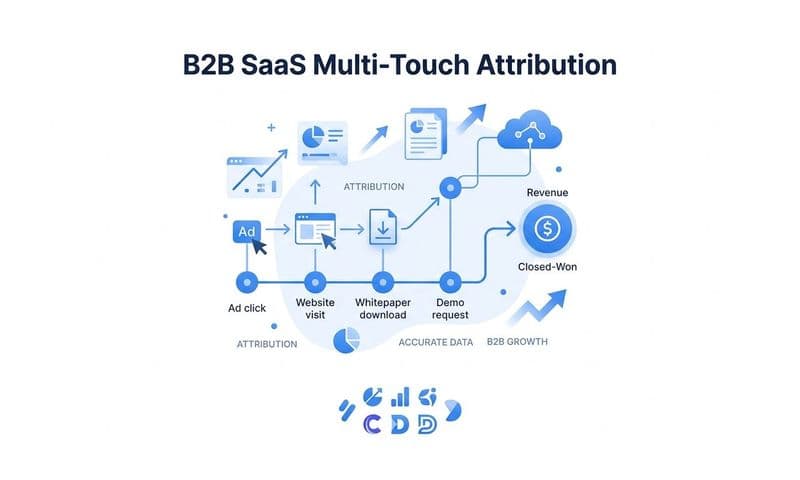
The process works like this: your attribution system captures every touchpoint in the customer journey. Someone clicks a Facebook ad, visits from Google organic search, clicks a Google ad, then converts. Your attribution platform sees all of it and determines which channels deserve credit.
When a conversion happens, your attribution platform sends that data back to Facebook, Google, TikTok, and other ad networks. But unlike basic pixel tracking, this conversion data is enriched with complete journey information and matched to the correct user using first-party data.
Link your attribution platform to each ad network through their respective APIs. This typically involves generating API credentials in each platform and authorizing your attribution system to send conversion data on your behalf.
Configure which conversion events sync to each platform. You might send all purchases to Facebook but only high-value purchases to TikTok. Different platforms optimize better with different conversion signals, so customize your sync settings accordingly.
Decide which data points to include with each conversion. The conversion value and currency are essential. Customer identifiers like hashed email improve matching. Custom parameters like product category or customer lifetime value help platforms optimize for the right outcomes.
Set up your sync cadence based on conversion volume and platform requirements. Real-time syncing sends conversions immediately as they happen, ideal for high-volume businesses. Scheduled syncing batches conversions and sends them hourly or daily, suitable for lower-volume operations. If you need instant conversion tracking updates, prioritize real-time sync configurations.
Real-time syncing gives ad platforms fresh data to optimize against, but it requires robust infrastructure. Scheduled syncing is simpler to implement and maintain, though it introduces a delay between conversion and platform optimization.
Platforms like Cometly automate this entire process. They track every touchpoint from ad click through CRM events, attribute conversions accurately across your marketing stack, and sync enriched conversion data back to your ad platforms automatically. The system handles the technical complexity while you focus on strategy.
Verify your conversion sync is working by comparing platform-reported conversions with your attribution data. The numbers should align closely. If you're syncing 100 conversions but the platform only shows 75, investigate your matching parameters or API configuration.
Monitor match rates in each platform. Meta shows Event Match Quality for Conversions API events. Google shows match rates for Enhanced Conversions and offline imports. High match rates confirm your first-party data is successfully connecting conversions to users.
Watch for duplicate conversions. If you're running both native platform tracking and attribution platform syncing, ensure proper deduplication. Use event IDs or conversion IDs to prevent the same sale from being counted twice.
Track the impact on campaign performance over time. As platforms receive more accurate conversion data, their algorithms optimize more effectively. You should see improved ROAS, better audience targeting, and more efficient budget allocation as the systems learn from complete data.
Step 7: Validate Your Setup and Establish Ongoing Monitoring
Implementation is only half the battle. You need to validate everything works correctly and establish monitoring systems to catch issues before they impact your campaigns.
Run a comprehensive validation test over at least two weeks. Compare conversions attributed by your new tracking setup against actual revenue in your source of truth. The numbers should match within a reasonable margin, typically 95% or better.
If your attributed conversions are significantly lower than actual revenue, you're still missing conversions somewhere. Check your server-side tracking implementation, verify your API connections are working, and ensure all conversion points are properly instrumented. Understanding why conversions are not tracking helps you systematically diagnose these gaps.
If attributed conversions exceed actual revenue, you have a duplication problem. Review your event deduplication logic, check for multiple tracking implementations firing simultaneously, and verify you're not double-counting conversions across different systems.
Create a monitoring dashboard that tracks key metrics daily. Total conversions by platform, match rates, Event Match Quality scores, API error rates, and the gap between attributed and actual revenue. When something breaks, you'll see it immediately.
Set up alerts for significant discrepancies. If your Facebook conversion volume drops 30% overnight, you need to know immediately. Automated alerts catch tracking failures before they waste significant ad spend.
Document your entire tracking architecture. What systems connect to what? Which APIs are in use? What are the event naming conventions? Where are customer identifiers captured and stored? This documentation becomes critical when troubleshooting issues or onboarding new team members.
Include troubleshooting steps in your documentation. If conversions stop flowing to Facebook, here's the checklist to diagnose the problem. If Event Match Quality drops, here's how to investigate. Documented processes turn tracking maintenance from expert-only work into something any team member can handle.
Schedule quarterly audits of your entire tracking setup. Platforms change their APIs, privacy regulations evolve, and your website gets updated. Regular audits catch new tracking gaps before they become serious problems.
During audits, repeat your initial baseline test. Compare platform-reported conversions to actual revenue. The gap should remain minimal. If it's growing, investigate immediately. Something in your tracking chain has degraded.
Test new features and conversion points as you add them. Launching a new product? Verify conversions track correctly. Adding a new lead form? Test that submissions flow through your tracking systems. Proactive testing prevents tracking gaps from emerging.
Stay informed about platform updates. Subscribe to developer blogs for Facebook, Google, and other ad platforms you use. Privacy regulation changes affect tracking capabilities. Platform API updates might require configuration changes. Knowledge keeps your tracking working smoothly.
Putting It All Together
Accurate conversion tracking after iOS updates isn't optional anymore. It's the foundation of profitable advertising. Without it, you're flying blind, making budget decisions based on incomplete data and missing opportunities to scale what actually works.
Use this implementation checklist to verify your setup is complete:
Current tracking gaps documented and quantified. You know exactly how much data you're missing and where the blind spots are.
Server-side tracking implemented and tested. Conversions flow from your server to tracking systems regardless of browser restrictions.
Meta Conversions API configured with event deduplication. Facebook and Instagram receive accurate conversion data with proper matching parameters.
Google Enhanced Conversions and offline imports active. Google Ads gets enriched conversion data from both website and CRM sources.
First-party data collection built into customer journey. You're capturing emails and identifiers early, creating trackable relationships with customers.
Attribution platform syncing data back to ad networks. Complete journey data flows back to platforms to improve their optimization algorithms.
Ongoing monitoring and validation processes in place. You catch tracking issues quickly and maintain accurate data over time.
When these systems work together, you regain the visibility that iOS updates took away. You see which campaigns actually drive revenue. You optimize based on complete data. You scale with confidence because your numbers reflect reality.
Platforms like Cometly streamline this entire process by connecting your ad platforms, CRM, and website to track the complete customer journey. The system captures every touchpoint, uses AI to identify high-performing campaigns, and syncs enriched conversion data back to your ad networks automatically. This feeds better data to platform algorithms, improving targeting and optimization while giving you clear visibility into what's actually driving results.
The iOS updates changed the game, but they didn't end accurate tracking. They just raised the bar for what proper implementation looks like. Server-side methods, first-party data, and smart platform configurations restore the visibility you need to run profitable campaigns at scale.
Ready to elevate your marketing game with precision and confidence? Discover how Cometly's AI-driven recommendations can transform your ad strategy. Get your free demo today and start capturing every touchpoint to maximize your conversions.