You're probably living some version of this right now.
Paid social says it drove the sale. Google Ads says it assisted. Your CRM shows the lead came from an outbound sequence. Shopify records revenue, but your analytics tool loses the thread somewhere between the first click and the checkout. Meanwhile, the customer had to re-enter information twice, got a retargeting ad for a product they already bought, and opened a support ticket that nobody in marketing ever sees.
That's not just a customer experience problem. It's a measurement problem.
A unified customer experience matters because fragmented journeys create fragmented data. When teams can't connect touchpoints across web, CRM, email, support, and commerce systems, attribution turns into guesswork. And when attribution is weak, budget decisions get political fast. Channels get funded because they're loud, not because they work.
Beyond the Buzzword What Unification Means for Marketers
Marketers often hear “customer experience” and think about service quality, brand consistency, or post-sale support. Those matter, but they miss the operational point. For performance teams, unified customer experience means one connected record of how a person moved from awareness to revenue.
Without that continuity, every platform tells a partial story. Meta sees an impression. Google sees a branded search. HubSpot sees a form fill. Stripe sees a payment. None of them, on their own, can explain the full path or assign credit with confidence.
Why this became a competitive issue
The push for unification didn't show up last quarter. It has been building for years. A 2012 Gartner-era shift toward competing on customer experience framed CX as a core differentiator, with 89% of companies expecting to compete primarily on CX by 2016. That direction held up as CX leaders outperformed laggards by 20% in sales growth, while 73% of consumers used multiple channels during their journey.
For marketers, that last number is the one that changes everything. If most buyers move across channels, but your data doesn't move with them, your reporting is misaligned with reality from the start.
Practical rule: If a customer can switch devices, channels, or teams faster than your data can follow them, your attribution model is already broken.
A unified customer experience fixes that by treating the journey as one system instead of separate events. That's why data architecture and campaign measurement belong in the same conversation. If you want a clean view of ROI, you need clean continuity between touchpoints.
What fragmentation looks like in practice
Here's the common pattern:
- Acquisition data lives in ad platforms: Clicks, impressions, and campaign IDs stay trapped in media tools.
- Lead data lives in the CRM: Sales sees stages and owners, but not the ad context.
- Revenue data lives in commerce or billing systems: Finance knows what closed, but not what influenced it.
- Support data lives elsewhere: Post-purchase friction never feeds back into marketing decisions.
That setup doesn't just create reporting gaps. It creates bad customer experiences and bad budget allocation at the same time. Teams trying to solve this usually start with reporting, then realize the root issue is broader. The path to cleaner measurement usually starts with marketing data unification, not another dashboard layered on top of messy inputs.
Defining a Truly Unified Customer Experience
A unified customer experience is simple to describe and hard to build.
It means a customer feels like they're dealing with one company that remembers them, understands context, and responds consistently across channels. From the business side, it means your systems can recognize the same person across touchpoints and act on that shared view.
 Mastering the Unified Customer Experience in 2026
The easiest way to think about it
A fragmented journey feels like talking to a friend who forgets every previous conversation. Every time you text, call, or meet, you have to start over. You repeat your name, your issue, what you bought, what you already tried, and what you want next.
A unified journey feels like an ongoing conversation. Context carries forward. The next interaction makes sense because the last one wasn't lost.
That difference shows up everywhere:
Experience type | What the customer sees | What the marketer sees |
|---|---|---|
Fragmented | Repetitive questions, irrelevant ads, channel inconsistency | Conflicting attribution, duplicate contacts, missing revenue paths |
Unified | Relevant follow-up, smoother handoffs, personalized timing | Cleaner source data, connected journeys, stronger ROI analysis |
What good looks like from the customer side
A buyer clicks a paid search ad, browses pricing on mobile, signs up later on desktop, receives an onboarding email after purchase, and gets support that reflects what they already bought. Nobody asks them to start from zero. Nobody serves them acquisition creative after conversion. Nobody treats the support interaction as if it happened in a different universe.
That's a unified customer experience.
By contrast, a siloed setup does the opposite. It retargets existing customers with prospecting offers. It sends a generic nurture sequence after a sales call. It logs the same person as three different contacts because one system has a phone number, another has an email, and a third only knows a browser session.
The customer experiences confusion. The marketing team experiences false signals.
That's why journey visibility matters so much. Teams that invest in customer journey analytics stop treating touchpoints as isolated campaign events and start reading them as connected behavior. Once you see the journey that way, “unified customer experience” stops sounding abstract. It becomes the standard for whether your data can support your marketing decisions.
The Business Case for Unifying Customer Data
A paid social campaign drives a lead. The prospect returns through branded search, books a demo after an email reminder, then closes after a sales follow-up. If those interactions live in separate systems, each team claims a different version of the win. Finance sees conflicting CAC. Marketing overfunds the wrong channels. Sales trusts gut feel over reporting because the reporting keeps changing.
 Mastering the Unified Customer Experience in 2026
That is the fundamental business case for unifying customer data. A unified customer experience improves satisfaction, but the bigger upside is measurement. Teams can only prove marketing ROI when customer interactions, identifiers, and revenue events connect into one usable record.
For a CMO, that means cleaner attribution. For a CFO, it means less budget waste caused by false credit assignment. For revenue teams, it means fewer arguments about what influenced pipeline versus what appeared near the finish line.
Why finance should care as much as marketing
Many companies still treat unification as a martech cleanup project. That framing misses the cost of bad measurement.
Disconnected source data pushes budget toward channels that look efficient in platform reporting but contribute less than they appear to. Branded search often absorbs credit created by earlier demand. Retargeting gets praised for conversions that were already likely to happen. Email can look like a top closer because the first click, product visit, or sales touch was never connected back to the same person.
Attribution works like bookkeeping for demand generation. If transactions are recorded in different ledgers with different customer names, the final report is unreliable no matter how polished the dashboard looks.
That's why big data for marketers matters only if the data can be matched to people, journeys, and revenue outcomes.
A short explainer on why this matters operationally is worth watching:
The payoff shows up in operations and in reporting
Better dashboards are part of the return. Better decisions are the larger one.
- Marketing gets cleaner attribution: Budget shifts toward channels that create pipeline and revenue, not just cheap conversions inside ad platforms.
- Sales gets better context: Reps see what a lead viewed, clicked, downloaded, and responded to before the handoff.
- Support gets a fuller history: Teams resolve issues faster because purchase details, onboarding activity, and prior conversations are visible in one place.
- Leadership gets one operating view: Teams spend less time reconciling conflicting reports and more time acting on the same numbers.
Unified customer experience means customer context carries across systems instead of resetting at each handoff.
That changes how companies invest. They stop treating unification as a branding or CX initiative alone and start treating it as the foundation for attribution, budget control, and credible ROI measurement.
The Four Building Blocks of a Unified Experience
A buyer clicks a paid social ad on Monday, reads two case studies on Wednesday, books a demo from a branded search on Friday, and closes three weeks later after a sales call. If those interactions live in separate systems with separate IDs, marketing gets a distorted story. The customer experience feels fragmented, and attribution does too.
That is why these four building blocks matter. They do more than improve coordination across teams. They create the conditions for credible ROI measurement.
 Mastering the Unified Customer Experience in 2026
Centralized data collection
Centralized collection is the intake layer. Every meaningful touchpoint needs to arrive in a system where it can be matched later. That includes site visits, form fills, ad clicks, purchases, CRM stage updates, support events, and email engagement.
Many teams mistake stored data for connected data. Analytics sits with web, pipeline activity sits in CRM, revenue sits in billing, and campaign history sits inside ad platforms. Each system records part of the journey, but none can explain the whole journey well enough to defend budget decisions.
The goal is simple. Capture interactions with source, timestamp, and customer identifiers intact so later reporting can connect spend to revenue instead of just clicks to conversions.
Accurate identity resolution
Identity resolution connects those interactions back to the same person across devices, sessions, and platforms. It works like reconciling multiple versions of the same contact record before reporting starts. Without that step, one buyer can look like three separate leads.
Teams usually rely on two types of signals. Deterministic matching uses identifiers such as email address, login, account ID, or customer ID. Probabilistic matching uses supporting clues such as device, location, browsing behavior, and timing when direct identifiers are missing.
The trade-off is accuracy versus coverage. Strict deterministic rules reduce false matches but leave more anonymous activity unassigned. Broader matching fills in more of the path but can introduce noise if governance is weak.
Attribution quality rises or falls here. If identity is messy, reports will overcount paths, split revenue across duplicate users, and give too much credit to whichever platform sits closest to the conversion.
Field note: Identity resolution improves when teams standardize naming conventions, pass consistent IDs through every handoff, and stop letting each platform create its own version of the customer.
Multi-touch attribution
Once collection and identity are in place, attribution can move beyond first-click and last-click shortcuts. Multi-touch attribution assigns credit across the sequence of interactions that influenced the outcome.
Buying journeys rarely follow a straight line. A prospect might first hear about the brand from YouTube, return through organic search, engage with an email, then convert after a retargeting ad or branded search. Last-click reporting will make the final touch look stronger than it is and hide the channels that created demand earlier.
Multi-touch attribution helps answer questions that finance and leadership care about:
- Which campaigns start revenue-producing journeys
- Which channels assist conversion without claiming the final click
- Which touchpoint patterns show up in larger deals or faster sales cycles
- Which sources look efficient only because they appear at the end
A useful analogy is assisted scoring in team sports. The player who taps in the final goal matters, but so do the passes that made the chance possible. Good attribution measures the whole play, not just the finish.
Real-time journey orchestration
Orchestration is where the unified experience becomes visible to the customer. The connected profile triggers the next action based on current context, not on whatever one tool happens to know.
For example, after a purchase, the system should stop prospecting ads, start onboarding emails, update lifecycle stage in the CRM, and flag support if setup activity stalls. That response depends on shared data arriving quickly and consistently across systems.
This is also where server-side tracking for better data continuity earns its keep. Teams often adopt it to improve measurement, but the operational payoff is just as important. More reliable event flow means better timing, fewer broken handoffs, and a customer record that stays usable when browser-side tracking drops events or loses identifiers.
These four blocks reinforce each other. Collection without identity creates noise. Identity without attribution creates a cleaner database but weak budget guidance. Attribution without orchestration improves reporting but leaves customer experience untouched. Put them together, and unification stops being a CX slogan and starts functioning as a measurement system the business can trust.
An Actionable Roadmap to Implementation
Most unification projects fail because teams try to transform everything at once. They buy tools before defining the customer record, migrate too many systems in one push, and end up with a more expensive version of the same mess.
A better approach is phased and boring. That's a good thing.
Start with an audit you can defend
Before choosing software, map the systems that already touch the customer. Include ad platforms, web analytics, CRM, email platform, support tool, billing system, e-commerce platform, and any warehouse or CDP already in place.
Then answer four practical questions:
- Where does customer identity begin
- Where does it split
- Where does revenue get recorded
- Where does context disappear
This audit should show not just tools, but handoff failures. For example, a lead form may push into the CRM without campaign metadata. A checkout event may record revenue without reconnecting to the original acquisition source. A support ticket may exist under an email alias that doesn't match the purchase record.
Choose the system of record before adding more software
Every team needs a place where the unified customer record lives or is at least resolved. That may be a CDP, a warehouse-centric setup, or an attribution layer connected tightly to CRM and commerce data. The right architecture depends on team size, resources, and technical depth.
What doesn't work is trying to make every tool the source of truth.
Use this decision lens:
Decision area | Bad approach | Better approach |
|---|---|---|
Customer identity | Let each platform define a user separately | Standardize identifiers across systems |
Revenue mapping | Report revenue inside ad tools only | Reconcile with CRM, billing, or commerce records |
Event tracking | Fire tags everywhere and hope they align | Define core events and naming rules first |
Ownership | Split accountability across departments | Assign one team to govern data quality |
Pilot one journey, not the whole company
Don't begin with “unify all channels.” Begin with one high-value journey.
For a SaaS company, that may be ad click to demo booked to opportunity created. For e-commerce, it may be first session to product view to purchase to repeat order. For a B2B services firm, it may be content engagement to form fill to sales-qualified lead.
Pick one journey where revenue matters and data breaks are obvious. Then fix that path end to end. Get attribution, identity, and post-conversion suppression working there first.
Teams build trust in unification when they can show one journey got cleaner, one report got more believable, and one budget decision got easier.
Scale with governance, not enthusiasm
Once the pilot works, scale by adding adjacent systems and channels in sequence. Document naming conventions. Lock down event definitions. Create rules for when a contact is considered new, qualified, customer, or repeat buyer.
At this stage, governance matters more than ambition. The companies that sustain a unified customer experience are the ones that treat data quality like an operating discipline, not a launch project.
How Attribution Platforms Enable Unification
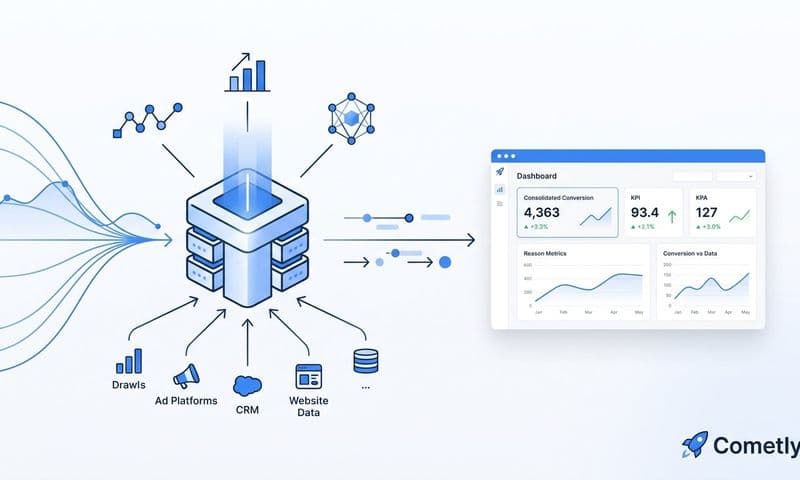
Attribution platforms sit in a useful middle layer between raw customer data and budget decisions. They don't replace your CRM, commerce platform, or support tool. They connect signals across them so marketing can read one revenue story instead of five partial ones.
 Mastering the Unified Customer Experience in 2026
That's why unified customer experience and attribution belong together. Attribution answers, “What influenced the sale?” Unification answers, “Are we even looking at the same customer across all those touchpoints?” You need the second before the first becomes trustworthy.
What a good attribution layer actually does
A solid attribution platform should help with four jobs at once:
- Ingest channel data: Paid, organic, email, outbound, referral, and direct interactions need to land in one reporting environment.
- Preserve identity across touchpoints: Anonymous visitor behavior has to connect to known leads and customers when the handoff occurs.
- Sync conversion outcomes back to media platforms: If ad platforms never receive accurate downstream conversions, optimization drifts.
- Show revenue by path, not just by click: Teams need to see assistance, not only last-touch winners.
This is where marketing attribution becomes practical rather than theoretical. The platform turns fragmented event streams into a decision-making view that media buyers, growth leads, and CMOs can actually use.
Why server-side and multi-touch matter so much
Client-side tracking alone often creates gaps. Browser restrictions, ad blockers, cookie loss, and inconsistent tagging all chip away at fidelity. Server-side infrastructure helps stabilize the flow of conversion data between your site, CRM, and ad platforms. Multi-touch models then use that cleaner input to assign credit across the path.
The operational result is better optimization, not just prettier reports. As noted earlier in the business case, better issue resolution and retention follow from stronger unification. In the attribution layer specifically, the outcome is clearer budget allocation.
Qualitatively, teams using AI-enhanced unified platforms and server-side event flows often see less wasted spend and more confidence in scaling decisions. The biggest difference isn't that every report becomes perfect. It's that the organization stops arguing over disconnected numbers and starts adjusting campaigns from a shared view of reality.
Where teams go wrong with attribution tools
The most common mistake is treating the platform like a scoreboard instead of a system. If you only use attribution software to inspect results after the fact, you leave value on the table.
Use it to govern action:
- Feed clean conversions back into ad platforms
- Spot journeys that stall between lead and revenue
- Find channels that assist high-value customers
- Suppress wasteful retargeting after purchase
- Compare reported platform performance to actual business outcomes
That's when an attribution platform starts supporting a unified customer experience instead of merely describing its absence.
Common Pitfalls and How to Avoid Them
The biggest mistake is assuming this is a technology project. It isn't. It's a business process project with technical dependencies.
Buying tools before defining the journey
Teams often sign a CDP, add tracking scripts, and connect ad accounts before they agree on the core customer journey they're trying to measure. The result is lots of data and very little clarity.
Fix that by defining one revenue-critical journey first. Agree on stages, success events, ownership, and required identifiers before implementation starts.
Letting departments keep separate definitions
Marketing says a lead is created at form fill. Sales says it starts at qualification. Success says the customer lifecycle starts after onboarding. None of these definitions are wrong in isolation, but they break unification if they aren't reconciled.
Create a shared measurement dictionary. Decide what counts as a lead, opportunity, customer, repeat customer, and churn risk. If teams name the same reality differently, your reporting will never line up.
Ignoring governance until data gets messy
A lot of companies postpone governance because it sounds slow. Then naming conventions drift, duplicate records multiply, and no one trusts the dashboards.
Set rules early for event naming, source tagging, identity matching, and access control. Review them often. Data quality declines gradually, then all at once.
The failure pattern is consistent. Teams chase visibility first, then discover they never defined ownership, identifiers, or standards.
A unified customer experience works when strategy, operations, and measurement move together. If one of those lags, the customer feels the break and the reporting reflects it.
If you want to connect ad spend, customer journeys, and actual revenue in one place, Cometly gives performance teams the infrastructure to do it. It helps unify touchpoints across paid, organic, email, CRM, and commerce systems so you can measure what's really driving pipeline and sales, then optimize with confidence.