
You check your Facebook Ads dashboard and see 47 conversions this week. Your Google Analytics shows 62. Your CRM says 38 people actually became customers. Which number do you trust? More importantly, which number is your ad platform using to decide who to show your ads to next?
This isn't just a reporting headache. It's a fundamental problem that's quietly draining your ad budget every single day. When your ad platforms optimize campaigns based on incomplete or inaccurate conversion data, they're essentially making decisions in the dark. They show your ads to the wrong people, bid too high on low-value audiences, and miss opportunities to scale what's actually working.
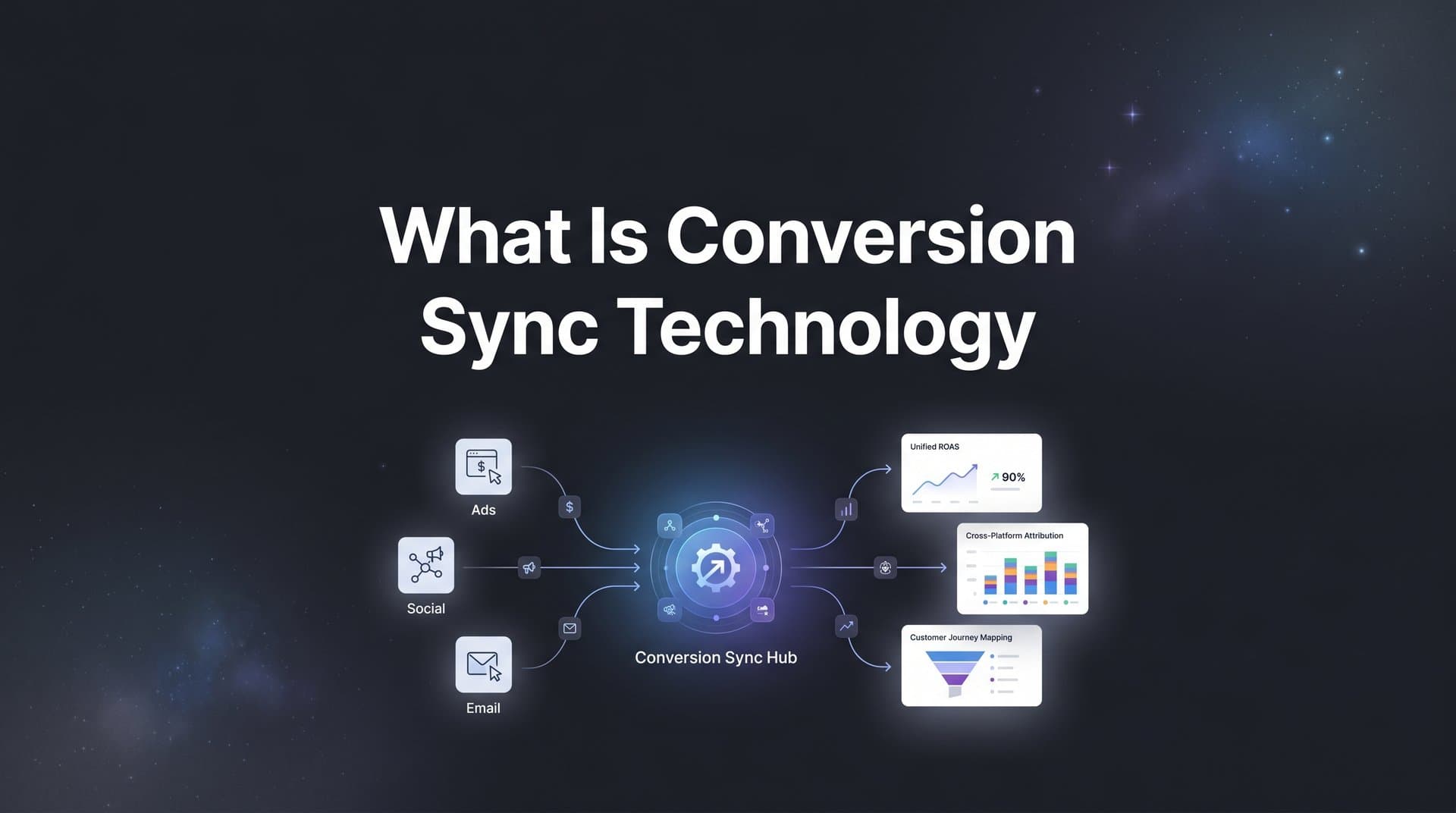
Conversion sync technology exists to solve exactly this problem. It creates a direct pipeline between your actual business results and the algorithms that control your ad spend. Instead of relying on browser cookies that get blocked or pixels that miss conversions, it feeds real conversion data directly from your CRM or backend systems to your ad platforms in real time. The result? Smarter targeting, better optimization, and campaigns that actually scale based on what drives revenue.
The Data Gap That's Costing You Ad Spend
Let's start with why this problem exists in the first place. Traditional ad tracking worked beautifully for years using a simple mechanism: you placed a pixel on your website, someone clicked your ad, the pixel fired when they converted, and the ad platform knew exactly which ad drove that conversion.
Then everything changed. Apple's iOS 14.5 update in 2021 introduced App Tracking Transparency, which lets users opt out of tracking across apps and websites. Most users said no. Suddenly, Meta and other platforms lost visibility into millions of conversions happening on iOS devices. Google followed suit with plans to deprecate third-party cookies in Chrome. Firefox and Safari had already blocked them years earlier.
The impact goes beyond just privacy updates. Modern customer journeys are inherently complex. Someone sees your ad on their phone during lunch, researches on their laptop at home, and converts on their tablet the next morning. Each device switch creates a potential tracking gap. Add in ad blockers, VPNs, and users who clear their cookies regularly, and you're looking at a tracking ecosystem full of holes.
Here's where it gets expensive. Ad platform algorithms rely on conversion signals to learn who your best customers are. When Meta's Advantage+ campaigns or Google's Performance Max don't receive accurate conversion data, they optimize toward incomplete patterns. They might think your best customers are people who convert quickly on desktop, when your actual highest-value customers research for days across multiple devices before buying on mobile. Understanding click to conversion time becomes critical in these scenarios.
The business impact shows up in three painful ways. First, your cost per acquisition climbs because platforms bid aggressively on audiences that look good in their incomplete data but don't actually convert at your backend. Second, you miss scaling opportunities because platforms never learn about your best-performing segments. Third, you make budget decisions based on platform reporting that doesn't match your actual revenue, leading to misallocated spend across channels.
Think about running a lead generation campaign where someone fills out a form on your site, but only 30% of those leads actually qualify after your sales team vets them. If your ad platform only knows about the form fill and never learns which leads became qualified opportunities, it will keep finding more people who fill out forms but waste your sales team's time. The platform thinks it's crushing it while your actual pipeline stays thin.
How Conversion Sync Technology Actually Works
Conversion sync technology takes a fundamentally different approach to tracking. Instead of relying on browser-based pixels that can be blocked or lost, it captures conversion events at the source—your CRM, payment processor, or backend database—and transmits them directly to ad platforms via server-to-server API connections. This is the foundation of server-side conversion tracking.
Here's the technical flow in practice. A potential customer clicks your Facebook ad and lands on your website. They browse, maybe leave and come back later, then eventually convert by making a purchase or submitting a lead form. Your CRM or e-commerce platform records this conversion with all the relevant details: customer email, order value, product purchased, timestamp.
This is where conversion sync kicks in. The technology captures that conversion event from your backend system, enriches it with attribution data to connect it back to the original ad click, then sends it to the appropriate ad platform using their official API. For Meta, that's the Conversions API. For Google, it's Enhanced Conversions. TikTok has its Events API, and LinkedIn has its own Conversions API.
The matching process uses hashed customer identifiers. When someone converts, the system takes their email address or phone number, hashes it using a one-way encryption algorithm, and sends that hashed value along with the conversion event. The ad platform compares this against its own hashed database of users to match the conversion to the person who clicked the ad. This happens entirely server-side, so browser tracking limitations don't interfere.
The difference between pixel-based tracking and server-side conversion sync comes down to reliability and completeness. A pixel fires in the user's browser and can be blocked by privacy settings, ad blockers, or browser restrictions. It only knows what happens on that specific device and browser session. Server-side conversion sync happens on your server, completely independent of the user's browser. It captures every conversion that hits your backend, regardless of device, browser, or privacy settings.
There's another crucial advantage: timing. Pixels can only report conversions that happen immediately during a tracked session. If someone clicks your ad, browses your site, leaves, then returns three days later through a different channel and converts, the pixel likely won't connect that conversion back to the original ad. Server-side conversion sync can attribute that conversion accurately because it's matching based on customer identity, not cookie sessions.
Modern conversion sync solutions also handle the complexity of multi-platform campaigns. If you're running ads on Meta, Google, TikTok, and LinkedIn simultaneously, the technology determines which platforms should receive credit for each conversion based on your attribution model. It then formats the conversion event correctly for each platform's specific API requirements and sends it in real time.
Why Ad Platform Algorithms Need Better Data
To understand why conversion sync matters so much for campaign performance, you need to understand how modern ad platform algorithms actually work. They're no longer simple targeting systems where you pick demographics and interests. They're sophisticated machine learning models that find patterns in conversion data to predict who else is likely to convert.
Meta's Advantage+ Shopping campaigns and Google's Performance Max are prime examples. You give these systems your creative assets, a budget, and basic parameters, then they use conversion signals to figure out everything else. They test different audiences, placements, and bidding strategies, constantly learning from which combinations drive conversions.
The quality of your conversion data directly determines how well this learning process works. When you feed an algorithm incomplete conversion data—say, it only sees 60% of your actual conversions due to tracking limitations—it builds a model based on a skewed sample. It might think your best audience is 25-34 year old women in urban areas because those are the conversions it can track, when your actual best customers include a significant segment of 35-44 year old men in suburbs whose conversions go untracked. Understanding attributed conversions helps clarify what the algorithm actually sees.
Lookalike audiences and similar audience targeting rely entirely on this principle. The platform analyzes the characteristics of your converters—their interests, behaviors, demographics, and engagement patterns—then finds other users who match those patterns. If your seed audience of converters is incomplete or inaccurate, your lookalike audiences will be too. You'll scale into the wrong people.
Bid optimization works the same way. When Google's Smart Bidding or Meta's Lowest Cost bidding strategies decide how much to bid on each auction, they're predicting the likelihood that this specific user will convert based on patterns they've learned from your historical conversion data. Better conversion data means more accurate predictions, which means more efficient bids. You pay less for the same conversions because the algorithm knows exactly who to pursue aggressively and who to skip.
There's also the learning phase to consider. When you launch a new campaign, ad platforms enter a learning period where they're gathering data to optimize performance. Meta typically needs about 50 conversions per week to exit learning phase. But here's the catch: it's 50 conversions that the platform can see and track. If you're only capturing 60% of your actual conversions due to tracking gaps, you need significantly more real-world conversions to feed the algorithm enough data. This extends your learning phase and delays the point where your campaigns start performing efficiently.
Conversion sync technology solves this by ensuring platforms receive complete, accurate conversion signals. When Meta's algorithm sees 100% of your conversions instead of 60%, it builds better models faster. It finds your real best audiences, bids more efficiently, and exits learning phase sooner. The compounding effect of better data ripples through every aspect of campaign performance.
Key Features to Look for in a Conversion Sync Solution
Not all conversion sync implementations are created equal. The difference between a basic setup and a sophisticated solution can mean thousands of dollars in campaign performance. Here's what separates the best systems from the rest.
Real-Time Syncing: Speed matters more than you might think. Some solutions batch conversion events and upload them to ad platforms every few hours or once daily. This creates a lag between when someone converts and when the platform learns about it. Real-time syncing sends conversion events to ad platforms within seconds or minutes of them happening. This matters because platforms use recent conversion data to make immediate optimization decisions about which auctions to bid on and how much to spend. A conversion that happened two hours ago is far more valuable for optimization than one that gets reported tomorrow.
Multi-Platform Support: You're probably not running ads on just one platform. A quality ad platform conversion sync solution needs to support Meta, Google, TikTok, LinkedIn, Pinterest, Snapchat, and any other networks where you advertise. More importantly, it should handle the technical nuances of each platform's API. Meta's Conversions API has different requirements than Google's Enhanced Conversions. Your solution should abstract away this complexity and format events correctly for each destination automatically.
Deep Integration Capabilities: The real power of conversion sync comes from capturing conversions that happen deep in your funnel, not just at the top. Look for solutions that integrate with your CRM to sync qualified leads, your payment processor to capture actual revenue, and your analytics stack to track downstream events. If you're a SaaS company, you want to sync demo bookings, trial starts, and paid conversions. If you're in e-commerce, you want to capture purchases with accurate order values, including any post-purchase upsells or subscription renewals.
Attribution Model Flexibility: Different businesses need different attribution approaches. Some conversions should be attributed to multiple touchpoints, while others make sense as last-click. Your conversion sync solution should let you choose how to distribute credit across channels and send appropriately weighted conversion events to each platform. This prevents double-counting while ensuring each platform receives the signal it needs to optimize effectively. Learn more about conversion window attribution to understand these options.
Event Enrichment: Basic conversion sync sends a simple "conversion happened" signal. Advanced solutions enrich that event with additional data: customer lifetime value, product categories, conversion value, lead quality scores, or custom parameters specific to your business. This enriched data helps ad platforms optimize not just for any conversion, but for the conversions that matter most to your business.
Deduplication Logic: When you're running pixels and server-side conversion sync simultaneously, you risk sending duplicate conversion events to platforms. Quality solutions include deduplication logic that identifies when the same conversion is being reported through multiple channels and ensures platforms receive it only once. This keeps your reporting accurate and prevents algorithms from over-optimizing based on inflated conversion counts.
Practical Use Cases Across Different Business Models
Conversion sync technology adapts to different business models in distinct ways. Understanding how it applies to your specific situation helps you implement it effectively and measure the right outcomes.
E-commerce Applications: Online retailers face a particular challenge with tracking purchase events accurately. Someone might add items to cart on mobile, abandon it, then complete the purchase on desktop three days later after receiving an email reminder. Traditional pixel tracking often misses this conversion or attributes it to the wrong channel. Conversion sync captures the purchase event from your e-commerce platform with complete accuracy, including the exact order value, products purchased, and customer information. This lets you optimize for return on ad spend rather than just conversion volume. The platform learns which audiences generate $200 average order values versus $50, and adjusts bidding accordingly. Understanding purchase conversion value helps you maximize this optimization.
SaaS and Lead Generation: This is where conversion sync becomes truly powerful. Most SaaS companies care far more about qualified demos or paid subscriptions than they do about form fills or free trial starts. But ad platforms typically only see the top-of-funnel action because that's what happens on the website where pixels fire. Conversion sync lets you send the conversions that actually matter. When a lead qualifies in your CRM, that event syncs to your ad platforms. When a trial converts to paid, that higher-value conversion syncs. Now your campaigns optimize toward revenue, not just activity. The platform learns the difference between someone who fills out a form and ghosts your sales team versus someone who becomes a paying customer.
Agency Management: Marketing agencies managing multiple client accounts face unique complexity. Each client has different conversion events, different platforms, different CRMs. A scalable conversion sync solution lets agencies set up and manage server-side tracking across their entire client roster from a central dashboard. You can map conversion events differently for each client, sync to different ad accounts, and maintain separate attribution models. This turns conversion sync from a one-off technical project into a standard service offering that improves results across your client base.
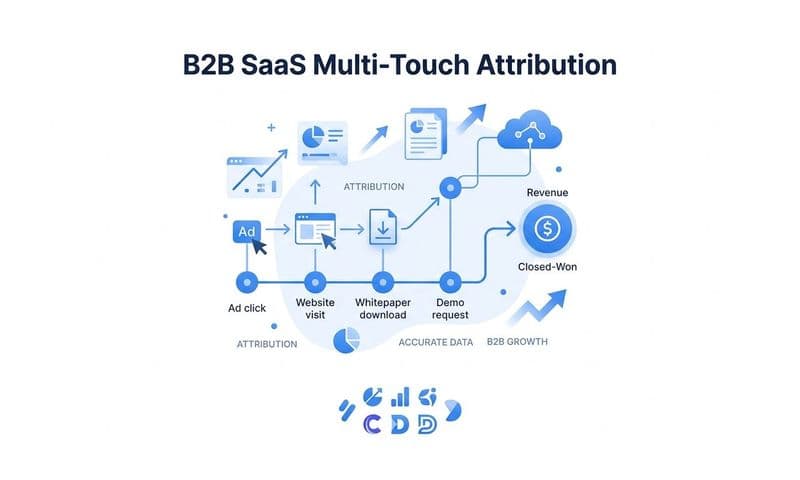
High-Ticket B2B: Companies with long sales cycles and high deal values need conversion sync most of all. When your sales cycle runs 60-90 days and your average deal is $50,000, you can't wait for platforms to figure out patterns from website behavior alone. Conversion sync lets you send closed-won deal events back to ad platforms months after the initial click. The platform learns that the ad which drove a demo request in January resulted in a $50,000 deal in March. This feedback loop is impossible with pixel-based tracking but essential for optimizing B2B campaigns effectively. Tracking offline conversions becomes essential for these longer sales cycles.
Subscription and Recurring Revenue: Businesses with subscription models benefit from syncing lifetime value events, not just initial conversions. When someone subscribes, that's valuable. When they stay subscribed for six months and upgrade to a higher tier, that's far more valuable. Conversion sync can send ongoing value signals to ad platforms as customer lifetime value increases. This trains algorithms to find customers who stick around and spend more over time, not just customers who convert initially and churn quickly.
Getting Started with Conversion Sync
Implementing conversion sync doesn't require a complete overhaul of your marketing stack, but it does need thoughtful planning. Here's how to approach it systematically. For a detailed walkthrough, check out our conversion sync setup guide.
Step 1: Connect Your Ad Platforms: Start by establishing API connections between your conversion sync solution and each ad platform where you run campaigns. This typically involves generating API credentials from each platform's business manager and authorizing your conversion sync tool to send data on your behalf. Most modern solutions guide you through this process with step-by-step instructions.
Step 2: Integrate Your Data Sources: Next, connect the systems where your actual conversions happen. This might be Salesforce or HubSpot for lead conversions, Shopify or WooCommerce for e-commerce purchases, Stripe for payment events, or your custom backend database. The goal is to create a pipeline where conversion events flow automatically from these source systems into your conversion sync platform.
Step 3: Map Your Conversion Events: Define which events you want to sync and how they should be categorized. A form submission might be a "Lead" event. A qualified sales opportunity might be "SQL." A completed purchase is "Purchase." Map these events to the corresponding conversion types in each ad platform. This ensures that when you send a "Purchase" event, Meta records it as a purchase conversion and Google does the same. You can also set up custom conversions for events specific to your business.
Step 4: Test and Validate: Before going live, run test conversions through your system and verify they appear correctly in your ad platforms. Most platforms have testing tools that let you send sample events and confirm they're being received and processed properly. Check that conversion values are passing through accurately and that deduplication is working if you're running pixels simultaneously.
Common concerns about setup complexity are usually overblown. Modern conversion sync platforms are designed for marketers, not just developers. If you can connect integrations in Zapier, you can set up conversion sync. That said, having technical support available during initial setup helps smooth out any platform-specific quirks.
Measuring success comes down to comparing before and after. Track your platform-reported conversions against your CRM or backend data before implementing conversion sync. You'll likely see a significant gap. After implementation, that gap should close dramatically. You should also see improvements in campaign efficiency metrics: lower cost per acquisition, higher return on ad spend, shorter learning phases for new campaigns, and better performance from algorithmic campaign types like Advantage+ and Performance Max.
The Competitive Edge of Better Data
Privacy changes aren't slowing down. Third-party cookies are disappearing. Tracking restrictions are expanding. The marketers who win in this environment are the ones who adapt their measurement infrastructure to work with these changes, not against them.
Conversion sync technology represents that adaptation. It acknowledges that browser-based tracking is increasingly unreliable and builds a more robust foundation using server-side data pipelines. When your competitors are still trying to squeeze performance out of incomplete pixel data, you're feeding ad platform algorithms the complete picture of what drives revenue in your business.
The advantage compounds over time. Better conversion data means better optimization. Better optimization means more efficient campaigns. More efficient campaigns mean you can profitably bid higher and capture more market share. Meanwhile, competitors working with incomplete data struggle to scale because their algorithms never learn the full truth about what works.
This isn't theoretical. Marketers implementing proper server-side conversion sync consistently see improvements across their key metrics because they've fixed the fundamental data problem that was holding their campaigns back. The platforms finally have the information they need to do their job well.
Ready to elevate your marketing game with precision and confidence? Discover how Cometly's AI-driven recommendations can transform your ad strategy—Get your free demo today and start capturing every touchpoint to maximize your conversions.