You've just closed another successful month. Revenue is up, leads are flowing, and your marketing campaigns are firing on all cylinders. But when your CEO asks which channels are actually driving those results, you freeze. Was it the Facebook ad that introduced them to your brand? The Google search that brought them back? The email that finally convinced them to buy?
If you're relying on last-click attribution, you're giving 100% of the credit to that final email—and completely ignoring the Facebook ad and Google search that made the conversion possible. That's like crediting only the closing pitcher for winning a baseball game while ignoring the eight innings that came before.
Multi-Touch Marketing Attribution (MMA) solves this problem by revealing the complete customer journey. Instead of oversimplifying complex buyer behavior into a single touchpoint, MMA shows you exactly how each interaction contributes to conversions. This isn't just about better reporting—it's about making smarter budget decisions based on what actually works.
The Attribution Problem Every Marketer Faces
Single-touch attribution models create dangerous blind spots in your marketing data. First-click attribution gives all the credit to whatever brought someone to your site initially, completely ignoring the nurturing that happened afterward. Last-click attribution does the opposite—it credits only the final interaction before conversion, pretending the earlier touchpoints never existed.
Here's why this matters: Modern customer journeys are messy. Your buyers don't see one ad and immediately purchase. They discover your brand on Instagram, research you on Google, read reviews, compare alternatives, sign up for your email list, and finally convert after seeing a retargeting ad weeks later.
When you use single-touch attribution, you're essentially flying blind through this complexity. You might see that your Facebook ads generated 50 conversions last month and conclude they're performing well. But what if those "conversions" were actually people who discovered you through organic search, engaged with your content for weeks, and just happened to click a Facebook ad right before buying?
The real cost of misattribution goes straight to your bottom line. You waste budget scaling channels that look good in reports but don't actually drive new customers. Meanwhile, you underinvest in the channels doing the heavy lifting because they're hidden in your data. Understanding the dilemma of attribution in marketing is the first step toward solving it.
Think about the marketing team that cuts their content budget because blog posts rarely get last-click credit—even though those posts are essential for moving prospects through the consideration phase. Or the agency that doubles down on retargeting because it shows great last-click conversions, not realizing they're just harvesting demand created by other channels.
This attribution problem gets worse as you add more marketing channels. Running campaigns across Meta, Google, TikTok, LinkedIn, and email? Each platform's native analytics will claim credit for the same conversions, inflating your reported results and making it impossible to know what's actually working.
How Multi-Touch Marketing Attribution Actually Works
Multi-Touch Marketing Attribution is a methodology that distributes conversion credit across all the touchpoints a customer interacts with before purchasing. Instead of picking one "winner," MMA recognizes that multiple channels work together to drive results.
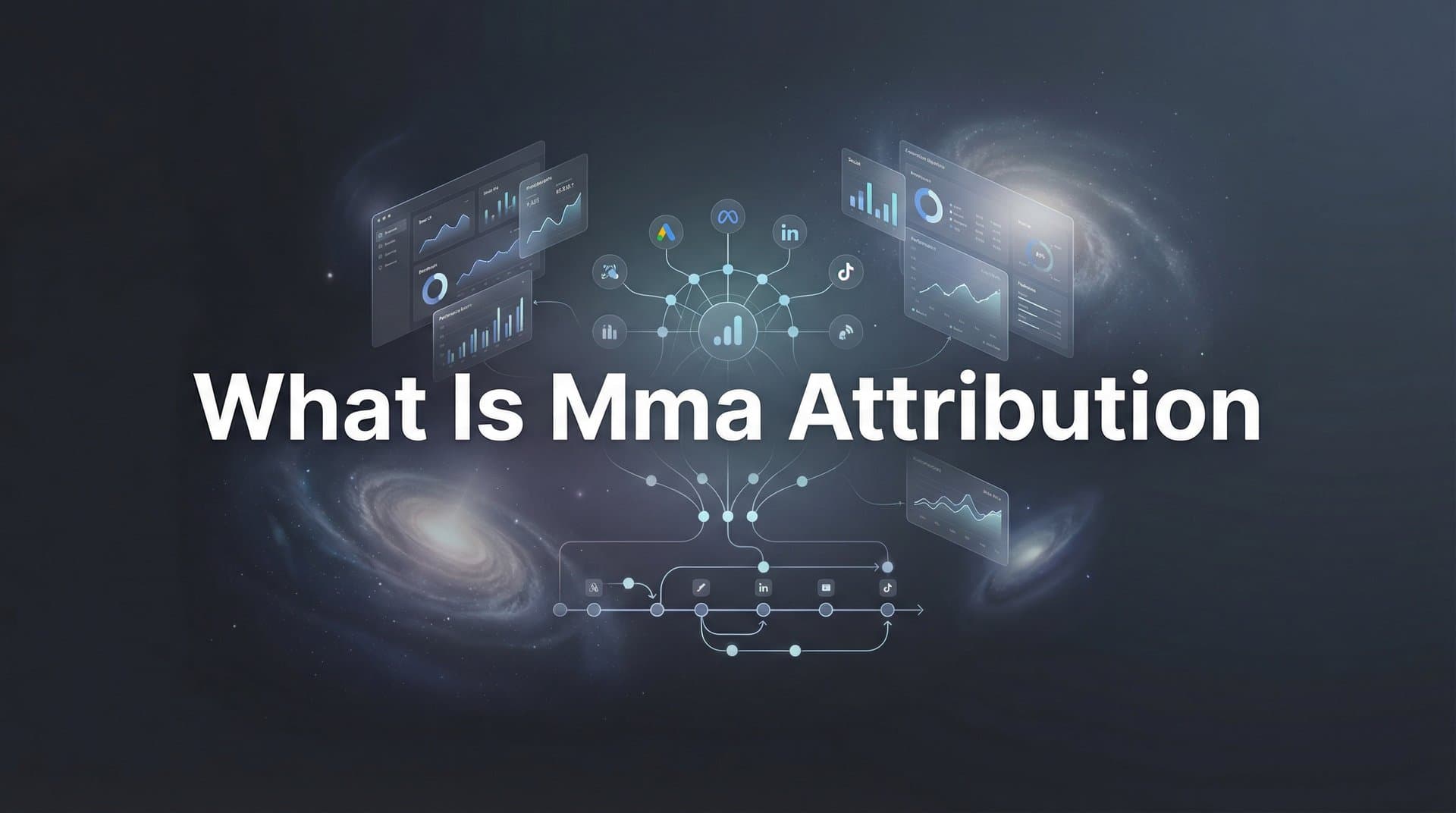
The process starts with comprehensive data collection. MMA platforms track every interaction a prospect has with your brand—from the first ad impression through website visits, email opens, content downloads, and ultimately the final conversion. This creates a complete timeline of the customer journey.
Here's what that looks like in practice: Sarah sees your Facebook ad on Monday but doesn't click. On Wednesday, she searches for your product category on Google and visits your website. Thursday, she opens your welcome email and reads a blog post. The following Monday, she sees a LinkedIn ad and finally converts.
Traditional last-click attribution would give LinkedIn 100% of the credit. But MMA recognizes that Facebook introduced her to your brand, Google brought her to your site, your content educated her, and LinkedIn closed the deal. Each touchpoint played a role. This is why understanding what is multi-touch attribution matters for accurate measurement.
The technical foundation of MMA is cross-platform data integration. Your attribution platform needs to connect data from your ad accounts, website analytics, CRM, and email platform into a unified view. This is harder than it sounds because each platform tracks users differently and uses different identifiers.
Server-side tracking has become essential for accurate MMA attribution. Browser-based tracking faces increasing limitations from privacy updates, ad blockers, and cookie restrictions. Server-side tracking captures conversion data directly from your server, maintaining accuracy even when browser tracking fails.
The platform then links these touchpoints to individual users, creating journey maps that show exactly how people move from awareness to conversion. This requires identity resolution—matching the person who clicked your Facebook ad to the same person who later visited from Google and eventually converted.
Once the data is connected, MMA platforms apply attribution models to distribute credit. Some models split credit equally across touchpoints. Others weight certain interactions more heavily based on their position in the journey or their actual impact on conversion probability.
The output is actionable insight: You can see that while LinkedIn gets the last click, Facebook actually introduces 60% of your eventual customers. Your blog content assists in 40% of conversions even though it rarely gets last-click credit. Google Search drives high-intent traffic that converts quickly, while Meta builds awareness that converts over time.
Common MMA Attribution Models Compared
Choosing the right attribution model determines how credit gets distributed across your marketing touchpoints. Each model serves different purposes and reveals different insights about your customer journey. For a deeper dive into selecting the right approach, explore what attribution model is best for optimizing ad campaigns.
Linear Attribution: This model gives equal credit to every touchpoint in the customer journey. If someone interacts with five channels before converting, each channel gets 20% of the credit. Linear attribution is best for understanding full journey involvement—which channels consistently appear in successful conversions, regardless of their position.
The strength of linear attribution is its simplicity and fairness. No channel gets preferential treatment, so you can see which touchpoints are universally involved in conversions. This works well when you want to identify channels that play supporting roles throughout the journey.
The limitation? Linear attribution assumes all touchpoints are equally important, which isn't always true. The ad that introduced someone to your brand probably deserves different credit than the retargeting ad they saw right before converting. Learn more about what is linear attribution model and when it makes sense for your business.
Time-Decay Attribution: This model gives more credit to touchpoints closer to the conversion. The most recent interaction gets the most credit, with earlier touchpoints receiving progressively less. Time-decay works well for shorter sales cycles where recent interactions have the strongest influence on purchase decisions.
If you're selling a product with a quick consideration phase—maybe a week from awareness to purchase—time-decay attribution makes sense. The touchpoints that happened yesterday are more relevant than what happened two weeks ago.
For longer B2B sales cycles, time-decay can undervalue the early-stage content and awareness campaigns that started the relationship months before conversion.
Position-Based Attribution: Also called U-shaped attribution, this model gives 40% credit to the first touchpoint, 40% to the last touchpoint, and splits the remaining 20% among middle interactions. This approach recognizes that introducing someone to your brand and closing the deal are both critical moments.
Position-based attribution works well when you want to understand both your acquisition channels (what brings new prospects) and your conversion channels (what closes deals). It acknowledges that the middle touchpoints matter, but the endpoints deserve special emphasis.
This model is popular because it balances awareness and conversion while still crediting the nurturing that happens between. However, it can still undervalue mid-journey touchpoints that play crucial educational or consideration roles.
Data-Driven Attribution: This is where machine learning enters the picture. Data-driven attribution analyzes your actual conversion data to determine which touchpoints have the strongest correlation with successful outcomes. Instead of applying a predetermined formula, it assigns credit based on what actually drives conversions in your specific business.
The platform compares journeys that converted versus journeys that didn't, identifying which touchpoints make the biggest difference. If your data shows that people who engage with your webinar content convert at 3x the rate of those who don't, the model weights webinar touchpoints more heavily.
Data-driven attribution is the most accurate approach because it's based on your real conversion patterns, not assumptions. The downside? You need sufficient conversion volume for the algorithm to identify meaningful patterns. If you're only generating 20 conversions per month, you don't have enough data for reliable machine learning.
The best approach often involves comparing multiple models. Linear attribution might show you that your blog content appears in 70% of conversion journeys. Time-decay reveals that your retargeting ads close deals. Data-driven attribution quantifies exactly how much each channel actually influences conversion probability. Understanding multi-touch attribution models for data helps you choose the right combination.
When MMA Attribution Makes the Biggest Impact
Multi-Touch Attribution isn't equally valuable for every business. Understanding when MMA delivers the most insight helps you decide if it's worth the implementation effort.
Multi-Channel Campaigns: If you're running ads across Meta, Google, TikTok, LinkedIn, and other platforms simultaneously, MMA attribution becomes essential. Each platform's native analytics will claim credit for conversions, creating a reporting nightmare where your total attributed conversions exceed your actual conversions.
Without MMA, you can't answer basic questions: Should I increase my Meta budget or my Google budget? Which platform actually drives new customers versus just retargeting people who were already going to convert? MMA cuts through the platform-level reporting confusion to show true cross-channel performance. Mastering channel attribution in digital marketing is crucial for accurate revenue tracking.
This becomes even more critical as you scale. The difference between a $10,000/month ad budget and a $100,000/month budget isn't just more volume—it's more complexity. More channels, more campaigns, more touchpoints. MMA gives you the clarity to scale confidently.
Longer Sales Cycles: B2B companies and high-consideration purchases benefit enormously from MMA attribution because their customer journeys span weeks or months. Someone researching enterprise software might attend a webinar, download three whitepapers, visit your pricing page multiple times, and engage with sales before finally converting.
Last-click attribution would credit only the final touchpoint—maybe a sales email—while ignoring the months of marketing that made that sale possible. MMA reveals the full nurture sequence, showing which content pieces move prospects forward and which channels introduce your best leads.
For businesses with sales cycles measured in days rather than months, single-touch attribution might be sufficient. But once your average time-to-conversion extends beyond a couple weeks, you need MMA to understand what's actually working.
Scaling Decisions: The most valuable application of MMA attribution is determining which channels deserve increased budget. When you're ready to scale from $50,000 to $150,000 in monthly ad spend, you need confidence that you're investing in the right places.
MMA answers the critical scaling questions: Which channels are saturated versus which have room to grow? Which platforms drive new customer acquisition versus just harvesting existing demand? Where should your next dollar go for maximum return?
Without accurate attribution, you might scale the wrong channels—increasing spend on retargeting that's already capturing everyone it can reach, while underfunding top-of-funnel channels that could bring in new prospects. MMA prevents these expensive mistakes by showing true channel contribution.
Implementing MMA Attribution: What You Actually Need
Setting up effective Multi-Touch Attribution requires more than just signing up for a platform. The technical foundation determines whether your attribution data is accurate or misleading.
Server-Side Tracking: Browser-based tracking is increasingly unreliable due to iOS privacy updates, cookie restrictions, and ad blockers. Server-side tracking captures conversion data directly from your server, maintaining accuracy even when browser tracking fails. This is non-negotiable for reliable MMA attribution in the current privacy landscape.
Server-side tracking also allows you to send enriched conversion data back to ad platforms. Instead of just telling Facebook that a conversion happened, you can include revenue value, customer lifetime value predictions, and other context that helps ad algorithms optimize better.
Cross-Platform Data Integration: Your attribution platform needs to connect data from every marketing channel you use. This means integrations with Meta Ads, Google Ads, TikTok, LinkedIn, your CRM, email platform, and website analytics. The platform should automatically pull data from these sources rather than requiring manual exports.
Look for platforms that offer native integrations rather than requiring complex API work. The easier the integration process, the faster you'll get to actionable insights. Explore the best marketing attribution tools for effective multi-channel tracking.
CRM Connectivity: Connecting your attribution platform to your CRM is essential for understanding which marketing touches actually drive revenue, not just leads. You need to see which channels bring in customers who pay, renew, and have high lifetime value—not just which channels generate form fills.
This connection also enables closed-loop attribution, where you can track a customer from first ad click through to revenue and beyond. You'll see which marketing channels acquire your best customers versus which bring in leads that never convert. Understanding what is revenue attribution helps you connect marketing efforts to actual business outcomes.
Data Quality Essentials: Accurate attribution depends on clean data. Implement consistent UTM parameters across all your campaigns so you can properly identify traffic sources. Create naming conventions and stick to them—don't tag some campaigns as "facebook-ad" and others as "fb_ad" or you'll fragment your reporting.
Make sure your conversion tracking is properly configured. If your platform can't accurately capture conversions, no attribution model will help. Test your tracking regularly to catch issues before they corrupt your data.
Choosing the Right Platform: Not all attribution platforms are created equal. Prioritize platforms that offer multiple attribution models so you can compare different perspectives on your data. Look for AI-powered insights that identify patterns you might miss. Make sure the platform can handle your conversion volume and complexity without breaking your budget.
The platform should also feed conversion data back to your ad platforms, improving their optimization algorithms. This creates a virtuous cycle where better attribution leads to better targeting, which drives better results. Compare Google Analytics vs attribution platforms to understand the differences in capability.
Turning Attribution Data Into Better Marketing Decisions
Having attribution data is worthless if you don't know how to act on it. The real value comes from translating insights into smarter budget allocation and campaign optimization.
Reading Attribution Reports: Start by identifying the difference between high-performing channels and assisted converters. A channel might show low last-click conversions but appear in 80% of successful customer journeys. That's an assisted converter—it doesn't close deals, but it's essential for moving prospects forward.
Look for channels that consistently introduce new prospects to your brand. These top-of-funnel channels deserve investment even if they don't show strong last-click performance. Then identify which channels excel at converting people who are already aware of your brand.
Pay attention to journey length patterns. If customers who engage with certain content pieces convert faster, you've found an acceleration point. If specific channel combinations show higher conversion rates, you can intentionally create those sequences.
Budget Reallocation Strategies: Use attribution insights to shift budget from overvalued channels to undervalued ones. If your data shows that blog content assists in 60% of conversions but you're spending 90% of your budget on paid ads, you have a reallocation opportunity.
Don't make dramatic changes overnight. Test incremental shifts—move 10% of budget from a saturated channel to an underinvested one and measure the impact. Attribution data guides the direction, but you still need to validate changes with real results.
Consider the full journey when allocating budget. You need channels that introduce new prospects, channels that nurture consideration, and channels that close deals. Cutting top-of-funnel spend because it doesn't show direct conversions will eventually starve your bottom-of-funnel channels of prospects.
Optimizing Ad Platform Algorithms: Modern ad platforms use machine learning to optimize delivery, but they can only optimize based on the conversion data you send them. Accurate MMA attribution helps you feed better data back to these platforms.
Instead of just reporting that a conversion happened, send enriched events that include revenue value, customer quality scores, and other context. This helps ad platforms understand which conversions are actually valuable, improving their optimization over time.
Use attribution insights to set better campaign objectives. If your data shows that certain campaigns excel at introducing new prospects while others close deals, structure your campaigns accordingly rather than asking every campaign to do everything.
Making Confident Marketing Decisions With Real Data
Multi-Touch Marketing Attribution is more than a measurement tool—it's the foundation for confident, data-driven marketing decisions. When you understand exactly which touchpoints drive conversions, you stop guessing and start knowing where to invest for growth.
The marketers who win in the current landscape are those who can accurately measure what works across increasingly complex customer journeys. Single-touch attribution made sense when customer journeys were simple, but modern buyers interact with multiple channels before converting. MMA reveals that complexity instead of hiding it.
Implementing proper attribution tracking transforms how you approach marketing. You'll stop wasting budget on channels that look good in reports but don't actually drive new customers. You'll confidently scale the channels that truly contribute to revenue. You'll make budget decisions based on data rather than intuition.
The technical requirements—server-side tracking, cross-platform integration, CRM connectivity—might seem daunting, but they're investments that pay dividends through better marketing performance. Accurate attribution isn't just about measurement. It's about knowing exactly where your next dollar should go to drive maximum return.
Ready to elevate your marketing game with precision and confidence? Discover how Cometly's AI-driven recommendations can transform your ad strategy—Get your free demo today and start capturing every touchpoint to maximize your conversions.