
Marketing attribution is no longer a luxury—it's essential for understanding what drives revenue. If you're exploring Wicked Reports alternatives, you're likely facing one of several challenges: tracking accuracy has declined since iOS privacy updates, you need AI-powered optimization recommendations, or you're looking for better integration with your specific tech stack. Perhaps you've outgrown your current platform's capabilities, or you're seeking more transparent pricing that aligns with your budget.
The right attribution platform should do more than just track clicks. It needs to connect every touchpoint across your customer journey, feed accurate conversion data back to ad platforms, and provide actionable insights that actually improve campaign performance. With server-side tracking becoming critical for data accuracy and AI transforming how we optimize campaigns, choosing the right alternative matters more than ever.
This guide breaks down seven proven Wicked Reports alternatives, each designed for different marketing needs. Whether you're an ecommerce brand scaling on Shopify, a B2B company with complex sales cycles, or an agency managing multi-channel campaigns, you'll find a platform built for your specific attribution challenges. Let's explore what makes each option unique and help you make a confident decision.
1. Cometly: AI-Powered Attribution with Server-Side Tracking
The Challenge It Solves
Modern marketers face a critical problem: traditional pixel-based tracking misses conversions due to iOS privacy restrictions, ad blockers, and cookie limitations. This creates blind spots in your data, leading to poor optimization decisions and wasted ad spend. When your ad platforms receive incomplete conversion data, their algorithms can't properly optimize campaigns, leaving revenue on the table.
The Platform Explained
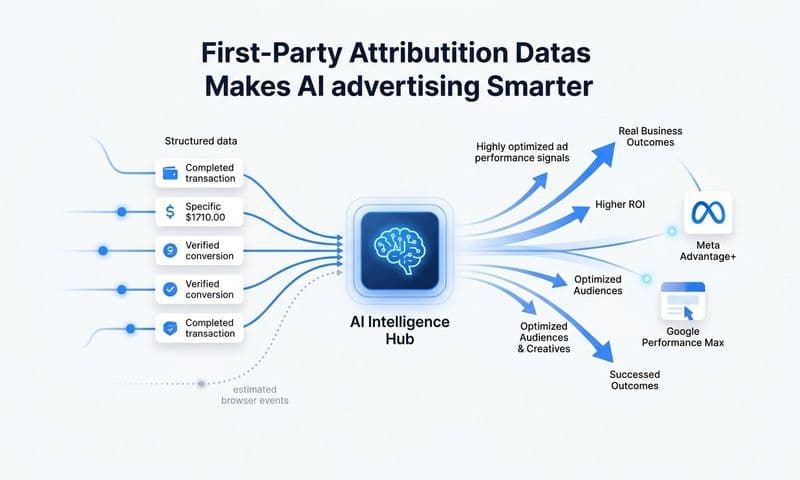
Cometly combines server-side tracking with AI-powered analytics to deliver accurate attribution across every marketing touchpoint. The platform captures data that browser pixels miss, then uses AI to analyze performance and provide specific optimization recommendations. Unlike basic tracking tools, Cometly enriches your conversion data and syncs it back to ad platforms like Meta and Google, feeding their algorithms better information for improved targeting and bidding.
 7 Best Wicked Reports Alternatives for Accurate Marketing Attribution in 2026
The AI Chat feature lets you query your marketing data conversationally, getting instant answers about campaign performance without building complex reports. The AI Ads Manager analyzes your campaigns and suggests specific budget adjustments, creative changes, and scaling opportunities based on what's actually driving revenue.
Implementation Steps
1. Connect your ad platforms, CRM, and analytics tools to create a unified data source that tracks the complete customer journey from first click to final conversion.
2. Install server-side tracking to capture conversions that browser-based pixels miss, ensuring you have accurate data even when users block cookies or use iOS devices.
3. Configure multi-touch attribution models to see which channels deserve credit at each stage of your funnel, then use AI recommendations to optimize budget allocation.
4. Enable Conversion Sync to send enriched event data back to Meta, Google, and other ad platforms, improving their algorithmic optimization and campaign performance.
Pro Tips
Start by comparing your current pixel-based data against Cometly's server-side tracking for one week. The difference in conversion counts will reveal exactly how much revenue you've been missing. Use the AI Chat to ask specific questions like "Which campaigns have the highest ROAS this month?" or "What's my customer acquisition cost by channel?" to get instant, actionable insights without waiting for manual reports.
2. Triple Whale: Ecommerce Dashboard Built for Shopify Brands
The Challenge It Solves
Shopify brands often juggle multiple analytics platforms to understand their business performance. Checking Facebook Ads Manager, Google Analytics, Shopify reports, and email platform dashboards separately wastes time and makes it difficult to see the complete picture. This fragmentation leads to delayed decisions and missed optimization opportunities during critical sales periods.
The Platform Explained
Triple Whale consolidates ecommerce metrics into a single dashboard designed specifically for Shopify merchants. The platform pulls data from your ad accounts, Shopify store, and marketing tools to display real-time performance metrics. You can monitor daily revenue, profit margins, ad spend, and ROAS without switching between multiple platforms. The mobile app lets you check store performance from anywhere, making it popular with founders who want quick access to key metrics.
 7 Best Funnel.io Alternatives for Marketing Data Analytics in 2026
The platform focuses on pixel-based tracking with their Pixel integration, which aims to improve attribution accuracy for Facebook and TikTok ads. Triple Whale also includes profit analytics that factor in cost of goods sold, shipping costs, and other expenses to show true profitability rather than just revenue.
Related reading: our complete guide to AI ad generator for Facebook ads.
Implementation Steps
1. Connect your Shopify store to Triple Whale and link your advertising accounts to begin pulling performance data into the unified dashboard.
2. Install the Triple Whale pixel on your store to enhance conversion tracking for Facebook and TikTok campaigns beyond what platform pixels capture.
3. Configure your product costs, shipping expenses, and other overhead to enable accurate profit tracking across all your marketing channels.
Pro Tips
Triple Whale works best for direct-to-consumer Shopify brands running primarily Facebook and TikTok ads. If you're heavily invested in Google Ads or run a multi-brand operation, you may find the platform's capabilities limited. The mobile dashboard is particularly valuable during product launches or flash sales when you need to monitor performance in real time without being at your desk. For brands seeking more robust Facebook pixel alternatives, consider platforms with server-side tracking capabilities.
3. Northbeam: Machine Learning Attribution for High-Spend Advertisers
The Challenge It Solves
Brands spending hundreds of thousands monthly on ads need more sophisticated attribution than basic last-click models. When you're running campaigns across Meta, Google, TikTok, YouTube, and other platforms simultaneously, understanding the true incrementality of each channel becomes complex. Traditional multi-touch attribution often overcredits certain touchpoints while missing the broader impact of brand-building channels.
The Platform Explained
Northbeam combines multi-touch attribution with media mix modeling to provide a more complete view of marketing effectiveness. The platform uses machine learning to analyze how different channels work together, identifying which combinations drive the best results. This approach helps distinguish between channels that directly convert customers and those that assist conversions by building awareness earlier in the journey.
 9 Best Ad Attribution Software With Free Trials in 2026
The platform provides daily updated attribution models rather than the delayed insights typical of traditional media mix modeling. This allows larger advertisers to make faster optimization decisions while still benefiting from statistical modeling that accounts for factors beyond direct response metrics.
Implementation Steps
1. Integrate your major advertising platforms and ensure you have sufficient data history for the machine learning models to identify meaningful patterns.
2. Configure your attribution windows and model preferences based on your typical customer journey length and business objectives.
3. Review the platform's incrementality analysis to understand which channels truly drive new customers versus those that capture existing demand.
Pro Tips
Northbeam's pricing and feature set target brands with substantial ad budgets, typically starting around $50,000 monthly in ad spend. If you're below this threshold, the platform may be cost-prohibitive. The machine learning models require several weeks of data to stabilize, so expect an onboarding period before you can fully trust the attribution insights for major budget decisions. For a detailed breakdown of how Northbeam compares to similar platforms, explore our Hyros alternatives guide.
4. Rockerbox: Enterprise Multi-Touch Attribution Across All Channels
The Challenge It Solves
Enterprise marketing teams run campaigns across dozens of channels, including digital advertising, television, podcast sponsorships, direct mail, and retail partnerships. Measuring the combined impact of online and offline marketing requires more than standard web analytics. Without proper cross-channel attribution, marketing leaders struggle to justify budgets and optimize the full marketing mix.
The Platform Explained
Rockerbox provides enterprise-grade multi-touch attribution that tracks both digital and offline marketing channels. The platform offers customizable attribution models, letting you choose between first-touch, last-touch, linear, time-decay, and algorithmic approaches based on what best represents your customer journey. This flexibility matters for large organizations where different teams may need different attribution perspectives.
 9 Best Ad Tracking Software for Marketers in 2026
The platform integrates with traditional media channels through partnerships and data onboarding processes, connecting TV spots, podcast placements, and other offline marketing to online conversions. Rockerbox also provides marketing mix modeling capabilities for brands that want statistical analysis alongside user-level tracking. Companies evaluating enterprise attribution alternatives often consider Rockerbox for its comprehensive offline channel support.
Implementation Steps
1. Work with Rockerbox's implementation team to connect your digital marketing platforms and establish tracking for web and mobile conversions.
2. Coordinate offline channel integration by providing campaign schedules for TV, radio, podcast, and other traditional media placements.
3. Define your attribution model preferences and configure the platform to match your organization's reporting needs and decision-making processes.
Pro Tips
Rockerbox serves enterprise clients with complex marketing operations and typically requires a longer sales and implementation process. The platform works best when you have dedicated marketing operations personnel who can manage the ongoing data integrations and model configurations. Smaller teams may find the platform's enterprise focus results in more complexity than needed for their attribution requirements.
5. Ruler Analytics: Revenue Attribution for Lead Generation Businesses
The Challenge It Solves
Lead generation businesses face a unique attribution challenge: the gap between initial website visit and final sale can span weeks or months. Phone calls, form submissions, live chat conversations, and email exchanges all contribute to conversions, but most analytics platforms only track form fills. This incomplete picture makes it nearly impossible to understand which marketing channels actually drive closed deals and revenue.
The Platform Explained
Ruler Analytics specializes in closed-loop revenue attribution for businesses with longer sales cycles. The platform tracks anonymous website visitors, then connects their journey to form submissions, phone calls, and eventually CRM opportunities and closed deals. Call tracking is built directly into the platform, attributing inbound phone calls to the marketing sources that generated them. If call tracking is central to your business, you may also want to review CallTrackingMetrics alternatives for additional options.
 8 Best Attribution Tools with Onboarding Support in 2026
The CRM integration is central to Ruler's value proposition. By syncing with Salesforce, HubSpot, Pipedrive, and other CRMs, Ruler can attribute actual revenue to marketing touchpoints rather than just counting leads. This lets you calculate true ROI by channel and optimize based on revenue generated, not just lead volume.
Implementation Steps
1. Install Ruler's tracking script on your website to begin capturing visitor journeys and connecting them to conversion events.
2. Set up call tracking by routing your phone numbers through Ruler's system to attribute calls to their originating marketing sources.
3. Integrate your CRM to enable closed-loop tracking that connects marketing touchpoints to actual deals and revenue in your sales pipeline.
Pro Tips
Ruler Analytics delivers the most value when phone calls represent a significant portion of your conversions. If your business model relies primarily on self-service online purchases or doesn't involve phone conversations, other platforms may better suit your needs. The platform's strength lies in its ability to prove marketing ROI for businesses where sales teams close deals after initial marketing-generated interest.
6. Dreamdata: B2B Revenue Attribution for Complex Buying Processes
The Challenge It Solves
B2B companies with enterprise sales face attribution complexity that consumer-focused platforms can't handle. Multiple stakeholders from the same company interact with your marketing before a single deal closes. Individual-level attribution misses the account-based reality of B2B buying, where a CFO, VP of Marketing, and Director of Operations might all engage with different content before their company becomes a customer.
The Platform Explained
Dreamdata provides account-based attribution specifically designed for B2B revenue teams. The platform groups individual visitor sessions by company, creating an account-level view of the customer journey. This approach reveals which marketing activities influenced the buying committee rather than just tracking individual user behavior.
 9 Best Cross Channel Attribution Tools to Track Your Full Marketing Journey in 2026
The platform automatically identifies companies visiting your website, even when visitors don't fill out forms. By analyzing IP addresses and firmographic data, Dreamdata shows which accounts are engaging with your content and how they're progressing through the buying journey. Integration with B2B sales tools like Salesforce and HubSpot connects marketing touchpoints to pipeline and closed revenue. For teams building comprehensive digital marketing reports, Dreamdata's account-level insights add valuable context.
Implementation Steps
1. Install Dreamdata's tracking to begin capturing visitor data and automatically identifying companies engaging with your website and marketing.
2. Connect your CRM and marketing automation platform to enable account-based journey mapping that shows all touchpoints before deals close.
3. Configure your attribution model to reflect your typical B2B sales cycle length and the relative importance of different touchpoint types.
Pro Tips
Dreamdata works best for B2B companies with deal values that justify longer sales cycles and multiple touchpoints. If you're selling low-cost subscriptions with simple, individual purchase decisions, account-based attribution adds unnecessary complexity. The platform's company identification features are most valuable when you're running targeted account-based marketing campaigns and need to measure engagement at the account level.
7. SegMetrics: Lifecycle Marketing Analytics for Customer Lifetime Value
The Challenge It Solves
Subscription businesses and online course creators need to understand customer lifetime value, not just initial conversion rates. When customers make repeat purchases over months or years, optimizing only for first-sale acquisition cost misses the bigger picture. You need to know which marketing sources bring customers who stick around, upgrade, and generate the most long-term revenue.
The Platform Explained
SegMetrics focuses on lifecycle marketing analytics, tracking customer value over time rather than just initial conversions. The platform connects marketing touchpoints to subscription renewals, upsells, and long-term revenue, showing which acquisition sources deliver the highest lifetime value customers. This matters enormously for businesses where the real profit comes from retention and expansion revenue.
The platform integrates deeply with email marketing platforms like ActiveCampaign, Drip, and ConvertKit, making it particularly strong for businesses that rely heavily on email sequences for nurturing and retention. SegMetrics can show how specific email campaigns contribute to upgrades and renewals, not just initial sales. Teams comparing marketing analytics software alternatives often find SegMetrics compelling for its lifetime value focus.
Implementation Steps
1. Connect your payment processor and CRM to enable tracking of customer purchases, subscriptions, and lifetime value metrics over time.
2. Integrate your email marketing platform to attribute email campaigns to conversions, upgrades, and retention throughout the customer lifecycle.
3. Configure cohort analysis to compare customer lifetime value across different acquisition sources, campaigns, and time periods.
Pro Tips
SegMetrics delivers the most value for businesses with recurring revenue models where customer lifetime value significantly exceeds initial purchase value. If you sell one-time products without repeat purchases, the platform's lifecycle focus won't provide meaningful advantages over simpler attribution tools. The email platform integrations are particularly valuable for course creators and membership sites that use automated email sequences for onboarding and retention. For broader platform comparisons, our marketing attribution software alternatives guide covers additional options.
Making Your Attribution Decision
Choosing the right Wicked Reports alternative depends on your specific business model and attribution needs. Ecommerce brands running primarily Facebook and TikTok ads may find Triple Whale's Shopify-focused dashboard sufficient. B2B companies with complex sales cycles should prioritize account-based platforms like Dreamdata. Lead generation businesses that rely on phone calls need Ruler Analytics' call tracking capabilities.
For marketers seeking the most accurate attribution in 2026's privacy-focused landscape, server-side tracking has become essential. Platforms that feed enriched conversion data back to ad platforms create a compounding advantage—better data leads to better algorithmic optimization, which drives better results. AI-powered recommendations take this further by analyzing your attribution data and suggesting specific optimization actions.
Consider your monthly ad spend when evaluating options. Enterprise platforms like Northbeam and Rockerbox serve high-budget advertisers with sophisticated needs, while other alternatives target mid-market businesses. Budget matters, but so does the cost of poor attribution—making decisions based on incomplete data often wastes more money than investing in proper tracking.
The most important factor is solving your specific tracking challenges. If iOS privacy changes have created blind spots in your data, prioritize platforms with robust server-side tracking. If you need better optimization insights, look for AI-powered analysis. If your current platform doesn't integrate with your tech stack, focus on compatibility.
Ready to elevate your marketing game with precision and confidence? Discover how Cometly's AI-driven recommendations can transform your ad strategy—Get your free demo today and start capturing every touchpoint to maximize your conversions.