Conversion tracking used to be straightforward. A user clicked an ad, landed on your page, completed a purchase, and your pixel fired. Done. But the modern advertising landscape has made that clean, linear story nearly impossible to rely on.
Today, Apple's Intelligent Tracking Prevention (ITP), Firefox Enhanced Tracking Protection, and the gradual deprecation of third-party cookies have significantly weakened browser-based pixel tracking. Users switch between devices, clear cookies, use private browsing, and install ad blockers. What your ad platform reports as conversions often looks very different from what your CRM or backend systems actually record.
The result? Many marketers are making budget decisions based on inflated, misattributed, or simply incomplete data. Channels that appear to be performing well may be double-counting conversions. Channels that look underperforming may actually be driving significant revenue that the platform cannot see. Without accurate data, scaling decisions become guesswork.
The good news is that a layered approach to conversion tracking can solve most of these problems. Rather than relying on a single method, the most effective teams combine multiple techniques that reinforce each other, filling the gaps that any one method leaves behind.
This guide walks through seven proven conversion tracking methods that, when used together, give marketers a complete and trustworthy picture of what is actually driving revenue. Platforms like Cometly are built specifically to unify many of these methods into a single attribution system, so you are not stitching together five different tools to get a clear answer.
Let's break down each method, why it matters, and how to implement it effectively.
1. Server-Side Tracking
The Challenge It Solves
Browser-based tracking has a fundamental vulnerability: it depends on the user's browser to cooperate. When ITP shortens cookie lifespans to as little as one day, when ad blockers prevent pixels from firing, or when a user navigates away before the page fully loads, your tracking breaks silently. You never know a conversion was missed. Over time, these gaps compound into serious data loss that skews your entire attribution picture.
The Strategy Explained
Server-side tracking moves the conversion event transmission from the user's browser to your own web server. Instead of relying on a JavaScript pixel to fire client-side, your server receives the conversion data first and then forwards it to the relevant ad platforms and analytics tools. Because this happens at the server level, it bypasses browser restrictions, ad blockers, and ITP limitations entirely.
Meta, Google, and TikTok all now support server-side event transmission through their respective APIs. This approach is increasingly considered a foundational best practice rather than an advanced technique. The data quality improvement is meaningful: events that would have been lost in the browser are now captured reliably. You can learn more about server-side tracking vs pixel tracking to understand the differences in detail.
Implementation Steps
1. Set up a server-side tagging container using a tool like Google Tag Manager's server-side container or a dedicated first-party data endpoint on your domain.
2. Configure your website to send conversion events to your server first, using a first-party cookie or user identifier to associate the event with the correct session.
3. Forward the validated event data from your server to each ad platform's API, including any relevant user parameters like hashed email or phone number for matching.
4. Run parallel tracking for a period to compare server-side results against your existing browser-based tracking and verify the improvement in event capture rates.
Pro Tips
Use a subdomain of your own domain to host your server-side container. This keeps the data collection in a first-party context, which is more durable against future browser privacy changes. Also prioritize sending hashed user identifiers alongside events: better matching rates mean the platform's algorithm gets cleaner signals to optimize against. Cometly's server-side tracking is built to handle this entire process in a streamlined way.
2. Multi-Touch Attribution Modeling
The Challenge It Solves
Last-click attribution is still the default for many ad platforms, and it creates a distorted view of channel performance. It assigns all credit to the final touchpoint before conversion, completely ignoring every ad, email, or organic visit that contributed to the decision. This leads teams to over-invest in bottom-of-funnel channels and starve top-of-funnel channels that are actually generating demand.
The Strategy Explained
Multi-touch attribution distributes conversion credit across every touchpoint in the customer journey. Instead of one channel taking all the credit, each interaction receives a portion based on the model you choose. Linear models split credit equally. Time-decay models give more weight to touchpoints closer to conversion. Data-driven models use machine learning to assign credit based on actual patterns in your conversion data.
The right model depends on your sales cycle and business type. Longer sales cycles with multiple research touchpoints often benefit from a time-decay or data-driven approach. Shorter, impulse-driven purchases may be well-served by a simpler linear model. The key is moving away from single-touch models that systematically misrepresent channel contributions. For a deeper dive, explore how tracking conversions across multiple touchpoints strengthens your attribution.
Implementation Steps
1. Map out your typical customer journey by reviewing session data in your analytics tool to understand how many touchpoints precede a conversion on average.
2. Choose an attribution model that fits your sales cycle length and business goals, starting with linear if you are new to multi-touch modeling.
3. Implement a platform that can ingest touchpoint data from all your channels, including paid search, paid social, email, and organic, to build a complete journey view.
4. Compare channel performance under your new model versus your previous last-click model and use the differences to inform budget reallocation decisions.
Pro Tips
Do not switch attribution models and immediately reallocate budget. Run both models in parallel for at least a few weeks to build confidence in the new view before making major changes. Cometly's multi-touch attribution lets you compare models side by side so you can see exactly how credit shifts across your channels.
3. UTM Parameter Standardization
The Challenge It Solves
UTM parameters are only useful when they are consistent. When different team members, agencies, or tools create campaign links with inconsistent naming conventions, your analytics data fragments into dozens of variations of the same channel. "Facebook," "facebook," "FB," and "paid-social" all end up as separate traffic sources. You cannot aggregate performance accurately, and your attribution system receives noisy, unreliable input data.
The Strategy Explained
UTM standardization means creating a documented, enforced naming convention for every UTM parameter your organization uses: source, medium, campaign, content, and term. Every link created for every campaign must follow the same structure. This is not a technical fix; it is a process and governance fix. But it is foundational, because every other tracking method downstream depends on clean, consistent UTM data to correctly attribute sessions and conversions. Understanding the relationship between UTM tracking and attribution is essential for getting this right.
Google Analytics documentation recommends UTM parameters as the standard method for campaign tracking, and consistent implementation is what separates useful campaign data from a chaotic mess of unrecognizable traffic sources.
Implementation Steps
1. Define your naming convention for each UTM parameter, specifying allowed values, capitalization rules (lowercase is strongly recommended), and hyphen versus underscore usage.
2. Build a UTM builder spreadsheet or tool that enforces the naming convention and generates links automatically, reducing the chance of human error.
3. Document the convention in a shared team resource and make it part of your campaign launch checklist so no link goes live without proper UTM tagging.
4. Audit your existing UTM data quarterly to identify naming inconsistencies and correct them before they accumulate further.
Pro Tips
Use lowercase for all UTM values without exception. Analytics tools treat "Facebook" and "facebook" as two separate sources. A single capitalization inconsistency can split your data in ways that are tedious to clean up later. Treat your UTM convention as a living document and update it whenever you add new channels or campaign types to your mix.
4. Conversion API Integration
The Challenge It Solves
Ad platforms like Meta, Google, and TikTok use conversion data to optimize their algorithms. When your pixel misses events due to browser restrictions or ad blockers, the platform's machine learning has less signal to work with. This means your campaigns optimize more slowly, your cost per result tends to be higher, and your audience targeting becomes less precise over time. Poor data in means poor optimization out.
The Strategy Explained
Conversion API integration means sending verified conversion events directly from your backend systems to the ad platform's server-to-server API. Meta calls this the Conversions API. Google has Enhanced Conversions. TikTok has the Events API. These integrations allow you to pass conversion data that was captured server-side, often enriched with customer identifiers like hashed email addresses, directly to the platform without relying on the browser at all. For a comprehensive overview, see our guide on what is conversion API tracking.
The result is a higher event match quality score, which means the platform can better associate your conversions with the users who saw your ads. Better matching leads to better optimization, more efficient bidding, and improved campaign performance over time.
Implementation Steps
1. Obtain API access credentials for each platform you advertise on and review their respective API documentation for event formatting requirements.
2. Set up your backend to capture conversion events and the relevant user data, such as hashed email, phone number, and browser identifiers, at the point of conversion.
3. Configure your server to send these events to each platform's API endpoint in real time or on a short delay, ensuring event deduplication is in place to avoid double-counting with any remaining browser pixels.
4. Monitor your event match quality scores in each platform's event manager and iterate on the user data you are sending to improve matching rates.
Pro Tips
Always implement deduplication when running both a browser pixel and a Conversion API in parallel. Use a shared event ID across both methods so the platform knows to count only one conversion, not two. Cometly's Conversion Sync handles this automatically, sending enriched conversion events back to Meta, Google, and other platforms to feed their algorithms better data.
5. CRM-to-Ad Platform Data Bridging
The Challenge It Solves
Most ad platform tracking stops at the lead form submission or initial purchase. For businesses with longer sales cycles, this means you are optimizing campaigns toward top-of-funnel actions that may or may not result in actual revenue. A campaign that generates many leads at a low cost looks great in the platform, but if those leads never close, you are wasting budget on the wrong audience. Without connecting downstream revenue data, you cannot see which campaigns actually drive business outcomes.
The Strategy Explained
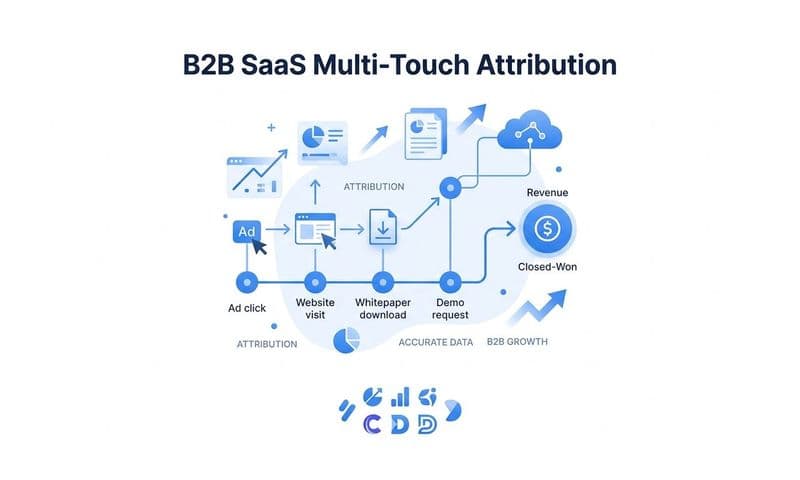
CRM-to-ad platform data bridging means connecting your CRM pipeline stages and closed revenue data back to your attribution system and, where possible, back to the ad platforms themselves. When a lead progresses through your pipeline and closes as a customer, that revenue event gets associated with the original ad touchpoints that drove the lead. This gives you a true cost-per-acquisition and return on ad spend based on actual closed revenue, not just lead volume. Exploring revenue attribution tracking tools can help you find the right solution for this workflow.
This approach is particularly powerful for B2B companies and high-consideration purchases where the gap between a lead and a closed deal can span weeks or months. It transforms your attribution from a lead-generation metric into a genuine revenue attribution model.
Implementation Steps
1. Ensure your CRM captures the original lead source and, ideally, the UTM parameters from the first or last touch that brought the lead in, storing this data at the contact or deal level.
2. Connect your CRM to your attribution platform so that deal stage updates and closed-won events are passed through with the associated lead source data intact.
3. Map your CRM pipeline stages to meaningful conversion events in your attribution system, distinguishing between a new lead, a qualified opportunity, and a closed customer.
4. Use this closed-revenue data to evaluate campaign performance at the revenue level and adjust your bidding strategies and budget allocation accordingly.
Pro Tips
Capture UTM parameters in a hidden field on every lead form and store them directly in your CRM on the contact record. This single step makes the entire bridging process dramatically more reliable. Without it, you are relying on probabilistic matching to connect CRM records to ad touchpoints, which introduces significant error. Cometly connects your CRM data directly to your attribution dashboard so you can see which campaigns are driving actual revenue, not just pipeline activity.
6. Cross-Device and Cross-Platform Identity Resolution
The Challenge It Solves
The average user interacts with content across multiple devices and browsers before converting. Someone might discover your brand on a mobile phone, research your product on a work laptop, and complete a purchase on a home desktop. Without identity resolution, each of these sessions looks like a different anonymous user. Your attribution system sees three separate journeys instead of one, misattributing credit and creating a fragmented, inaccurate picture of how customers actually move through your funnel.
The Strategy Explained
Cross-device identity resolution stitches together these fragmented sessions into a single unified user journey using two main approaches. Deterministic matching uses a known identifier, typically a logged-in email address or user ID, to definitively link sessions across devices when the user authenticates. Probabilistic matching uses signals like IP address, device fingerprint, and behavioral patterns to infer when multiple sessions likely belong to the same person, even without a login event. For more on this topic, read our guide on tracking conversions across devices.
Deterministic matching is more accurate but requires user authentication. Probabilistic matching casts a wider net but carries some margin of error. The most effective implementations use both in combination, applying deterministic matching where possible and probabilistic matching to fill the gaps.
Implementation Steps
1. Implement a user identification event in your tracking setup that fires whenever a user logs in or submits a form, capturing a hashed version of their email or user ID to link to their session.
2. Pass this identifier through your server-side tracking setup so it is available for matching across all subsequent events in that user's journey.
3. Use an attribution platform that supports cross-device stitching to merge sessions that share the same identifier into a single unified journey view.
4. Review your identity resolution match rates regularly and look for patterns in where stitching fails, such as mobile-to-desktop gaps, to prioritize improvements.
Pro Tips
Encourage account creation or login at key points in your funnel. Every authenticated session is a deterministic match opportunity that dramatically improves your cross-device tracking accuracy. Even a small increase in login rates can meaningfully improve the completeness of your journey data. Think of your login prompt not just as a product feature but as a data quality tool.
7. Regular Data Auditing and Discrepancy Analysis
The Challenge It Solves
Tracking implementations break. Pixels misfire after site updates. UTM parameters get dropped by redirect chains. Conversion API integrations fail silently when authentication tokens expire. Without a regular auditing process, these errors accumulate quietly in the background while you make budget decisions based on increasingly corrupted data. Many experienced media buyers and agencies have discovered, often painfully, that a tracking error that went unnoticed for weeks can completely distort campaign performance assessments.
The Strategy Explained
A data auditing process means building a recurring workflow to compare platform-reported conversions against your CRM or backend source of truth and investigate any significant discrepancies. This is not a one-time setup task; it is an ongoing operational practice. The goal is to catch errors early, understand where data gaps exist, and maintain confidence that the numbers driving your decisions are accurate. If you are wondering why your conversion tracking numbers are wrong, a structured audit process is the fastest way to find out.
Discrepancy analysis also helps you understand the natural gap between platform-reported conversions and your actual backend data, which exists even with good tracking due to attribution window differences and view-through conversions. Knowing what a "normal" discrepancy looks like helps you quickly identify when something has gone wrong.
Implementation Steps
1. Set a recurring audit schedule, weekly for active campaigns and monthly for a broader review, and assign ownership to a specific team member so it does not fall through the cracks.
2. Pull conversion data from each ad platform and compare it against your CRM or backend conversion records for the same time period, noting the size and direction of any discrepancies.
3. Investigate discrepancies that exceed your established baseline threshold by checking pixel firing in Tag Manager, reviewing Conversion API event match quality scores, and auditing UTM parameter integrity in your analytics tool.
4. Document your findings and any corrective actions taken so you build a historical record of your tracking health over time.
Pro Tips
Build a simple comparison dashboard that pulls data from your ad platforms and your CRM into one view so the weekly audit takes minutes rather than hours. The easier you make the process, the more consistently it will happen. Cometly's analytics dashboard centralizes your attribution data across channels, making it much easier to spot discrepancies between what platforms report and what your backend actually recorded.
Putting It All Together
No single tracking method solves the accuracy problem on its own. Browser pixels miss events. Last-click attribution distorts channel value. Messy UTMs corrupt your data at the source. Conversion APIs feed platforms better signals but do not replace a full attribution picture. Each method addresses a specific gap, and the most effective tracking systems layer all seven together into a cohesive, self-reinforcing approach.
If you are not sure where to start, prioritize based on your biggest current gap. If your platform-reported conversions look significantly higher than what your CRM shows, start with server-side tracking and Conversion API integration to improve data capture reliability. If you cannot connect your leads to actual closed revenue, start with CRM bridging. If your analytics data is fragmented and inconsistent, UTM standardization and a regular audit process will deliver immediate clarity.
The goal is progressive improvement, not perfection on day one. Each layer you add makes your data more trustworthy, your attribution more accurate, and your scaling decisions more confident.
Platforms like Cometly are built to bring many of these methods together in one place. From server-side tracking and multi-touch attribution to Conversion Sync and CRM integration, Cometly gives you a unified view of every touchpoint in the customer journey without requiring you to stitch together multiple point solutions. You get accurate, actionable data in one dashboard, so you can focus on making better decisions rather than debugging tracking setups.
Ready to stop guessing and start making decisions based on data you can actually trust? Get your free demo today and see how Cometly helps you capture every touchpoint, connect every conversion to revenue, and scale your campaigns with real confidence.