You've just launched a campaign that's driving hundreds of clicks. Your ad platform dashboard shows conversions rolling in. But when you check your CRM, the numbers don't match. Not even close.
This isn't a glitch. It's the reality most marketers face every single day.
Your ad platforms are making optimization decisions based on incomplete data. They're scaling campaigns that look profitable but aren't. They're pausing winners because they can't see the full picture. And you're left wondering why your ROAS keeps declining despite following best practices.
Ad conversion sync technology solves this problem by creating a direct bridge between what actually happens in your business and what your ad platforms see. Instead of relying on browser pixels that miss half your conversions, you send accurate, enriched conversion data directly to Meta, Google, and other platforms through their APIs. The result? Ad algorithms that optimize toward real revenue instead of phantom signals.
This guide breaks down exactly how ad conversion sync technology works, why it's become essential for modern marketing, and how to implement it across your entire advertising stack.
The Data Disconnect That's Costing You Money
Your ad platforms are blind to most of what matters. And it's getting worse.
When Apple rolled out App Tracking Transparency in 2021, it didn't just make tracking harder. It fundamentally broke the feedback loop that ad algorithms depend on. Now when someone clicks your Facebook ad on their iPhone, opts out of tracking, and converts three days later on their laptop, Meta sees nothing. Zero conversion signal.
The same thing happens when users block cookies, switch devices mid-journey, or simply clear their browser data. Your pixel fires, but the conversion never makes it back to the platform. From the algorithm's perspective, that ad click led nowhere. These cross device conversion tracking challenges affect nearly every advertiser today.
Here's where it gets expensive: ad platforms don't just lose visibility into individual conversions. Their machine learning models start optimizing toward the wrong audience entirely.
Think about it. If Meta can only see 60% of your actual conversions, it's building lookalike audiences and optimization strategies based on an incomplete dataset. The platform thinks your best customers are whoever happens to have tracking enabled, not whoever actually buys from you.
This creates a vicious cycle. You scale campaigns based on platform-reported ROAS. But because the platform is missing half your conversions, you're actually scaling toward audiences with lower intent and worse conversion rates. Your true ROAS drops while your dashboard shows green arrows.
The downstream effects compound fast. You can't accurately test new creative because you don't know which ads actually drive revenue. You waste budget on campaigns that look profitable but aren't. And when you try to scale winners, performance craters because the algorithm never had good data to begin with.
Marketing teams often discover this disconnect only after running their own attribution analysis. They'll see that their ad platforms report 500 conversions while their CRM shows 800. That 300-conversion gap represents real customers that ad algorithms never learned from.
How Ad Conversion Sync Technology Actually Works
Ad conversion sync technology flips the traditional tracking model on its head. Instead of hoping browser pixels capture conversions, you send conversion data directly from your server to ad platforms through their APIs.
Here's the technical flow: when someone clicks your ad, you capture that click data along with a unique identifier. This might be a click ID from the ad platform, a user ID from your system, or both. That identifier travels with the user through their entire journey on your site.
When a conversion happens—whether it's a purchase, form submission, or qualified lead—your server captures that event along with all the context that matters. Revenue value, product purchased, lead quality score, customer lifetime value prediction, and crucially, the original ad click identifier.
Your attribution platform then takes this enriched conversion data and sends it back to the ad platform via their Conversions API. For Meta, that's the Conversions API. For Google, it's offline conversion imports. For TikTok, it's Events API. Each platform has its own endpoint, but the concept is identical. Understanding what conversion sync technology is helps you grasp why this approach works so effectively.
The key difference from pixel-based tracking is where the data originates. Browser pixels fire client-side, meaning they're subject to ad blockers, privacy settings, and browser limitations. Server-side conversion sync happens on your infrastructure, completely independent of what's happening in the user's browser.
This server-side approach captures conversions that pixels miss entirely. That iOS user who opted out of tracking? You still send their conversion because you're not relying on their device to report it. The user who switched from mobile to desktop? You connect those dots on your server and send a complete conversion event.
But conversion sync goes beyond just recovering lost conversions. You're also enriching the data you send. Instead of a basic "conversion happened" signal, you can include revenue amounts, product categories, customer segments, and attribution data that tells platforms exactly which touchpoints mattered.
For example, when you sync a purchase conversion, you might include the order value, whether it's a first-time or repeat customer, the products purchased, and even signals about purchase intent based on the customer's journey. This enriched data gives ad algorithms much more to work with when optimizing.
The technical implementation typically involves three layers: tracking infrastructure to capture click IDs and user behavior, an attribution system to connect clicks to conversions, and API integrations to push conversion events back to ad platforms. Marketing attribution platforms like Cometly handle all three layers, creating a seamless flow from ad click to synced conversion.
Why Ad Platform Algorithms Perform Better With Synced Data
Ad platforms are prediction machines. They're constantly trying to answer one question: who is most likely to convert?
Every conversion signal you send becomes training data for these machine learning models. The algorithm looks at who converted, what they looked like, how they behaved, and uses that information to find more people like them. The quality of your conversion data directly determines the quality of these predictions.
When you're only sending pixel-based conversions, you're training the algorithm on an incomplete dataset. It's like teaching someone to recognize apples by only showing them red ones. They'll miss all the green apples because they were never part of the training set.
Synced conversion data solves this by giving algorithms a complete view of who actually converts. That iOS user who opted out of tracking? Now they're in the training set. That high-value customer who took a week to decide? The algorithm learns from their journey instead of thinking the ad failed.
Meta and Google have both built their platforms around a concept called "signal strength." Higher signal strength means the algorithm has more confidence in its predictions, which typically translates to better targeting efficiency and lower costs per acquisition. When you sync conversions to ad platforms properly, you maximize this signal strength.
When you implement conversion sync, signal strength improves dramatically because you're sending more conversion events with richer data attached. Instead of the algorithm guessing at patterns from partial data, it's working with a complete dataset that includes revenue values, customer quality indicators, and attribution context.
This impacts every aspect of campaign optimization. Lookalike audiences become more accurate because they're modeled on your actual customers, not just the trackable ones. Automated bidding strategies work better because the algorithm understands true conversion value. Even creative testing becomes more reliable because you're measuring real performance instead of whatever the pixel happened to catch.
The improvement shows up most clearly in campaign scaling. When algorithms have good data, they can confidently expand your audience while maintaining performance. When they're working with incomplete signals, scaling almost always leads to efficiency loss because the algorithm doesn't really know what success looks like.
Think of it this way: synced conversion data turns your ad platform from someone making educated guesses into someone who actually knows what works. The difference in campaign performance can be substantial, especially for businesses with complex customer journeys or high-value conversions that take time to materialize.
Server-Side Tracking vs. Browser-Based Pixels
Browser pixels have been the foundation of digital advertising for over a decade. You drop a snippet of JavaScript on your site, it fires when someone converts, and the ad platform records it. Simple, straightforward, and increasingly unreliable.
The problem isn't the technology itself. It's that browser pixels depend entirely on the user's environment. If they're blocking cookies, using privacy-focused browsers, or have tracking prevention enabled, your pixel might fire but the data never makes it back to the platform.
Server-side tracking operates in a completely different environment. Instead of relying on the user's browser to report conversions, your server sends conversion data directly to ad platforms. This happens on your infrastructure, where ad blockers can't interfere and privacy settings don't matter. The server side conversion tracking benefits extend far beyond just recovering lost data.
The reliability difference is substantial. Browser pixels typically capture 40-60% of actual conversions in 2026, depending on your audience and traffic sources. Server-side conversion sync can capture 90-95% of conversions because it's not subject to client-side limitations.
But server-side tracking does more than just recover lost conversions. It gives you complete control over what data gets sent and when. You can wait for a lead to be qualified before sending the conversion. You can update conversion values when someone makes a repeat purchase. You can send events based on actions that happen entirely offline, like a phone call that closes a deal.
This control extends to data privacy and compliance. With browser pixels, data flows directly from the user's device to the ad platform. With server-side tracking, data flows through your infrastructure first, giving you the opportunity to filter, anonymize, or enrich it before sending. This makes it easier to comply with privacy regulations while still maintaining effective tracking. Many marketers are now exploring how to track conversions without cookies entirely.
The technical implementation differs significantly too. Browser pixels are passive—they wait for page loads and user actions. Server-side tracking is active—you decide exactly when and what to send. This means you can sync conversions that happen days or weeks after the initial click, something browser pixels struggle with due to cookie expiration and attribution windows.
One common concern is that server-side tracking is harder to implement. That's true if you're building it from scratch. But modern attribution platforms handle the complexity for you, providing simple integrations that capture click data, track conversions server-side, and sync everything back to your ad platforms automatically.
The reality is that most sophisticated advertisers now use both methods together. Browser pixels provide immediate conversion signals for fast optimization, while server-side sync fills in the gaps and provides enriched data for longer-term learning. This hybrid approach maximizes both speed and accuracy.
Implementing Conversion Sync Across Your Marketing Stack
Setting up conversion sync requires connecting three key systems: your ad platforms, your website or app, and your conversion tracking infrastructure. The good news is that once it's configured, the system runs automatically.
Start with your tracking foundation. You need a way to capture click IDs from every ad platform you use. Meta calls theirs fbclid, Google uses gclid, TikTok has ttclid. These parameters get appended to your landing page URLs automatically when someone clicks an ad.
Your website needs to capture these click IDs and store them—either in a cookie, local storage, or by sending them to your server immediately. This identifier is what connects future conversions back to the original ad click. Without it, you can't attribute conversions or sync them back to the platform. A thorough conversion sync setup guide can walk you through each step in detail.
Next, you need conversion tracking that fires server-side. This might be an event in your CRM when a lead is created, a webhook from your payment processor when a purchase completes, or a custom event you trigger based on business logic. The key is capturing the conversion on your server, not just in the browser.
Your attribution platform sits in the middle, connecting these pieces together. When a conversion happens, it matches the event to the original ad click using the stored click ID, calculates attribution based on your chosen model, and prepares the conversion data for syncing.
The final step is pushing that data to ad platforms via their APIs. For Meta Conversions API, you send a POST request with the conversion event, value, timestamp, and user data for matching. Google's offline conversion imports work similarly, accepting conversion data tied to click IDs or user identifiers.
Each platform has specific requirements for the data format and matching parameters. Meta wants hashed email addresses and phone numbers for user matching. Google needs the exact click ID from the original ad click. TikTok requires specific event names and properties. Your attribution platform handles these platform-specific requirements automatically.
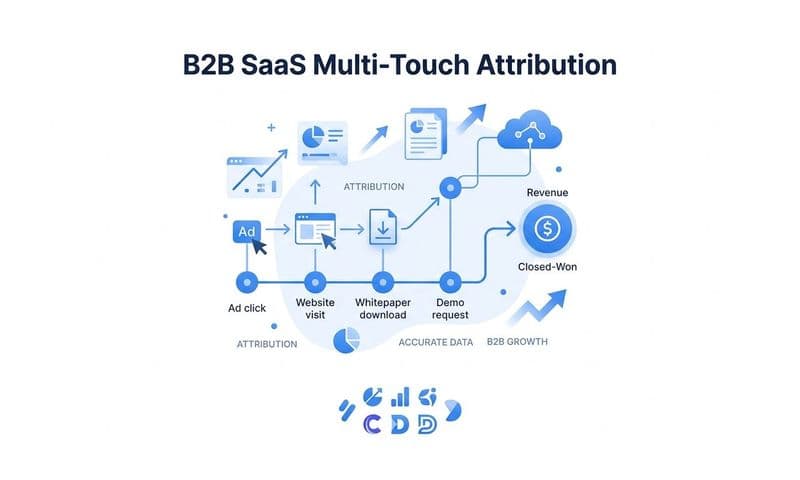
Implementation typically follows this flow: user clicks ad, click ID is captured, user converts on your site or through your sales process, conversion event fires server-side, attribution platform receives the event, matches it to the ad click, enriches it with journey data, and syncs it back to the originating platform.
The timeline for this sync matters. Some platforms accept conversion events up to 7 days after they occur, while others have shorter windows. Real-time or near-real-time syncing ensures maximum impact on algorithm optimization, especially for campaigns using automated bidding.
Integration with your CRM is often the most valuable piece. When someone fills out a form, you might not know immediately if they're a qualified lead. By syncing conversion events from your CRM rather than just form submissions, you can send "qualified lead" events that better represent actual business value. This teaches ad algorithms to optimize for quality, not just quantity.
Measuring the Impact on Campaign Performance
Once conversion sync is running, you need to validate that it's actually improving your advertising performance. The most immediate metric to check is match rate—what percentage of your conversion events are successfully matching to ad clicks and syncing back to platforms.
A good match rate depends on your business model and customer journey, but you should typically see 70-85% of server-side conversions matching to ad clicks. If your match rate is lower, it might indicate issues with click ID capture, cookie duration, or attribution window settings. When you encounter problems, knowing how to fix conversion tracking issues becomes essential.
Next, compare platform-reported conversions before and after implementing sync. You should see the conversion count in your ad platform increase significantly as previously invisible conversions start flowing through. This increase represents the data gap you were operating with before.
The real test is campaign efficiency metrics. Track your cost per acquisition and return on ad spend over a 30-day period before and after enabling conversion sync. As ad algorithms receive better data, you should see CPA decrease and ROAS improve, typically within 2-3 weeks as the algorithms retrain.
Pay attention to signal strength indicators in your ad platforms. Meta's Events Manager shows a signal quality score for your Conversions API setup. Google provides data quality metrics in offline conversion imports. These scores should improve as you send more complete, accurate conversion data.
Campaign scaling provides another validation point. Try increasing budgets on campaigns that are performing well. With better conversion data feeding the algorithms, you should be able to scale more aggressively while maintaining efficiency. If performance still drops when you scale, it might indicate other issues beyond data quality.
Monitor your attribution reports to ensure conversions are being credited correctly across touchpoints. Server-side tracking often reveals conversions that were previously unattributed, giving you a clearer picture of which channels and campaigns are actually driving results. Learning how to track conversions across multiple platforms ensures you capture the complete customer journey.
Don't forget to track the operational benefits too. Are you making faster optimization decisions because you trust your data more? Are creative tests reaching statistical significance quicker? Is your team spending less time reconciling discrepancies between platforms and your CRM?
The New Standard for Modern Marketing
Ad conversion sync technology isn't a nice-to-have anymore. It's the foundation that modern marketing campaigns are built on.
The privacy changes that broke traditional tracking aren't going away. Browser restrictions will only get stricter. Third-party cookies are disappearing. The gap between what ad platforms see and what actually happens in your business will keep widening unless you take control of your conversion data.
Server-side tracking and conversion APIs give you that control. They let you capture complete conversion data, enrich it with business context, and feed it directly to the algorithms that determine your campaign performance. The result is ad platforms that optimize toward real revenue instead of incomplete signals.
The marketers who implement conversion sync now are the ones who'll maintain profitable campaigns as tracking gets harder. They're building advertising systems that work with accurate data, scale efficiently, and adapt to privacy changes without losing effectiveness.
Your competitors are already doing this. The platforms you advertise on are actively encouraging it. The question isn't whether to implement conversion sync—it's how quickly you can get it running.
Ready to elevate your marketing game with precision and confidence? Discover how Cometly's AI-driven recommendations can transform your ad strategy—Get your free demo today and start capturing every touchpoint to maximize your conversions.