You're running ads across Facebook, Google, TikTok, and maybe a few other platforms. The campaigns are live, the budget is flowing, and you're seeing clicks and impressions pile up. But here's the question that keeps you up at night: which of these ads are actually driving purchases?
For ecommerce businesses, this isn't just a curiosity. It's the difference between profitable growth and burning cash on campaigns that look good on paper but don't move the revenue needle. The challenge gets even trickier when you realize your customers rarely buy on the first click. They see your Instagram ad at lunch, search for your brand on Google later that evening, click through an email the next morning, and finally make a purchase three days later after seeing a retargeting ad.
So which ad gets the credit? Which platform deserves more budget? Without proper tracking, you're making these decisions blind.
Add to this the reality that browser privacy updates have made traditional tracking methods less reliable. iOS updates block a significant portion of conversion data, and browser-based pixels miss conversions from users with ad blockers enabled. The gap between what your ad platforms report and what actually shows up in your bank account keeps growing.
This guide walks through seven proven strategies to close that gap. You'll learn how to capture conversion data that would otherwise slip through the cracks, connect your advertising efforts to actual revenue, and build a measurement foundation that supports confident budget decisions. Let's start with the most critical fix for modern ecommerce tracking.
1. Implement Server-Side Tracking to Capture Lost Data
The Challenge It Solves
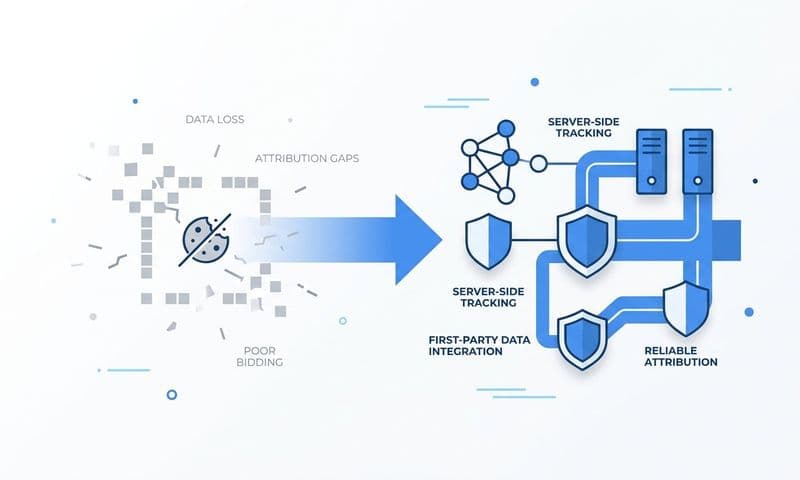
Browser-based tracking pixels are increasingly unreliable. When a customer has an ad blocker enabled, uses Safari with Intelligent Tracking Prevention, or browses on an iOS device with App Tracking Transparency restrictions, your standard Facebook or Google pixel might not fire. This means conversions happen, but your ad platforms never see them. You're flying blind, and your algorithms are optimizing based on incomplete data.
The result? You undervalue campaigns that are actually working, and you feed ad platforms partial information that weakens their targeting capabilities.
The Strategy Explained
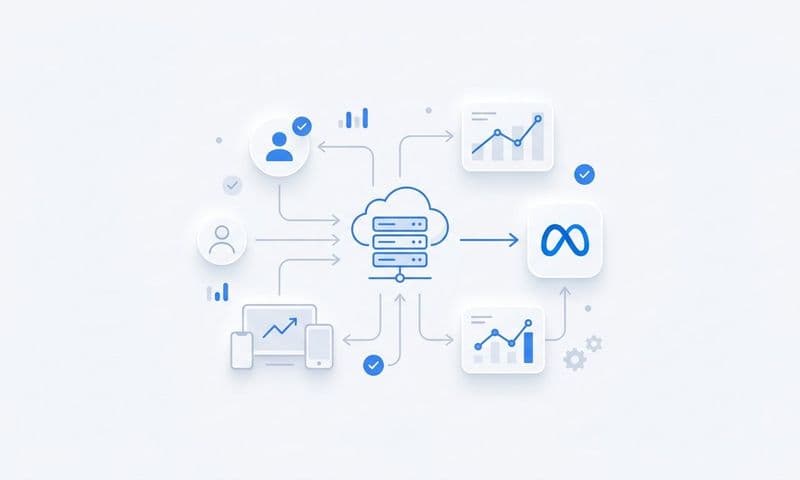
Server-side tracking moves the conversion tracking process from the customer's browser to your server. Instead of relying on a JavaScript pixel that can be blocked, your server sends conversion data directly to ad platforms through their APIs. This approach captures significantly more conversions because it bypasses browser restrictions entirely.
When a purchase happens on your site, your server records it and sends that conversion event to Facebook, Google, and other platforms using their Conversion APIs. The data flows server-to-server, which means privacy tools can't interfere with it. You get a more complete picture of which ads drive results, and ad platforms receive better data to improve their targeting and optimization.
Implementation Steps
1. Set up server-side tracking through your attribution platform or directly with each ad platform's Conversion API. Most modern attribution tools handle this automatically once connected to your ecommerce platform.
2. Ensure your server captures all critical conversion events including purchases, add-to-cart actions, and checkout initiations. Map these events to match what your ad platforms expect.
3. Test the implementation by making test purchases and verifying that conversion data appears in your ad platform dashboards. Compare server-side conversion counts with browser pixel data to see how much previously lost data you're now capturing.
Pro Tips
Don't disable your browser pixels entirely when you implement server-side tracking. Run both in parallel. The browser pixel still captures valuable data like page views and session behavior, while server-side tracking ensures conversions are recorded. This dual approach gives you the most complete dataset possible.
2. Connect Your Ad Platforms to Your CRM for Full-Funnel Visibility
The Challenge It Solves
Your ad platforms tell you about clicks and reported conversions. Your CRM tells you about actual customers and revenue. The problem? These systems rarely talk to each other, which means you're making budget decisions based on incomplete information. A campaign might look mediocre in Facebook Ads Manager but actually be driving your highest lifetime value customers. Without connecting these systems, you'd never know.
The Strategy Explained
Connecting your advertising data with your CRM creates a complete view of the customer journey from first ad click to long-term revenue. When someone becomes a customer, you can trace back through every touchpoint that influenced their decision. More importantly, you can see which ad campaigns attract customers who stick around, make repeat purchases, and generate real profit versus those who buy once and disappear.
This connection transforms how you evaluate campaign performance. Instead of optimizing for the lowest cost per acquisition, you start optimizing for the highest customer lifetime value. You might discover that a campaign with a higher upfront cost per customer actually delivers better long-term returns because those customers make repeat purchases.
Implementation Steps
1. Integrate your ecommerce platform with your CRM so every purchase creates or updates a customer record. Most platforms like Shopify, WooCommerce, and BigCommerce offer native integrations with popular CRMs.
2. Connect your attribution platform to both your ad accounts and your CRM. This creates the bridge between advertising data and customer data, allowing you to see which campaigns drive which customer segments.
3. Set up automated reporting that shows customer lifetime value by acquisition channel. Track metrics like repeat purchase rate, average order value over time, and customer retention by original ad source.
Pro Tips
Pay special attention to the time lag between first purchase and repeat purchase. Some campaigns might look weak in the first 30 days but show their true value over 90 or 180 days. Adjust your optimization windows accordingly, and don't kill campaigns too early just because they don't show immediate repeat purchases.
3. Use Multi-Touch Attribution to Credit the Full Customer Journey
The Challenge It Solves
Last-click attribution gives all the credit to whichever ad someone clicked right before purchasing. This approach systematically undervalues upper-funnel campaigns that introduce customers to your brand and overvalues bottom-funnel retargeting ads that simply close the deal. You end up cutting budgets from awareness campaigns that are actually essential to your growth, then wondering why your retargeting pool starts shrinking.
The Strategy Explained
Multi-touch attribution distributes credit across all the touchpoints in a customer's journey. If someone sees your Facebook ad, clicks a Google search ad three days later, receives an email, and then converts through a retargeting ad, each of those interactions gets partial credit for the conversion. This approach reveals the true role each channel plays in driving sales.
Different attribution models weight touchpoints differently. Linear attribution splits credit evenly. Time-decay gives more credit to recent interactions. Position-based (U-shaped) emphasizes the first and last touchpoints. The key is choosing a model that reflects how your customers actually buy, then using it consistently to compare campaign performance. Implementing proper attribution tracking for ecommerce is essential for understanding these complex customer journeys.
Implementation Steps
1. Choose an attribution platform that tracks all customer touchpoints across channels. Look for tools that capture ad clicks, email opens, website visits, and other interactions in a unified customer journey map.
2. Select an attribution model that matches your business reality. If you have a long sales cycle with extensive research, time-decay or position-based models often work better than linear attribution.
3. Run comparison reports showing how different campaigns perform under last-click versus multi-touch attribution. This reveals which campaigns are being undervalued by platform-native reporting.
Pro Tips
Don't get paralyzed trying to find the "perfect" attribution model. The goal isn't perfect precision but better decision-making. Even a simple linear multi-touch model gives you dramatically better insights than last-click attribution. Start with one model, use it consistently for at least 60 days, then refine based on what you learn.
4. Set Up Cross-Platform Conversion Tracking with Unified Metrics
The Challenge It Solves
Every ad platform reports conversions differently. Facebook counts view-through conversions within a certain window. Google has its own attribution methodology. TikTok uses yet another approach. When you try to compare performance across platforms, you're comparing apples to oranges. You can't make smart budget allocation decisions when each platform is playing by different rules.
The Strategy Explained
Unified conversion tracking means establishing a single source of truth for what counts as a conversion and measuring all platforms against that standard. Instead of trusting each platform's native reporting, you use an independent attribution system that applies consistent conversion logic across all channels. Effective ad spend tracking across platforms lets you accurately compare which platforms drive the most valuable results.
The approach involves sending conversion data from your ecommerce platform to a central analytics hub, then using that hub to evaluate all advertising channels. When you want to know which platform delivers the best return on ad spend, you're comparing performance measured the same way rather than trying to reconcile different platform methodologies.
Implementation Steps
1. Define your conversion events clearly and consistently. Decide exactly what actions count as conversions (purchase, qualified lead, etc.) and what attribution window you'll use across all platforms.
2. Set up a centralized analytics platform that receives conversion data directly from your ecommerce system. This becomes your single source of truth for performance measurement.
3. Build comparison dashboards that show all ad platforms side by side using your unified metrics. Track cost per acquisition, return on ad spend, and conversion rate calculated the same way for every channel.
Pro Tips
Keep using platform-native conversion tracking for campaign optimization within each platform. The algorithms need that data to work effectively. But when you're making strategic decisions about budget allocation across platforms, always refer to your unified metrics. This dual approach gives you the best of both worlds.
5. Feed Enriched Conversion Data Back to Ad Platform Algorithms
The Challenge It Solves
Ad platform algorithms optimize toward the conversion signals you send them. If you only tell Facebook that a purchase happened, it treats all purchases as equally valuable. But you know that a $500 order from a repeat customer is worth more than a $30 first-time purchase. When platforms can't distinguish between high-value and low-value conversions, they waste budget finding cheap conversions instead of profitable ones.
The Strategy Explained
Conversion data enrichment means sending ad platforms detailed information about each conversion, not just that it happened. You pass along the order value, customer type (new versus returning), product categories purchased, and other signals that help algorithms understand what "good" looks like. This allows platforms to optimize for revenue and customer quality, not just conversion volume.
When Facebook's algorithm knows that conversions from a certain audience segment generate higher order values, it can find more people like that. When Google sees that certain keywords drive customers who make repeat purchases, it can bid more aggressively on those terms. Better input data leads to better algorithmic decisions and lower wasted spend. The right conversion tracking software for ecommerce makes this data enrichment process seamless.
Implementation Steps
1. Configure your server-side tracking to send conversion value data along with conversion events. Most platforms accept a "value" parameter that should reflect actual purchase amount.
2. Create custom conversion events for high-value actions beyond standard purchases. Track events like "high-value purchase" for orders above your average, or "repeat customer purchase" for returning buyers.
3. Use value-based optimization settings in your ad platforms. Switch from optimizing for "conversions" to "conversion value" so algorithms actively seek higher-revenue outcomes.
Pro Tips
Give the algorithms time to learn from enriched data. When you first implement value-based optimization, performance might dip for a week or two as the system recalibrates. Resist the urge to switch back immediately. Most platforms need 50-100 conversions with the new data structure before optimization improves.
6. Build Real-Time Dashboards for Daily Budget Optimization
The Challenge It Solves
Checking campaign performance once a week or even every few days means you're always reacting to problems after they've cost you money. A campaign could be hemorrhaging budget on Monday, and you won't notice until Friday. Similarly, you might miss a 48-hour window where a campaign is performing exceptionally well and deserves more budget immediately.
The Strategy Explained
Real-time dashboards consolidate data from all your ad platforms, your ecommerce system, and your attribution tracking into a single view that updates throughout the day. You can see current performance across all channels at a glance, spot emerging trends before they become problems, and capitalize on opportunities while they're hot. This approach transforms ad management from reactive firefighting to proactive optimization.
The key is identifying the right metrics to monitor in real time versus those that only matter over longer periods. Track daily spend, conversion rates, and cost per acquisition in real time. Monitor return on ad spend and customer lifetime value over weekly or monthly windows. Leveraging marketing analytics for ecommerce stores helps you make fast tactical adjustments without getting distracted by normal daily fluctuations in broader metrics.
Implementation Steps
1. Connect all your ad platforms and your ecommerce system to a unified analytics dashboard. Choose a platform that refreshes data automatically throughout the day rather than requiring manual updates.
2. Configure alerts for key threshold violations. Set notifications when daily spend exceeds a certain amount without corresponding conversions, when cost per acquisition spikes above your target, or when conversion rates drop below normal ranges.
3. Establish a daily check-in routine. Review your dashboard at the same time each day to catch issues early and identify optimization opportunities while they're actionable.
Pro Tips
Don't overreact to single-day performance swings. Use your real-time dashboard to spot trends over 2-3 days rather than making major changes based on 24 hours of data. The exception is when you see clear technical issues like tracking failures or budget pacing problems. Those deserve immediate action.
7. Track Micro-Conversions to Identify Early Warning Signs
The Challenge It Solves
Waiting for purchase data to evaluate campaign health means you're always looking backward. By the time you notice a drop in conversions, you've already lost days or weeks of performance. You need leading indicators that signal problems before they impact revenue, giving you time to investigate and fix issues while they're still small.
The Strategy Explained
Micro-conversions are the actions people take before purchasing. Add-to-cart events, checkout initiations, email signups, and product page views all indicate purchase intent. When these metrics drop, it often predicts a coming decline in actual purchases. By monitoring micro-conversions alongside final purchases, you get early warning when something breaks in your funnel or when campaign quality deteriorates.
This approach also helps you understand where in the funnel problems occur. If add-to-cart rates stay strong but checkout initiations drop, you know the issue is in your cart-to-checkout experience, not your ad targeting. If product page views decline but conversion rates from those views stay steady, the problem is likely in your ad creative or targeting rather than your website. Proper conversion tracking for ecommerce stores captures all these critical touchpoints.
Implementation Steps
1. Identify the 3-5 micro-conversions that most reliably predict purchases in your business. Common examples include add-to-cart, begin checkout, product page views, and email signups.
2. Set up tracking for these events across all your ad platforms and in your analytics dashboard. Treat them as seriously as you treat purchase tracking.
3. Create benchmark ratios for how micro-conversions relate to final purchases. Calculate your normal add-to-cart to purchase rate, your product view to add-to-cart rate, and similar metrics. Monitor these ratios daily.
Pro Tips
Use micro-conversion data to optimize campaigns faster. Instead of waiting for 50 purchases to evaluate a new ad set, you can make decisions based on 200 add-to-cart events. This speeds up your testing cycles and helps you identify winners and losers before spending your entire test budget.
Your Implementation Roadmap
These seven strategies work together to create a complete ad spend tracking system, but you don't need to implement everything at once. Start with the foundation, then build from there.
Your first priority should be implementing server-side tracking. This single change captures conversion data you're currently losing and immediately improves the accuracy of everything else you measure. Most attribution platforms can have this running within a few hours of setup.
Next, connect your ad platforms to your CRM. This connection reveals which campaigns drive valuable long-term customers versus one-time buyers. The insights often lead to immediate budget reallocation that improves overall returns.
Once you have accurate conversion tracking and customer data flowing, implement multi-touch attribution. This shows you the true value of each campaign across the customer journey and helps you avoid the classic mistake of cutting upper-funnel campaigns that feed your retargeting pool.
From there, focus on enriching the data you send back to ad platforms. Better conversion signals lead to better algorithmic optimization, which reduces your cost per acquisition and improves targeting over time.
Finally, build out your real-time dashboards and micro-conversion tracking. These advanced strategies help you optimize faster and catch issues before they become expensive problems.
The goal isn't perfect tracking. It's having enough visibility to make confident decisions about where to invest your ad budget. Every improvement in your measurement accuracy translates directly to better budget allocation and stronger returns.
Ready to elevate your marketing game with precision and confidence? Discover how Cometly's AI-driven recommendations can transform your ad strategy. Get your free demo today and start capturing every touchpoint to maximize your conversions.