
You're spending thousands on Facebook ads, Google Shopping campaigns, and retargeting. Your ad platforms show conversions. Your analytics dashboard shows traffic. But when you look at your actual revenue in Shopify or WooCommerce, the numbers don't match. You're left wondering: which ads actually drove those sales?
This isn't just frustrating. It's expensive.
Without accurate ad tracking for ecommerce stores, you're making budget decisions in the dark. You might be scaling campaigns that look profitable but actually lose money. Or cutting budgets on channels that drive your most valuable customers. The gap between what your ad platforms report and what your store actually earns has never been wider, and it's costing online retailers real money every single day.
Why Platform Metrics Tell an Incomplete Story
Here's the uncomfortable truth: Facebook thinks it drove 50 conversions. Google claims 35. Your email platform takes credit for 20. Add those up and you've got 105 conversions, but your store only recorded 60 actual sales.
This isn't a glitch. It's how attribution works when platforms operate in isolation.
Each advertising platform uses its own attribution window and methodology. Facebook might count a conversion if someone clicked your ad anytime in the last seven days before purchasing. Google uses a different window. They both claim credit for the same sale because they both touched that customer at different points. The result? Inflated numbers that make every channel look more effective than it really is.
The situation got dramatically worse after Apple introduced App Tracking Transparency in iOS 14.5. When users opt out of tracking (and most do), Facebook and other platforms lose visibility into what happens after someone clicks an ad. They can't see if that click turned into a purchase, so they estimate. Those estimates often miss the mark.
Cookie restrictions from browsers like Safari and Firefox compound the problem. Third-party cookies that once tracked users across websites are disappearing. Your retargeting pixel can't follow shoppers who browse on Safari, abandon their cart, then return on Chrome to complete the purchase. That entire journey becomes invisible.
The consequences hit your bottom line directly. When you believe Facebook drove 50 conversions at $30 each, you calculate a $60 cost per acquisition. That looks profitable, so you increase your budget. But if Facebook actually only drove 25 conversions, your real CPA is $120. You're scaling a losing campaign because your tracking told you a story that wasn't true.
Many ecommerce businesses discover this the hard way. They scale aggressively based on platform metrics, then wonder why their profit margins shrink even as reported conversions climb. Implementing proper conversion tracking for ecommerce stores reveals the true picture behind these misleading numbers.
The Building Blocks of Ecommerce Ad Tracking
Accurate tracking starts with capturing data at the source, on your terms. This means building a first-party data foundation that doesn't rely on what ad platforms choose to share with you.
The tracking pixel is your starting point. When someone visits your store, a small piece of code fires and records that visit. But browser-based pixels face limitations. Ad blockers remove them. Privacy settings restrict them. They can't track users across devices if someone browses on mobile then purchases on desktop.
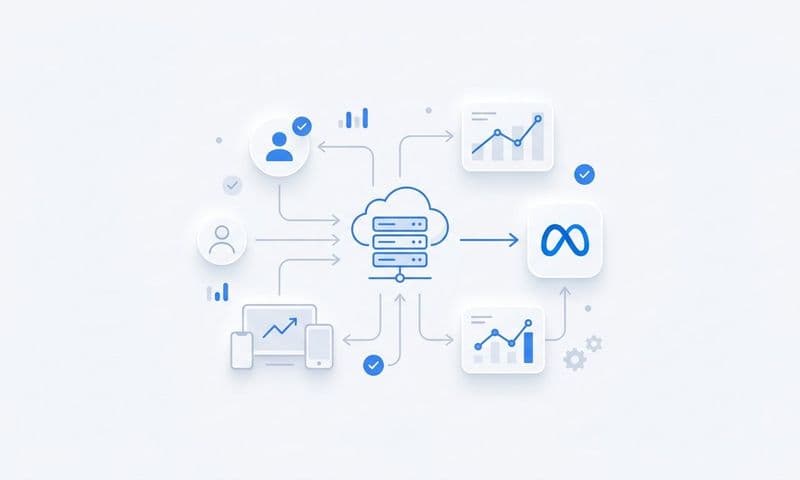
This is where server-side tracking solutions for ecommerce change everything. Instead of relying solely on browser pixels, your server sends conversion data directly to ad platforms. When someone completes a purchase, your ecommerce platform (Shopify, WooCommerce, BigCommerce) triggers an event from your server to Facebook, Google, and other platforms. This bypasses browser restrictions entirely.
If you're evaluating vendors, our ecommerce ad creative generator breakdown can help.
UTM parameters connect the dots between ad clicks and eventual conversions. When you tag your ad URLs with source, medium, and campaign parameters, you create a trail. Someone clicks your Facebook ad with utm_source=facebook&utm_campaign=spring_sale, browses your store, leaves, then returns three days later through a Google search and buys. Without UTM tracking, you'd credit Google. With proper UTM implementation, you can see Facebook initiated that customer journey.
But UTM parameters alone aren't enough. You need customer identity resolution to connect touchpoints across sessions and devices. This is the technology that recognizes the person who clicked your Facebook ad on their iPhone is the same person who later purchased on their laptop. Without identity resolution, these look like two different visitors, and you lose the connection between ad exposure and purchase.
CRM integration completes the picture. When your tracking system connects to your customer database, you can see not just who bought, but who they are, what they purchased before, and their lifetime value. This transforms your tracking from counting conversions to understanding customer quality. A campaign that drives 20 customers worth $500 each beats one that drives 50 customers worth $50 each, even though the conversion count is lower.
First-party data collection means you own the relationship with your customer and the data that comes from it. You're not dependent on Facebook or Google to tell you what happened. You're capturing events directly: page views, add-to-carts, checkout initiations, purchases. This data lives in your system, giving you a complete view regardless of what ad platforms can or cannot track.
The technical implementation requires coordination between your ecommerce platform, your tracking tools, and your ad platforms. But once it's working, you have a foundation that survives privacy changes, browser updates, and platform policy shifts. You're tracking based on actual behavior in your store, not estimates from external platforms.
If you're evaluating vendors, our ecommerce ad generator tool breakdown can help.
Attribution Models That Make Sense for Online Stores
Attribution models determine which touchpoints get credit for a sale. Choose the wrong model and you'll systematically misunderstand which marketing efforts actually work.
Last-click attribution is the default in most analytics platforms. It gives 100% credit to whatever brought the customer immediately before they purchased. Someone clicks a Facebook ad, browses your store, leaves, sees a retargeting ad, ignores it, searches your brand name on Google three days later, clicks the paid search ad, and buys. Last-click gives all the credit to that final Google search ad.
This seems logical until you realize it systematically undervalues awareness and consideration channels. The Facebook ad that introduced your brand to that customer gets zero credit. The retargeting ad that kept you top-of-mind gets nothing. Only the final click counts, even though that customer would never have searched for your brand without those earlier touchpoints.
First-click attribution flips this around, giving all credit to whatever introduced the customer to your store. This model favors top-of-funnel channels like prospecting campaigns and content marketing. It's useful if you want to understand what's bringing new customers into your ecosystem, but it ignores everything that happened between discovery and purchase.
For most ecommerce businesses, the truth lives somewhere between first and last click. Multi-touch attribution distributes credit across the entire customer journey. Linear attribution splits credit equally among all touchpoints. Time-decay gives more weight to interactions closer to the purchase. Position-based (U-shaped) attribution emphasizes the first and last touchpoints while giving some credit to everything in between.
The right model depends on your business. If you sell impulse-buy products under $50, many customers purchase immediately after their first ad exposure. Last-click attribution works reasonably well because the customer journey is short. But if you sell furniture, electronics, or anything that requires research and consideration, customers typically interact with your brand multiple times before buying. Proper marketing attribution for ecommerce stores reveals the full story.
Consider your sales cycle. Products with longer consideration periods benefit from attribution models that recognize earlier touchpoints. A customer might see your ad, visit your site, read reviews, compare competitors, and return two weeks later to purchase. If you only credit the last click, you miss the journey that built trust and intent.
Product type matters too. High-ticket items usually involve more research and touchpoints. Lower-priced consumables often convert faster. If you sell both, you might need different attribution strategies for different product categories.
The key question isn't which attribution model is "correct." It's which model helps you make better decisions. If your current model shows you that certain campaigns drive conversions but your profit analysis reveals those campaigns lose money, your attribution is misleading you. The model should connect marketing activity to actual business outcomes, not just surface-level conversions.
Many ecommerce brands find value in comparing multiple attribution models side by side. Look at last-click, first-click, and linear attribution for the same campaign. If all three models agree a campaign performs well, you can scale with confidence. If they tell wildly different stories, dig deeper to understand what's really happening in the customer journey.
Server-Side Tracking: The Foundation for Accurate Data
Browser-based tracking is dying. Server-side tracking is how modern ecommerce stores maintain accuracy despite privacy restrictions and technical limitations.
Here's what happens with traditional pixel tracking: A customer clicks your Facebook ad, lands on your product page, and your Facebook pixel fires in their browser. They add an item to cart, and the pixel sends an "AddToCart" event back to Facebook. They complete checkout, and the pixel reports a purchase. This all works perfectly until it doesn't.
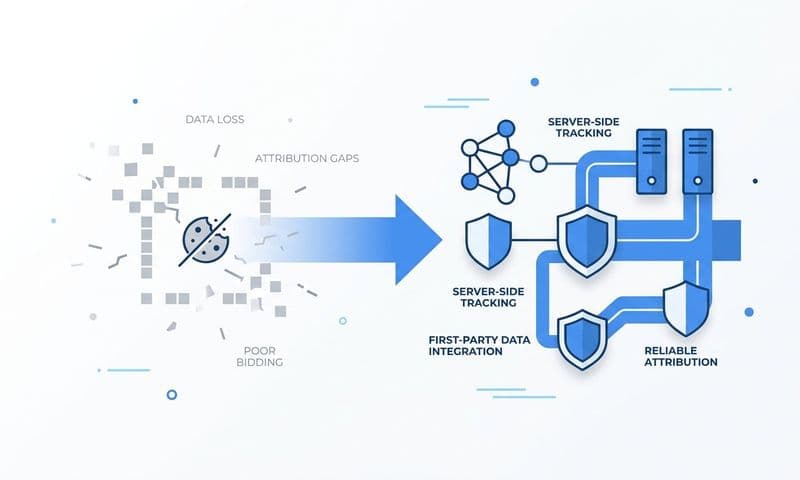
Ad blockers strip out tracking pixels entirely. Privacy-focused browsers limit what pixels can do. iOS restrictions prevent pixels from tracking users across apps and websites. The customer completes a real purchase, but your pixel never fires the conversion event. Facebook thinks the ad didn't work. You think the campaign failed. You cut the budget. But the ad actually drove a sale that simply went untracked.
Server-side tracking solves this by moving conversion reporting from the browser to your server. When a customer completes a purchase, your ecommerce platform knows it happened. Your server then sends that conversion event directly to Facebook, Google, and other ad platforms through their Conversion APIs. No browser required. No pixels to block. No privacy restrictions to bypass.
The technical flow works like this: Customer purchases on your store. Your ecommerce platform records the order. A server-side integration detects the purchase and formats the conversion data. The integration sends this data to ad platform APIs with proper customer matching parameters (hashed email, phone number, click IDs). The ad platform receives the conversion and attributes it to the correct campaign.
For a deeper dive into this space, see our AI ecommerce ad generator guide.
This approach captures conversions that browser pixels miss. Studies across the ecommerce industry show server-side tracking typically captures 20-30% more conversions than pixel-only implementations. That's not because server-side creates fake conversions. It's because it reports real purchases that browser-based tracking lost.
But server-side tracking delivers more than just better conversion counting. It sends enriched data back to ad platforms. Instead of just reporting "a purchase happened," you can send the order value, product categories purchased, customer lifetime value, and other business metrics. This enriched data helps ad platform algorithms optimize more effectively.
When Facebook's algorithm knows which ads drive high-value customers versus bargain hunters, it can target more people like your best customers. When Google sees that certain keywords lead to repeat purchasers, it can bid more aggressively on those terms. The ad platforms use your conversion data to train their machine learning models. Better data in means better targeting and optimization out.
Server-side tracking also future-proofs your measurement. As browsers add more privacy restrictions and third-party cookies disappear completely, pixel-based tracking will become even less reliable. Server-side tracking doesn't depend on browser features or user permissions. It works regardless of how privacy regulations evolve.
Implementation requires technical coordination between your ecommerce platform and ad platforms, but the best ad tracking tools for ecommerce handle this automatically. The investment in setting up server-side tracking pays back quickly through more accurate data and better ad performance.
Turning Tracking Data Into Scaling Decisions
Accurate tracking is worthless if you don't use it to make better decisions. The goal isn't just to know what happened. It's to know what to do next.
Start by identifying which campaigns actually drive profitable growth. Look beyond surface metrics like click-through rates and reported conversions. Connect ad spend directly to revenue. A campaign that costs $5,000 and generates $15,000 in revenue is fundamentally different from one that costs $5,000 and generates $6,000, even if they both show similar conversion counts.
Attribution data reveals which channels deserve more budget. When you can see that Facebook prospecting campaigns consistently bring in customers who make repeat purchases, while Google Shopping drives one-time buyers, you know where to invest for long-term growth. Scale the channels that bring customers with staying power, not just immediate conversions.
Watch for campaigns that look good on paper but drain profit in reality. Sometimes a campaign drives lots of conversions, but the customers it attracts have high return rates, low order values, or never purchase again. Your attribution system should connect ad exposure to customer lifetime value, not just first purchase. Using attribution software for ecommerce stores prevents you from scaling campaigns that bring in unprofitable customers.
Recognize underperformers early, before they waste significant budget. Set up alerts for campaigns where cost per acquisition exceeds your target or where conversion rates drop below baseline. The faster you catch declining performance, the less money you lose. Attribution data should trigger action, not just provide reports you review weekly.
Build a feedback loop between insights and adjustments. When attribution shows a specific ad creative drives higher-value customers, create more ads in that style. When certain audience segments convert at lower rates, exclude them or reduce bids. Let your tracking data inform creative strategy, audience targeting, and budget allocation.
Use attribution to test hypotheses systematically. Want to know if video ads outperform static images for customer acquisition? Track not just conversions, but customer quality from each format. Wondering if broad targeting beats detailed interest targeting? Compare the lifetime value of customers from each approach. Attribution transforms opinions into data-driven conclusions.
The most successful ecommerce brands treat attribution as a continuous optimization engine. They review performance daily, adjust budgets based on real revenue data, and constantly test new approaches while killing underperformers. This requires tracking infrastructure that delivers insights quickly enough to act on them.
Think of attribution as the bridge between spending money and making money. Without it, you're guessing. With it, you're making calculated decisions based on what actually drives your business forward. The brands that scale profitably are the ones that close this loop effectively.
Your Ad Tracking Action Plan
Ready to fix your tracking? Start with an honest audit of what you're measuring today and what you're missing.
Audit your current setup: Check if your tracking pixels fire correctly on every page. Test the checkout flow to confirm purchase events reach your ad platforms. Look for gaps where conversions happen but don't get reported. Review your attribution window settings across platforms to understand why numbers might conflict.
Verify UTM parameter consistency: Make sure every paid ad uses proper UTM tagging. Check that your analytics platform captures these parameters and connects them to conversions. Look for campaigns running without UTM tags—these are blind spots in your tracking.
Implement server-side tracking: This is your highest-impact improvement. Set up Conversion APIs for Facebook, Google, and any other platforms where you advertise. Ensure your ecommerce platform sends purchase events from your server, not just from browser pixels. Test that conversion data flows correctly and matches your actual orders.
Connect your CRM: Integrate your customer database with your attribution system. This lets you track customer lifetime value, repeat purchase rates, and other metrics that reveal true campaign performance. Without CRM integration, you're only seeing first purchases, missing the full customer story.
Choose your attribution model: Decide which model fits your business best. Start with multi-touch attribution if your customer journey involves multiple touchpoints. Compare different models to understand how they change your perspective on channel performance.
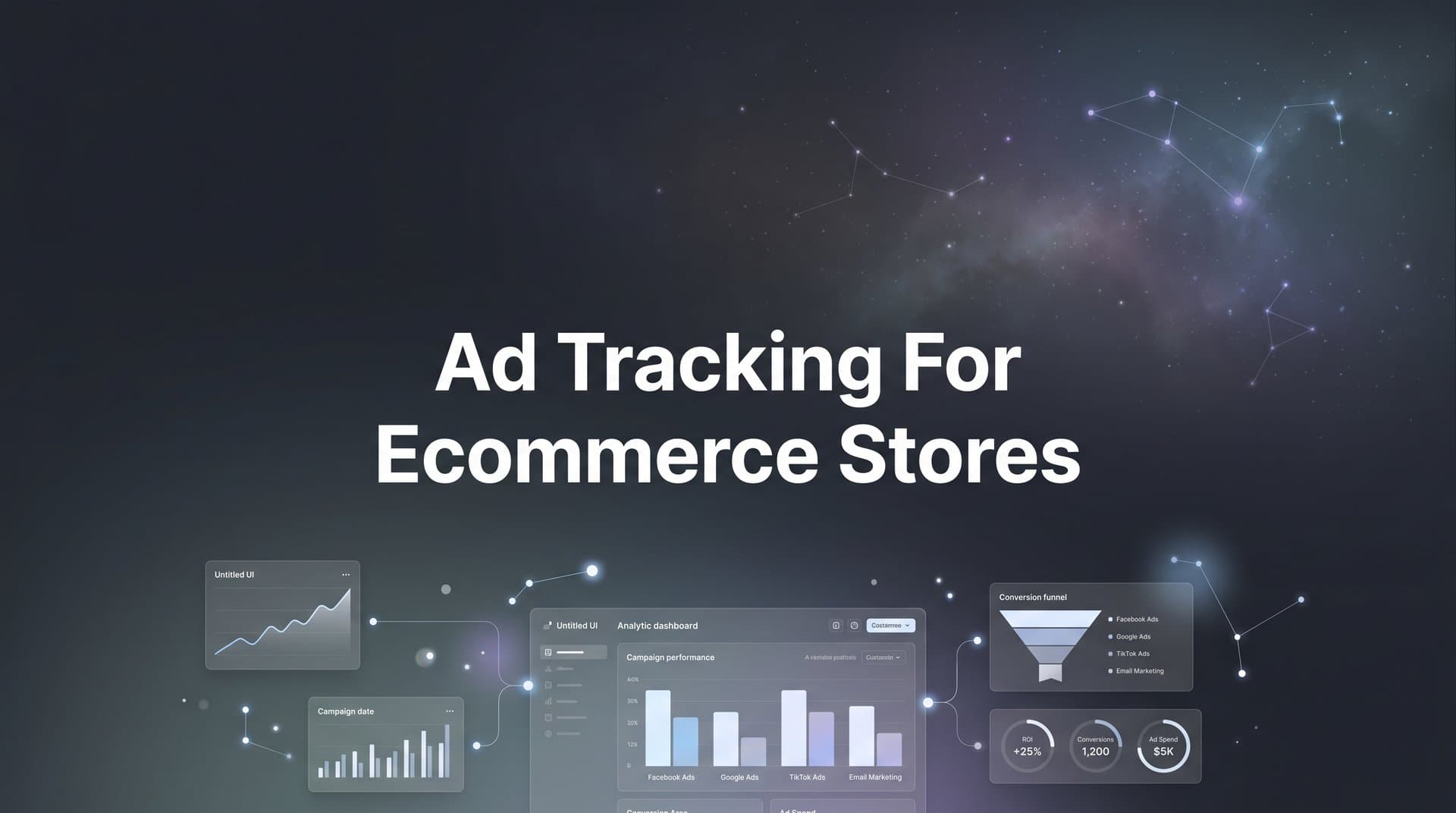
Set up regular reporting: Build dashboards that connect ad spend to actual revenue. Track cost per acquisition, return on ad spend, and customer lifetime value by channel. Leveraging marketing analytics for ecommerce stores makes this data accessible to everyone making budget decisions.
This is where platforms like Cometly transform the entire process. Instead of manually connecting pixels, Conversion APIs, CRM systems, and attribution models, Cometly tracks every touchpoint automatically. It captures ad clicks, website visits, CRM events, and purchases in one system. You can see which ads actually drive revenue, compare attribution models instantly, and feed enriched conversion data back to your ad platforms to improve their optimization.
The platform connects your entire customer journey from first ad exposure to final purchase and beyond. When your tracking infrastructure works this seamlessly, you shift from reactive reporting to proactive optimization. You know what's working before you waste budget on what isn't.
Making Every Ad Dollar Count
Accurate ad tracking isn't a nice-to-have feature for ecommerce stores. It's the difference between profitable growth and expensive guessing.
The brands that scale successfully know exactly which ads drive revenue. They don't rely on what Facebook or Google report in isolation. They track the complete customer journey, attribute value accurately, and make budget decisions based on real business outcomes. This level of visibility requires infrastructure that goes beyond basic pixels and platform reporting.
Server-side tracking, proper attribution modeling, and CRM integration transform your marketing from a cost center into a predictable growth engine. When you can connect every dollar spent to actual revenue generated, you know where to scale and where to cut. You stop funding campaigns that look good but lose money. You double down on channels that bring customers who stick around.
The gap between what ad platforms report and what actually drives your business will only widen as privacy restrictions increase. The solution isn't to accept incomplete data. It's to build a first-party tracking foundation that captures truth regardless of what external platforms can measure.
Ready to elevate your marketing game with precision and confidence? Discover how Cometly's AI-driven recommendations can transform your ad strategy. Get your free demo today and start capturing every touchpoint to maximize your conversions.