You're staring at dashboards from Meta, Google, TikTok, and your CRM. Each one tells a different story about what's working. Meta says your retargeting campaign is crushing it. Google claims search ads deserve the credit. Your CRM shows leads coming from everywhere, but the revenue attribution looks like a puzzle with missing pieces.
This is the paradox of modern marketing: we have more data than ever, yet making confident decisions feels harder than it should.
AI-driven marketing insights change this equation entirely. Instead of manually comparing spreadsheets or trusting incomplete platform reports, machine learning analyzes patterns across every customer touchpoint—connecting the dots between first ad impression and final purchase. The result? Clear recommendations on where to invest, which audiences to prioritize, and how to optimize campaigns based on what actually drives revenue, not vanity metrics.
From Data Overload to Actionable Intelligence
Let's start with what AI-driven marketing insights actually mean, because the term gets thrown around a lot without much clarity.
At its core, AI-driven marketing insights represent automated pattern recognition across your entire marketing ecosystem. The technology analyzes customer touchpoints, ad performance data, and conversion events to surface relationships and trends that would take humans weeks to identify—if they could spot them at all.
Think of it this way: traditional analytics tells you what happened. You can see that Campaign A generated 500 clicks and Campaign B generated 300. You know your conversion rate was 3.2% last month. That's descriptive analytics—useful, but backward-looking.
Machine learning operates differently. It doesn't just report what happened; it predicts what will happen and recommends what you should do about it. By processing thousands of customer journeys simultaneously, AI identifies which combination of touchpoints leads to conversions, which audiences are most likely to convert next, and where your next dollar of ad spend will generate the highest return.
The difference is profound. Descriptive analytics might tell you that your Facebook ads generated 50 conversions last week. Data driven marketing insights reveal that those conversions actually started with a Google search ad three weeks earlier, touched your blog content twice, and converted after seeing a retargeting ad. Suddenly, you're not just counting conversions—you're understanding the journey that creates them.
AI surfaces three critical types of insights that transform how you make decisions:
Attribution Clarity: Which touchpoints actually influence conversions versus those that just happen to be present in the journey? AI distinguishes between correlation and causation, showing you what's driving results versus what's taking credit.
Budget Allocation Recommendations: Based on predicted performance, where should you shift spend to maximize ROI? Machine learning models forecast campaign outcomes and suggest reallocation strategies that improve overall efficiency.
Audience Behavior Patterns: What characteristics define your highest-value customers? AI identifies behavioral signals and demographic patterns that indicate conversion likelihood, helping you refine targeting across all platforms.
This isn't about replacing human judgment. It's about augmenting your strategic thinking with computational power that processes more variables, faster, than any team could manage manually.
The Engine Behind the Insights: How AI Processes Marketing Data
Understanding how AI generates these insights helps you trust the recommendations and use them effectively.
For a deeper dive, see our guide to can AI generate UGC content.
The process starts with data unification. Your marketing data lives in silos—Meta's ad platform, Google's conversion tracking, your CRM's lead records, your website's behavior analytics. Each system captures different pieces of the customer journey, but none of them see the complete picture.
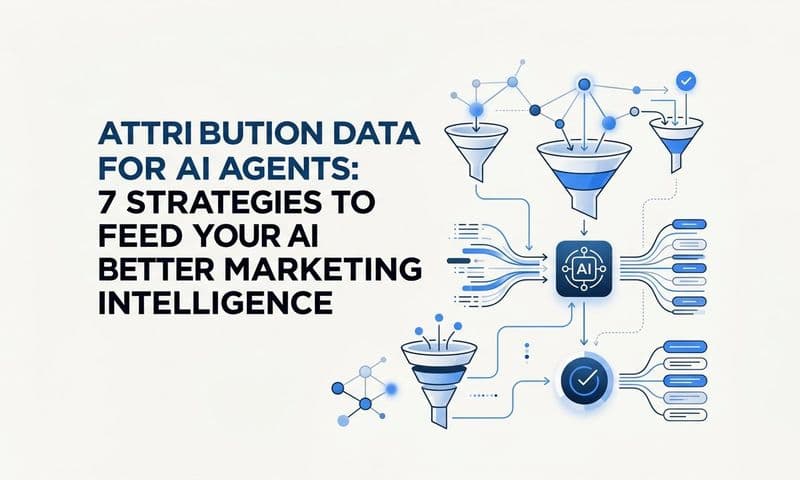
AI-powered attribution platforms solve this by connecting these disparate sources into unified customer journeys. When someone clicks your Facebook ad, visits your website, downloads a lead magnet, receives nurture emails, and eventually purchases through a Google search ad, the AI tracks all of it as a single, connected journey rather than isolated events.
Here's where it gets interesting. Machine learning algorithms then analyze thousands of these complete journeys to identify patterns. Which sequence of touchpoints most reliably leads to conversion? Which channels appear in high-value customer journeys versus low-value ones? What's the typical time lag between first touch and conversion for different audience segments?
The AI isn't just counting touches—it's calculating influence. This is crucial because not all touchpoints contribute equally to a conversion. Maybe your display ads rarely get clicked, but customers who see them convert 40% more often when they later encounter your search ads. Traditional analytics would dismiss those display ads as underperformers. AI recognizes their role in the conversion path.
Server-side tracking plays a critical role in this process. Client-side tracking—the traditional method where your website's JavaScript sends data to analytics platforms—has become increasingly unreliable. Ad blockers, browser privacy features, and iOS restrictions mean you're often missing 20-30% of your actual traffic data.
Server-side tracking captures events on your server before they reach the browser, creating a more complete data set. When AI has access to accurate, comprehensive data, its pattern recognition becomes dramatically more reliable. You're not making decisions based on a partial view of reality—you're seeing the full picture.
The algorithms also learn continuously. As more data flows through the system, the AI refines its understanding of what drives conversions in your specific business. It adapts to seasonal patterns, responds to market changes, and adjusts recommendations based on what's actually working right now, not what worked last quarter.
This creates a feedback loop: better data leads to better pattern recognition, which leads to better recommendations, which leads to better results, which generates more data to learn from. The system gets smarter over time, unlike static analytics dashboards that always show you the same metrics the same way.
Five Ways AI-Driven Insights Change Campaign Decisions
Theory is interesting, but let's talk about how this actually changes your day-to-day marketing decisions. Here are five specific ways AI-driven insights transform campaign management:
Cross-Channel Attribution That Reveals the Full Story: Instead of crediting the last ad someone clicked before converting, AI shows you which combination of channels drives revenue. You might discover that LinkedIn ads don't convert directly but consistently appear in high-value customer journeys alongside Google search. This insight changes your budget allocation entirely—you're not cutting LinkedIn spend because it "doesn't convert"; you're recognizing its role in the conversion ecosystem. Implementing cross channel marketing attribution software makes this level of visibility possible across all your platforms.
Budget Optimization Based on Predicted Performance: AI analyzes current campaign performance, historical patterns, and market signals to recommend where your next dollar will generate the highest return. If the algorithm predicts that your Facebook lookalike audience will outperform your Google search campaign next week based on current trends, you get that recommendation in time to act on it. This is proactive optimization, not reactive reporting.
Creative and Messaging Insights for High-Value Segments: Machine learning identifies which ad creative combinations resonate with audiences that actually convert. You might learn that your direct-response messaging works for low-ticket buyers, but your authority-building content drives high-ticket conversions. AI surfaces these patterns by analyzing thousands of customer journeys, showing you which messages work for which segments.
Audience Refinement That Goes Beyond Demographics: AI identifies behavioral signals that indicate conversion likelihood. Maybe customers who visit your pricing page twice before converting have a 60% higher lifetime value than those who convert on the first visit. This insight lets you create audience segments based on behavior patterns, not just age and location. Your targeting becomes dramatically more sophisticated.
Real-Time Anomaly Detection and Opportunity Identification: AI monitors performance continuously, alerting you when something changes significantly. If a campaign suddenly starts converting at twice the normal rate, you know immediately and can scale it. If tracking breaks or performance drops unexpectedly, you catch it before wasting significant budget. This real-time intelligence prevents both missed opportunities and costly mistakes.
These aren't theoretical benefits. They represent fundamental shifts in how you make marketing decisions—from gut instinct supplemented by basic metrics to data-driven strategy informed by pattern recognition at scale.
The competitive advantage comes from speed and accuracy. While other marketers are manually comparing last week's reports, you're acting on predictive insights about next week's opportunities. While they're debating which channel deserves credit for a conversion, you're optimizing based on complete journey data. The gap compounds quickly.
Feeding the Feedback Loop: Why Better Data Means Smarter AI
Here's something most marketers miss: AI-driven insights don't just help you make better decisions—they help ad platforms make better decisions on your behalf.
When you send enriched conversion data back to Meta, Google, TikTok, and other ad platforms, you're feeding their algorithms critical information about what actually drives value for your business. This is called conversion sync, and it creates a compounding effect that improves performance across your entire marketing stack.
Think about how ad platform algorithms work. They optimize toward the conversion events you tell them matter. If you're only tracking basic conversions—someone filled out a form or made a purchase—the algorithm optimizes for those actions without understanding quality differences.
But what if you could tell Meta which leads actually became customers? Which purchases came from high-value buyers versus one-time shoppers? Which conversions happened after a long consideration period versus impulse buys? That enriched data lets the platform's AI optimize toward outcomes that actually matter to your business, not just surface-level actions. This approach to marketing revenue attribution transforms how platforms target your ideal customers.
This creates a powerful feedback loop. Your attribution platform captures the complete customer journey, identifies which touchpoints drive valuable conversions, and sends that verified conversion data back to ad platforms. Those platforms then use that information to improve their targeting, showing your ads to people who match the behavioral patterns of your best customers.
The result? Your ads perform better, which generates more conversion data, which makes the AI smarter, which improves ad performance further. The system optimizes itself continuously, becoming more efficient over time.
But here's the catch: this only works if your data is accurate and complete. Common attribution challenges in marketing analytics undermine AI insights and break the feedback loop:
Tracking gaps from iOS privacy restrictions mean you're missing conversion data. Ad blockers prevent client-side tracking from capturing events. Siloed systems create duplicate or conflicting records. Delayed conversion data arrives too late for algorithms to optimize effectively.
These issues don't just make your reports less accurate—they actively degrade AI performance. When machine learning models train on incomplete or inaccurate data, they learn the wrong patterns and make poor recommendations. Garbage in, garbage out applies to AI just as much as traditional analytics.
This is why server-side tracking and unified attribution platforms matter so much. They solve data quality issues at the source, ensuring that AI has the accurate, complete information it needs to generate reliable insights and feed better data back to ad platforms.
Implementing AI-Driven Insights Into Your Marketing Stack
Understanding AI-driven insights is one thing. Actually implementing them into your workflow is another. Here's how to make this practical.
Start with essential integrations. For AI to analyze your complete marketing picture, it needs connections to your ad accounts, CRM system, and website analytics. This isn't optional—incomplete data means incomplete insights. Connect Meta, Google, TikTok, LinkedIn, and any other ad platforms you use. Link your CRM to track lead quality and revenue. Integrate your website tracking to capture behavior data.
These integrations create the unified data layer that AI needs to identify patterns across channels. Without them, you're back to siloed reporting where each platform tells its own story without context from the others. When choosing a marketing analytics platform, prioritize solutions that offer seamless connections to your existing tech stack.
Next, learn how to evaluate AI recommendations within your strategic context. Machine learning is powerful, but it doesn't understand your business goals, competitive positioning, or brand considerations. The algorithm might recommend aggressive scaling on a campaign that technically performs well but targets the wrong audience for your long-term strategy.
Treat AI insights as expert recommendations, not automated commands. When the system suggests shifting budget from Campaign A to Campaign B, dig into why. What patterns did it identify? How does that align with your strategic goals? Is the recommendation based on short-term performance or sustainable trends?
This balanced approach—algorithmic insights informed by human judgment—produces the best results. You're not blindly following AI recommendations, and you're not ignoring data-driven insights in favor of intuition. You're combining computational pattern recognition with strategic thinking.
Build team workflows that incorporate AI insights consistently. Create a regular cadence for reviewing recommendations—daily for active campaigns, weekly for strategic planning. Establish decision frameworks: which recommendations can team members act on immediately versus which require leadership approval? How do you test AI suggestions before committing significant budget?
Documentation matters too. When you act on an AI recommendation, note what you implemented and track the results. This creates organizational learning—you're not just optimizing campaigns, you're building institutional knowledge about which types of AI insights drive results for your specific business. Using marketing campaign tracking software helps maintain this documentation automatically.
Finally, remember that AI-driven insights improve as your data improves. Invest in fixing tracking issues, cleaning up duplicate records, and ensuring complete data flow between systems. The quality of your insights is directly proportional to the quality of your data foundation.
The Competitive Edge of Intelligence at Scale
We've moved from reactive reporting to proactive optimization. That shift represents more than a technical upgrade—it's a fundamental change in how marketing decisions get made.
Traditional marketing analytics tells you where you've been. You review last week's performance, identify what worked, and try to replicate it. By the time you've analyzed the data and adjusted your strategy, market conditions have changed and you're optimizing for yesterday's reality.
AI-driven insights flip this model. Instead of looking backward, you're looking forward. The system identifies emerging patterns in real-time, predicts upcoming performance, and recommends actions based on what's likely to work tomorrow, not what worked yesterday. You're staying ahead of changes instead of reacting to them.
This creates a significant competitive advantage. While other marketers are manually comparing reports and debating attribution, you're acting on comprehensive, data-driven insights. While they're guessing which channels drive value, you're seeing complete customer journeys. While they're optimizing campaigns based on incomplete data, you're feeding enriched conversion information back to ad platforms for better targeting.
The gap compounds over time. Better insights lead to better decisions. Better decisions lead to better results. Better results generate more data for AI to learn from. The system gets smarter, your campaigns get more efficient, and your competitive position strengthens. Understanding multi-touch marketing attribution becomes essential for capturing this complete picture.
But here's what matters most: AI-driven marketing insights aren't about replacing marketer judgment—they're about augmenting it with pattern recognition at scale. You're still making strategic decisions, setting campaign goals, and crafting messaging. The AI handles the computational heavy lifting—processing thousands of data points, identifying patterns, and surfacing recommendations that would be impossible to generate manually.
The marketers winning in this environment are those who embrace this partnership between human strategy and machine intelligence. They use AI to see what they couldn't see before, understand patterns they couldn't identify manually, and optimize with a level of precision that wasn't possible with traditional analytics. Focusing on improving marketing campaign performance through these methods separates leaders from laggards.
If you're ready to move beyond basic reporting and start leveraging AI-driven insights that actually transform campaign performance, the foundation is clear: unified attribution that captures every touchpoint, machine learning that identifies what drives revenue, and conversion sync that feeds better data back to ad platforms for improved targeting.
Cometly delivers exactly this combination. The platform captures every customer touchpoint across ad platforms, CRM, and website behavior—giving AI the complete data it needs for accurate pattern recognition. You get clear insights into which channels drive revenue, AI-powered recommendations for budget optimization, and enriched conversion data sent back to Meta, Google, and other platforms to improve their targeting algorithms.
Ready to elevate your marketing game with precision and confidence? Discover how Cometly's AI-driven recommendations can transform your ad strategy—Get your free demo today and start capturing every touchpoint to maximize your conversions.