You're tracking clicks. You're monitoring impressions. You're watching conversions roll in across Meta, Google, TikTok, and half a dozen other platforms. Your dashboard looks like mission control at NASA, and yet when someone asks which campaigns are actually driving revenue, you freeze.
Sound familiar?
Most marketing teams aren't suffering from a lack of data—they're drowning in it. The average marketer has access to more performance metrics than ever before, but that abundance creates its own problem: knowing what to do with it all. The gap between collecting data and actually using it to drive smarter decisions isn't just frustrating. It's costing businesses real revenue every single day.
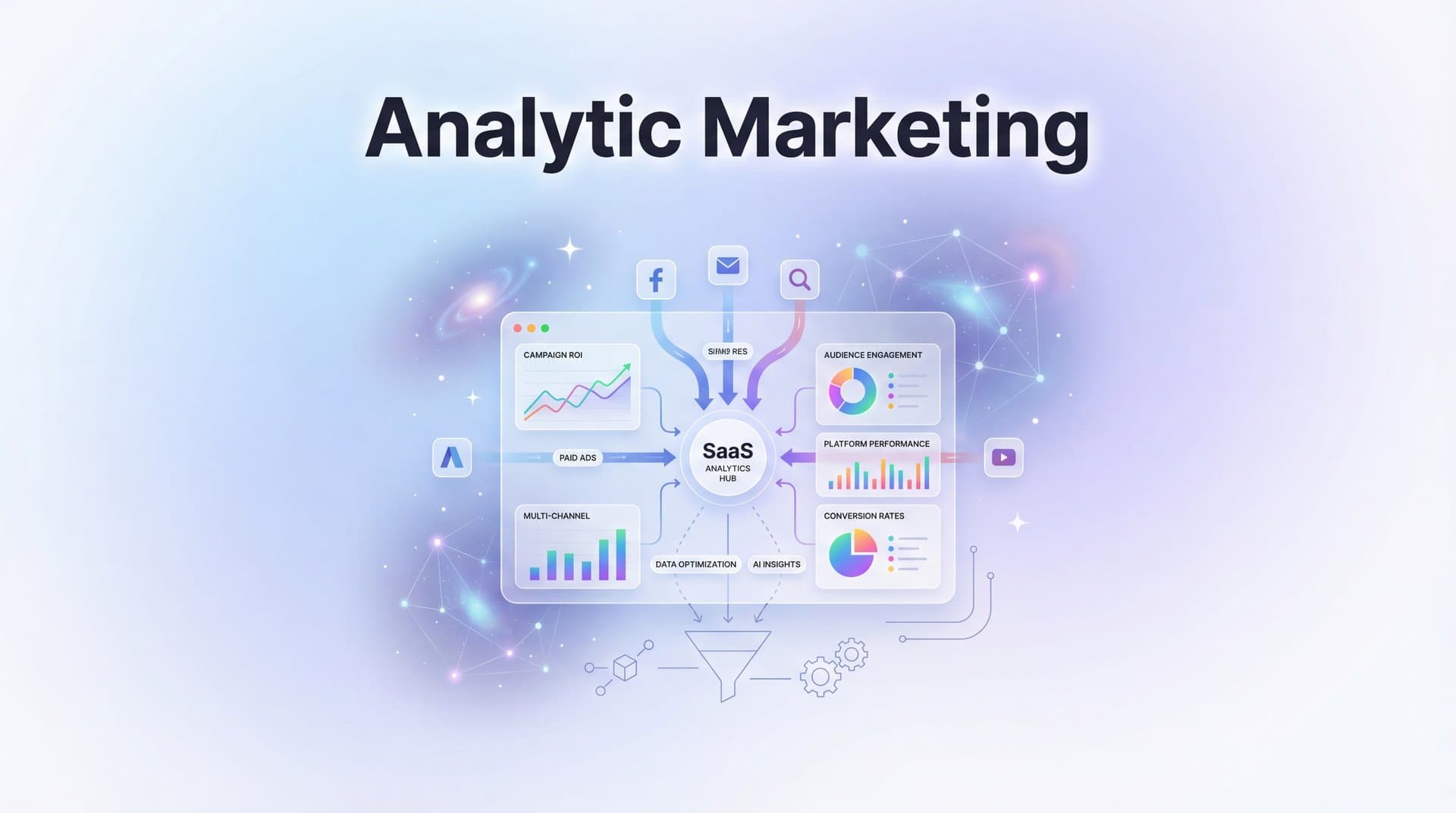
Analytic marketing is the bridge between those mountains of raw numbers and the actionable strategy that moves your business forward. It's the systematic approach to turning marketing data into insights you can act on, campaigns you can optimize, and results you can scale. This guide will show you exactly how to build that bridge—how to move from data collection to data-driven growth with confidence and clarity.
From Gut Feelings to Growth Metrics: Understanding Analytic Marketing
Analytic marketing is the systematic use of data analysis to guide marketing decisions, measure performance, and optimize campaigns based on evidence rather than intuition. It's not just about having analytics tools installed—it's about creating a repeatable process where data informs every strategic choice you make.
Think about how marketing decisions used to get made. A creative director would pitch an idea based on experience. A media buyer would allocate budget based on what worked last quarter. A CMO would approve campaigns based on gut instinct honed over years in the industry. None of that was wrong, exactly—but it left massive opportunities on the table.
The shift from intuition-based marketing to evidence-based marketing changes everything. Instead of guessing which audiences will convert, you analyze behavioral patterns and conversion data to identify your highest-value segments. Instead of wondering whether your Facebook campaigns are worth the spend, you track the complete customer journey from first click to final purchase and calculate precise return on ad spend.
Here's what makes this approach powerful: you stop making decisions in the dark.
Analytic marketing has four core components working together. First, data collection—capturing interactions across every touchpoint where customers engage with your brand. Second, analysis—processing that data to identify patterns, trends, and anomalies. Third, insight generation—translating those patterns into strategic understanding about what's working and what's not. Fourth, action implementation—using those insights to make concrete changes to campaigns, budgets, targeting, and creative.
The marketers who master this cycle don't just run better campaigns. They build competitive advantages that compound over time. Every test teaches them something. Every campaign adds to their understanding of what drives results. Every optimization makes the next decision smarter.
This is where traditional marketing and analytic marketing diverge completely. Traditional marketing optimizes based on assumptions and best practices. Analytic marketing optimizes based on your actual customer behavior, your actual conversion patterns, your actual revenue data. One approach borrows strategies from others. The other builds strategies uniquely suited to your business. For a deeper dive into this topic, explore our guide on what analytics in marketing really means.
The Data That Actually Matters: Key Metrics and KPIs
Not all metrics deserve your attention. The difference between vanity metrics and actionable metrics determines whether you're tracking activity or tracking results.
Let's break down the metrics that actually move your business forward, organized by what they tell you.
Acquisition Metrics: These tell you what it costs to bring new customers into your ecosystem. Cost per acquisition (CPA) shows what you're paying to generate a conversion—whether that's a lead, a trial signup, or a purchase. Customer acquisition cost (CAC) goes deeper, calculating the total cost of acquiring a customer including all marketing and sales expenses. When you know your CAC, you can make intelligent decisions about how much you can afford to spend to grow.
Engagement Metrics: These reveal how effectively you're capturing attention and driving action. Click-through rate (CTR) shows whether your ads and content are compelling enough to earn clicks. Session duration and pages per session indicate whether visitors find your content valuable enough to stick around. Engagement rate on social platforms tells you if your audience actually cares about what you're posting. These metrics matter because engagement is the bridge between awareness and conversion.
Revenue Metrics: These connect your marketing directly to business outcomes. Return on ad spend (ROAS) calculates how much revenue you generate for every dollar spent on advertising. Customer lifetime value (LTV) projects the total revenue a customer will generate over their entire relationship with your business. The LTV to CAC ratio tells you if your unit economics actually work—if you're spending less to acquire customers than they're worth over time. Understanding how to boost sales with marketing analytics starts with mastering these revenue metrics.
But here's where most marketers hit a wall: attribution.
Attribution metrics answer the question that keeps CMOs up at night—which touchpoints actually drove this conversion? A customer might see your Facebook ad, click a Google search result three days later, read your email campaign the following week, and finally convert through a retargeting ad. Which channel gets credit? Which one actually influenced the decision?
Understanding the customer journey across multiple touchpoints is critical for accurate measurement. Last-click attribution gives all credit to the final interaction before conversion—simple, but misleading. First-click attribution credits the initial touchpoint—better for understanding awareness, but ignores everything that happened after. Multi-touch attribution distributes credit across all interactions in the journey, giving you a more complete picture of how your channels work together. Many teams struggle with attribution challenges in marketing analytics that prevent them from seeing the full picture.
This is where the gap between vanity metrics and actionable metrics becomes obvious. Impressions and reach are vanity metrics—they measure exposure, not impact. Conversions attributed to specific channels and campaigns are actionable metrics—they tell you where to invest more and where to pull back.
The marketers who win aren't the ones tracking the most metrics. They're the ones tracking the right metrics and understanding how those metrics connect to actual business outcomes. They know their CAC, they know their LTV, and they know exactly which channels and campaigns are driving profitable growth.
Building Your Analytic Marketing Stack
Your marketing stack is only as good as the data flowing through it. The right combination of tools creates a unified view of performance across every channel. The wrong combination creates data silos, blind spots, and endless manual work trying to connect the dots.
Let's walk through the essential tool categories and how they fit together.
Tracking and Pixel Solutions: These are your data collection foundation. Pixels and tracking scripts capture user interactions on your website and connect them back to the campaigns that drove those visitors. Facebook Pixel, Google Ads conversion tracking, and LinkedIn Insight Tag all serve this purpose. But here's the challenge—browser restrictions and privacy changes have made pixel-based tracking increasingly unreliable. Many interactions simply don't get captured anymore.
Analytics Platforms: These process and organize your data into usable insights. Google Analytics remains the standard for understanding website traffic, user behavior, and conversion paths. It shows you where visitors come from, what they do on your site, and where they drop off. But platform analytics only tell part of the story—they show you what happened on your site, not necessarily what happened across your entire marketing ecosystem. Choosing the right marketing analytics platform is critical to closing these visibility gaps.
We compare the leading options in our AI marketing image generator roundup.
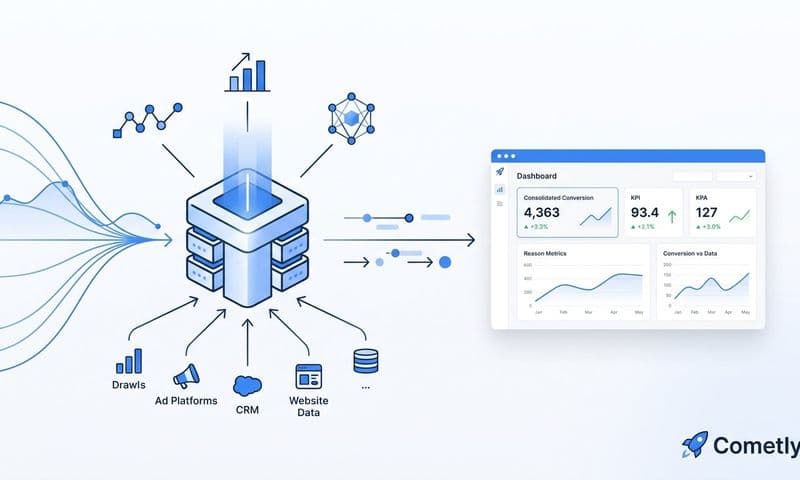
Attribution Software: This is where the magic happens. Attribution platforms connect data from all your marketing channels, ad platforms, CRM, and website to build a complete picture of the customer journey. They track interactions across devices and sessions, apply attribution models to distribute conversion credit accurately, and show you which campaigns are actually driving revenue—not just platform-reported conversions.
For a deeper dive into this space, see our AI marketing video generator guide.
Visualization Dashboards: These make your data accessible and actionable for your entire team. Tools that centralize metrics from multiple sources into unified dashboards eliminate the need to jump between platforms. When your team can see real-time performance across all channels in one place, decisions get made faster and more confidently. The top marketing analytics dashboard companies specialize in creating this unified view.
The key is integration. These tools need to talk to each other seamlessly. Your attribution software should pull data from your ad platforms. Your CRM should feed conversion data back to your analytics. Your dashboard should surface insights from all sources without requiring manual data exports and spreadsheet gymnastics.
But integration is where most marketing stacks break down. Data silos emerge when tools don't connect properly. Cross-platform tracking gaps appear when pixels fail to fire or users switch devices. You end up with incomplete customer journeys and attribution models that miss critical touchpoints.
The solution is building your stack with integration as the priority from day one. Choose tools that offer robust APIs and native integrations. Implement server-side tracking to capture data that browser-based pixels miss. Use attribution software that can unify data from multiple sources and fill in the gaps that individual platforms can't see. Our guide to the best marketing analytics tools can help you evaluate your options.
When your stack is properly integrated, you stop guessing and start knowing. You see the complete customer journey. You understand which touchpoints matter. You make decisions based on comprehensive data, not fragmented snapshots from individual platforms.
Turning Numbers Into Action: The Analysis-to-Optimization Loop
Data without action is just noise. The analysis-to-optimization loop is how you transform insights into results that compound over time.
Here's how the process works when you do it right.
Step 1: Identify Patterns. Start by looking at your performance data with specific questions in mind. Which campaigns have the highest ROAS? Which audience segments convert at the lowest cost? Which ad creatives generate the most engagement? Which traffic sources lead to the highest lifetime value customers? Patterns emerge when you look at data through the lens of business outcomes, not just platform metrics.
Step 2: Form Hypotheses. Once you spot a pattern, develop a testable hypothesis about why it's happening and how you can leverage it. If your retargeting campaigns consistently outperform cold traffic, your hypothesis might be that customers need multiple touchpoints before converting. If one audience segment has a CAC 40% lower than others, your hypothesis might be that this segment has higher intent or better product-market fit.
Step 3: Test Changes. Implement specific changes based on your hypothesis and measure the results. This might mean reallocating budget from underperforming campaigns to high-performers. It might mean refining audience targeting to focus on segments with proven conversion rates. It might mean testing new ad creative variations based on elements that resonated in previous campaigns.
Step 4: Measure Results. Track the impact of your changes against clear success metrics. Did shifting budget to top-performing campaigns increase overall ROAS? Did tightening audience targeting reduce CAC while maintaining conversion volume? Did the new creative variations improve CTR and conversion rate? The measurement phase closes the loop and informs your next round of optimization. Learning how to use marketing analytics effectively means mastering this continuous improvement cycle.
Let's make this concrete with examples of how analysis leads to specific optimizations.
Budget reallocation: You analyze attribution data and discover that while your Facebook campaigns report a 3x ROAS, your Google Search campaigns actually drive customers with 60% higher lifetime value. You reallocate 30% of your Facebook budget to Google Search and watch your overall customer value increase while maintaining acquisition volume.
Audience refinement: You segment your conversion data by demographics and behavior and find that customers acquired through interest-based targeting have a 25% higher retention rate than those acquired through lookalike audiences. You shift your targeting strategy to prioritize interest-based campaigns and see long-term customer value improve.
Creative testing: You analyze engagement metrics across ad variations and notice that video ads generate 2x the CTR of static images, but static images convert at a 30% higher rate. You develop a strategy using video ads for cold traffic to build awareness and static images for retargeting to drive conversions. Your overall funnel efficiency improves significantly.
Here's where AI and automation are changing the game entirely. Modern attribution platforms use AI to surface insights and recommendations faster than any human analyst could. They identify patterns across millions of data points, flag anomalies that deserve attention, and suggest specific optimizations based on what's working across your campaigns. Discover how AI marketing analytics can drive results for your campaigns.
AI doesn't just speed up the analysis-to-optimization loop—it makes it continuous. Instead of monthly optimization reviews, you get real-time recommendations. Instead of wondering what to test next, you get specific suggestions backed by data. The marketers who embrace AI-powered analytics aren't just working faster—they're operating at a completely different level of precision.
Common Pitfalls That Derail Data-Driven Marketing
Having more data doesn't automatically make you a better marketer. In fact, it often creates new problems that can derail your entire strategy if you're not careful.
Let's talk about the traps that catch even experienced marketing teams.
Analysis Paralysis: This is the most common failure mode in analytic marketing. You collect massive amounts of data across every channel. You build elaborate dashboards. You generate detailed reports. And then... nothing happens. You keep analyzing without ever acting on what you learn. The data becomes an excuse for inaction rather than a catalyst for optimization.
The fix is simple but requires discipline: set decision deadlines. When you run an analysis, commit to making a specific decision by a specific date based on what you learn. If Campaign A outperforms Campaign B by a meaningful margin, you don't need another week of data—you need to reallocate budget now. Action beats perfection in marketing.
Attribution Blind Spots: iOS privacy changes, cookie deprecation, and cross-device tracking gaps have created massive visibility problems for marketers. When Apple introduced App Tracking Transparency, many advertisers saw their Facebook attribution drop by 30-50% overnight—not because their campaigns stopped working, but because they couldn't track iOS users anymore.
These blind spots are dangerous because they lead to bad decisions. If you can't see the full customer journey, you might cut campaigns that are actually driving conversions but aren't getting credit. You might over-invest in channels that get last-click attribution but aren't really influencing decisions. You might feed incomplete conversion data back to ad platforms, causing their algorithms to optimize for the wrong outcomes. Recognizing the signs you need better marketing analytics is the first step toward solving these problems.
The solution is implementing tracking that works even when browser-based pixels fail. Server-side tracking captures conversion data directly from your backend systems, bypassing browser restrictions entirely. First-party data collection builds your own customer database that you control completely. Multi-touch attribution models help you understand the full journey even when some touchpoints are invisible.
Optimizing for the Wrong Metrics: Not every metric that improves is a metric worth improving. You might increase your CTR by 50% with clickbait headlines, but if those clicks don't convert, you've just wasted money on traffic that goes nowhere. You might boost your Facebook engagement rate with entertaining content that has nothing to do with your product, but engagement without purchase intent is just noise.
The danger here is mistaking correlation for causation. Two metrics might move together without one actually causing the other. Your conversion rate might increase at the same time you launched a new creative campaign, but the real driver could be seasonal demand, a competitor going out of stock, or a dozen other factors.
The safeguard is always connecting metrics back to revenue outcomes. Does this optimization increase actual sales, or just an intermediate metric? Does this campaign drive customers with high lifetime value, or just cheap conversions that churn immediately? Revenue is the ultimate scoreboard—everything else is just a proxy.
Putting Analytic Marketing Into Practice: A Framework for Success
Theory is useless without execution. Here's your step-by-step framework for implementing analytic marketing in your business, regardless of your current setup or sophistication level.
Step 1: Audit Your Current Data Collection. Start by mapping out every touchpoint where customers interact with your brand and every tool you're using to track those interactions. List your ad platforms, analytics tools, CRM, email marketing software, and any other systems that capture customer data. Then identify the gaps. Where are you blind? Which customer journey stages aren't being tracked? Which conversions aren't being attributed back to their source?
Step 2: Identify Your Key Business Questions. What do you actually need to know to make better marketing decisions? This isn't about tracking everything—it's about tracking what matters. Your key questions might include: Which campaigns drive the highest lifetime value customers? What's our true ROAS across all channels? How many touchpoints does it take before someone converts? Which audience segments are worth investing more in? Write down your top five business questions and make sure your data collection can answer them.
Step 3: Select Appropriate Metrics. For each business question, identify the specific metrics that provide answers. If you need to understand true ROAS, you need revenue data connected to marketing source. If you need to understand customer journey complexity, you need multi-touch attribution data. If you need to evaluate audience quality, you need LTV data segmented by acquisition source. Choose metrics that directly inform decisions, not metrics that just look impressive on a dashboard. Understanding the different types of marketing analytics helps you select the right approach for each question.
Step 4: Implement Proper Tracking. This is where most implementations fail—not from lack of trying, but from incomplete execution. Install tracking pixels correctly across your entire site. Implement server-side tracking to capture data that browser-based tracking misses. Connect your CRM to your analytics so you can track the complete journey from first click to closed deal. Set up conversion events that actually matter—not just pageviews, but actions that indicate purchase intent and revenue generation.
Step 5: Establish Your Reporting Cadence. Decide how often you'll review data and make optimization decisions. Daily monitoring for critical metrics like ad spend and conversion volume. Weekly reviews for campaign performance and budget allocation. Monthly deep dives into attribution patterns, customer cohort analysis, and strategic planning. The cadence matters less than the consistency—pick a schedule and stick to it. Our guide on marketing analytics and reporting explains how to turn data into revenue-driving decisions.
Here's the critical piece most marketers miss: connecting marketing data to actual revenue outcomes, not just platform-reported metrics. Facebook might report a 4x ROAS based on its attribution window. Google might claim a 5x ROAS based on its tracking. But when you look at your actual bank account, the numbers don't add up. That's because platform-reported metrics are optimistic at best and misleading at worst.
The solution is building your measurement system around your own data. Track conversions in your CRM or backend system. Calculate revenue based on actual purchases, not platform estimates. Use attribution software that unifies data from all sources and shows you what really happened, not what each platform wants to take credit for.
Finally, build a culture of data-driven decision making within your marketing team. This means making data accessible to everyone who needs it. It means framing discussions around metrics and evidence rather than opinions and assumptions. It means celebrating tests that fail because they taught you something valuable. It means making decisions based on what the data shows, even when it contradicts your instincts.
When your entire team operates from the same data foundation, alignment becomes automatic. Budget discussions become easier because you're optimizing toward shared metrics. Creative debates become productive because you can test variations and let performance decide. Strategic planning becomes more confident because you're building on proven patterns rather than untested assumptions.
The Path Forward: From Data Collection to Competitive Advantage
Analytic marketing isn't about drowning in dashboards or obsessing over every metric that moves. It's about having the right data connected to real business outcomes so you can make smarter decisions faster than your competition.
The marketers who win in this environment aren't the ones with the most sophisticated tools or the biggest budgets. They're the ones who can see the complete customer journey, understand which touchpoints actually drive results, and act on what they learn before the opportunity passes.
Every day you operate without clear attribution is a day you're making decisions in the dark. Every campaign you run without understanding its true impact on revenue is a gamble. Every dollar you spend without knowing whether it's generating positive ROI is a leak in your growth engine.
The gap between collecting data and actually using it to drive growth isn't technical—it's strategic. It's about building systems that connect your marketing activities to business outcomes. It's about implementing tracking that captures the complete customer journey, even when browsers and platforms try to hide it. It's about using AI to surface insights and recommendations faster than manual analysis ever could.
Take a hard look at your current analytics setup. Can you confidently answer which campaigns are driving your highest-value customers? Do you know your true ROAS across all channels, or are you relying on platform-reported numbers? Can you see how your marketing touchpoints work together to influence conversions, or are you stuck with last-click attribution?
If those questions make you uncomfortable, you're not alone. Most marketing teams are operating with significant visibility gaps that cost them real money every single day. The good news is that closing those gaps is more achievable than ever with modern attribution software that unifies your data, tracks the complete customer journey, and feeds better conversion data back to your ad platforms to improve their optimization.
Ready to elevate your marketing game with precision and confidence? Discover how Cometly's AI-driven recommendations can transform your ad strategy—Get your free demo today and start capturing every touchpoint to maximize your conversions.