
Most subscription businesses celebrate the wrong moment. They pop champagne when someone signs up for a free trial or enters their credit card details. But here's the uncomfortable truth: that signup you're celebrating might cancel before the first billing cycle ends, while the one you barely noticed could stick around for five years and become your most valuable customer. The difference between these two outcomes? It's not luck. It's about understanding conversion analytics for subscription services in a fundamentally different way.
Unlike traditional e-commerce where success happens at checkout, subscription success unfolds over months or years. That initial conversion is just the opening chapter of a relationship that will either flourish or fizzle. This reality demands a complete rethinking of how you measure, track, and optimize your marketing efforts.
The marketers who win in the subscription economy aren't the ones who drive the most signups. They're the ones who know which channels attract subscribers who stay, engage, and grow in value over time. This guide will show you how to build that knowledge into your analytics foundation, transforming your marketing from a guessing game into a precision instrument for sustainable growth.
The Fatal Flaw in Standard Conversion Tracking
Traditional conversion tracking was built for a world of one-time transactions. Someone clicks an ad, lands on your site, buys a product, and you're done. The value of that conversion is known immediately. Your analytics dashboard lights up with a clear signal: this campaign generated $50 in revenue.
Subscription businesses don't work that way. When someone signs up for your service, you have no idea if you just acquired a customer worth $500 or one who will request a refund next week. That uncertainty creates a dangerous gap between what your analytics tell you and what actually matters for your business.
Think about the implications. You're running two ad campaigns. Campaign A drives 100 signups at $20 per signup. Campaign B drives 50 signups at $30 per signup. Standard analytics would tell you Campaign A is winning. But what if Campaign A's subscribers churn at 80% within three months, while Campaign B's subscribers have a 70% retention rate after a year? Suddenly, Campaign B is dramatically more valuable, but your real-time dashboard would never reveal that.
This delayed feedback loop creates a vicious cycle. By the time you realize a channel produces low-quality subscribers who churn quickly, you've already spent months optimizing toward the wrong goal. You've fed your ad platforms signals that say "get me more signups like these" when you should have been saying "find me subscribers who will stay." Understanding conversion tracking for subscription businesses requires a fundamentally different approach than traditional e-commerce.
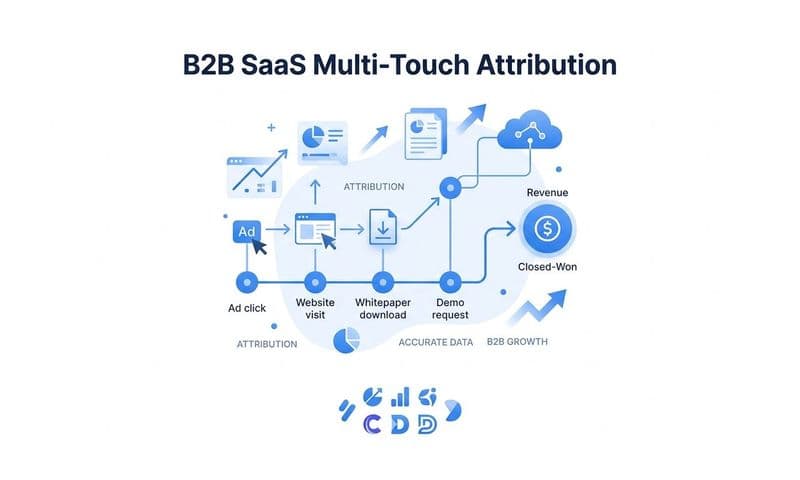
The problem gets worse with standard last-click attribution. Subscription decisions rarely happen in a single session. Your prospects see your brand mentioned in a podcast, visit your site a week later from an organic search, read comparison articles, check reviews, and finally click a retargeting ad before signing up. Last-click attribution gives all the credit to that final retargeting ad, completely ignoring the podcast sponsorship that started the entire journey.
For subscription businesses where consideration periods often span weeks, this attribution blindness leads to systematic underinvestment in awareness channels and overinvestment in bottom-funnel tactics. You end up optimizing for the last touch while starving the campaigns that actually build your pipeline.
The Metrics That Actually Predict Subscription Success
Signups are a vanity metric. They make your dashboard look impressive but tell you almost nothing about business health. The metrics that matter for subscription growth reveal whether you're acquiring customers who will stick around and generate real revenue.
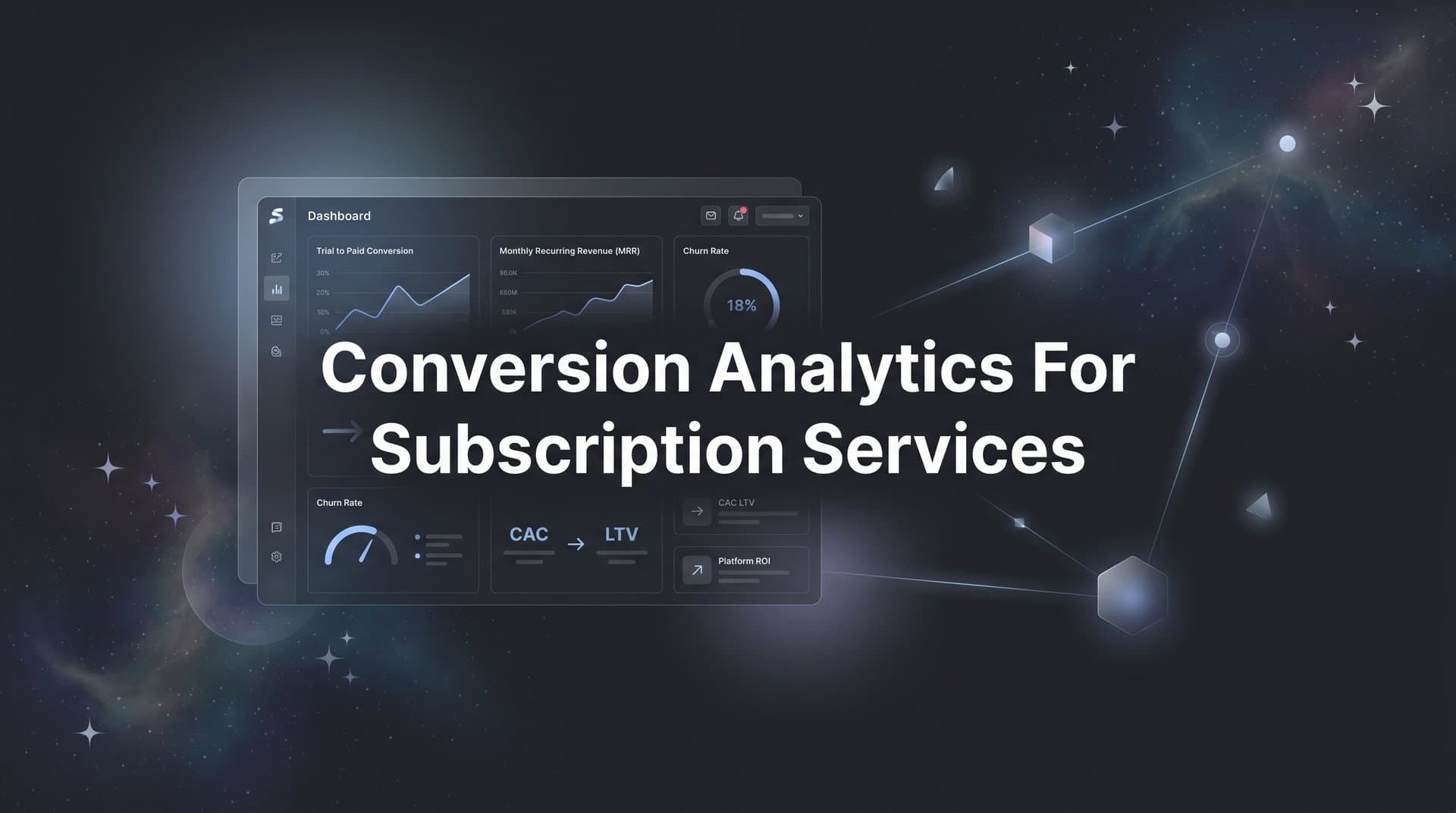
Start with trial-to-paid conversion rate, broken down by acquisition source. This metric exposes which channels bring in tire-kickers versus serious prospects. A channel that drives 1,000 trial signups with a 5% conversion to paid is less valuable than one that drives 300 trials with a 25% conversion rate. When you track this by source, you discover which campaigns attract genuinely interested prospects rather than freebie seekers.
Time-to-first-value is another revealing signal. How quickly do new subscribers reach meaningful milestones in your product? Users who complete key setup steps or achieve their first success within days are statistically more likely to become long-term customers. A robust marketing analytics for subscription businesses approach helps you trace these engagement patterns back to acquisition source.
Cohort-based analysis transforms your understanding of channel performance. Instead of looking at all subscribers as one mass, you group them by when they signed up and which campaign brought them in. Then you watch how each cohort behaves over time. You might discover that subscribers from LinkedIn ads have a 60% six-month retention rate, while those from Facebook ads show only 35% retention. That insight changes everything about budget allocation.
The relationship between customer acquisition cost and predicted lifetime value becomes your north star. If you're spending $100 to acquire a subscriber whose predicted LTV is $80, you're systematically destroying value no matter how many signups you generate. But if you're spending $150 to acquire subscribers with a predicted LTV of $600, you should be finding ways to scale that channel aggressively.
Early engagement signals often predict long-term retention better than any demographic data. Subscribers who invite team members in their first week, who use your product three times in the first five days, or who complete specific activation milestones are statistically more likely to remain customers. When you can connect these behavioral patterns back to acquisition sources, you gain the ability to optimize for quality, not just quantity.
Building a Complete View of the Customer Journey
Your subscribers don't experience your brand in neat, trackable boxes. They encounter you across devices, platforms, and sessions over days or weeks. They might see your ad on their phone during their morning commute, research your product on their work laptop that afternoon, read reviews on their tablet that evening, and finally sign up on their phone again three days later.
Traditional pixel-based tracking loses the thread at multiple points in this journey. Browser restrictions, cookie blocking, private browsing modes, and device switching all create gaps in your data. For subscription businesses where the consideration period often spans multiple sessions and devices, these gaps aren't minor annoyances. They represent fundamental blindness about what's actually driving conversions.
Server-side tracking has become essential for maintaining data accuracy. Instead of relying on browser cookies that can be blocked or deleted, server-side tracking sends conversion data directly from your servers to your analytics platform and ad networks. This approach maintains the connection between touchpoints even when users switch devices or use privacy features.
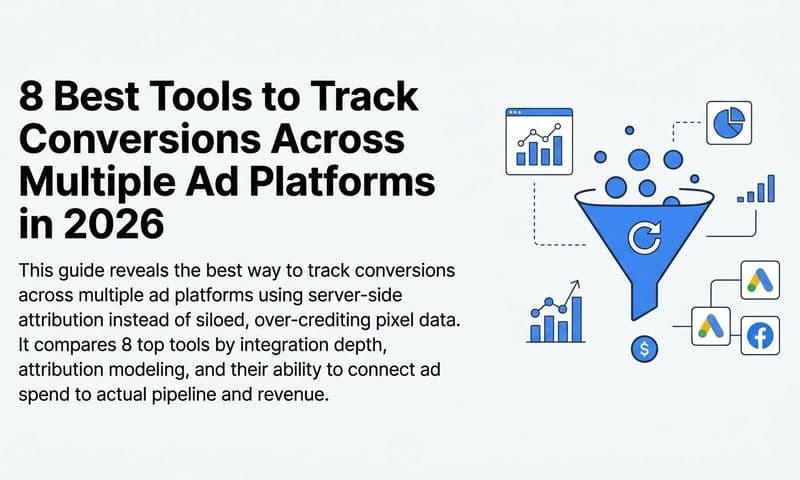
The technical shift to server-side tracking addresses a real business problem. When your tracking is incomplete, you make decisions based on partial information. You might cut budget from a channel that appears to be underperforming, not realizing that it's actually driving significant conversions that your pixel-based tracking is missing. Implementing accurate cross platform conversion tracking solves this visibility gap.
Integrating CRM and billing data with your ad platform data creates the unified view you need. Your CRM knows when a trial user becomes a paying customer, when they upgrade their plan, when they renew their subscription, and when they churn. Your billing system knows their actual revenue contribution over time. When you connect this downstream data back to the original acquisition campaign, you can finally measure what matters.
This integration reveals patterns that would otherwise remain hidden. You might discover that subscribers acquired through content marketing have lower initial conversion rates but higher lifetime values than those from paid search. Or that certain ad campaigns consistently attract subscribers who upgrade to premium plans within three months. These insights only become visible when you connect the full journey from first impression through ongoing revenue events.
Tracking every meaningful milestone creates a richer picture of subscriber quality. Beyond signup and payment, you want to track product activation, feature adoption, engagement frequency, support interactions, referrals made, and upgrades completed. Each of these events tells you something about subscriber health and long-term value potential.
Attribution Models Designed for Recurring Revenue
Multi-touch attribution reveals the full story of how subscribers find and choose your service. Instead of giving all credit to the last click, multi-touch models distribute credit across the various touchpoints that influenced the decision. For subscription businesses, this shift in perspective is transformative.
Consider a typical subscription customer journey. Someone hears about your product in a podcast sponsorship. Two weeks later, they see a LinkedIn ad and visit your site but don't sign up. A week after that, they click a Google search ad for a comparison term and read your blog content. Three days later, they see a retargeting ad and finally start a trial. Last-click attribution gives all the credit to that retargeting ad. Multi-touch attribution recognizes that the podcast planted the seed, the LinkedIn ad built awareness, the search ad addressed their research needs, and the retargeting ad closed the deal.
When you understand the true influence of each touchpoint, your budget allocation changes dramatically. You stop undervaluing awareness campaigns that start journeys and overvaluing bottom-funnel tactics that simply capture demand you've already created. Choosing the right attribution for subscription based business models ensures you recognize that both types of campaigns play essential roles in driving conversions.
Attribution windows need to match your actual sales cycle. Standard platforms often default to 7-day or 28-day attribution windows, but subscription purchase decisions frequently unfold over longer periods. If your average prospect takes 45 days from first awareness to signup, a 28-day attribution window systematically misses the early touchpoints that started their journey.
Extending your attribution window to match your real consideration period ensures you're seeing the complete picture. This might mean using 60-day or even 90-day windows for complex B2B subscriptions, or 30-45 day windows for consumer subscriptions with longer research phases.
The most sophisticated approach goes beyond tracking to signup and incorporates downstream value signals. Instead of just measuring which campaigns drive signups, you measure which campaigns drive subscribers with high retention rates, strong engagement, and higher lifetime values. This requires connecting your attribution model to actual subscriber behavior over time.
When you can see that LinkedIn campaigns consistently produce subscribers who stay for an average of 18 months while Facebook campaigns produce subscribers who churn after 6 months, you have the insight needed to allocate budget toward long-term value rather than short-term signup volume. This shift from quantity-focused to quality-focused attribution transforms marketing effectiveness.
From Data to Decisions That Scale Revenue
Analytics only matter if they change what you do. The goal isn't to have prettier dashboards or more detailed reports. The goal is to use conversion data to make better decisions about where to invest your marketing budget and how to optimize your campaigns for sustainable growth.
Feeding enriched conversion data back to ad platforms creates a powerful optimization loop. When you send signals to Meta or Google that distinguish between a signup that churned immediately and one that became a high-value subscriber, their algorithms can optimize toward finding more of the valuable prospects. This is fundamentally different from just sending a generic "signup completed" event.
The enrichment comes from connecting downstream events back to the original conversion. When a subscriber upgrades to a premium plan three months after signing up, you can send that signal back to the ad platform, effectively telling it "the campaign that acquired this user is producing high-value customers." The platform's machine learning then adjusts to find more prospects with similar characteristics. A marketing analytics platform with AI capabilities can automate much of this feedback process.
This feedback loop becomes more powerful over time. As your ad platforms receive more signals about which conversions lead to valuable long-term subscribers, their targeting becomes increasingly precise. You move from hoping your campaigns will work to knowing they're optimized for the outcomes that actually matter to your business.
Building systematic feedback loops requires technical infrastructure that connects your analytics platform, CRM, billing system, and ad platforms. When a subscriber renews their annual plan, that renewal should trigger an event that flows back through your attribution system to credit the original acquisition campaign. When someone upgrades or expands their subscription, that expansion should similarly be attributed back to its source.
AI-powered recommendations take this a step further by automatically identifying optimization opportunities. Instead of manually analyzing reports to figure out which campaigns deserve more budget, AI can surface insights like "Campaign X is producing subscribers with 40% higher retention than your account average, consider increasing budget by 30%" or "Subscribers from this audience segment have upgraded to premium plans at 3x the normal rate." Exploring the top analytics platforms for advertisers can help you find tools that deliver these actionable recommendations.
These recommendations transform how quickly you can act on insights. Rather than waiting for monthly reviews to spot trends, you get real-time guidance on where to shift budget, which audiences to scale, and which campaigns to pause based on actual subscriber quality data.
Building Your Subscription Analytics Foundation
Conversion analytics for subscription services isn't about tracking more metrics. It's about tracking the right metrics and connecting them to the outcomes that actually determine business success. The shift from transaction-focused measurement to relationship-focused measurement changes everything about how you evaluate marketing performance.
When you measure what truly matters, you stop celebrating vanity metrics like signup volume and start optimizing for the subscribers who stay, engage, and grow in value over time. You recognize that the best marketing channels aren't necessarily the ones that drive the most conversions, but the ones that drive conversions that turn into lasting customer relationships.
This foundation requires technical infrastructure that can track the complete customer journey, integrate data across your marketing stack, and feed enriched signals back to ad platforms. It requires attribution models that match your actual sales cycle and give credit to the full range of touchpoints that influence decisions. Most importantly, it requires a mindset shift from measuring what's easy to measure toward measuring what actually predicts long-term success.
The subscription businesses that win aren't guessing which channels work. They know with confidence where to invest because their analytics reveal the true relationship between marketing spend and subscriber lifetime value. They've built feedback loops that make their campaigns smarter over time, feeding better data to ad platforms and receiving better targeting in return.
Ready to elevate your marketing game with precision and confidence? Discover how Cometly's AI-driven recommendations can transform your ad strategy. Get your free demo today and start capturing every touchpoint to maximize your conversions.