Browser-based tracking is losing ground fast. Between iOS privacy updates, ad blockers, and tightening cookie restrictions, the pixel data your Shopify store sends to Meta is increasingly full of holes. The algorithms optimizing your campaigns are working with incomplete signals, which leads to poor targeting, wasted budget, and reporting you simply cannot trust.
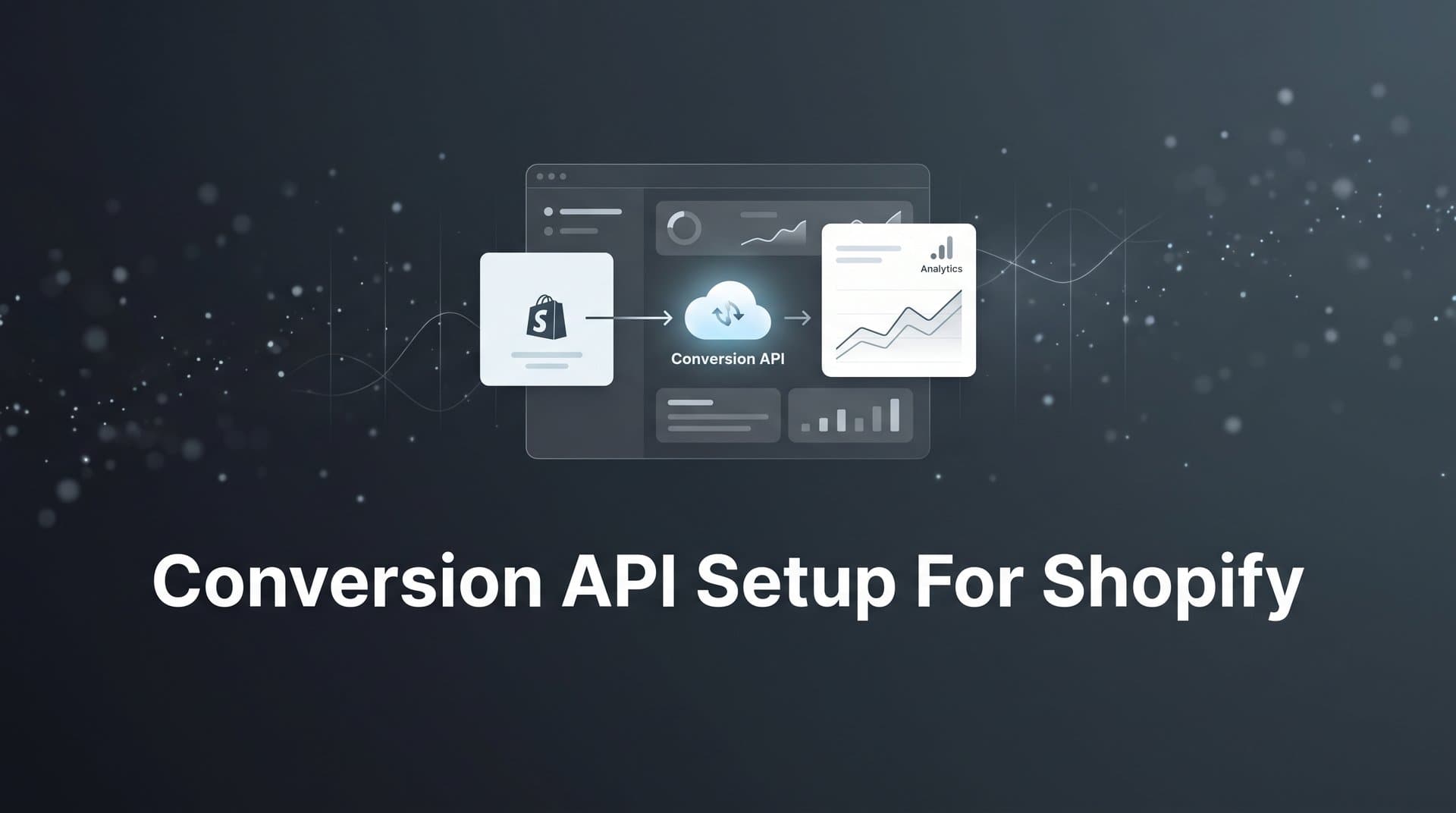
The Conversion API (CAPI) fixes this at the source. Instead of relying on a browser to fire events, CAPI sends conversion data directly from your server to Meta's servers, bypassing the browser entirely. It captures purchases, checkouts, and other key actions that browser-based pixels routinely miss, giving Meta a far more complete picture of what is actually driving results in your store.
For Shopify store owners running paid ads, this is no longer a nice-to-have. It is table stakes. Without server-side tracking, you are flying partially blind, and your ad platform's optimization engine is doing the same.
The good news is that setting up the Conversion API for Shopify is more straightforward than it sounds, especially with Shopify's native Meta sales channel handling much of the heavy lifting. This guide walks you through every step, from verifying your domain to validating that events are firing correctly and your match quality is where it needs to be.
By the time you finish this tutorial, you will have a working server-side tracking setup that feeds Meta better data, improves your campaign performance, and gives you a much stronger foundation for making smart advertising decisions. Let's get into it.
Step 1: Verify Your Domain and Confirm Pixel Installation
Before you touch the Conversion API, you need to make sure your foundation is solid. Domain verification and pixel installation are prerequisites for CAPI to function correctly, and skipping this step is one of the most common reasons server-side events get rejected or deduplicated incorrectly.
Why domain verification matters: Meta requires that you verify ownership of your domain in Meta Business Manager before you can configure Aggregated Event Measurement (AEM) or use CAPI effectively. Without verified domain ownership, your server-side events may be rejected, and your AEM configuration will not apply properly to iOS users.
To check your verification status, log in to Meta Business Manager and navigate to Business Settings. Under Brand Safety, select Domains. If your Shopify store domain is listed with a green checkmark, you are verified. If it is not listed or shows as unverified, you need to complete verification before proceeding.
Meta offers three verification methods: adding a DNS TXT record through your domain registrar, uploading an HTML file to your site's root directory, or adding a meta-tag to your site's head section. For most Shopify merchants, the meta-tag method is the simplest since you can add it through your theme's code editor. If you need a broader overview of Shopify conversion tracking setup, it is worth reviewing the full process before diving into CAPI specifically.
Confirm your Meta Pixel is active: Head to Meta Events Manager and select your pixel. Check the Overview tab for recent activity. You should see events firing within the last 24 to 48 hours if your pixel is properly installed. If you see no recent activity, reinstall the pixel through the Meta sales channel app in Shopify before moving forward.
Configure Aggregated Event Measurement: Once your domain is verified, set up your AEM priority events. In Events Manager, navigate to the Aggregated Event Measurement section and configure up to eight prioritized conversion events for your domain. For most Shopify stores, the priority order looks something like this: Purchase, InitiateCheckout, AddToCart, ViewContent, and PageView. CAPI works alongside AEM, so getting this configuration right ensures your server-side events are counted correctly for iOS users.
Watch out for this: If you have multiple pixels associated with your domain, or if your domain is claimed by a different Business Manager account, you will run into verification conflicts. Resolve any domain ownership disputes before proceeding. Duplicate pixels are a headache that will follow you through every subsequent step.
Step 2: Generate Your Conversion API Access Token
With your domain verified and pixel confirmed, the next step is generating the access token that authenticates communication between your Shopify store and Meta's servers. Think of this token as the secure handshake that proves your server is authorized to send events on behalf of your pixel.
How to generate your token: In Meta Events Manager, select the pixel you want to use with CAPI. Navigate to the Settings tab and scroll down until you find the Conversions API section. You will see an option labeled "Generate access token." Click it, and Meta will create a unique token tied to your pixel.
Copy this token immediately and store it somewhere secure, such as a password manager or your team's credential vault. You will need it in the next step when connecting CAPI through Shopify. If you want to understand more about what the Conversion API is and how it works at a conceptual level, that context can help you troubleshoot issues down the road.
What the token actually does: When your server sends an event to Meta's Conversions API endpoint, it includes this token in the request header. Meta uses it to verify that the request is coming from an authorized source and to associate the event with the correct pixel and ad account. Without a valid token, the API call will fail and no events will be recorded.
Security is non-negotiable here: Treat this access token exactly like a password. Never expose it in client-side JavaScript, never commit it to a public code repository, and never share it in plain text over email or messaging tools. If you suspect your token has been compromised, you can revoke it in Events Manager and generate a new one. The old token will stop working immediately.
Token permissions to be aware of: The access token is tied to the user account that generates it. If that team member leaves your organization and their account is removed from Business Manager, the token may stop working. For production setups, it is worth generating the token from a system user account in Business Manager rather than a personal account. This prevents disruptions if team members change.
Success indicator: Once generated, your token will appear in the Conversions API section of your pixel's Settings tab. If you can see it there and copy it successfully, you are ready for the next step.
Step 3: Connect CAPI Through Shopify's Native Meta Channel
Here is where things come together. Shopify's native Meta sales channel integration is the simplest path to enabling the Conversion API for most Shopify merchants. It handles the server-side event sending automatically once you flip the switch, without requiring custom API development or third-party middleware.
Install or update the Meta sales channel: In your Shopify admin, go to the App Store and search for the Meta sales channel (previously called Facebook and Instagram). If you already have it installed, make sure you are running the latest version. Outdated versions of the app have been known to cause duplicate events, missing parameters, and broken CAPI connections. If you see an update available, install it before proceeding.
Connect your Meta Business account: Open the Meta sales channel app in your Shopify admin. If you have not already connected your Meta Business account, follow the prompts to link it. You will need admin access to the Business Manager account that owns your pixel. Select the correct ad account and pixel when prompted, making sure they match the pixel you verified in the previous steps.
Enable the Conversion API toggle: Once your account and pixel are connected, navigate to the Data Sharing section within the Meta sales channel settings. You will see options for data sharing levels, typically labeled Standard, Enhanced, and Maximum. Selecting Enhanced or Maximum enables the Conversion API alongside your browser pixel. Maximum data sharing passes the most customer parameters through CAPI, which improves your Event Match Quality score. More on that in Step 5.
When you enable CAPI through this native integration, Shopify automatically begins sending server-side events for the standard Shopify event set: PageView, ViewContent, AddToCart, InitiateCheckout, AddPaymentInfo, and Purchase. You do not need to write any code or configure individual event triggers. Shopify handles the server-side tracking for Shopify on your behalf.
For stores with custom setups: If your Shopify store has a heavily customized checkout, uses a headless architecture, or relies on third-party checkout solutions, the native integration may not capture all your events accurately. In those cases, you may need to implement CAPI manually using Meta's Marketing API. This involves setting up a server-side endpoint that receives event data from your store and forwards it to Meta's Conversions API. This is a more technical implementation, but it gives you full control over what data gets sent and when. For the majority of standard Shopify stores, the native channel is sufficient.
Common pitfall to avoid: If you have multiple Meta pixels installed on your Shopify store (which sometimes happens after agency transitions or platform migrations), you risk sending duplicate events from multiple sources. Before enabling CAPI, audit your store to confirm only one pixel is active. Remove any legacy pixel code from your theme files and confirm that only the Meta sales channel pixel is running. Understanding the common pitfalls of Shopify tracking can help you avoid these issues proactively.
Success indicator: After enabling CAPI through the Meta sales channel, visit your Shopify store, add a product to your cart, and then check Events Manager. Within a few minutes, you should start seeing events appearing with a "Server" source tag alongside your existing "Browser" events.
Step 4: Configure Event Deduplication to Prevent Double Counting
Running both your browser pixel and CAPI simultaneously is the recommended approach because it creates redundancy. If the pixel misses a conversion due to an ad blocker or cookie restriction, CAPI catches it on the server side. But this setup introduces a real risk: if both the pixel and CAPI fire for the same user action without proper deduplication, Meta will count that conversion twice.
Double-counted conversions inflate your reported results, distort your cost per acquisition, and mislead the optimization algorithms that decide how to spend your budget. This is one of the key reasons platforms are underreporting conversions in ad platforms or, in this case, overreporting them. Deduplication is not optional. It is essential.
How deduplication works: Meta uses a parameter called event_id to identify and merge duplicate events. When both your pixel and your CAPI send an event for the same user action, they need to include the exact same event_id value. Meta's system then recognizes that these two events represent a single conversion and counts it only once, while still benefiting from the data provided by both sources.
Shopify's native integration handles this automatically: When you use the Meta sales channel with CAPI enabled, Shopify generates a consistent event_id for each user action and includes it in both the browser pixel event and the corresponding server-side CAPI call. You do not need to manually configure this. However, you should verify it is working correctly rather than assuming it is.
How to verify deduplication is working: In Meta Events Manager, navigate to the Overview tab and look at the event breakdown for your key conversion events, particularly AddToCart and Purchase. You should see events listed with a source of "Browser and Server" rather than separate "Browser" and "Server" counts that add up to more than your actual conversion volume. The "Browser and Server" designation means Meta is successfully recognizing and merging duplicates.
If you see significantly inflated event counts compared to your actual order volume in Shopify, deduplication may not be working correctly. Check the Diagnostics tab in Events Manager for any deduplication warnings.
For custom or manual CAPI setups: If you are implementing CAPI outside of Shopify's native integration, you are responsible for generating and passing matching event_id values in both your pixel code and your server-side API calls. A common approach is to generate a UUID when the user action occurs, store it in a data layer or session variable, pass it through the pixel's custom data object, and include the same value in your server-side CAPI payload. Consistency is everything here. Even a minor mismatch between the pixel event_id and the CAPI event_id will cause Meta to treat them as separate events.
Success indicator: Events Manager shows your key events sourced from "Browser and Server" without inflated counts compared to your actual Shopify order volume. If your purchase event count in Events Manager roughly matches your actual order count (allowing for some variation from users with tracking blocked entirely), deduplication is working.
Step 5: Test and Validate Events Using Meta's Diagnostic Tools
Never rely on live campaign data to discover that your CAPI setup is broken. Before you start optimizing campaigns based on server-side events, you need to validate that everything is firing correctly using Meta's built-in testing tools. This step saves you from making budget decisions based on faulty data.
Using the Test Events tool: In Meta Events Manager, navigate to the Test Events tab. You will see a field where you can enter a test event code, which is a unique identifier that flags your test traffic so it appears in real time in the Events Manager interface without affecting your live data or ad delivery.
Copy the test event code provided. Then open your Shopify store in a browser and add the test event code as a URL parameter (Meta provides instructions for how to do this within the tool). Now perform the key actions you want to test: view a product page, add an item to your cart, proceed to checkout, and if possible, complete a test purchase using a test payment method.
As you perform these actions, watch the Test Events interface in real time. You should see events appearing with both "Browser" and "Server" source tags, confirming that both your pixel and CAPI are firing. If you only see "Browser" events, CAPI is not sending correctly. If you only see "Server" events, your pixel may have an issue. For a deeper walkthrough of the full process, our setup Conversion API tutorial covers additional validation techniques.
Reviewing the Diagnostics tab: After running your test, switch to the Diagnostics tab in Events Manager. This tab surfaces warnings and errors related to your event setup, including missing required parameters, low match quality scores, deduplication issues, and configuration errors. Address any errors before moving on. Warnings are worth reviewing too, even if they are not blocking your events from being received.
Understanding Event Match Quality: Meta's Event Match Quality (EMQ) score measures how well the customer information in your server-side events matches Meta user profiles. The score runs from 1 to 10. A score of 6 or above is generally considered the target for effective optimization. Higher scores mean Meta can more accurately attribute your conversions to specific users and ad interactions, which directly improves how your campaigns are optimized.
EMQ is determined by the customer parameters you pass through CAPI. The most impactful parameters are hashed email address, hashed phone number, first name, last name, city, state, zip code, and country. The more of these you include, the higher your match quality will be.
Improving your EMQ score: If your score is below 6, the most common fix is ensuring you are passing email and phone data through CAPI. In Shopify's native integration with Maximum data sharing enabled, these parameters are sent automatically when customers provide them during checkout. If your score is still low, check whether your customer data is being hashed correctly. Meta requires that personally identifiable information be SHA-256 hashed before being sent through CAPI.
Success indicator: Test Events tool confirms events are received with both Browser and Server sources, no critical errors appear in Diagnostics, and your Event Match Quality score is 6 or above for your Purchase event.
Step 6: Optimize Your Server-Side Data for Sustained Ad Performance
Getting CAPI live is the starting line, not the finish line. The real payoff comes from consistently maintaining and enriching the data you send so that your ad platform's optimization engine gets better signals over time. Here is how to make the most of your new server-side setup.
Monitor Events Manager weekly for the first month: In the early weeks after launch, check Events Manager regularly for data quality drops, new diagnostic warnings, or unexpected changes in event volume. CAPI setups can break silently if app updates, theme changes, or checkout modifications disrupt the event flow. Catching issues early prevents you from running campaigns on bad data without realizing it.
Enrich your customer parameters over time: Beyond email and phone, passing additional parameters like city, state, zip code, and country through your CAPI events can meaningfully improve your Event Match Quality score. In Shopify's native integration, these are passed automatically when customers complete checkout. If you are using a custom setup, make sure your server-side payload includes all available customer fields from your order data. Exploring conversion tracking tools for ecommerce can help you identify solutions that enrich this data further.
Better data feeds better algorithms: Every enriched conversion signal you send through CAPI gives Meta's optimization algorithm more to work with. When the algorithm has a clearer picture of who is actually converting, it can find more users who look like your best customers. This typically translates to improved targeting efficiency and lower cost per acquisition over time, though results vary based on your account's overall data volume and campaign structure.
Where Cometly fits into this picture: CAPI solves the data transmission problem for Meta, but it does not give you a complete view of what is driving revenue across all your channels. That is where a platform like Cometly adds significant value.
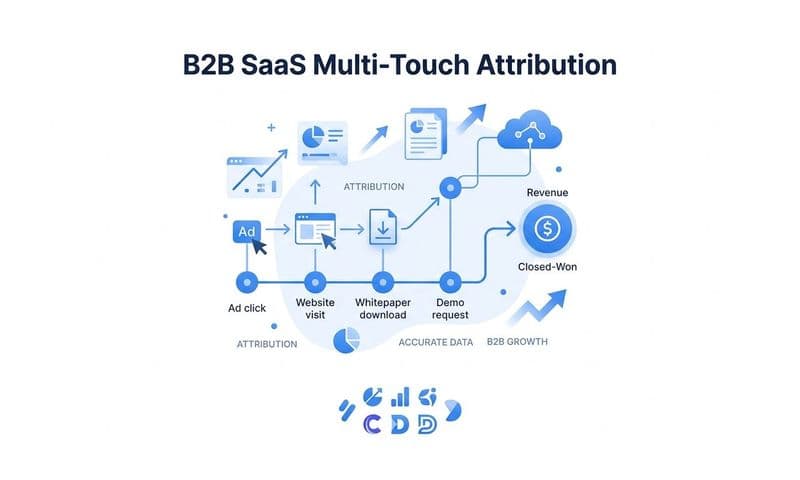
Cometly is a marketing attribution and analytics platform that tracks every touchpoint across your customer journey, from the first ad click through to the final purchase, across Meta, Google, and every other channel you run. While CAPI ensures Meta gets accurate conversion signals, Cometly shows you which campaigns, ads, and channels are actually driving revenue at a cross-channel level. Its multi-touch attribution models give you a far more accurate picture than any single platform's native reporting can provide. If you want to track ad performance across platforms, layering in a dedicated attribution solution is the logical next step.
Cometly's server-side tracking and Conversion Sync features also complement your CAPI setup by feeding enriched, conversion-ready event data back to Meta, Google, and other ad platforms. This means the algorithms across all your channels benefit from better data, not just Meta. And with Cometly's AI-powered recommendations, you can identify which ads and campaigns are performing and scale them with confidence based on real attribution data rather than platform-reported numbers that may be overstated.
The compounding effect: Accurate server-side data improves your ad platform's optimization. Better optimization improves your campaign results. Better results give you more conversion data to work with. It is a compounding cycle, and it starts with getting your CAPI setup right and keeping it healthy.
Putting It All Together
With your Conversion API setup complete on Shopify, your store is now sending conversion data through a reliable server-side connection that does not depend on browser cookies or client-side scripts. This means more accurate tracking, better signals for ad platform algorithms, and smarter campaign optimization from here forward.
Use this checklist to confirm everything is in order before you rely on your new setup for campaign decisions:
Domain verified: Your Shopify store domain is verified in Meta Business Manager with a green checkmark.
Pixel confirmed active: Events Manager shows recent pixel activity and your AEM priority events are configured.
Access token generated: Your CAPI access token is created, stored securely, and connected to your pixel.
Meta sales channel enabled: The Meta sales channel app is installed and updated, with CAPI toggled on at Enhanced or Maximum data sharing.
Deduplication confirmed: Events Manager shows key events sourced from "Browser and Server" without inflated conversion counts.
Test Events validated: The Test Events tool confirms events are received without critical errors in the Diagnostics tab.
Event Match Quality at target: Your Purchase event EMQ score is 6 or above.
From here, review your Events Manager regularly to catch any issues early. As your store evolves and you make changes to your theme, checkout flow, or app stack, it is worth re-running the Test Events validation to confirm nothing has broken.
And if you want full visibility into what is driving revenue across every channel, not just Meta, consider layering in a platform like Cometly. Accurate data is the foundation of profitable advertising, and you have just built that foundation. Now it is time to use it.
Ready to take your attribution further? Get your free demo and see how Cometly's AI-driven recommendations can help you capture every touchpoint, understand what is truly driving conversions, and scale your campaigns with confidence.