You're spending thousands on Facebook and Google ads for your Shopify store. Your ad dashboards show promising conversion numbers. But when you check your actual Shopify sales, the numbers don't match. You're left wondering: which campaigns are actually profitable? Where should you allocate more budget? Which ads are burning money?
This disconnect isn't just frustrating—it's costly. Without accurate conversion tracking, you're essentially flying blind, making budget decisions based on incomplete or misleading data. And the problem has only gotten worse since iOS 14.5 introduced App Tracking Transparency, blocking a significant portion of the tracking data that marketers relied on for years.
The solution isn't to accept these limitations. It's to build a comprehensive tracking infrastructure that captures every purchase, add-to-cart, and checkout event across your entire customer journey. This means going beyond basic pixel installation to implement server-side tracking, proper event configuration, and multi-touch attribution that shows you exactly which marketing touchpoints drive real revenue.
This guide walks you through the complete process of setting up Shopify conversion tracking that actually works. You'll learn how to audit your current setup, configure essential conversion events, implement server-side tracking to bypass browser limitations, and connect everything to an attribution system that reveals your true marketing performance. By the end, you'll have the data foundation needed to scale your profitable campaigns with confidence.
Step 1: Audit Your Current Tracking Setup and Identify Gaps
Before adding new tracking, you need to understand what's already installed and where the gaps exist. Many Shopify stores have partial tracking setups—a Meta Pixel installed months ago, maybe a Google Ads tag added by an agency—but no clear picture of what's actually firing and what's being missed.
Start by logging into your Shopify admin and navigating to Settings > Apps and sales channels. Check which sales channels and marketing apps have access to your store data. Look for installed pixels under Settings > Customer events. Shopify's native pixel management shows which tracking codes are active, but it doesn't tell you if they're configured correctly.
Next, open your live Shopify store in a browser and access the developer tools (right-click > Inspect, or press F12). Navigate to the Network tab and filter for "pixel" or "analytics." As you browse your store—viewing products, adding items to cart, and going through checkout—watch for tracking requests being sent. You should see events firing to Meta (facebook.com/tr), Google (google-analytics.com/collect or googleadservices.com), and any other platforms you're using.
Common gaps you'll likely discover: missing checkout events because tracking wasn't extended to Shopify's checkout pages, duplicate conversions from multiple pixels firing for the same action, or complete blindness to iOS users who've opted out of tracking. Many stores only track the Purchase event while missing critical mid-funnel events like AddToCart and InitiateCheckout that are essential for building effective retargeting audiences.
Document everything you find. Create a simple spreadsheet listing each ad platform you run, which events are currently tracked, and which are missing. Note any discrepancies you've observed between platform-reported conversions and actual Shopify orders. This audit becomes your roadmap for the setup process ahead.
The most critical insight from this audit: if you're relying solely on browser-based pixel tracking, you're missing a significant portion of your conversions. Browser restrictions, ad blockers, and privacy settings mean that even perfectly installed pixels can't capture the complete picture. That's why the steps ahead focus on building a more resilient tracking infrastructure. For a deeper dive into common issues, explore the 3 pitfalls of Shopify tracking that most store owners overlook.
Step 2: Install and Configure Your Base Tracking Pixels
With your audit complete, it's time to ensure all necessary tracking pixels are properly installed. Shopify offers multiple installation methods, and choosing the right approach depends on your technical comfort level and specific needs.
For Meta Pixel installation, the easiest path is through Shopify's native Meta sales channel. Navigate to Settings > Apps and sales channels > Add sales channel, then select Facebook & Instagram. Connect your Meta Business account and follow the prompts to install your Meta Pixel. This method automatically adds the base pixel code to all pages and sets up standard ecommerce events without requiring code modifications.
For Google Ads, install the Google & YouTube sales channel through the same process. Connect your Google Ads account, and Shopify will automatically implement the Google Ads tag and set up conversion tracking for purchases. The native integration handles dynamic remarketing parameters and product feed synchronization automatically. If you need step-by-step instructions, our guide on how to set up Google Ads conversion tracking for Shopify covers every detail.
However, native integrations have limitations. They typically only track standard events and may not capture custom parameters you need for advanced campaign optimization. This is where Google Tag Manager becomes valuable as a central tracking hub.
To set up Google Tag Manager on Shopify, first create a GTM account at tagmanager.google.com. Create a new container for your Shopify store. You'll receive a GTM container code snippet that needs to be added to your theme. In Shopify admin, go to Online Store > Themes > Actions > Edit code. In the theme.liquid file, paste the first part of the GTM code immediately after the opening tag, and the second part immediately after the opening tag. Save your changes.
With GTM installed, you can manage all your tracking pixels from one interface. Add your Meta Pixel through GTM by creating a new tag, selecting "Custom HTML," and pasting your Meta Pixel base code. Set it to fire on "All Pages." Repeat this process for any other platform pixels you need—TikTok, Pinterest, Snapchat.
The advantage of GTM is centralized control. When ad platforms update their tracking requirements, you can make changes in GTM without editing your theme code repeatedly. You can also implement more sophisticated tracking logic, like firing different events based on product categories or customer segments.
After installing pixels through either native integrations or GTM, verify everything is working. Use Meta's Events Manager (business.facebook.com > Events Manager) to check that your pixel is active and receiving data. For Google, use Google Tag Assistant (a Chrome extension) to verify that tags are firing correctly. Open your store, browse a few pages, and confirm that the tools show active pixel activity.
One critical note: if you're using both native integrations and GTM to install the same pixel, you'll create duplicate tracking. Choose one method per platform and stick with it. For most stores, using native integrations for basic tracking and GTM for custom events and additional platforms provides the best balance of simplicity and flexibility.
Step 3: Configure Essential Conversion Events
Installing pixels is just the foundation. The real value comes from configuring specific conversion events that capture meaningful customer actions throughout your funnel. These events power your campaign optimization, audience building, and attribution analysis.
Every Shopify store should track these five standard ecommerce events: PageView (every page load), ViewContent (product page views), AddToCart (when someone adds a product), InitiateCheckout (when checkout begins), and Purchase (completed orders). Most native integrations set these up automatically, but you need to verify they're firing with the correct parameters.
The Purchase event is your most critical conversion. It must include dynamic values that change with each order: total purchase value, currency, product IDs, and quantity. In Meta Events Manager, check a recent Purchase event to confirm these parameters are populated. You should see "value" matching the order total, "currency" set to your store's currency, and "content_ids" containing the purchased product IDs.
If these parameters are missing or incorrect, your campaigns can't optimize effectively. Meta's algorithm needs accurate value data to find customers likely to make high-value purchases. Google's Smart Bidding strategies rely on conversion values to maximize return on ad spend. Without proper parameters, you're limiting your campaign performance.
For GTM users, setting up these events requires creating triggers and variables. Create a trigger for "AddToCart" that fires when someone clicks your add-to-cart button. Create a tag that sends this event to Meta with relevant parameters like product ID and value. Shopify's dataLayer (a JavaScript object containing page information) provides the data you need. Reference variables like {{product.id}} and {{product.price}} in your tag configuration.
Beyond standard events, consider custom events that matter for your specific business. If you sell subscription products, track when someone views your subscription page. If you offer product customization, track when someone uses your customizer tool. These custom events let you build highly specific audiences for retargeting campaigns. Understanding your complete conversion funnel tracking helps identify where customers drop off and where to focus optimization efforts.
Event parameters are equally important for audience building. When someone views a product, pass the product category as a parameter. This lets you create audiences of "people who viewed products in the Electronics category" for targeted campaigns. When someone adds to cart, pass the cart value so you can retarget high-intent shoppers differently than browsers.
After configuring events, test them thoroughly. Use Meta's Test Events tool in Events Manager to see real-time event data as you browse your store. Open your store in one browser tab and Events Manager in another. Add a product to cart, initiate checkout, and complete a test purchase. Verify that each event fires with accurate parameters. For Google, use the Google Analytics DebugView or Google Tag Assistant to confirm event tracking.
Common issues to watch for: events firing multiple times for a single action (indicating duplicate tracking), incorrect currency codes, missing product IDs, or events not firing at all on mobile devices. Fix these issues before launching campaigns, because inaccurate event data leads to poor campaign optimization and wasted ad spend.
Step 4: Implement Server-Side Tracking for Data Accuracy
Even perfectly configured browser-based tracking has fundamental limitations. Ad blockers prevent pixels from loading. iOS users who opt out of tracking become invisible to your pixels. Browser cookie restrictions limit the duration you can track returning visitors. These aren't minor edge cases—they represent a substantial portion of your actual conversions that your ad platforms never see.
Server-side tracking solves this by sending conversion data directly from your server to ad platforms, bypassing browser limitations entirely. When someone completes a purchase on your Shopify store, your server sends that conversion data to Meta's Conversions API or Google's offline conversion import, regardless of whether the customer's browser allows pixel tracking. To understand the technical differences, read our breakdown of Conversion API vs pixel tracking.
For Meta, the Conversions API is the server-side solution. It works alongside your browser pixel, not as a replacement. The browser pixel captures what it can, while the Conversions API fills in the gaps and provides redundancy. Together, they give Meta a more complete view of your conversions, which improves campaign optimization and attribution accuracy.
Setting up Conversions API on Shopify typically requires a third-party app or custom integration. Several Shopify apps offer Conversions API setup, including official Meta partners. These apps automatically send purchase events (and other conversions) from your Shopify server to Meta whenever an order is created, including all the necessary parameters like purchase value, product IDs, and customer information.
The critical technical requirement is event matching. For server-side events to be useful, Meta needs to match them to specific users. This requires sending user identifiers—email address, phone number, and the fbp cookie value—with each server event. Quality Shopify Conversions API apps handle this automatically by collecting these identifiers during checkout and including them in server events.
Google's equivalent is offline conversion import, though the setup differs. For Google Ads, you can upload conversion data using Google's API or through manual CSV imports. The more automated approach is using Google's enhanced conversions, which sends hashed customer data (email, phone, address) with conversion events to improve matching and attribution accuracy.
One critical consideration with server-side tracking is deduplication. If both your browser pixel and server-side integration send the same purchase event, you'll double-count conversions. Proper setup includes sending an event_id (a unique identifier for each conversion) with both browser and server events. When Meta or Google receives two events with the same event_id, they count it once. Most quality Shopify apps handle deduplication automatically, but verify this in your setup. For a comprehensive explanation, explore what is server-side conversion tracking and why it matters.
The benefit of server-side tracking extends beyond just capturing more conversions. It feeds better data back to ad platform algorithms. When Meta's algorithm receives more complete conversion data, it can more accurately identify which users are likely to convert, improving your campaign targeting and optimization. This creates a positive feedback loop: better data leads to better optimization, which leads to better results.
After implementing server-side tracking, monitor your conversion metrics closely. You should see an increase in reported conversions as the server-side integration captures purchases that the browser pixel missed. This isn't inflated data—it's a more accurate picture of your actual performance. Use this data to reevaluate campaigns that previously appeared unprofitable but may actually be driving conversions that weren't being tracked.
Step 5: Connect Your Attribution System for Full Funnel Visibility
Your pixels are installed, events are configured, and server-side tracking is capturing conversions. But you're still missing a critical piece: understanding the complete customer journey. Native ad platform attribution shows you conversions within each platform's silo, but customers rarely convert after seeing just one ad on one platform.
The reality of modern ecommerce: someone sees your Instagram ad, clicks but doesn't buy. Three days later, they Google your brand name, click your Google ad, and add to cart. A week later, they receive your email, click through, and finally purchase. Which marketing touchpoint deserves credit? Meta claims it. Google claims it. Your email platform claims it. And all three show inflated ROAS numbers that don't add up to your actual revenue.
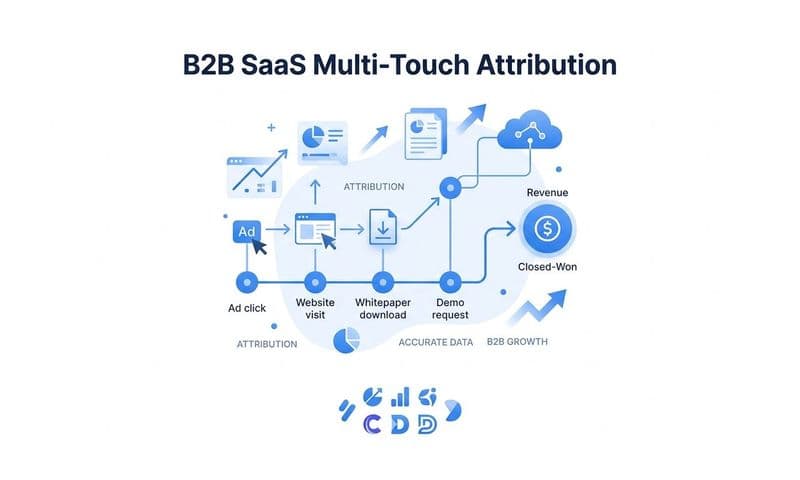
Multi-touch attribution solves this by tracking the entire customer journey across all touchpoints and channels. Instead of each platform claiming full credit, attribution models distribute credit appropriately. This reveals which campaigns truly drive conversions versus which ones get credit for sales that would have happened anyway.
Setting up proper attribution requires connecting your Shopify order data with your ad click data. When someone clicks an ad, your attribution system captures that click with a unique identifier. When that person eventually purchases, the system matches the order back to all the marketing touchpoints they engaged with. This creates a complete journey map showing exactly which ads, emails, and organic touches contributed to each sale. Our attribution tracking setup guide walks through the complete process.
The technical foundation is UTM parameters and click tracking. Every ad you run should include UTM parameters in the destination URL (utm_source, utm_medium, utm_campaign). These parameters identify where traffic comes from. Your attribution system captures these parameters when visitors land on your site and associates them with that visitor's session.
But UTM tracking alone isn't enough. Browser cookie limitations mean you can't reliably track visitors across multiple sessions and devices. This is where server-side attribution becomes essential. By capturing first-party data (email addresses, phone numbers) during checkout and matching it with your ad click data, you can connect customer journeys even when cookies fail. Understanding cross-device conversion tracking solutions becomes critical for accurate attribution.
Attribution platforms designed for ecommerce—like Cometly—automate this entire process. They track every click from every marketing channel, capture your Shopify order data in real time, and use advanced matching algorithms to connect orders back to the marketing touchpoints that influenced them. The result is a unified dashboard showing your true marketing performance across all channels.
For a deeper dive into this space, see our Shopify ad design tool guide.
The value becomes clear when you compare attribution data against native platform reporting. You might discover that Meta is claiming 80 conversions at $50 ROAS, while Google is claiming 60 conversions at $40 ROAS. But your Shopify store only had 100 total orders. With proper attribution, you see that 30 of those orders involved both a Meta ad and a Google ad in the customer journey. Now you can accurately assess each channel's contribution and make smarter budget allocation decisions.
Attribution data also reveals which campaigns drive new customer acquisition versus which ones get credit for retargeting existing customers. A campaign might show strong ROAS numbers, but attribution reveals it's only converting people who already visited your site multiple times. That's valuable for retargeting but shouldn't be scaled like a cold acquisition campaign.
The most sophisticated attribution systems go beyond just tracking clicks to incorporate view-through attribution (people who saw but didn't click your ads) and offline touchpoints (phone calls, in-store visits for omnichannel brands). They also provide different attribution models—first-click, last-click, linear, time-decay, data-driven—so you can analyze performance from multiple perspectives. If you're running ads across Facebook, Google, and other platforms, learn how to manage conversion tracking for multiple ad platforms effectively.
Step 6: Test, Validate, and Troubleshoot Your Setup
Your tracking infrastructure is in place, but before launching campaigns based on this data, you need to validate that everything works correctly. Testing catches configuration errors that could lead to inaccurate reporting and poor optimization.
Start with end-to-end test purchases. Create a test order on your Shopify store using a real payment method (you can refund it immediately). Go through the complete customer journey: land on a product page, add to cart, proceed to checkout, and complete purchase. Monitor your tracking tools throughout this process to verify every event fires correctly.
In Meta Events Manager, watch the Test Events tool as you complete your test purchase. You should see PageView when you land, ViewContent on the product page, AddToCart when you add the item, InitiateCheckout when you start checkout, and Purchase when you complete the order. Check that the Purchase event includes the correct value, currency, and product information.
Repeat this test from different devices and browsers. Test on desktop, mobile, and tablet. Test with ad blockers enabled to verify that your server-side tracking captures conversions even when browser pixels are blocked. Test with a VPN to simulate different geographic locations if you run location-specific campaigns.
After your test purchases, compare the conversions reported in your ad platforms against the actual orders in your Shopify admin. Check the order numbers, values, and timestamps. They should match exactly. If your ad platform shows more conversions than Shopify orders, you have a duplication problem. If it shows fewer, your tracking isn't capturing all conversions.
Common issues you might encounter: missing checkout events because tracking wasn't extended to Shopify's checkout pages (this requires additional configuration for Shopify Plus stores using custom checkouts), incorrect conversion values due to currency formatting issues, timezone mismatches causing attribution windows to misalign, or events firing but with missing parameters that limit their usefulness for optimization. When problems arise, our guide on fixing conversion tracking gaps helps identify and resolve common issues.
Create a tracking validation checklist that you'll use for ongoing monitoring. This checklist should include: weekly comparison of platform-reported conversions against Shopify orders, monthly review of event parameter completeness in Meta Events Manager, quarterly audit of UTM parameter consistency across campaigns, and immediate investigation whenever conversion counts show unexpected changes.
Set up automated alerts where possible. Many attribution platforms can alert you when conversion tracking drops below expected thresholds or when discrepancies between platforms exceed normal ranges. These alerts catch tracking breaks quickly, before they impact your campaign optimization or budget decisions.
Remember that tracking isn't set-and-forget. Ad platforms regularly update their tracking requirements. Shopify releases updates that can affect custom code. Browsers implement new privacy restrictions. Schedule quarterly tracking audits to ensure your setup remains accurate as these changes occur. The investment in ongoing monitoring pays for itself by preventing the costly mistakes that come from making decisions based on broken data. Review our best practices for tracking conversions accurately to maintain data quality over time.
Your Shopify Tracking Foundation Is Complete
You've built a comprehensive conversion tracking system that captures the complete picture of your marketing performance. From properly configured pixels to server-side tracking that bypasses browser limitations, you now have the data foundation needed to scale profitable campaigns confidently.
Here's your quick-reference checklist for maintaining tracking accuracy:
Monthly: Compare ad platform conversions against Shopify orders to catch discrepancies early. Review event parameters in Meta Events Manager and Google Analytics to ensure data quality remains high.
Quarterly: Run complete test purchases to validate end-to-end tracking. Audit UTM parameter consistency across all campaigns. Review attribution data to identify shifts in customer journey patterns.
After Platform Updates: Test tracking immediately after Shopify updates, ad platform changes, or theme modifications. Monitor for unexpected drops in conversion reporting that might indicate tracking breaks.
The most important insight: accurate tracking isn't about collecting more data—it's about collecting the right data that reveals true marketing performance. Browser-based pixels alone can't provide this accuracy anymore. Server-side tracking and comprehensive attribution are no longer optional for serious ecommerce marketers.
As you move forward, focus on using this data to make smarter decisions. Identify which campaigns drive new customer acquisition versus which retarget existing visitors. Discover which ad creative resonates with cold audiences versus warm audiences. Find the optimal budget allocation across channels based on true contribution, not inflated platform claims.
The tracking infrastructure you've built enables all of this. It connects every marketing touchpoint to actual revenue, giving you the confidence to scale what works and cut what doesn't. This is how modern ecommerce brands achieve profitable growth while competitors struggle with incomplete data and guesswork.
Ready to elevate your marketing game with precision and confidence? Discover how Cometly's AI-driven recommendations can transform your ad strategy—Get your free demo today and start capturing every touchpoint to maximize your conversions. With Cometly's server-side tracking and multi-touch attribution built specifically for ecommerce, you'll finally see which campaigns truly drive profitable growth for your Shopify store.