Dropshipping businesses run on thin margins and high ad spend. When you cannot clearly see which ads are generating purchases, you are essentially flying blind with your budget. Conversion tracking for dropshipping is not just a nice-to-have feature. It is the foundation of every profitable scaling decision you will make.
The challenge is that dropshipping creates unique tracking complexity. You are often running paid ads across multiple channels, selling products you do not manufacture, processing orders through third-party suppliers, and dealing with customers who research across devices before buying. Standard out-of-the-box tracking setups frequently miss key touchpoints, misattribute revenue, or lose signal entirely due to browser privacy changes and ad blocker interference.
This guide covers seven proven conversion tracking strategies specifically designed for dropshipping operations. Whether you are running Facebook and Instagram ads, Google Shopping campaigns, or TikTok creatives, these strategies will help you build a reliable data foundation, understand which channels actually drive purchases, and make confident budget decisions backed by real attribution data.
Each strategy addresses a specific tracking gap that dropshipping businesses commonly face. Together, they form a complete measurement system that connects ad spend directly to revenue.
1. Implement Server-Side Tracking to Recover Lost Conversions
The Challenge It Solves
Browser-based pixels are increasingly unreliable. Apple's App Tracking Transparency framework, Safari's Intelligent Tracking Prevention, and widespread ad blocker adoption all erode the conversion signals your ad platforms depend on. For dropshipping businesses running high-volume paid campaigns, this signal loss translates directly into underreported ROAS, weakened ad delivery algorithms, and poor optimization decisions based on incomplete data.
The Strategy Explained
Server-side tracking via Conversion APIs, specifically Meta's Conversion API (CAPI) and Google's Enhanced Conversions, sends purchase events directly from your server rather than relying on a browser-based pixel. Because the signal travels from server to server, it bypasses browser restrictions entirely. Meta has publicly documented that CAPI improves event match quality, which directly strengthens ad delivery and audience optimization.
For dropshipping, this means purchase events that would previously go unrecorded now flow cleanly into your ad platforms. Your campaigns receive accurate conversion data, your bidding algorithms optimize toward real buyers, and your reported ROAS reflects actual performance rather than a degraded sample.
Implementation Steps
1. Audit your current pixel setup to identify the gap between browser-reported events and actual orders processed through your store backend.
2. Set up your Conversion API integration, either natively through your e-commerce platform or via a dedicated attribution tool that supports server-side event sending.
3. Enable event deduplication so that conversions reported by both the browser pixel and the server-side API are not counted twice within the same ad platform.
4. Monitor event match quality scores in Meta Events Manager and conversion diagnostics in Google Ads to confirm signal improvement after implementation.
Pro Tips
Run your browser pixel and server-side API in parallel rather than replacing one with the other. The redundancy ensures maximum coverage. Prioritize sending hashed customer data such as email and phone number alongside purchase events to improve match rates, which strengthens the quality of the signal your ad platforms receive. Understanding why server-side tracking is more accurate than browser-based methods will help you make the case for this investment internally.
2. Use Multi-Touch Attribution to Understand the Full Purchase Path
The Challenge It Solves
Last-click attribution is one of the most common and costly mistakes in dropshipping measurement. Customers rarely discover a product and purchase immediately. They typically see a prospecting ad on social media, research the product organically, and then convert through a retargeting ad. A last-click model rewards only the final touchpoint and assigns zero value to every ad that built awareness and intent along the way. This leads to cutting top-of-funnel campaigns that are actually essential to the purchase path.
The Strategy Explained
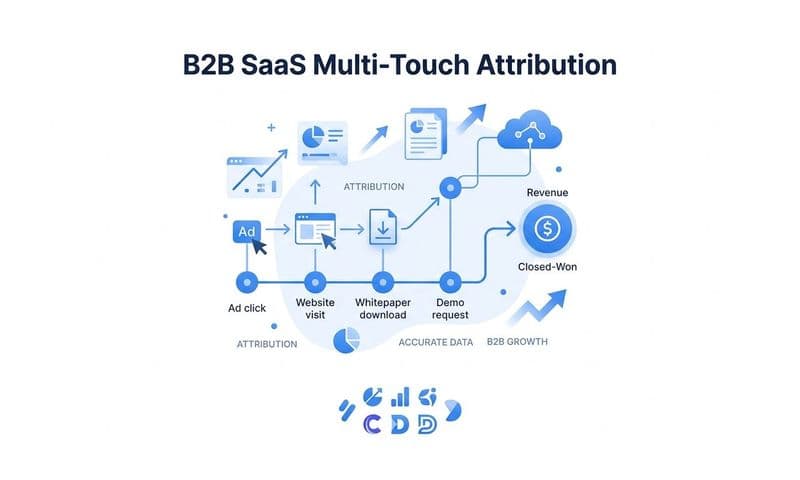
Multi-touch attribution distributes conversion credit across all touchpoints in the customer journey rather than awarding it entirely to the last interaction. Models like linear attribution spread credit equally across every touchpoint. Time-decay models give more credit to interactions closer to the purchase. Position-based models weight the first and last touches most heavily. Data-driven models use actual conversion path data to assign credit algorithmically.
For dropshipping, this matters because your prospecting campaigns on TikTok or Facebook often introduce customers to products they later purchase through a Google Shopping ad or a retargeting campaign. Without multi-touch visibility, you would pause the discovery campaigns and wonder why your retargeting ROAS starts declining.
Implementation Steps
1. Map your typical customer journey by reviewing conversion path reports in your analytics tools to understand how many touchpoints precede a purchase on average.
2. Select an attribution model that reflects your actual sales cycle. Longer consideration periods often benefit from time-decay or data-driven models.
3. Implement a third-party attribution platform that captures cross-channel touchpoints independently of individual ad platform reporting.
4. Compare performance across attribution models to identify which campaigns look different under multi-touch versus last-click, and adjust budget accordingly.
Pro Tips
Do not make budget decisions based on any single attribution model. Use multi-touch data as a lens to challenge last-click assumptions, particularly for prospecting campaigns that consistently appear early in the conversion path. If a campaign always shows up at the beginning of customer journeys, it is likely driving more value than last-click reporting suggests.
3. Track Revenue Values, Not Just Conversion Counts
The Challenge It Solves
Counting conversions without capturing revenue values gives you a misleading picture of campaign performance. Two ad sets might each generate fifty purchases, but if one drives orders averaging significantly higher in value, treating them as equivalent leads to misallocated budget. Dropshipping margins are already tight, and optimizing toward conversion volume rather than revenue can quietly erode profitability.
The Strategy Explained
Dynamic purchase value tracking passes the actual order value of each transaction to your ad platforms at the moment of conversion. This allows Google and Meta to optimize their delivery algorithms toward users more likely to generate higher-value purchases, not just any purchase. It also makes your ROAS calculations accurate because they reflect real revenue rather than a flat proxy value.
For dropshipping businesses selling products at different price points or running multiple product categories, this distinction is critical. A campaign driving high-ticket orders may show lower conversion volume but superior revenue ROAS compared to a campaign generating frequent low-value orders. Following best practices for tracking conversions accurately ensures your revenue data is reliable enough to act on.
Implementation Steps
1. Audit your current purchase event configuration to confirm whether you are passing a static value or a dynamic order value to each ad platform.
2. Update your conversion event code or server-side integration to pull the actual transaction total from your order system and pass it with each purchase event.
3. Set up value-based bidding in Google Ads and Meta Ads to allow algorithms to optimize toward revenue rather than raw conversion counts.
4. Create ROAS-based reporting views in your attribution dashboard that segment performance by revenue generated, not just conversions recorded.
Pro Tips
Consider whether your revenue values should reflect gross revenue or net revenue after product cost. Passing gross revenue is standard practice for ad platform optimization, but your internal profitability analysis should account for supplier costs and shipping to give you an accurate picture of true margin by channel.
4. Connect Your Ad Data to Your CRM and Order Management System
The Challenge It Solves
Ad platform ROAS tells you how much revenue was attributed to your campaigns within the platform's attribution window. It does not tell you about refunds, chargebacks, cancelled orders, or the downstream lifetime value of the customers those campaigns acquired. Dropshipping businesses that rely exclusively on in-platform reporting often discover their true profitability looks very different once order-level data is factored in.
The Strategy Explained
Integrating your ad platform data with your order management system and CRM creates a complete picture of customer acquisition from first ad click to fulfilled order. You can identify which campaigns acquire customers who actually complete their purchases, which channels drive customers with higher repeat purchase rates, and where refund rates are disproportionately high relative to reported revenue.
This integration also enables true customer acquisition cost analysis. Rather than dividing ad spend by attributed conversions, you can map spend to actual fulfilled orders and understand which channels are most efficient at acquiring customers who stick. Setting up ecommerce tracking across multiple channels is the foundation for making these cross-system comparisons reliable.
Implementation Steps
1. Identify the data you want to connect: ad click source, campaign, ad set, creative, order value, order status, and customer email or ID at minimum.
2. Use UTM parameters consistently across all campaigns to pass traffic source data into your order management system via your website analytics layer.
3. Set up an integration between your attribution platform and your CRM or order system, either natively or through a connector, to match ad-attributed customers with their actual order histories.
4. Build reporting views that show customer acquisition cost and order completion rates segmented by channel, campaign, and ad creative.
Pro Tips
Pay particular attention to refund rates by channel. Some traffic sources that appear profitable based on attributed revenue may have higher refund or chargeback rates that significantly reduce actual net revenue. This insight is only visible when you connect ad data to downstream order outcomes.
5. Set Up Cross-Channel Attribution to Stop Double-Counting
The Challenge It Solves
Every ad platform claims credit for conversions using its own attribution window and logic. Meta might claim a purchase because a user clicked a Facebook ad within a seven-day window. Google claims the same purchase because the user also clicked a Shopping ad. TikTok claims it too. When you add up all platform-reported conversions, the total often far exceeds your actual order count. Making budget decisions based on these inflated numbers leads to overspending across the board.
The Strategy Explained
A neutral third-party attribution platform sits outside the individual ad ecosystems and measures conversions independently. It deduplicates conversions that multiple platforms are claiming simultaneously, assigns credit based on a consistent methodology, and gives you a single source of truth for cross-channel performance comparison.
This is particularly valuable for dropshipping businesses running concurrent campaigns on Facebook, Google, and TikTok. Without deduplication, you cannot make a fair comparison of which platform is actually driving the most efficient growth. Reviewing the best software for tracking marketing attribution can help you identify a tool that handles cross-channel deduplication effectively.
Implementation Steps
1. Implement a third-party attribution tool that captures touchpoints across all your active ad channels through a combination of pixel tracking, server-side events, and UTM data.
2. Define a consistent attribution window and model within the tool so all channels are measured against the same standard.
3. Compare third-party attributed conversions against each platform's self-reported conversions to understand the magnitude of double-counting in your current setup.
4. Use the deduplicated data as your primary source for budget allocation decisions rather than relying on individual platform dashboards.
Pro Tips
Use platform-reported data for in-platform optimization, since each platform's algorithm relies on its own signals. Use your third-party attribution data for strategic budget decisions across channels. These two uses of data serve different purposes and should not be confused with each other.
6. Leverage First-Party Data Enrichment for Better Ad Targeting
The Challenge It Solves
Third-party cookies have been progressively deprecated across major browsers, and the tracking landscape continues to shift toward privacy-first defaults. For dropshipping businesses, this means the behavioral data that once powered precise ad targeting and retargeting is becoming less available. Without strong first-party data flowing back to ad platforms, event match rates decline, audiences become less precise, and cost per acquisition tends to rise over time.
The Strategy Explained
First-party data enrichment means collecting customer identifiers directly from your own properties, specifically email addresses, phone numbers, and customer IDs, and using them to improve the match rate when sending conversion events back to Meta and Google. When a purchase event is accompanied by hashed customer data that matches a user in the platform's database, the event quality score improves significantly.
Higher event match quality means your ad platforms can more accurately attribute conversions, build better lookalike audiences from your customer base, and optimize delivery toward users who resemble your best buyers. This is documented in Meta's CAPI best practices and Google's Enhanced Conversions documentation as a core lever for improving campaign performance in a privacy-first environment. Addressing conversion tracking gaps caused by missing customer data is one of the highest-leverage improvements you can make to your measurement setup.
Implementation Steps
1. Ensure your checkout flow collects email and phone number from every customer, and that this data is captured before the purchase confirmation event fires.
2. Hash customer identifiers using SHA-256 before passing them to ad platforms, in line with Meta and Google's data handling requirements.
3. Include hashed customer data with every server-side purchase event sent via CAPI or Enhanced Conversions to maximize event match quality.
4. Monitor event match quality scores regularly and investigate any drops, which may indicate a gap in data collection at checkout or in your event payload.
Pro Tips
Build your first-party data collection into the customer experience naturally. Post-purchase confirmation pages, order tracking emails, and loyalty program sign-ups are all opportunities to capture and enrich customer data. The richer your customer profiles, the stronger the signals you can send back to ad platforms to improve targeting and reduce wasted spend.
7. Build a Real-Time Attribution Dashboard to Drive Daily Decisions
The Challenge It Solves
Dropshipping ad management moves fast. An ad set that is profitable today can turn unprofitable by tomorrow if CPMs shift, creative fatigue sets in, or a competitor enters the auction. Weekly reporting cycles are simply too slow for the pace at which performance changes in competitive dropshipping markets. Teams that wait for weekly reports to make scaling or pausing decisions are consistently reacting to yesterday's data rather than acting on today's opportunities.
The Strategy Explained
A real-time attribution dashboard consolidates data from all your ad channels, your website analytics, and your order management system into a single live view. It surfaces the metrics that matter most for daily decision-making: ROAS by channel and campaign, revenue attributed to each ad set, cost per acquisition trends, and AI-driven performance insights that flag anomalies or opportunities before they become costly. The best ecommerce tracking apps for boosting ROAS combine real-time data with actionable recommendations rather than simply displaying raw numbers.
Tools like Cometly are built specifically for this use case. Cometly connects your ad platforms, CRM, and website to track the entire customer journey in real time, delivering AI-powered recommendations that identify which campaigns to scale and which to pause based on actual revenue data rather than vanity metrics.
Implementation Steps
1. Define the core metrics your team needs for daily decisions: ROAS, revenue by channel, cost per acquisition, and conversion volume at minimum.
2. Connect all your active ad platforms, your website analytics, and your order data to a central attribution platform that updates in real time or near-real time.
3. Set up alerts for significant performance changes, such as ROAS dropping below a defined threshold or spend pacing ahead of budget, so your team can respond immediately.
4. Establish a daily review cadence where the team checks the dashboard each morning and makes scaling or pausing decisions based on the previous day's attributed performance.
Pro Tips
Resist the temptation to build a dashboard that shows everything. Focus on the five to seven metrics that actually drive decisions. A dashboard with too many metrics creates analysis paralysis rather than clarity. Start with revenue by channel, ROAS by campaign, and cost per acquisition by ad set. Add complexity only when your team has established a consistent daily review habit.
Putting It All Together
Effective conversion tracking for dropshipping is a layered system, not a single tool. Each strategy in this guide addresses a specific gap in the measurement infrastructure that most dropshipping businesses are currently operating with.
Start by fixing your data foundation with server-side tracking to recover the conversions your browser pixel is missing. Layer in multi-touch attribution to understand the full path to purchase rather than rewarding only the last click. Make sure you are tracking actual revenue values so your ROAS calculations reflect real profitability rather than a misleading count of transactions.
Then connect your ad data to your order management and CRM systems to see the complete picture including refunds, fulfillment outcomes, and customer lifetime value. Resolve cross-channel double-counting so you can compare Facebook, Google, and TikTok on equal terms. Enrich your first-party data to keep ad platform algorithms well-fed in a privacy-first world. Finally, bring everything into a real-time dashboard so your team can act on insights daily rather than waiting for the weekly report.
Cometly is built to support exactly this kind of attribution infrastructure. It captures every touchpoint from ad click to revenue, connects your ad platforms and CRM, delivers AI-powered recommendations so you always know where to scale and where to pull back, and sends enriched conversion signals back to Meta and Google to improve targeting over time.
If you are ready to move from guesswork to data-driven dropshipping growth, Get your free demo today and start capturing every touchpoint to maximize your conversions.