Your ad platform dashboard is glowing green. Cost-per-conversion looks great, return on ad spend is climbing, and the campaigns you launched last quarter appear to be crushing it. Then you open your CRM, and the picture looks completely different. Fewer leads than reported. Revenue numbers that don't match. Deals that supposedly came from paid channels that your sales team has never heard of.
This disconnect is one of the most frustrating experiences in B2B SaaS marketing, and it happens far more often than most teams realize. The problem is not just annoying. It is strategically dangerous. When your conversion tracking is inaccurate, every budget decision you make is built on a distorted foundation. You scale campaigns that are losing money. You cut campaigns that are quietly driving pipeline. You optimize toward signals that do not reflect real buying behavior.
Decisions made on bad data are not neutral. They are often worse than making no data-driven decisions at all, because they carry the false confidence of numbers that look precise but are fundamentally misleading.
So why is conversion tracking inaccurate in the first place? The answer is not simple, and it is not a single cause. It is a layered problem involving how ad platforms are incentivized to report, how browser privacy changes have degraded pixel-based measurement, how B2B buying cycles expose the limits of standard attribution windows, and how technical implementation errors silently corrupt data over time. This article breaks down each root cause and, more importantly, explains what you can actually do about it.
The Self-Attribution Problem: Why Ad Platforms Always Claim Credit
Every major ad platform, including Meta, Google, and LinkedIn, operates as a walled garden with its own attribution logic. Each platform tracks conversions using its own pixel, its own attribution window, and its own rules for deciding which ad interaction deserves credit for a conversion. The problem is that none of these platforms talk to each other.
Think about what this means in practice. A B2B buyer sees a LinkedIn ad on Monday, clicks a Google search ad on Wednesday, and then converts on Friday after seeing a Meta retargeting ad. LinkedIn claims the conversion because the click happened within its attribution window. Google claims the conversion because the search click assisted the journey. Meta claims the conversion because the final ad interaction before conversion happened on its platform.
That is one real conversion being reported as three separate conversions across your dashboards. When you add up the numbers from each platform's native reporting, the total can dramatically exceed the actual number of leads or customers recorded in your CRM. This is not a bug. It is a structural feature of how walled gardens are designed, and it systematically inflates reported performance across every channel you run simultaneously.
The attribution window overlap compounds this problem. Meta's default attribution window includes view-through conversions, meaning someone who simply saw your ad without clicking can still be counted as a conversion if they convert within a certain timeframe. Google has similar view-through attribution logic in display campaigns. When both platforms are running simultaneously and both claim view-through credit for the same conversion, your reported numbers become untethered from reality.
The last-click model built into many native platform reports creates a different kind of distortion. By giving all credit to the final touchpoint before conversion, it makes channels that initiate and nurture the buying journey appear to underperform. Your top-of-funnel awareness campaigns on LinkedIn or YouTube look like they are generating no return, while your branded search or retargeting campaigns look like they are doing all the heavy lifting. In reality, the assist channels may have been essential to creating the demand that the final-touch channel simply captured.
The result is a reporting environment where every channel looks better than it actually is in isolation, and where the channels that build pipeline are systematically undervalued. This creates a feedback loop where marketers cut upper-funnel investment, starve the pipeline, and then wonder why their retargeting performance eventually declines.
How Browser Privacy Changes Degraded Pixel Tracking
Even if ad platform self-attribution were not an issue, client-side pixel tracking has been under sustained pressure from browser privacy changes that have materially reduced its reliability. This is not a future concern. It is already affecting your data today.
Safari's Intelligent Tracking Prevention, which Apple has been developing and tightening for several years, limits how long third-party cookies can persist and restricts cross-site tracking. Because Safari holds a significant share of browser usage, particularly among mobile users and in markets where Apple devices are prevalent, this directly affects a meaningful portion of your audience. Conversions that happen after a Safari session where the tracking cookie has expired or been blocked simply do not get attributed back to the originating ad interaction.
Apple's App Tracking Transparency framework, introduced with iOS 14, went further by requiring apps to explicitly ask users for permission to track them across other apps and websites. A large share of users opted out, which significantly reduced the signal that ad platforms, particularly Meta, could use to match ad clicks to downstream conversions. Meta acknowledged this impact directly and introduced the Conversions API as its recommended solution for recovering that lost signal.
Ad blockers add another layer of signal loss. Browser extensions that block tracking scripts are widely used among technical and professional audiences, which is exactly the demographic that overlaps with B2B SaaS buyers. When an ad blocker prevents your pixel from firing, that conversion is invisible to your ad platform. It still happened. Your CRM recorded it. But your ad platform has no visibility into it, which means it cannot optimize toward that signal and cannot credit the campaign that drove it.
The cumulative effect is systematic underreporting. The conversions that do get reported are not a random sample of all conversions. They are skewed toward users with less privacy protection, which can distort your understanding of which campaigns are actually performing. You may be seeing strong reported performance from a segment of your audience while a more privacy-conscious segment converts at a similar rate but remains invisible in your platform data.
This is why client-side pixel tracking alone is no longer sufficient for accurate conversion measurement. The infrastructure it was built on has changed, and the data it produces reflects that degradation.
The B2B Attribution Window Problem
Ad platform attribution windows were largely designed with e-commerce buying cycles in mind. A consumer sees an ad, clicks, and purchases within days. The 7-day click and 1-day view window that many platforms default to makes reasonable sense in that context. B2B SaaS buying cycles operate on an entirely different timeline.
In B2B SaaS, a prospect might first encounter your brand through a paid ad in January, spend weeks doing independent research, attend a webinar in February, get referred to a colleague, go through a sales process, and close in March or April. That entire revenue journey originated with a paid ad interaction, but under a 30-day attribution window, let alone a 7-day one, that initial touchpoint is completely invisible. The revenue gets attributed to whatever touchpoint happened to fall within the window, often organic search or direct traffic near the end of the cycle.
This structural mismatch makes paid channels look less effective than they actually are for B2B SaaS companies. You are not seeing the full picture of how your ad investment influences pipeline and revenue. You are seeing a truncated snapshot that systematically excludes the conversions with the longest buying cycles, which are often your highest-value deals.
The multi-stakeholder nature of B2B buying compounds this further. Enterprise and mid-market deals typically involve multiple people from the buying organization, each doing their own research across different devices and channels. A champion sees your ad on LinkedIn on their work laptop. They share your content with a decision-maker who looks it up on their phone. The decision-maker visits your website directly from their desktop before a demo call. Each of these interactions is effectively a separate identity in your tracking system.
Cross-device journeys create identity resolution gaps that pixel-based tracking cannot bridge. Without a way to connect these disparate touchpoints into a single customer journey, you end up with fragmented data that makes it impossible to understand how your campaigns are actually influencing the buying process. The result is that paid channels get undervalued, organic and direct traffic get overcredited, and budget allocation decisions are made on a fundamentally incomplete picture of how demand is actually being created.
Silent Data Corruption: Technical Errors That Skew Your Numbers
Beyond the structural issues with ad platform reporting and browser privacy, a significant share of conversion tracking inaccuracy comes from technical implementation errors that silently corrupt your data over time. These errors are often invisible in day-to-day reporting because they do not cause obvious failures. They just make your numbers wrong in ways that are hard to detect without deliberate auditing.
Duplicate conversion events are one of the most common sources of inflated conversion counts. When both a client-side pixel and a server-side Conversion API are running simultaneously without deduplication logic, the same conversion gets reported twice. Meta and Google both document the deduplication requirement in their Conversion API setup guides, but many implementations skip this step or implement it incorrectly. The result is that your cost-per-acquisition looks artificially low because you are counting each conversion twice.
Incorrect pixel placement is another frequent culprit. A conversion event that fires on page load rather than on actual form submission or purchase completion records every page visitor as a conversion. This is a straightforward implementation error, but it can persist undetected for months if no one is auditing the data against CRM records. Your campaign dashboards look exceptional. Your sales team is seeing a fraction of the leads your platforms are reporting.
UTM parameter gaps break the attribution chain at the source level. When UTM parameters are missing from ad URLs, stripped by redirect chains, or inconsistently applied across campaigns, conversions cannot be tied back to their originating source. Those conversions get bucketed as direct traffic or unattributed, which inflates your direct channel performance and makes it appear that paid campaigns are generating less pipeline than they actually are. Consistent UTM hygiene across every campaign is foundational to accurate source attribution, and it is one of the most commonly neglected areas of tracking implementation.
Server-Side Tracking and First-Party Data: The Path Forward
The good news is that the industry has developed a clear technical response to the degradation of client-side tracking. Server-side tracking via Conversion APIs represents a meaningful step forward in measurement accuracy, and it is now supported by all major ad platforms.
Instead of relying on a browser-based pixel to fire and send conversion data to an ad platform, server-side tracking sends that data directly from your server to the platform's API. Because the data travels server-to-server rather than through the browser, it bypasses ad blockers, browser privacy restrictions, and cookie limitations entirely. Conversions that would have been invisible to a client-side pixel get captured and reported back to the platform. Meta's Conversions API and Google's Enhanced Conversions are the two most widely deployed implementations of this approach, and both are publicly documented and actively recommended by their respective platforms.
The quality of the data you send matters as much as the method. First-party data collected through your own CRM, enriched with behavioral signals from your website and product, gives ad platforms higher-quality match data for connecting conversion events back to the users who triggered them. Better match rates mean better algorithmic optimization. Your ad platform's machine learning can identify the audience segments that actually convert, rather than optimizing toward a noisy and incomplete signal.
The most important shift, however, is closing the loop between ad platform data and your actual revenue system. When you connect your ad platform reporting to your CRM and revenue data, you can validate what platforms report against real pipeline and closed-won revenue. This is the difference between optimizing toward form fills and optimizing toward revenue. A campaign that generates a high volume of form fills from poor-fit leads looks great in platform reporting. A campaign that generates fewer but higher-quality leads that actually close looks mediocre. Without CRM integration for SaaS attribution, you cannot tell the difference. With it, you can make budget decisions based on what is actually driving revenue, not what is driving conversion events.
Building a Tracking Architecture That Reflects Reality
Fixing conversion tracking inaccuracy is not a single change. It is a layered architecture that addresses each of the root causes described above. Here is what that foundation looks like in practice.
Establish a single source of truth. Rather than reading performance from each platform's native reporting in isolation, connect your ad platforms, CRM, and website data into a unified attribution system. This gives you one consistent view of performance that is not subject to each platform's self-serving attribution logic. When your numbers come from a centralized system that ingests data from all sources, you can compare what platforms claim against what your CRM actually recorded.
Implement server-side tracking alongside your client-side pixels. Running both in parallel with proper deduplication logic gives you the best of both worlds: the immediacy and breadth of client-side tracking combined with the reliability and privacy resilience of server-side events. The deduplication step is not optional. Without it, you will inflate your conversion counts and undermine the accuracy you are trying to build.
Enforce UTM parameter consistency across every campaign. Audit your UTM coverage regularly. Every paid ad, every email campaign, every social post that drives traffic to your site should carry consistent UTM parameters that follow a clear naming convention. Gaps in UTM coverage translate directly into unattributed conversions and inflated direct traffic numbers.
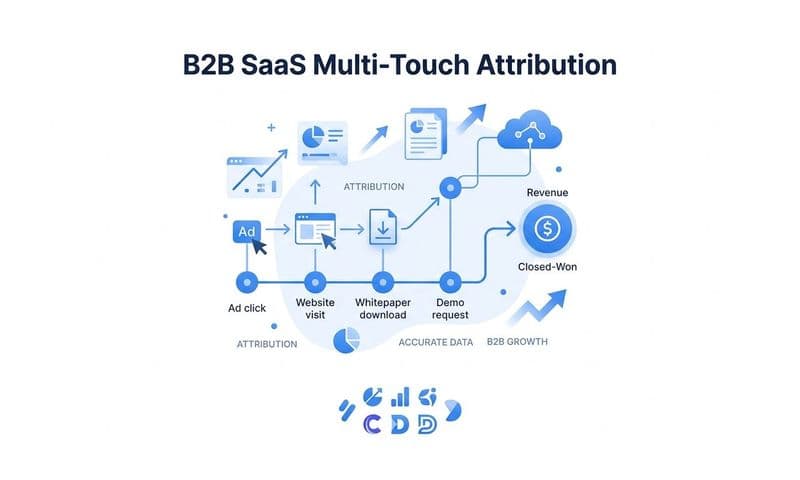
Adopt multi-touch attribution models. Moving away from last-click attribution toward models that distribute credit across the full customer journey gives you a more accurate picture of which channels are initiating, assisting, and closing conversions. This does not just improve measurement accuracy. It directly improves budget allocation by making the value of upper-funnel and mid-funnel channels visible. When you can see which campaigns are generating first touches and which are driving assisted conversions across touchpoints, you can invest across the funnel in proportion to actual impact rather than cutting everything that does not show up as a last-click conversion.
Validate platform data against CRM and revenue records regularly. Build a habit of comparing what your ad platforms report to what your CRM shows. Significant discrepancies are a signal that something in your tracking architecture needs attention. This kind of regular reconciliation catches implementation errors before they compound into months of distorted data.
Accurate Attribution Is an Engineering Problem With a Clear Solution
Inaccurate conversion tracking is not inevitable. It is the predictable result of relying on tracking infrastructure that was not designed for the complexity of modern B2B buying behavior, and of trusting ad platform native reporting at face value without validating it against your own data.
The root causes are clear: ad platform self-attribution and double-counting, browser privacy changes that have degraded client-side pixels, B2B sales cycles that outlast standard attribution windows, cross-device journeys that break identity resolution, and technical implementation errors that silently inflate or corrupt conversion counts. Each of these is a solvable problem. Together, they require a layered approach: server-side event tracking, first-party data enrichment, CRM integration, consistent UTM hygiene, deduplication logic, and a multi-touch attribution model that reflects real buying behavior.
This is exactly the problem Cometly was built to solve for B2B SaaS teams. Cometly connects your ad platforms, CRM, and website data into a single attribution system that tracks every touchpoint from first ad click to closed-won revenue. With server-side conversion tracking, Conversion API integration, and multi-touch attribution built in, Cometly gives you the accurate, complete picture of marketing performance that native platform reporting cannot provide. You can see which campaigns are actually driving pipeline, validate ad platform data against real revenue, and make budget decisions with confidence.
If your conversion data is telling a different story than your CRM, it is time to build tracking you can actually trust. Get your free demo and see how Cometly helps B2B SaaS teams capture every touchpoint, eliminate attribution gaps, and scale the campaigns that are genuinely driving revenue.