
You ran the outbound sequence. Your SDRs sent hundreds of emails, booked meetings, and followed up across LinkedIn and phone. Pipeline grew. Deals closed. But when your VP of Revenue asks which outbound campaigns actually drove that closed-won revenue, you have nothing concrete to show. The CRM says "outbound sourced," the marketing dashboard credits paid search, and nobody agrees on the real story.
This is the reality for most B2B SaaS teams running any meaningful outbound motion. Outbound generates activity, but connecting that activity to actual revenue is genuinely hard. Not because the data does not exist, but because it lives in the wrong places, gets captured inconsistently, and rarely feeds into the same attribution system that tracks your inbound channels.
As outbound motions grow more sophisticated and budgets face tighter scrutiny, flying blind is no longer acceptable. Revenue leaders need to know which sequences work, which channels produce the highest-value deals, and how outbound and inbound interact across the full customer journey. That requires a deliberate approach to outbound conversion attribution: understanding what it is, why it breaks standard tracking, and how to build a system that actually works.
Why Outbound Makes Attribution Harder Than Inbound
Inbound attribution is relatively straightforward because it is built on a simple premise: the prospect comes to you, and you track them. A click happens in a browser, a cookie fires, a session gets logged, and your analytics platform captures the source. The entire infrastructure of modern web analytics, from Google Analytics to ad platform pixels, is designed around this session-based, browser-initiated model.
Outbound flips this entirely. You go to the prospect, and that interaction happens completely outside the browser. A cold email lands in an inbox. A LinkedIn message gets a reply. An SDR makes a call. None of these touchpoints generate a browser event. No pixel fires. No session gets logged. Standard tracking infrastructure simply cannot see these interactions by default.
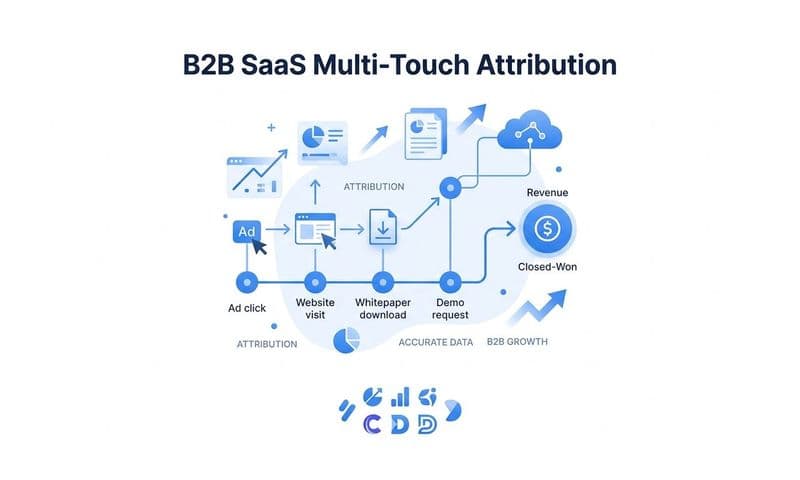
The problem deepens when you factor in the B2B buying cycle. A prospect might receive an outbound email sequence in January, ignore it initially, then see a retargeting ad in February, visit your website organically in March, and finally convert through a paid search click in April. Every one of those touchpoints played a role in that deal. But if your attribution system only captures web-based events, it sees a paid search conversion with some organic sessions in the history. The outbound sequence that opened the relationship is invisible.
Without a deliberate strategy, most teams default to last-click or last-touch attribution. This approach systematically erases outbound's contribution. The final touchpoint before conversion, almost always an inbound channel, gets all the credit. Sales teams know their outbound work drove the pipeline. Marketing dashboards say otherwise. The result is internal conflict, misallocated budgets, and outbound programs that cannot prove their value even when they are generating real revenue.
The structural gap between where outbound activity happens and where attribution systems look is the root cause of this problem. Solving it requires bridging that gap deliberately, not hoping your existing analytics stack will figure it out on its own.
Defining Outbound Conversion Attribution
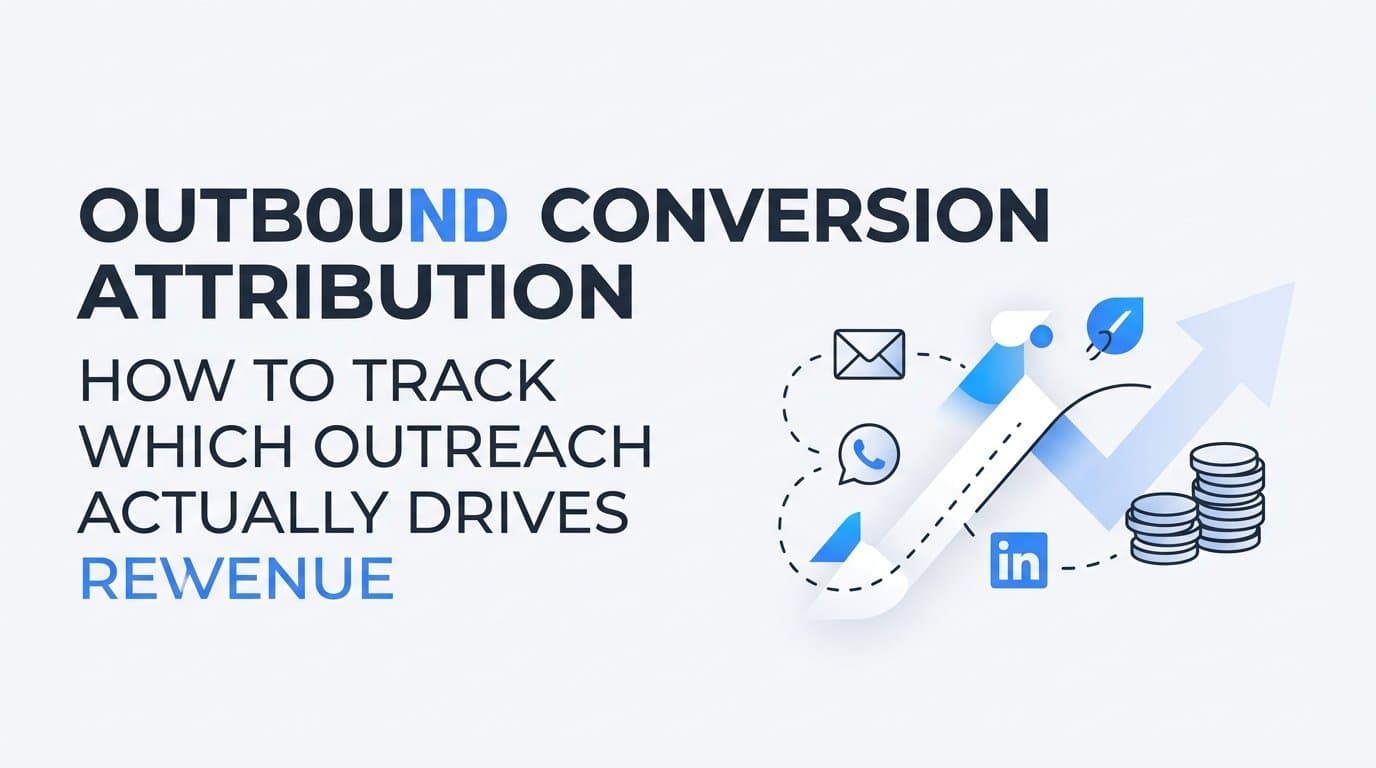
Outbound conversion attribution is the practice of connecting outbound sales and marketing activities to downstream conversion events and revenue outcomes. Those outbound activities include cold email sequences, SDR calls, LinkedIn outreach, direct mail, and any other proactive contact your team initiates with prospects. The conversion events you are trying to connect them to include demo bookings, opportunity creation, pipeline value, and ultimately closed-won revenue.
This is meaningfully different from inbound attribution. Inbound attribution tracks clicks, sessions, and form submissions. The data lives in web analytics platforms and ad dashboards. Outbound attribution requires pulling data from fundamentally different sources: CRM records, sales engagement platforms, call logs, and sequence analytics. The challenge is not just technical. It requires a different mental model for what counts as a trackable touchpoint.
There are two core questions that outbound attribution needs to answer. First: which outbound channel, sequence, or touchpoint influenced this deal? Was it the initial cold email that got a reply? The LinkedIn connection request that led to a call? The fifth follow-up in a sequence that finally got a response? Getting specific here is what separates useful attribution from vague "outbound sourced" labels in your CRM.
Second: how much credit should outbound receive relative to other touchpoints in the journey? In a multi-touch world, outbound rarely operates in isolation. Prospects who enter through outbound sequences often encounter paid ads, visit your website multiple times, and engage with content before converting. A complete attribution model needs to distribute credit across the full journey, not just hand it all to the first or last touchpoint.
Answering both questions accurately requires connecting CRM activity and sequence data to web-based conversion tracking systems. That connection does not happen automatically. It has to be built.
The Touchpoints That Need to Be Captured
Before you can attribute revenue to outbound, you need to know which outbound touchpoints to track. Not every interaction in a sequence carries equal weight, but a complete attribution system should be capable of capturing all of them and then letting the data determine which ones matter most.
First outbound contact: This is the initial email, call, or LinkedIn message your team sends to a prospect. Whether or not the prospect responds, this is the moment the relationship begins. Capturing the date, channel, sequence name, and persona segment at this stage is essential for later analysis.
Engagement events within the sequence: Email opens, link clicks, replies, voicemail listens, and LinkedIn message responses are all signals of engagement. The specific step in a sequence that triggered a response is often highly predictive of what is working and should be logged at the sequence and step level, not just the campaign level.
Meeting booked event: This is typically the most important outbound conversion event before opportunity creation. Tracking which outbound touchpoint directly preceded the meeting booking, and through which channel, tells you what is actually moving prospects to take action.
Follow-up touches before opportunity creation: In longer B2B sales cycles, there may be multiple follow-up interactions between the initial meeting and formal opportunity creation. These touches belong in the attribution record too.
Your CRM becomes the backbone of outbound attribution because this is where most of these interactions are logged, either directly or through sync from sales engagement platforms like Outreach, Salesloft, or Apollo. The key is ensuring that sequence data flows into your CRM consistently and that the CRM is connected to your attribution layer.
UTM parameters are an underused but practical bridge between outbound activity and web-based tracking. When you embed UTM-tagged links in outbound emails and LinkedIn messages, a prospect who clicks through carries that campaign data into your web analytics session. This allows you to tie a specific outbound sequence or campaign to subsequent website behavior and conversion events, connecting the offline touch to the online journey without requiring complex technical infrastructure.
Attribution Models That Reflect the Full Journey
Choosing the right attribution model for outbound is not a one-size-fits-all decision. Different models answer different questions, and the right choice depends on your team's goals and the volume of data you are working with.
First-touch attribution gives full credit to the outbound interaction that opened the relationship. For teams that want to understand which channels and sequences are best at creating new relationships from scratch, first-touch is a useful starting point. It naturally favors outbound in cases where outbound initiated the journey, which makes it a good model for demonstrating outbound's top-of-funnel contribution.
Multi-touch models distribute credit across all the touchpoints in a journey. Linear attribution spreads credit evenly. W-shaped attribution weights the first touch, the lead creation touch, and the opportunity creation touch more heavily, which often reflects the realities of a B2B sales cycle where those three moments carry the most strategic significance. These models are better suited for understanding how outbound and inbound work together rather than in competition.
Data-driven attribution is the most accurate approach for teams with sufficient conversion volume. Rather than applying fixed rules, data-driven models use statistical analysis to determine how much each touchpoint actually contributed to conversion based on historical patterns. This removes the arbitrary nature of rule-based models and produces credit distributions that reflect real buyer behavior.
One of the most damaging mistakes teams make is running inbound and outbound attribution in completely separate systems. When sales tracks outbound in one dashboard and marketing tracks inbound in another, you get double-counting, conflicting revenue numbers, and no ability to see the full customer journey. A deal that was influenced by both an outbound sequence and a paid ad campaign gets counted twice, once in each system. The result is inflated ROI claims from both teams and no clear picture of what is actually working.
A unified attribution layer that ingests data from both CRM and web analytics sources is the only way to build a coherent, non-duplicated view of how outbound and inbound interact across the full journey to revenue.
Building the Technical System That Connects Outbound to Revenue
Getting outbound conversion attribution right is not just a strategy question. It requires the right technical infrastructure. Here is how the core components fit together.
Your sales engagement platform, whether that is Outreach, Salesloft, Apollo, or another tool, is where outbound sequence data originates. This platform needs to sync reliably to your CRM so that sequence steps, replies, meeting bookings, and engagement events are captured as structured records tied to specific contacts and accounts.
Your CRM, typically Salesforce or HubSpot, becomes the central repository for outbound activity data. Every outbound touchpoint, from the first email sent to the meeting that created an opportunity, should be logged here with enough detail to support attribution analysis. This means capturing not just that a sequence ran, but which sequence, which step, which channel, and which contact responded.
A marketing attribution layer sits above both systems and ingests data from your CRM alongside your ad platforms and web analytics. This layer is responsible for stitching together the full customer journey, combining outbound CRM events with inbound web sessions and paid ad touchpoints into a single timeline per contact or account. Without this layer, outbound and inbound data remain in separate silos with no way to produce unified attribution reporting.
Server-side tracking and Conversion API integrations extend this system further. These are typically discussed in the context of paid advertising, but they are equally relevant for outbound attribution. When outbound-influenced conversions are sent as enriched server-side events to Meta or Google, ad platforms receive stronger optimization signals. This matters because retargeting campaigns often run alongside outbound sequences. When the ad platform understands that a conversion was influenced by outbound activity before the retargeting click, it can optimize more accurately for the types of prospects who are most likely to convert through that combined motion.
Closing the revenue loop requires connecting your billing data to the attribution system. Integrating a revenue source like Stripe with your CRM and attribution layer allows you to see not just which outbound sequences generated pipeline, but which ones generated closed-won revenue and at what contract value. This distinction matters because outbound-sourced deals sometimes close at different rates or at different average contract values than inbound-sourced deals. Without the revenue loop closed, you are attributing to pipeline creation rather than actual business outcomes.
First-party data enrichment ties the system together. Matching outbound contacts, known email addresses from your prospecting lists, to website visitor records or existing CRM profiles creates a unified customer record that makes cross-channel attribution dramatically more accurate. When you can confirm that the person who received your cold email is the same person who later visited your pricing page and clicked a paid ad, you can reconstruct the full journey with confidence rather than inference.
From Attribution Data to Outbound Decisions
Attribution data is only valuable if it changes how you operate. Once you have a reliable system connecting outbound activity to revenue, the decisions it enables are significant.
The most immediate application is resource and budget allocation. When you can see which sequences, channels, and persona segments generate the highest revenue per outbound touch, you know where to invest. You might find that a specific email sequence targeting a certain job title in a particular industry generates three times the closed-won revenue per contact touched compared to other sequences. Without attribution data, that insight is invisible. With it, you can scale what works and stop funding what does not.
Attribution data also feeds AI-driven recommendations. Modern attribution platforms can analyze patterns across your outbound and inbound data to surface proactive signals about which campaigns are contributing to pipeline before the quarter closes. Instead of waiting for end-of-quarter reporting to understand what worked, revenue operations leaders can see leading indicators in real time and adjust sequences, messaging, or targeting mid-flight.
There is also a direct connection between outbound attribution and paid ad performance. When outbound-influenced conversions are sent as enriched events to Meta or Google through Conversion API integrations, the ad algorithms receive higher-quality signals. They learn that the prospects converting through your paid campaigns often had prior outbound touchpoints. This improves targeting, reduces wasted ad spend, and strengthens the performance of retargeting campaigns that run alongside your outbound sequences. The outbound and paid channels stop competing for credit and start reinforcing each other's optimization.
Teams that build this feedback loop consistently make better decisions across both sales and marketing. They know which outbound sequences to scale, which ad campaigns to increase spend on, and how the two motions interact to produce the best outcomes. That is the compounding advantage of getting outbound conversion attribution right.
Putting It All Together
Outbound conversion attribution is not a reporting exercise. For B2B SaaS teams running any meaningful outbound motion, it is the difference between guessing which sequences and channels drive revenue and knowing with confidence.
The framework comes down to four things. Map your outbound touchpoints carefully, from the first contact through meeting creation and opportunity opening. Choose attribution models that reflect the full customer journey rather than defaulting to last-touch rules that erase outbound's contribution. Build a technical system that connects your sales engagement platform, CRM, marketing attribution layer, and revenue data into a single source of truth. And let that data drive decisions about where to scale, where to cut, and how to optimize both outbound and paid channels together.
This is exactly the problem Cometly is built to solve. Cometly connects every ad click, CRM event, and revenue signal into a unified attribution platform for B2B SaaS teams. It captures every touchpoint across the full customer journey, feeds AI-driven recommendations about which campaigns and sequences are performing, and sends enriched conversion events back to Meta and Google to improve ad optimization. Whether your pipeline comes from outbound sequences, paid campaigns, or a combination of both, Cometly gives you the clarity to see what is actually driving revenue.
If your outbound motion is generating pipeline but you cannot prove which sequences are closing deals, it is time to fix that. Get your free demo and see how Cometly can connect your outbound activity to real revenue outcomes.