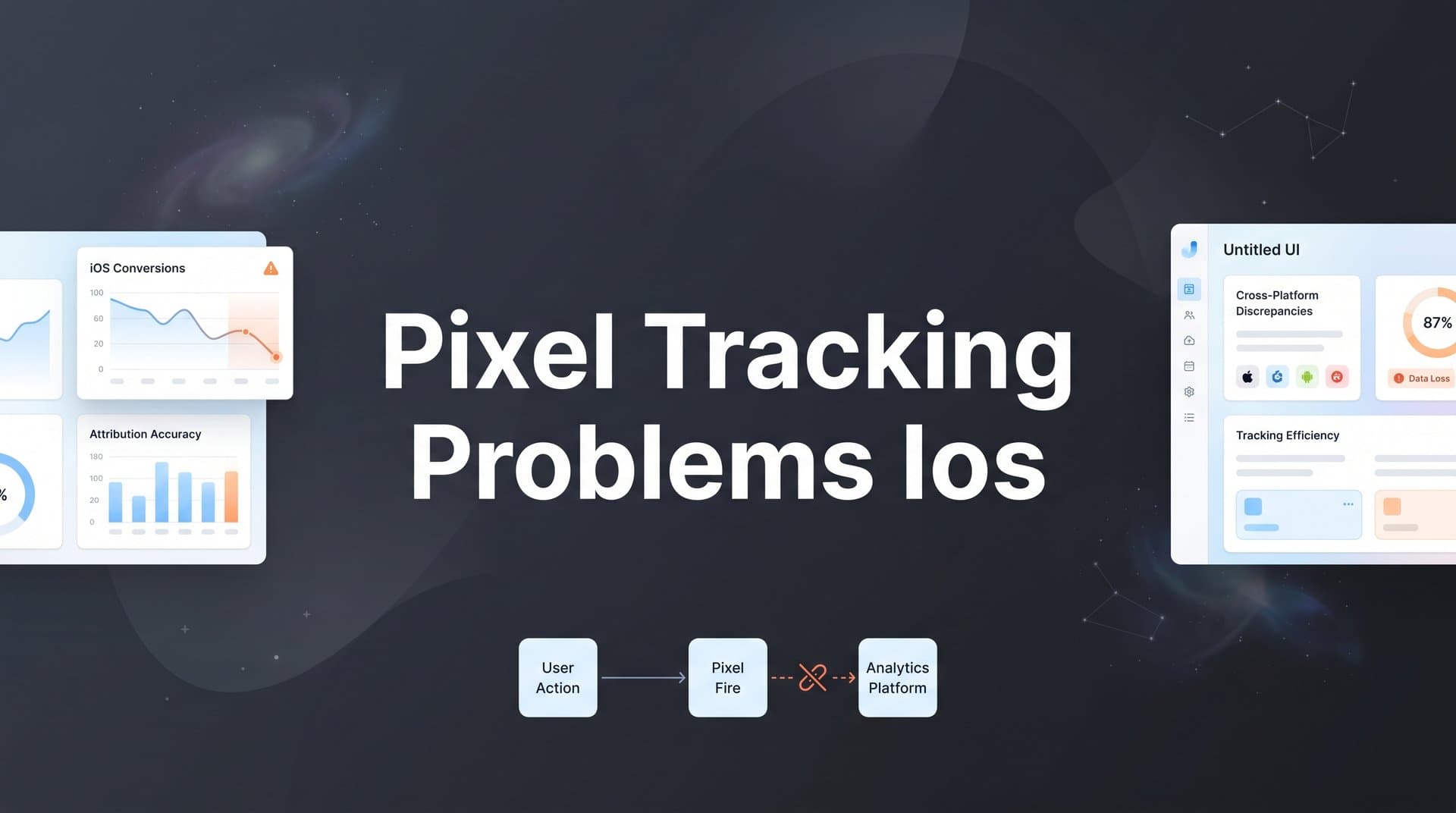
Your Facebook campaign dashboard shows 47 conversions. Your CRM says 89 sales came through that same campaign. The gap isn't a glitch—it's the new normal. Since iOS privacy changes rolled out, marketers have been flying blind, watching their attribution data crumble while ad costs climb. What used to be straightforward tracking has become a fragmented mess of incomplete signals, ghost conversions, and algorithms that can't tell which ads actually work.
The culprit? Apple's privacy updates fundamentally broke how pixel tracking operates. App Tracking Transparency and Intelligent Tracking Prevention didn't just tweak the rules—they rewrote the entire game. Your Facebook Pixel, Google Ads tags, and every other browser-based tracking script now faces barriers that didn't exist a few years ago. The result is attribution chaos that makes confident marketing decisions nearly impossible.
This isn't a temporary inconvenience that will resolve itself. iOS privacy restrictions will only get stricter, and other platforms are following Apple's lead. But here's the thing: while pixel-dependent tracking is broken, accurate attribution is still possible. You just need to understand what changed, why traditional pixels can't keep up, and which modern solutions actually work. Let's break down exactly what went wrong and how to fix it.
The iOS Privacy Shift That Changed Everything
In April 2021, Apple launched App Tracking Transparency (ATT) with iOS 14.5, fundamentally altering how apps can track user behavior. Before ATT, apps could freely monitor users across different apps and websites to build detailed profiles for ad targeting. After ATT, every app must explicitly ask permission before tracking users across other companies' apps and websites.
The prompt is simple: "Allow [App Name] to track your activity across other companies' apps and websites?" Most users tap "Ask App Not to Track." Industry reports consistently show that the majority of iOS users opt out when given the choice. When users decline, apps lose the ability to pass user identifiers to ad platforms, creating immediate blind spots in your attribution data. Understanding the full iOS App Tracking Transparency impact is essential for modern marketers.
But ATT is only half the story. Safari's Intelligent Tracking Prevention (ITP) has been quietly dismantling cookie-based tracking since 2017, with updates becoming increasingly aggressive. ITP now limits third-party cookies entirely and restricts first-party cookies to just seven days of lifespan. Some cookies set through client-side JavaScript expire in as little as 24 hours. This matters because pixels rely on cookies to connect a user's ad click to their eventual conversion.
Here's how this breaks your Facebook Pixel specifically: When someone clicks your Facebook ad on their iPhone, the pixel drops a cookie to track that user. If they convert eight days later, that cookie has already expired. Facebook can't connect the conversion back to the original ad click. The sale happens, but Facebook reports zero conversions from that campaign. Your attribution window just shrank from 28 days to whatever ITP allows—often less than a week. Many marketers are now experiencing Facebook Pixel not tracking all conversions as a direct result.
Google Ads faces the same constraints. Your conversion tags rely on cookies that Safari actively deletes. When users browse in Private mode or use ad blockers, those tracking scripts never fire at all. The technical infrastructure that powered digital advertising for the past decade simply doesn't function the same way on iOS devices anymore.
The combination of ATT and ITP creates a perfect storm: users can block cross-app tracking at the OS level, while their browsers automatically delete the cookies your pixels depend on. Every iOS update tightens these restrictions further. What worked in 2020 is fundamentally incompatible with how iOS operates in 2026.
Five Ways Broken Pixel Tracking Hurts Your Campaigns
Underreported Conversions Lead to Premature Campaign Shutoffs: When your pixel only captures 60% of actual conversions, your best-performing campaigns look like failures. You see a $150 cost per acquisition when the real number is $90. Based on incomplete data, you pause campaigns that are actually profitable. Meanwhile, your competitors who've solved attribution keep scaling the same audiences you just abandoned.
This underreporting compounds over time. Your quarterly analysis shows declining ROAS across all channels, so you cut budgets. But the conversions are still happening—they're just invisible to your tracking. You're making strategic decisions based on a distorted reality, optimizing for metrics that don't reflect actual business outcomes. These ad tracking accuracy problems can devastate your marketing ROI.
Inflated Cost-Per-Acquisition Metrics Distort Budget Decisions: When you only see half your conversions, your reported CPA doubles. A campaign generating sales at $50 each appears to cost $100 per sale. You shift budget away from "expensive" channels toward ones that seem cheaper, not realizing the data itself is the problem. Your budget allocation becomes a game of optimizing broken metrics instead of actual profitability.
This gets particularly dangerous during scaling attempts. You increase spend on a campaign, conversions appear to stay flat or decline, so you assume you've hit diminishing returns. In reality, conversions increased proportionally—your pixel just can't see them. You cap budgets on profitable campaigns because the data tells you they're not working.
Degraded Lookalike Audiences and Retargeting Pools From Incomplete Data: Facebook's lookalike audiences are only as good as the source data you provide. When your pixel misses 40% of conversions, Facebook builds lookalikes based on an incomplete picture of who actually buys from you. The algorithm thinks your best customers look like the partial dataset it can see, not your actual buyer profile.
Retargeting suffers even more acutely. Users browse your site, add items to cart, but the pixel doesn't fire consistently due to ITP restrictions. Your retargeting audience shrinks dramatically. The people most likely to convert—those who already engaged with your content—fall out of your remarketing pools before you can bring them back. You're left retargeting a fraction of your actual warm audience.
Ad Platform Algorithms Receive Poor Signals, Reducing Optimization Effectiveness: Facebook and Google's machine learning models need accurate conversion data to optimize delivery. When your pixel reports conversions inconsistently, the algorithms can't identify patterns in who converts and who doesn't. The system optimizes for the wrong signals because it's working with corrupted data.
This creates a vicious cycle. Poor data leads to poor optimization, which leads to worse performance, which generates even worse data. Your campaigns drift further from your actual conversion goals because the feedback loop feeding the algorithm is fundamentally broken. The AI is trying to optimize, but it's solving the wrong problem based on incomplete information.
Attribution Windows Collapse, Missing Multi-Day Customer Journeys: Most B2B purchases and many higher-ticket B2C sales don't happen instantly. A user might see your ad on Monday, research competitors on Wednesday, and convert on Friday. With cookie lifespans capped at 24-48 hours for some implementations, that conversion never gets attributed back to your original ad. You lose visibility into any customer journey longer than a few days.
This particularly impacts top-of-funnel campaigns. Awareness ads that introduce your brand to new audiences show zero conversions because users take time to decide. You conclude that cold traffic campaigns don't work, when in reality they're driving conversions that happen outside your shortened attribution window. These cross device conversion tracking problems make it nearly impossible to understand your true customer journey.
Why Browser-Based Pixels Can No Longer Keep Up
The fundamental architecture of browser-based pixels was designed for an era when browsers cooperated with tracking. A pixel is essentially a snippet of JavaScript that runs in the user's browser, drops a cookie, and sends data to an ad platform. This client-side approach worked beautifully when browsers allowed persistent cookies and users didn't actively block tracking. Understanding what a tracking pixel is and how it works reveals why this technology is now fundamentally limited.
That era is over. Modern browsers treat third-party tracking as a privacy violation, not a feature. Safari leads with ITP, but Firefox's Enhanced Tracking Protection and Chrome's Privacy Sandbox are moving in the same direction. The entire browser ecosystem is shifting away from the permissive environment that made pixel tracking reliable.
Ad blockers compound the problem. Browser extensions like uBlock Origin and Ghostery specifically target tracking scripts. When a user has an ad blocker installed, your pixel code never executes. The page loads, the user converts, but your tracking sees nothing. Industry estimates suggest that 25-40% of users actively block ads and tracking scripts. That's a quarter to nearly half of your audience that's completely invisible to pixel-based attribution.
Even when pixels do fire, cookie deletion breaks the connection. Users who clear their browser data regularly—either manually or through automated privacy tools—reset their tracking cookies. When they return to convert later, the pixel sees them as a new user with no prior ad interaction. The attribution chain breaks, and the conversion appears organic when it was actually driven by your paid campaigns. These cookie based tracking problems are only getting worse.
The technical reality is that client-side tracking depends on cooperation from browsers, users, and devices. iOS privacy features removed that cooperation. Your pixel can request permission to track, but it can't force compliance. When the browser says "no" or when the cookie expires, your attribution data simply stops flowing. There's no workaround within the pixel framework itself.
This creates massive attribution gaps. Your pixel reports what it can see, which is increasingly only a fraction of reality. The difference between pixel-reported conversions and actual sales widens every quarter. Marketers often discover this gap when they cross-reference pixel data against CRM records or payment processor data. The discrepancy isn't subtle—it's often 30-50% or more of total conversions going untracked.
Server-Side Tracking: The Foundation for Accurate Data
Server-side tracking flips the entire model. Instead of relying on JavaScript running in a user's browser, you send conversion data directly from your server to ad platforms. When a purchase happens in your CRM or checkout system, your server immediately notifies Facebook, Google, and other platforms about the conversion. No browser involvement required. No cookies to expire. No ad blockers to circumvent. The comparison between server side tracking vs pixel tracking reveals why this approach is now essential.
This approach bypasses every limitation that breaks browser-based pixels. Safari can't block what never touches the browser. ITP can't delete cookies that don't exist. Ad blockers can't stop server-to-server communication. The data flows directly from your backend systems to the ad platforms through secure API connections.
First-party data collection is the key advantage here. You're collecting information directly from your own systems—your website, CRM, payment processor, email platform. This data belongs to you, it's collected with user consent through your own privacy policy, and it's far more complete than what any pixel could capture. You know exactly who converted, what they bought, and how much they spent because it's in your own database.
The technical implementation connects your various data sources into a unified tracking layer. Your website sends events to your server. Your CRM logs customer actions. Your payment processor confirms transactions. All of this data flows to a central point where it's enriched, matched to user identifiers, and sent to ad platforms through their conversion APIs.
Facebook Conversions API (CAPI) and Google Enhanced Conversions are the server-side equivalents of their browser pixels. They accept the same conversion data, but through a server-to-server connection instead of client-side JavaScript. You can send purchases, leads, sign-ups, and custom events directly from your backend. Understanding the conversion API vs pixel tracking differences helps you implement the right solution for your business.
Server-side tracking also enables better data matching. You can send hashed email addresses, phone numbers, and other identifiers that help ad platforms connect conversions to the right users. This matching happens on the platform side using privacy-safe hashing, giving you attribution accuracy that pixels can't achieve. When Facebook receives an email hash from your server, it can match that to a user account even if cookies were blocked.
The privacy compliance angle matters too. Server-side tracking respects user privacy while maintaining attribution accuracy. You're not tracking users across the web—you're reporting conversions that happened on your own properties using data you legitimately collected. This aligns with privacy regulations and user expectations while still giving you the attribution data you need to run campaigns effectively.
Rebuilding Your Attribution Strategy for iOS Reality
The solution isn't abandoning pixels entirely—it's implementing a hybrid approach that combines browser-based and server-side tracking. Your Facebook Pixel should still run on your website to capture what it can. But now you're also sending the same events through Facebook Conversions API from your server. This dual-tracking approach maximizes data capture. When the pixel works, great. When it's blocked, your server-side implementation ensures the conversion still gets recorded. Learning how to fix iOS tracking issues starts with this hybrid implementation.
This redundancy is intentional. Ad platforms use deduplication logic to handle the same event arriving from both sources. If both your pixel and CAPI report the same purchase, Facebook recognizes it as one conversion, not two. But when the pixel fails and only CAPI reports it, you still get credit. The result is dramatically improved conversion tracking without inflating your numbers.
Feeding enriched conversion data back to ad platforms supercharges their optimization algorithms. Instead of just sending "purchase: $50," you can include product categories, customer lifetime value predictions, margin data, and whether this was a new or returning customer. Ad platforms use this enriched data to find more valuable customers, not just more conversions. The algorithm learns to optimize for buyers who spend more and stay longer.
This is where server-side tracking truly outperforms pixels. Your server has access to your entire customer database. You can append historical purchase data, segment information, and predictive analytics to every conversion event. Facebook's algorithm receives signals about which ads attract high-value customers versus one-time buyers. It optimizes accordingly, shifting delivery toward audiences more likely to generate profitable conversions.
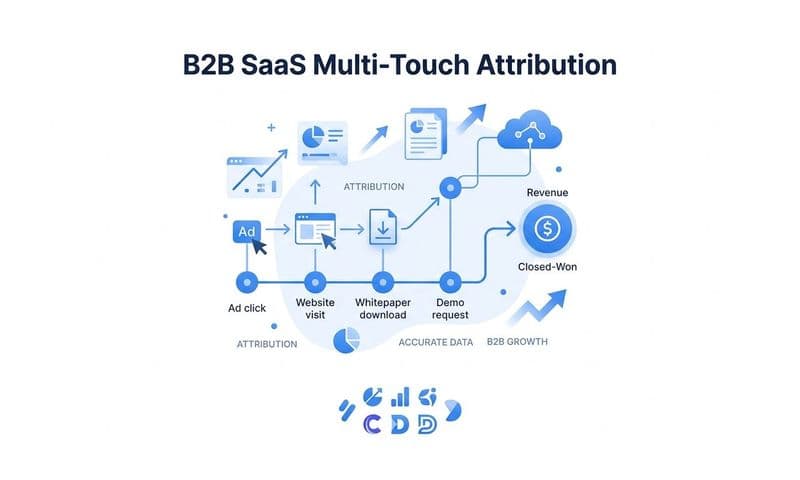
Multi-touch attribution becomes possible when you're tracking the full customer journey across devices and sessions. A user might see your Facebook ad on their iPhone, click a Google ad on their laptop, and convert after reading your email on their tablet. Browser-based pixels can't connect these dots across devices. Server-side attribution platforms can, by matching user identifiers across touchpoints and building a complete journey map. Exploring post iOS tracking solutions for marketers reveals the full range of options available.
This holistic view reveals which channels actually drive conversions versus which get last-click credit. You might discover that Facebook introduces most new customers, Google captures high-intent searches, and email closes the deal. Each channel plays a role, but last-click attribution only credits email. Multi-touch models distribute credit appropriately, showing you the true value of every marketing touchpoint.
The practical implementation means connecting your ad platforms, website, CRM, and analytics into a unified attribution system. Tools like Cometly specialize in this integration, capturing data from every source and feeding it back to ad platforms through their conversion APIs. You get complete journey tracking plus the ability to sync enriched conversion data that makes ad algorithms smarter.
This infrastructure also future-proofs your marketing stack. As privacy restrictions tighten further, server-side tracking will become the only reliable attribution method. Building this foundation now means you're not scrambling when the next iOS update breaks pixel tracking even more. You're already operating with the architecture that works in a privacy-first world.
Putting It All Together: A Clear Path Forward
The shift from pixel-dependent tracking to server-side attribution isn't optional anymore—it's the baseline for running profitable campaigns in 2026. iOS privacy restrictions eliminated the reliability of browser-based pixels. Waiting for Apple to reverse course or for pixels to somehow work again means accepting permanently broken attribution data.
Your immediate action items are straightforward. First, audit your current tracking setup to quantify the attribution gap. Compare pixel-reported conversions against actual sales data from your CRM or payment processor. The difference shows you exactly how much revenue you're currently attributing incorrectly. This gap is the business case for upgrading your tracking infrastructure.
Second, implement server-side tracking alongside your existing pixels. Set up Facebook Conversions API and Google Enhanced Conversions to send conversion data directly from your server. This doesn't replace your pixels—it supplements them with a more reliable data stream that works regardless of browser restrictions. The dual approach maximizes coverage while maintaining accuracy through deduplication.
Third, enrich the conversion data you send to ad platforms. Include customer value indicators, product categories, and margin information so algorithms can optimize for profitable conversions, not just volume. This transforms your campaigns from "get conversions" to "get valuable customers," dramatically improving return on ad spend.
Finally, adopt multi-touch attribution to understand the full customer journey. Stop relying on last-click models that miss earlier touchpoints. Implement attribution that connects ad impressions, clicks, website visits, and CRM events across devices and sessions. This complete view enables confident budget allocation based on actual contribution to revenue, not just final touch credit.
Accurate attribution enables confident scaling decisions. When you know which campaigns truly drive profitable growth, you can increase budgets without fear. When you can see the full customer journey, you optimize the entire funnel instead of just the last click. When your ad platforms receive complete conversion data, their algorithms find better customers more efficiently. This is how modern marketing teams operate in a post-pixel world.
The Sustainable Solution for Modern Attribution
iOS pixel tracking problems aren't getting better. Apple continues tightening privacy restrictions with each update, and other platforms are following their lead. The browser-based tracking era is ending, and marketers who cling to pixel-only attribution will fall further behind every quarter. The attribution gaps you're experiencing now will widen as privacy features become more aggressive.
Server-side tracking and enriched attribution represent the sustainable path forward. This infrastructure works with privacy restrictions instead of fighting against them. You're collecting first-party data from your own properties, sending it through secure APIs, and giving ad platforms the signals they need to optimize effectively. It's privacy-compliant, technically reliable, and produces accurate attribution data regardless of what happens in users' browsers.
The marketers and agencies winning in 2026 aren't the ones with the biggest budgets—they're the ones with the most accurate data. They know exactly which campaigns drive revenue because they've built attribution systems that capture every touchpoint. They scale confidently because their data reflects reality, not the fragmented view that pixels provide. They feed better signals to ad platforms, so algorithms optimize for actual business outcomes.
Ready to elevate your marketing game with precision and confidence? Discover how Cometly's AI-driven recommendations can transform your ad strategy—Get your free demo today and start capturing every touchpoint to maximize your conversions.